Best AI Mode SEO Analysis Software in 2026: 9 Tools Compared
By ToolNimba Editorial Team October 30, 2026 10 min read

- Top pick
 Semrush
SEO analysis plus AI visibility
Starting price$139 per monthCheck out SemrushRead our review - Runner-up
 Ahrefs
Link and content analysis plus Brand Radar
Starting price$29 per monthCheck out AhrefsRead our review - Also great
 BrightEdge
Enterprise GEO analysis
Starting priceSee websiteCheck out BrightEdgeRead our review
How we researched this
We compared official pricing and feature pages, app store listings, privacy policies and public user reviews. Prices change, so check the provider's site before you pay.
Key takeaways
- Analysis software should explain why a brand is cited or missing, not just report a visibility score.
- Semrush, Ahrefs and BrightEdge suit teams that need SEO analysis plus AI data, while Otterly.AI, Peec AI and Rank Prompt suit prompt-focused analysis.
- Citation analysis, content gaps, competitor comparison and crawler access are the four checks that turn AI data into fixes.
- AI answers change by prompt, so analyse a set of real customer prompts rather than a handful of brand-name searches.
Quick comparison
| Name | Best for | Starting price | Free plan | |
|---|---|---|---|---|
| Semrush | SEO analysis plus AI visibility | $139 per month | Free trial | Visit |
| Ahrefs | Link and content analysis plus Brand Radar | $29 per month | Free trial | Visit |
| BrightEdge | Enterprise GEO analysis | See website | Free trial | Visit |
 Otterly.AI | Small-team AI analysis | $29 per month | Free trial | Visit |
 Profound | Deep enterprise answer analysis | See website | Free trial | Visit |
 Scrunch AI | Brand and product answer analysis | $250 per month | Free trial | Visit |
 Peec AI | Simple AI visibility analysis | See website | Free trial | Visit |
 Rank Prompt | Prompt gap analysis and fixes | $49 per month | Free trial | Visit |
 SE Ranking | Audit and AI source analysis | $129 per month | Free trial | Visit |
The best AI Mode SEO analysis software
AI Mode SEO analysis means checking how a site performs in Google AI Mode and AI search answers, which pages get cited, which competitors win, and what content or technical gaps block citations. We compared publisher pages and reputable AI visibility roundups, focusing on citation analysis, competitor comparison, content recommendations, crawler checks and price.
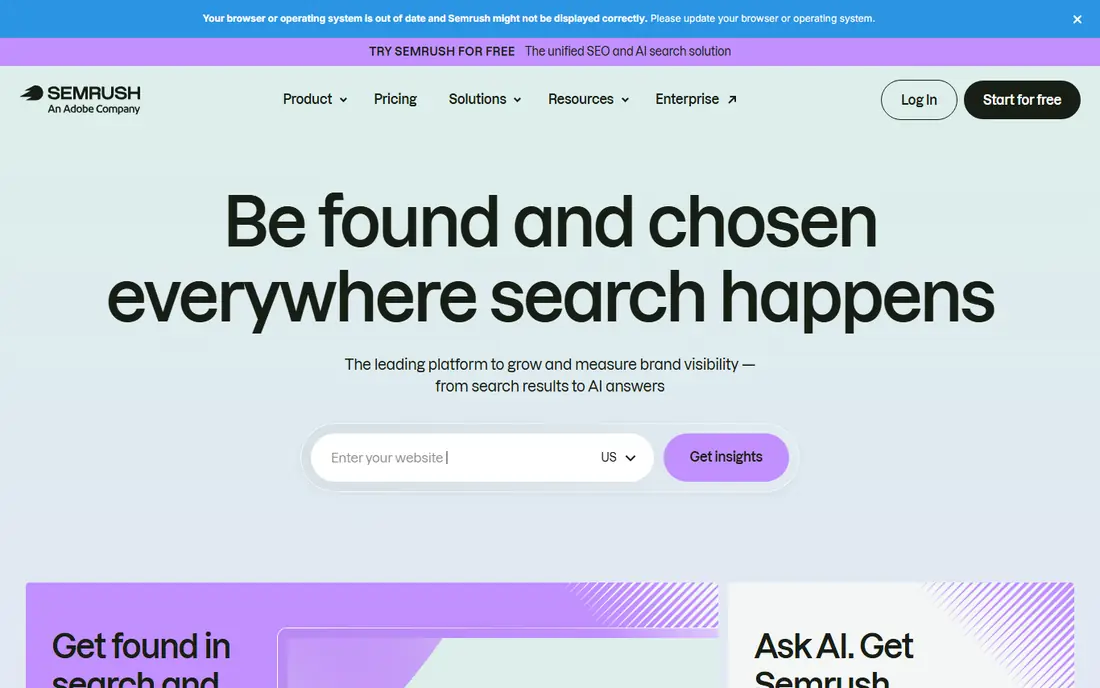
Semrush is the most complete analysis choice for teams that already do SEO. Its AI Visibility Toolkit reports brand share, sentiment and presence across ChatGPT, AI Mode, Perplexity and Gemini, while classic tools add keyword gaps, backlink data and site audits. Audit checks for blocked AI crawlers, such as search bots used by AI platforms, help explain why a page is never cited.
The limit is packaging and price. AI Mode coverage and prompt allowances vary by plan, and the SEO plan starts at $139 per month in reputable summaries, with the AI toolkit listed from $99 per month in some summaries. Semrush fits agencies and in-house teams that analyse SEO and AI together every week. Prompt-only users may prefer a cheaper dedicated tool.
- Combines classic SEO audit with AI visibility
- Brand share and sentiment reports
- Crawler-block checks
- AI Mode detail varies by plan and add-on
- High entry price for small teams
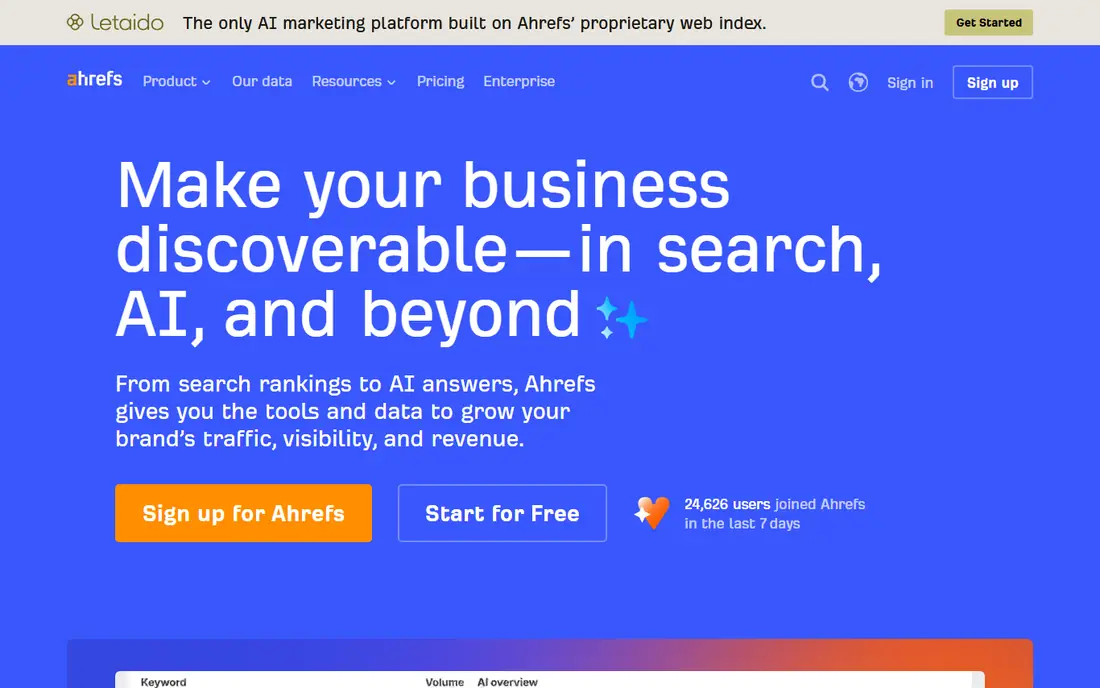
Ahrefs pairs strong classic analysis with AI visibility through Brand Radar. Teams can compare which pages earn links and rank well in classic search, then check whether those same pages are cited in AI Mode, AI Overviews, ChatGPT, Perplexity, Gemini and Copilot. That contrast often reveals pages that rank but are ignored by AI answers, which is a useful analysis starting point.
Pricing needs a careful read. Starter SEO pricing is listed at $29 per month, while AI Visibility Index pricing is listed from $199 per month in reputable summaries. Ahrefs suits content and link-led teams that want AI analysis inside a familiar platform. Small teams that only need AI analysis should compare Otterly.AI first.
- Deep link and content gap analysis
- Brand Radar for AI visibility
- Large keyword database
- Full AI Visibility Index costs more than entry plans
- Analysis depth varies by report
BrightEdge is an enterprise analysis platform for generative engine optimisation, with research and workflows focused on Google AI Overviews and wider AI assistants. It helps large teams analyse entities, content gaps and AI citation patterns across many pages, then turn findings into optimisation tasks. That scale suits publishers and large brands with thousands of pages.
Quote-based pricing and enterprise onboarding make BrightEdge a poor fit for small businesses. Teams that need a quick prompt check should use a self-serve tool instead. For enterprise SEO teams that already use BrightEdge for classic search, adding AI analysis in the same platform is a logical step.
- Enterprise research and workflows for AI Overviews
- Entity and content optimisation help
- Large-site reporting
- Pricing is quote-based
- Too large and costly for small sites
Otterly.AI offers practical AI analysis at a small-team price. It tracks presence across ChatGPT, AI Overviews, Perplexity and Copilot on core plans, with AI Mode and other engines as add-ons, and its GEO audit highlights likely reasons a brand is missing from answers. That audit step matters, since a visibility score alone does not tell you what to fix.
Prompt limits on entry plans mean large agencies will need higher tiers, and reporting is simpler than enterprise platforms. For a freelancer or small in-house team that wants to analyse a focused prompt set each week, Otterly.AI is a strong value pick.
- Low entry price
- AI Overview and ChatGPT analysis
- GEO audit to explain missing citations
- AI Mode, Gemini and Claude are add-ons on some plans
- Prompt limits are modest
Profound goes deeper than most trackers on answer analysis. It measures explicit and implicit brand mentions, sentiment, citation sources and trends across many large language models, with dashboards built for enterprise reporting. That depth helps a brand team understand not just whether it appears, but how AI systems describe it compared with rivals.
Enterprise pricing, listed from $2,000 or more per month in reputable summaries, puts Profound out of reach for most small sites. Setup and prompt design also take more work than a self-serve tool. Profound fits large brands that need rigorous, board-ready AI analysis across markets.
- Deep sentiment and implicit mention analysis
- Many engines
- Enterprise dashboards
- High enterprise pricing
- Complex setup for small teams
Scrunch AI analyses how AI platforms recommend brands and products, which is a different question from classic keyword ranking. It tracks mentions and recommendations across Google AI Mode, AI Overviews, Gemini and ChatGPT Shopping, and shows where a brand wins or loses in the customer journey. Product teams can use that view to fix pages, pricing information or product data that AI systems cite.
The starter price of $250 per month in reputable summaries is still high for small teams, and Scrunch does not replace a full SEO audit tool. For consumer brands where AI recommendations drive sales, its focused analysis is worth the cost. For general SEO analysis, Semrush or Ahrefs offer broader value.
- Analyses brand recommendations in AI answers
- Google AI Mode coverage
- Customer journey views
- Starter price is high for small teams
- Focus is brand answers, not classic SEO audits
Peec AI keeps AI analysis simple: track prompts, see visibility trends, compare brands and share reports. Self-serve plans let users choose models, with more models as add-ons, which helps a team check whether results differ by engine. That clarity suits marketers who need a weekly snapshot, not a research project.
Depth is the trade-off. Peec AI offers less detailed content gap and crawler analysis than Semrush or BrightEdge, so teams that need full SEO audits should pair it with another tool. Check current pricing, since model options affect cost. For straightforward AI Mode analysis, Peec AI is easy to adopt.
- Clean prompt analysis and trends
- Model choice on self-serve plans
- Easy sharing
- Prompt limits on starter plans
- Less deep content gap analysis than enterprise tools
Rank Prompt stands out for turning analysis into fixes. It scans prompts across major engines, shows where a brand is cited and where rivals win, and suggests concrete actions such as adding schema, strengthening citations and improving source coverage. Starter pricing is listed at $49 per month for 150 prompts, with higher tiers for larger prompt sets.
It is not a full SEO platform, so link analysis, technical audits and classic rank tracking at scale need another tool. For a team whose main question is why AI Mode answers cite rivals instead of them, Rank Prompt gives a clear, actionable analysis at a mid-range price.
- Prompt-level gap reports
- Schema and citation fix suggestions
- Competitor benchmarking
- Not a full SEO suite
- Prompt allowances rise with tier
SE Ranking combines classic SEO analysis with an AI module that adds source intelligence and brand mention tracking. Teams can audit a site, check keyword gaps and then see which sources AI answers cite for the same topics. That link between audit findings and AI citations helps prioritise content fixes.
The AI module is listed as an add-on at about $89 per month in reputable summaries, on top of Core pricing from $129 per month. That total suits agencies that already use SE Ranking for audits and reporting. Solo users who only need AI analysis will find Otterly.AI or Rank Prompt cheaper.
- Classic audits plus AI source intelligence
- Brand mention tracking
- Daily data
- AI module costs extra
- Total price is high for small teams
How we picked these
We compared publisher pages and reputable AI visibility roundups, and we kept only software that analyses Google AI Mode, AI Overviews or AI search answers, not just classic rankings. We checked citation analysis, competitor comparison, content recommendations, crawler access checks, prompt limits and price. We did not claim hands-on testing, and pricing changes often, so verify the vendor page before subscribing.
How to analyse SEO for AI Mode
Start with a prompt set built from real customer questions, including comparisons, costs, best-for queries and problem-solving searches. Run those prompts in AI Mode and note which brands are cited, which pages are used as sources, and which answers omit your brand entirely. A single brand search tells you little; a set of 30 varied prompts reveals patterns.
Next, check the technical and content reasons behind gaps. Confirm that AI crawlers can access key pages, that pages answer the question directly, and that facts, prices and comparisons are clear and current. Compare your cited pages with rival pages that win citations, and look for missing schema, thin sections or outdated data. Track the same prompt set weekly, since AI answers shift with model updates and new content, and keep classic Search Console and rank data alongside AI data for context.
Sources
- https://www.futurescope.co/best-tools-to-track-chatgpt-google-ai-overviews-and-ai-search-rankings/
- https://subscribepr.com/blog/best-rank-tracking-tools-2026/
- https://topify.ai/blog/google-ai-overviews-citation-tracking-tools
- https://onelittleweb.com/top-tools/ai-answer-tracking-tools/
- https://rankprompt.com/best-ai-visibility-products-optimized-answer-engines/
- https://www.semrush.com
- https://ahrefs.com
- https://www.brightedge.com
- https://otterly.ai
- https://www.tryprofound.com
- https://www.scrunchai.com
- https://peec.ai
- https://rankprompt.com
- https://seranking.com