Best App to Learn German in 2026: 9 Apps Compared
By ToolNimba Editorial Team October 30, 2026 12 min read

- Top pick
 Duolingo
Free daily habit building
Starting priceFreeCheck out DuolingoRead our review - Runner-up
 Babbel
Structured grammar and conversation
Starting price$17.95 per monthCheck out BabbelRead our review - Also great
 Busuu
Native-speaker feedback
Starting priceSee websiteCheck out BusuuRead our review
How we researched this
We compared official pricing and feature pages, app store listings, privacy policies and public user reviews. Prices change, so check the provider's site before you pay.
Key takeaways
- Duolingo is the best free starting point for daily habit building, while Babbel is stronger for structured grammar and real conversation phrases.
- Busuu adds native-speaker feedback on writing and speaking exercises, which helps learners who want corrections from real people.
- Pimsleur suits audio learners and commuters, because its core lessons are built around listening and speaking in 30-minute sessions.
- No app alone makes you fluent in German, so pair a course app with speaking practice, reading, and listening to real German media.
Quick comparison
| Name | Best for | Starting price | Free plan | |
|---|---|---|---|---|
| Duolingo | Free daily habit building | Free | Yes | Visit |
| Babbel | Structured grammar and conversation | $17.95 per month | No | Visit |
| Busuu | Native-speaker feedback | See website | Yes | Visit |
 Memrise | Vocabulary and native-speaker video | See website | Yes | Visit |
 Rosetta Stone | Immersion-style vocabulary | See website | Free trial | Visit |
 Pimsleur | Audio-first speaking practice | $20.99 per month | Free trial | Visit |
 Mondly | Short daily lessons across devices | See website | Yes | Visit |
 LingQ | Reading and listening to real content | See website | Yes | Visit |
 italki | Live lessons with real tutors | See website | No | Visit |
The best app to learn German
German rewards structure. Cases, word order, and separable verbs confuse learners who only memorise phrases, so the best app for you depends on whether you need grammar explained, vocabulary drilled, speaking practice, or a mix of all three. We compared official feature pages, pricing pages, app store listings, and public reviews to build this list, and we did not claim hands-on course completion we did not do.
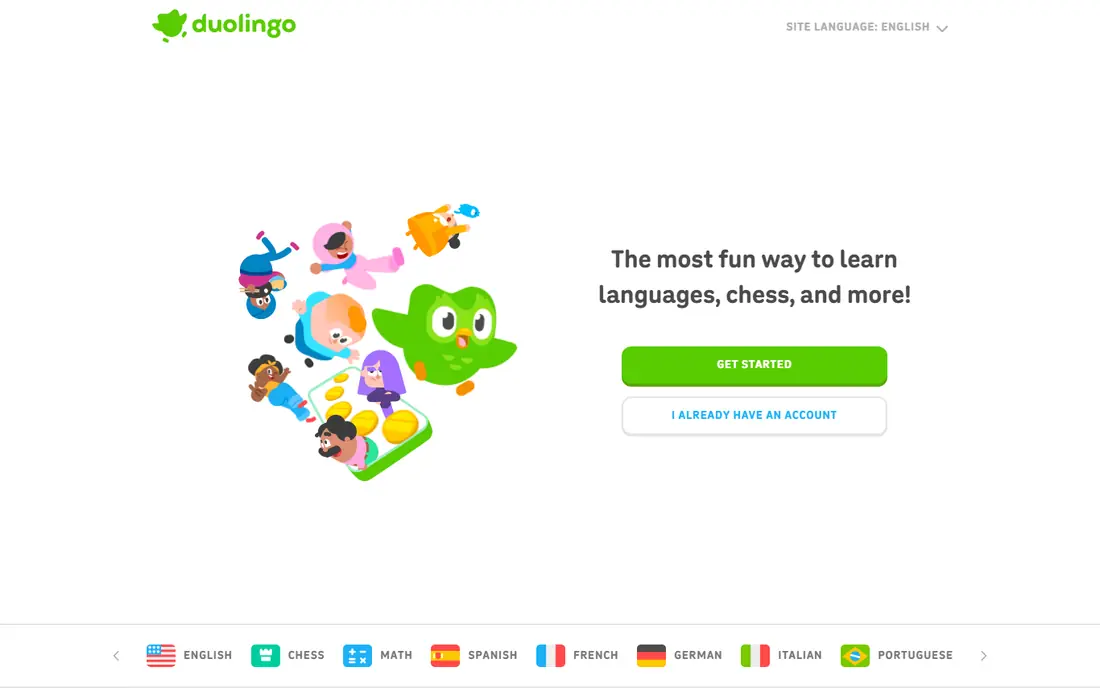
Duolingo is where most people should start, because it costs nothing to try and it makes daily practice easy to keep up. Lessons are short, visual, and game-like, with points, streaks, and levels that reward coming back tomorrow. For a beginner who wants to learn basic vocabulary, present-tense verbs, and everyday phrases, that habit matters more than any single feature.
The limits show up as you progress. Grammar is often taught by pattern rather than clear explanation, which can leave German cases feeling like guesswork, and speaking practice is lighter than in tutor or conversation apps. Super, the paid tier, removes ads and limits and adds extra practice tools, with pricing listed around $12.99 per month or about $84 per year in recent summaries, so check the app store listing for your region. Use Duolingo as your daily base, then add a grammar app or a tutor when you reach the point where you need explanations.
- Free core lessons with ads
- Short gamified lessons
- Streaks and reminders that keep learners returning
- Grammar explanations are light
- Speaking practice is limited compared with tutor apps
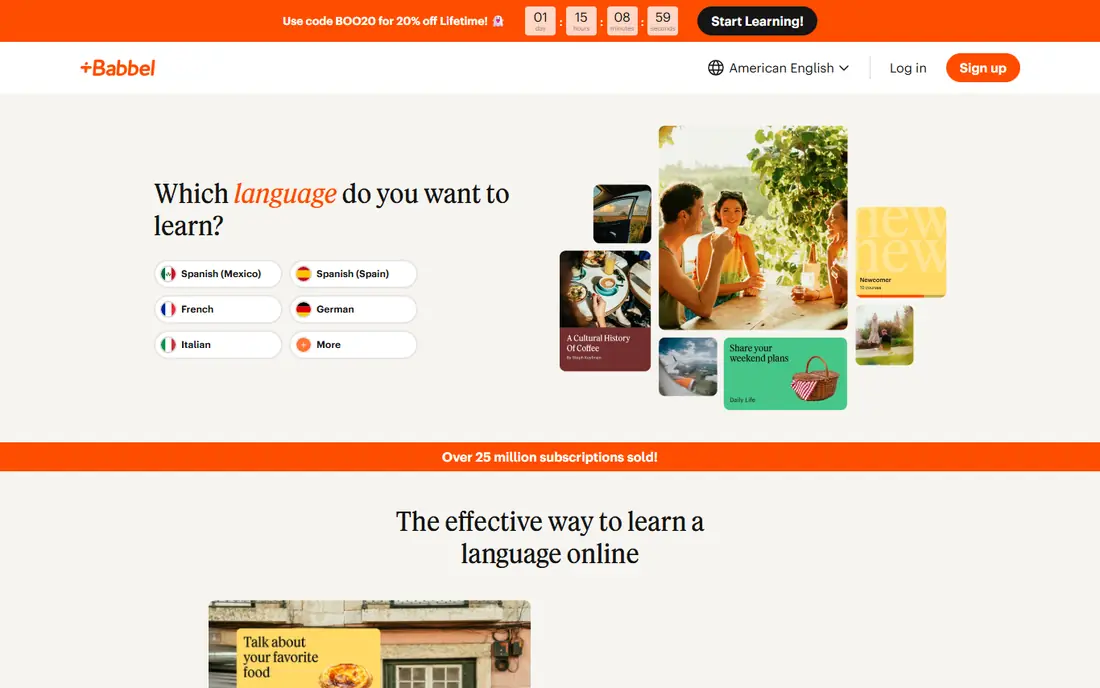
Babbel is the strongest self-study pick for learners who want to understand German rather than just repeat it. Lessons are built by linguists, grammar is explained in plain language, and dialogues cover situations such as travel, work, and daily life. Review sessions use spaced repetition to bring words back before you forget them, and lessons run about 10 to 15 minutes, which fits a lunch break or a commute.
Pricing varies by plan and region. Recent US listings show $17.95 per month for a short plan and about $8.95 per month on a 12-month plan, with a lifetime option also offered, so check the current Babbel pricing page for the plan you want. The first lesson of each course is free, which is enough to test the teaching style. Babbel will not take you to advanced fluency on its own, and it has no live tutor in the core plan, but for a solid foundation up to intermediate level it is our pick for most serious learners.
- Courses built by language experts
- Grammar explained in context
- Dialogues based on real situations
- No meaningful free tier beyond the first lesson
- Courses top out around intermediate level
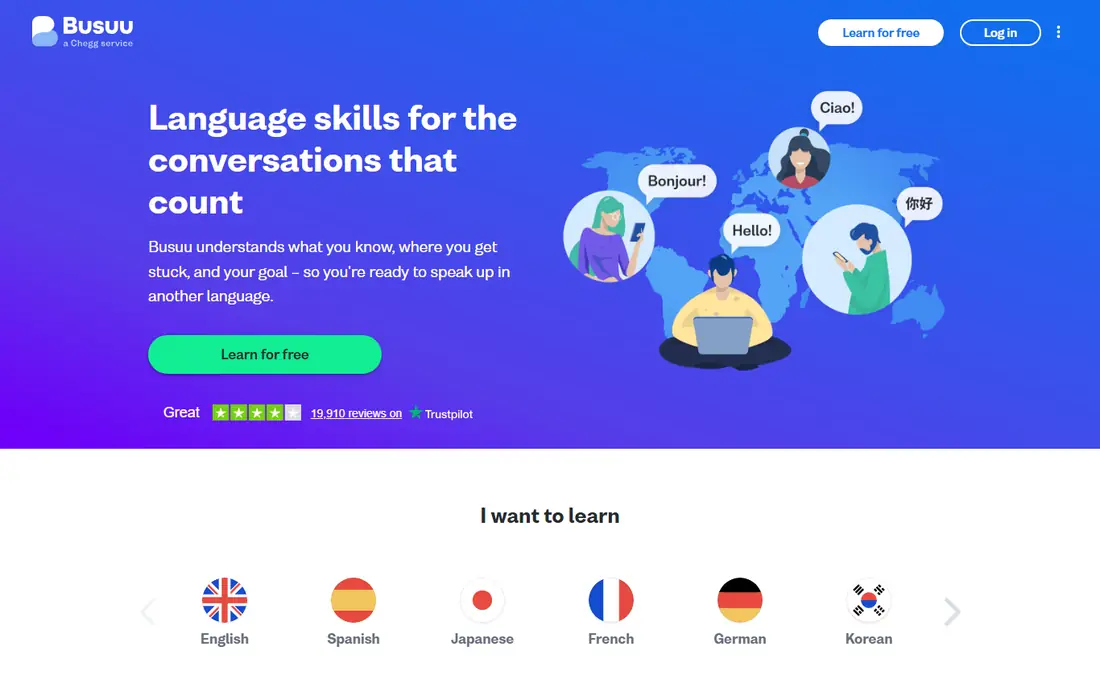
Busuu combines a structured course with a community that actually corrects your work. You complete lessons, then submit writing or speaking exercises for feedback from native German speakers, and you can return the favour for learners of your own language. That feedback loop is valuable for German, where a wrong case ending or word order can change meaning, and where a textbook alone rarely tells you why your sentence sounds odd.
The free tier gives a taste of the course, while Premium adds the full curriculum, offline mode, and grammar review, with recent listings showing annual plans from around $70 per year depending on the offer. Some levels offer certificates issued with McGraw Hill, which may help if you need proof of study for work or education. If you learn best when a real person corrects you, Busuu deserves a place alongside Babbel or Duolingo.
- CEFR-aligned German courses
- Community corrections from native speakers
- Certificates for completed levels
- Free tier is limited
- Premium pricing varies by plan and region
Memrise is best used as a vocabulary engine rather than a complete German course. Its core idea is simple: show you a word, show you a native speaker saying it in a real clip, then drill it with spaced repetition until it sticks. Hearing different voices, accents, and speeds helps you recognise German outside a classroom recording, which is a common weak spot for app-only learners.
The free tier covers core lessons, while Pro removes ads and adds extra learning modes, with recent app store listings showing around $24.99 per month or about $61.99 per year, so check your store before subscribing. Do not rely on Memrise alone for cases and sentence structure. Pair it with Babbel or Busuu for grammar, and use Memrise for the daily word load that makes reading and listening easier.
- Short videos of native speakers using words in context
- Spaced repetition for vocabulary
- Free core lessons
- Weaker as a full grammar course
- Paid pricing varies by store and region
Rosetta Stone takes the opposite approach to Babbel. It shows you pictures and German words together, with no English translation, and asks you to work out meaning from context. Pronunciation feedback helps you match sounds, and the method can build strong vocabulary intuition for learners who enjoy visual learning and dislike grammar drills.
That same method is its weakness for German. Cases, gender, and word order need explanation at some point, and Rosetta Stone does not give it, so many learners hit a wall around intermediate level. Recent listings show around $19.99 per month in the app or about $159 per year on the website, with a lifetime option also offered. Try the trial first, and be honest about whether immersion alone is teaching you, or whether you also need a grammar resource alongside it.
- Image-based immersion with no translation
- Pronunciation feedback
- Lifetime purchase option
- Grammar is never explained directly
- Weaker fit for German cases
- Higher price than many rivals
Pimsleur is built for people who learn by listening and speaking, not by tapping a screen. Each lesson runs about 30 minutes, prompts you to respond out loud, and builds phrases gradually so you can hold a basic conversation sooner than with a text-heavy app. It works well on a commute, a walk, or while doing chores, because you do not need to look at your phone for most of the lesson.
Recent app store listings show Pimsleur from about $20.99 per month, with annual options from around $131.99, so it is one of the pricier picks here. Reading and writing practice are lighter than in Babbel or Busuu, and the course tops out below advanced level. If speaking is your main goal, or if screen time is your barrier to practice, Pimsleur is worth the trial. Pair it with a reading app if you also need to handle German text.
- 30-minute audio lessons built for speaking
- Hands-free learning for driving and walking
- Strong pronunciation focus
- Among the pricier options
- Less reading and writing practice than course apps
Mondly suits learners who want a quick daily lesson without a heavy course structure. Lessons are short, topics are practical, and speech recognition gives you a chance to practise pronunciation and get instant feedback. It runs on phones, tablets, and the web, and a free version lets you try daily lessons before paying.
Recent app store listings show Mondly around $15.90 per month or about $74.90 per year, with a lifetime option sometimes offered, so check the current store page. German grammar depth is lighter than Babbel, and advanced learners will outgrow it sooner. As a second app for daily review, or as a low-pressure start for a complete beginner, Mondly is a solid choice.
- Bite-size daily lessons
- Speech recognition for pronunciation
- Covers many languages if you learn more than one
- Less depth on German grammar than Babbel
- Paid pricing varies by plan
LingQ is for learners who want to move beyond textbook sentences and into real German. You read and listen to articles, stories, and podcasts, tap unknown words to save them, and review them later with spaced repetition. You can also import your own texts, such as news articles or song lyrics, which keeps the material relevant to your interests.
The free plan has limits on saved words and features, while Premium adds full tracking and offline use, with recent listings around $14.99 per month or about $119.99 per year. LingQ is less structured than Babbel, so complete beginners may feel lost without a course to guide them. Once you know basic grammar and a few hundred words, LingQ becomes one of the best ways to grow vocabulary through reading and listening you actually enjoy.
- Learn from real German texts and audio
- Built-in dictionary and word tracking
- Import your own content
- Less structured than a course app
- Beginners may find real texts hard at first
Italki is not a course app, and that is why it belongs on this list. It connects you with professional teachers and community tutors for live video lessons, priced per lesson rather than by subscription, with recent listings showing lessons from a few dollars to much higher rates depending on the tutor. You can focus a lesson on conversation, grammar, exam preparation, or work German, and you get corrections in real time.
The trade-off is structure. Unless your tutor sets a curriculum, progress depends on what you ask for in each lesson, and tutor quality varies, so read reviews and book a trial lesson first. For most learners, the best mix is a course app for daily study plus one italki lesson per week for speaking. That combination covers the gap that no self-study app fully closes: holding a real conversation with a real person.
- One-to-one lessons with real German tutors
- Pay per lesson with no subscription
- Choose tutor by price, style, and availability
- Lesson prices vary widely by tutor
- No set curriculum unless your tutor provides one
How we picked these
We compared official feature and pricing pages, app store listings, and public reviews for apps that offer a real German course or German tutoring in October 2026. We included free, structured, audio-first, reading-based, and live-tutor options, because German learners have different goals and budgets. Prices shown are starting prices we could verify from recent listings; where pricing varied by plan, store, or region, we wrote See website rather than guessing a single number. We did not complete full courses ourselves, so this list reflects documented features and pricing, not personal course completion.
How to choose the right German app
Match the app to your weak spot
If you keep forgetting words, add Memrise or LingQ. If grammar confuses you, Babbel or Busuu will explain it better than Duolingo alone. If you can read German but cannot speak it, book italki lessons or try Pimsleur. A short honest check of what stops you, rather than a search for one perfect app, leads to a better mix.
Build a daily routine you will keep
Ten to twenty minutes a day beats two hours once a week for language learning. Pair a short lesson with something you already do, such as a morning coffee or a commute, and use streaks and reminders only if they help rather than stress you. If an app feels like a chore after two weeks, switch the app, not the goal.
Plan for speaking early
Reading and tapping exercises do not by themselves produce speaking skill. Start speaking in your first month, even if it is only repeating phrases aloud, recording yourself, or booking a low-cost tutor trial. Early speaking practice prevents the common trap of understanding a lot of German while being unable to say much in return.