Best Apps to Learn Italian in 2026: 9 Apps Compared
By ToolNimba Editorial Team October 30, 2026 8 min read

- Top pick
 Duolingo
Free daily habit building for beginners
Starting priceFreeCheck out DuolingoRead our review - Runner-up
 Babbel
Structured grammar and realistic dialogues
Starting price$6.95 per monthCheck out BabbelRead our review - Also great
 Pimsleur
Audio-first speaking confidence
Starting price$14.95 per monthCheck out PimsleurRead our review
How we researched this
We compared official pricing and feature pages, app store listings, privacy policies and public user reviews. Prices change, so check the provider's site before you pay.
Key takeaways
- Duolingo is the best free starting point, with gamified lessons that build a daily habit for beginners.
- Babbel is the best structured app, with grammar-focused lessons and realistic dialogues for Italian.
- Pimsleur is the best audio-first option, building speaking confidence through listening and repetition.
- italki is the best choice once you can hold basic conversations, with live tutors from around 4 dollars a lesson.
- No single app gets you to fluency: layer one core app with speaking practice and, ideally, weekly conversation with a real person.
Quick comparison
| Name | Best for | Starting price | Free plan | |
|---|---|---|---|---|
| Duolingo | Free daily habit building for beginners | Free | Yes | Visit |
| Babbel | Structured grammar and realistic dialogues | $6.95 per month | Free trial | Visit |
| Pimsleur | Audio-first speaking confidence | $14.95 per month | Free trial | Visit |
 italki | Live 1:1 tutoring with native speakers | See website | No | Visit |
 Rosetta Stone | Immersive learning without translation | $11.99 per month | Free trial | Visit |
 Busuu | Courses with native speaker feedback | Free | Yes | Visit |
 Memrise | Vocabulary with native speaker video | Free | Yes | Visit |
 Mondly | Gamified variety and chatbot practice | Free | Yes | Visit |
 Tandem | Free language exchange with native speakers | Free | Yes | Visit |
The best apps to learn Italian
Italian rewards learners who practice a little every day and speak early, and the apps below support different parts of that journey: habit building, grammar, audio, vocabulary, and live conversation. We compared pricing, teaching method, and what each app does best.
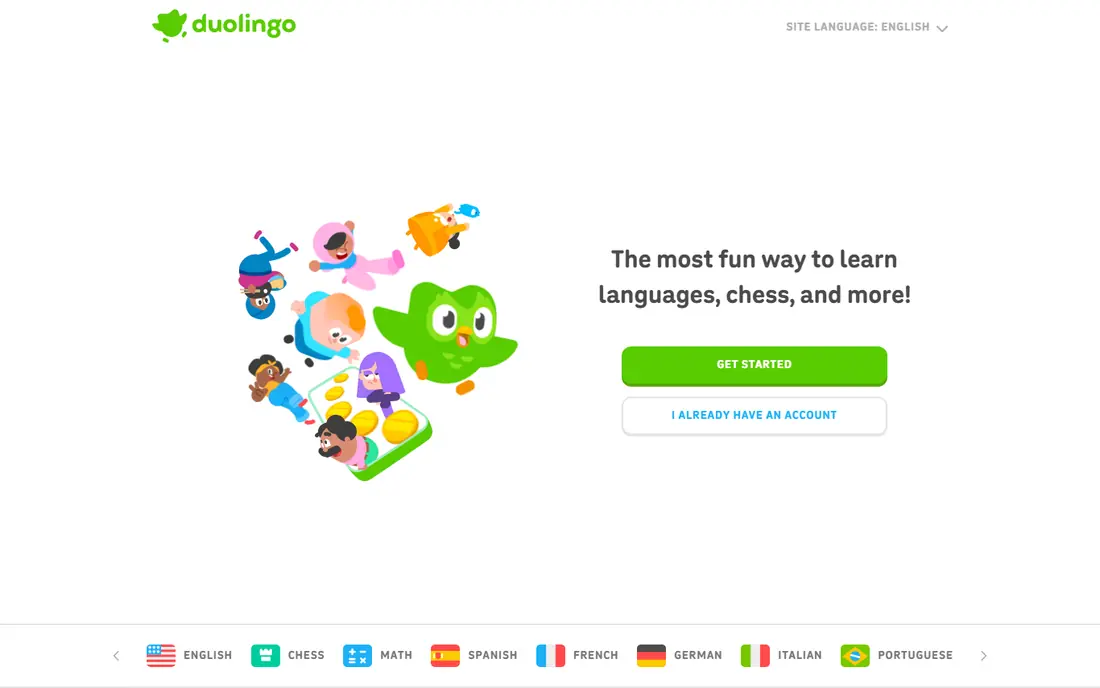
Duolingo is the most popular starting point for Italian, and its strength is habit: short, game-like lessons with streaks and reminders keep beginners practicing daily, which matters more than any single feature. The free tier covers the full course with ads, and Super from around 6.99 dollars a month removes ads and adds extras.
The ceiling is real: most learners plateau around a pre-intermediate level, where gamification substitutes for deeper learning. Use Duolingo to build vocabulary and a daily habit for your first months, then layer in Babbel, Pimsleur, or tutoring for real progress.
- Free and gamified
- Streaks keep you consistent
- Covers vocabulary and basic grammar
- Hits a ceiling around intermediate level
- Less speaking practice than tutors
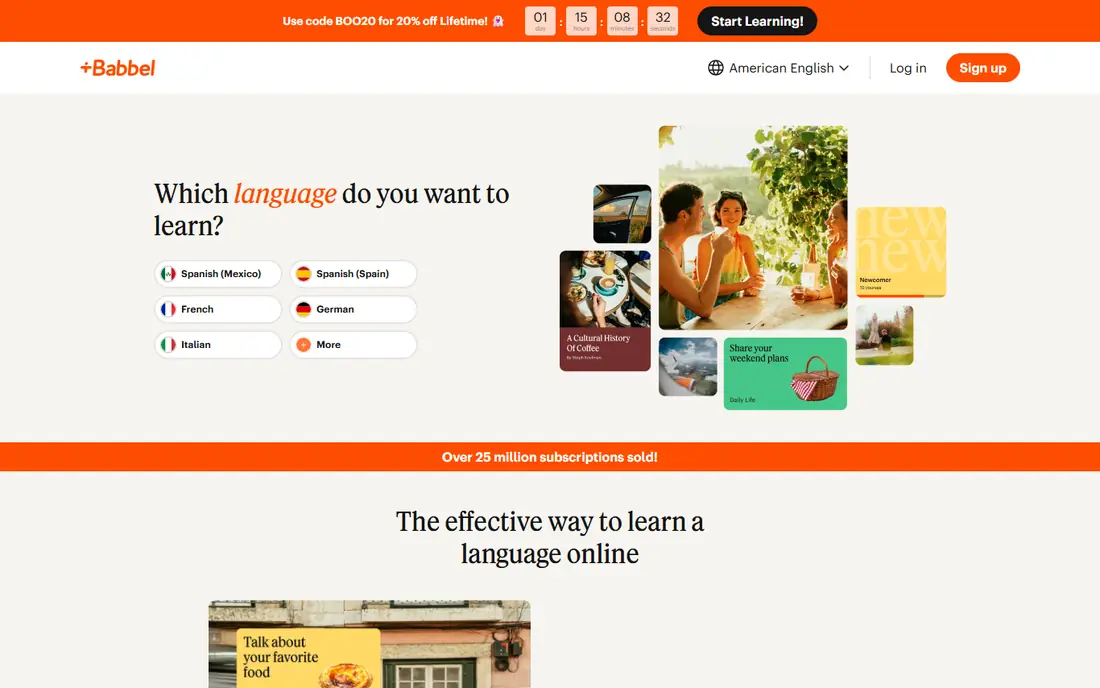
Babbel suits learners who want structure over games. Its Italian lessons teach grammar explicitly through realistic dialogues about travel, work, and daily life, with review sessions that reinforce what you learned. Annual plans bring the price to around 6.95 dollars a month, with monthly plans higher.
There is no full free tier, only the first lesson of each course, so you commit before you know if it fits. But for learners who want to understand why Italian works the way it does, not just memorize phrases, Babbel is the best structured app here.
- Grammar-focused lessons
- Realistic dialogues
- Italian content is strong
- No free tier beyond the first lesson
- Less gamified than Duolingo
Pimsleur teaches Italian the way you learned your first language: by listening and speaking, with no reading or writing at first. Its spaced repetition method builds pronunciation and speaking confidence faster than text-based apps, and audio lessons fit commutes, walks, and chores perfectly.
It is audio-only, so reading and writing need another tool, and plans run around 14.95 to 20.95 dollars a month. But for travelers and commuters who want to speak Italian soon, Pimsleur's conversational method is the most effective in this list.
- Excellent pronunciation training
- Conversational method
- Great for commuters
- Audio-only approach
- Higher monthly price
italki connects you with professional Italian teachers and community tutors for live video lessons, with prices set per tutor and lessons starting around 4 dollars. That live feedback is what apps cannot give: correction of pronunciation in real time, lessons adapted to your weak points, and real conversation under natural pressure.
You must schedule lessons and participate actively, and frequent tutoring costs add up. But once you reach a basic level, two or three italki sessions a week alongside app study will accelerate your Italian more than any app alone.
- Thousands of Italian tutors
- Lessons from around 4 dollars
- Personalized feedback
- Requires scheduling
- Costs add up with frequent lessons
Rosetta Stone teaches Italian without translation, using images, audio, and speech recognition to build associations directly in Italian. That immersive method suits learners who dislike grammar drills and prefer to absorb the language naturally, and a lifetime purchase option exists for committed learners.
The lack of grammar explanations frustrates learners who want rules, and progress can feel slow. But for patient, immersion-style learners, Rosetta Stone remains a respected and polished option.
- Immersive image-based method
- Speech recognition
- Lifetime option available
- No grammar explanations
- Slower for learners who want rules
Busuu combines structured Italian courses with a community feature: native speakers correct your written and spoken exercises, giving real feedback that automated apps cannot. The free tier covers basic courses, with Premium from around 5.83 to 9.99 dollars a month depending on billing.
Full courses need Premium, and its Italian community is smaller than Duolingo's. But for learners who want human feedback without paying for a tutor, Busuu's community corrections are a genuine advantage.
- Structured courses
- Feedback from native speakers
- Free tier available
- Premium needed for full courses
- Smaller Italian community than Duolingo
Memrise excels at vocabulary, using spaced repetition and short video clips of native speakers to teach words in real contexts. That video-first approach helps you recognize how Italians actually speak, not just how textbooks write, and core courses are free with a premium tier for full features.
Grammar teaching is lighter than Babbel, so Memrise works best as a companion app for vocabulary alongside a structured course. For building a large, usable Italian vocabulary, it is one of the best tools here.
- Spaced repetition for vocabulary
- Native speaker video clips
- Free core courses
- Less structured grammar teaching
- Premium needed for full features
Mondly offers gamified Italian lessons with a chatbot for conversation practice and augmented reality features that place vocabulary in your surroundings. That variety keeps practice fresh, and its daily lessons and challenges suit learners who get bored with one format.
Depth is less than Babbel or Pimsleur, and full access needs a premium plan from around 13 dollars a month. But for learners who want variety and a fun daily routine, Mondly is an engaging supplement to a core app.
- Gamified lessons with variety
- Chatbot conversation practice
- Augmented reality features
- Less depth than Babbel
- Premium needed for full access
Tandem pairs you with native Italian speakers who want to learn your language, for free conversation exchange by text, audio, or video. That real conversation practice is invaluable once you know basic Italian, and the community is large enough to find partners at most levels.
Partner quality varies, and Tandem is not a structured course, so you need another app for grammar and vocabulary. But as a free way to practice speaking with real Italians, Tandem is the best exchange app here.
- Free conversation exchange
- Large global community
- Text, audio, and video chat
- Quality depends on partners
- Not a structured course
How we picked these
We compared official pricing pages, teaching methods, and user reviews for Italian learning apps actively available in 2026. We favored apps with clear Italian courses and real speaking or feedback features, and we included free, structured, audio, and tutoring options. We did not claim hands-on testing; our comparison rests on published specifications, pricing, and public user reviews.
How to learn Italian faster with apps
Layer your tools. Use one core app daily for grammar and vocabulary, add an audio app like Pimsleur for speaking, and book a weekly italki or Tandem conversation once you can manage basic sentences. That combination covers input, output, and feedback, which no single app provides alone.
Also plan for travel or real use. If you are learning for a trip, focus on restaurant, hotel, and directions vocabulary in the weeks before you go, and practice speaking out loud, not just tapping answers. Apps build knowledge, but speaking builds fluency, and only real conversation closes that gap.
A short pilot with one small group usually reveals more than a long vendor comparison, so test your chosen option with real users before rolling it out widely.