Best Card Grading Services in 2026: 8 Services Compared
By ToolNimba Editorial Team October 30, 2026 11 min read

- Top pick
 PSA
Resale value and widest buyer recognition
Starting price$59.99 per cardCheck out PSARead our review - Runner-up
 CGC Cards
Budget TCG grading with an open entry tier
Starting price$20 per cardCheck out CGC CardsRead our review - Also great
 SGC
Vintage sports cards and a classic slab look
Starting price$50 per cardCheck out SGCRead our review
How we researched this
We compared official pricing and feature pages, app store listings, privacy policies and public user reviews. Prices change, so check the provider's site before you pay.
Key takeaways
- PSA still carries the widest buyer recognition, but its cheapest open tier in October 2026 is Standard at 59.99 dollars per card, with a long wait.
- CGC offers the lowest open entry price for a single card, with Economy at 20 dollars per card and Bulk at 17 dollars per card for 25 cards or more.
- SGC suits vintage sports cards and collectors who like its black-insert slab, with Standard at 50 dollars per card in recent October 2026 checks.
- Beckett remains the subgrade choice, but its Base and Standard tiers were paused and Express was the open route at 79.95 dollars per card.
- Always check the live service page before shipping, because tiers, prices, and turnarounds changed several times during 2026.
Quick comparison
| Name | Best for | Starting price | Free plan | |
|---|---|---|---|---|
| PSA | Resale value and widest buyer recognition | $59.99 per card | No | Visit |
| CGC Cards | Budget TCG grading with an open entry tier | $20 per card | No | Visit |
| SGC | Vintage sports cards and a classic slab look | $50 per card | No | Visit |
 Beckett (BGS) | Subgrades and Black Label chasing | $79.95 per card | No | Visit |
 TAG | A detailed digital report on each card | See website | No | Visit |
 AGS | Automated grading for modern cards | $15 per card | No | Visit |
 Arena Club | Grading plus a marketplace for graded cards | $15 per card | No | Visit |
 DCM Grading | A fast photo-based condition check | $2.99 per card | No | Visit |
The best card grading services
A grade does three jobs at once: it checks that a card is genuine, it records its condition on a set scale, and it seals the card in a labeled holder that buyers can trust. The right company depends on the card, on whether you plan to sell it, and on how long you can wait.
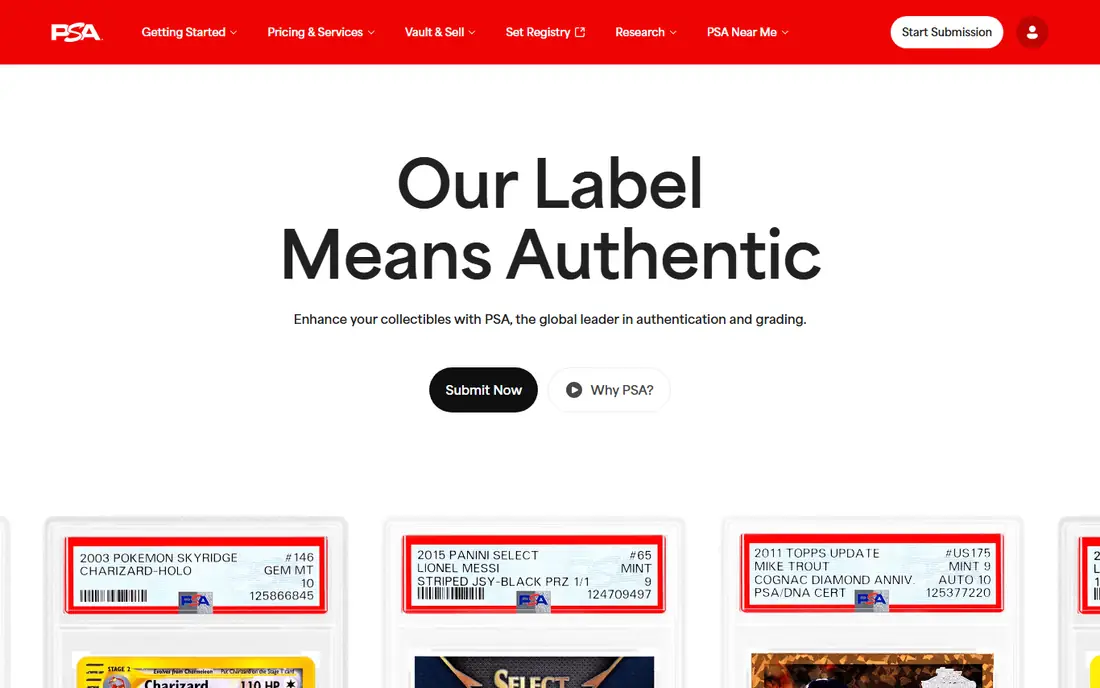
PSA is the default answer when resale value is the main goal. A PSA 10 tends to draw the widest set of buyers, and price guides and marketplaces key many listings to PSA population data. For vintage sports cards and high-demand trading cards, that buyer depth often outweighs a higher grading fee.
The catch in 2026 is access and wait. Recent October 2026 checks put Standard at 59.99 dollars per card with an estimated 90 to 100 business days, while cheaper Value tiers were paused. Add shipping, insurance, and any value-based upcharges to the fee before you decide. If the card is for a personal collection and not for sale, a cheaper grader may give you the same protection for less.
- Largest buyer pool and price-guide coverage
- Long-running population data for many sets
- Clear 1 to 10 scale that buyers know well
- Cheapest open tier is costly and slow in October 2026
- Value tiers were paused
- Membership can be needed for direct submissions
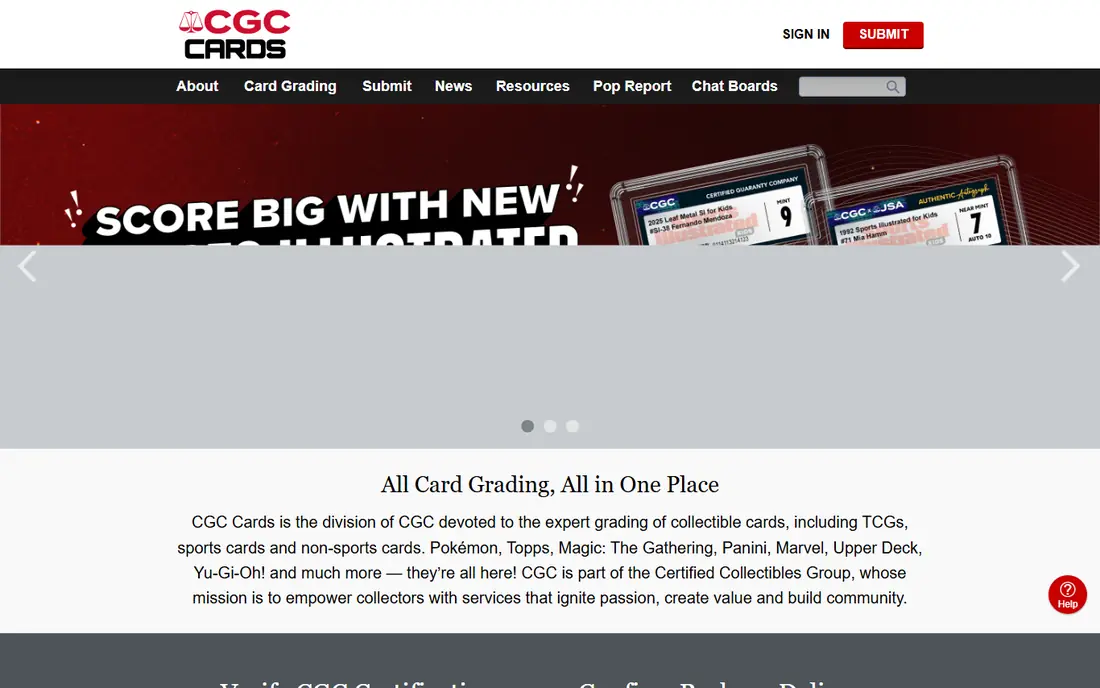
CGC Cards is the value pick for many trading card collectors, especially for Pokemon and other TCG sets. Economy at 20 dollars per card has no large minimum in recent checks, while Bulk at 17 dollars per card suits a larger submission. That gap matters when you grade ten or twenty modern cards at once.
Turnaround is the trade. Economy was listed around 90 business days and Bulk around 150 working days in October 2026 checks, so this is a patient collector's choice. If you need a card back for a show or a sale next month, pay for a faster tier or pick a different grader.
- Lowest open single-card price among the major mail-in graders in this guide
- Bulk tier at 17 dollars per card for 25 cards or more
- Separate Pristine 10 and Gem Mint 10 labels
- Long turnaround on Economy and Bulk tiers
- Resale prices often trail PSA for the same card and grade
SGC has a loyal following among vintage sports collectors, and the look of the slab is part of the appeal. The black insert frames older cards well, and the company has graded sports cards for decades. For a pre-war or mid-century card that will stay in a collection, SGC is a respected choice.
Price is the point to verify. Recent October 2026 checks put Standard at 50 dollars per card, a sharp rise from earlier 2026 pricing. That change makes SGC a harder value case for low-value modern cards, even though it remains a strong pick for vintage pieces where presentation matters.
- Distinct black-insert slab that many vintage collectors prefer
- Standard tier open in recent checks
- Clear 1 to 10 scale with a Pristine grade above Gem Mint
- Price rose during 2026, so older guides showing 15 dollars are out of date
- Turnaround of 40 or more business days on Standard
Beckett is the grader collectors choose when detail matters more than a single number. Subgrades show exactly where a card lost points, which helps buyers judge centering and surface with more confidence. A Black Label 10, with four 10 subgrades, is rare and can sell for a large premium over a standard top grade.
Access was limited in 2026. Base and Standard submissions were paused, and Express at 79.95 dollars per card with a 15 business day estimate was the open route in recent checks. Check the current service notice before you send anything, because Beckett's normal online flow was disrupted during the year.
- Four subgrades for centering, corners, edges, and surface on the label
- Black Label 10 for four perfect subgrades
- Strong fit for thick patch and autograph cards
- Base and Standard tiers were paused in 2026
- Express at 79.95 dollars per card is the costly open route
- Website disruption affected normal online submissions
TAG takes a different approach from the older graders. Each card gets a digital report with images and notes on flaws, so you can see why a card earned its grade instead of trusting a single number. For a modern collector who wants that detail, the report is genuinely useful.
Availability is the problem to check first. Recent October 2026 reports described limited drops and higher prices for open slots, with cheaper tiers paused. That makes TAG hard to recommend as a routine bulk grader right now, even though its report format stands out. Confirm what is open, and at what price, before you plan a submission around it.
- Machine-assisted grading with a photo-backed digital report
- Clear flaw-by-flaw detail for modern cards
- Distinct slab and report format
- Usual lower tiers were limited or paused in 2026
- Availability through limited drops in recent checks
- Modern-card focus limits vintage fit
AGS, short for Automated Grading Systems, uses machine-assisted grading to keep prices low and turnarounds shorter than the big mail-in graders. Published pricing in 2026 roundups put bulk near 15 dollars per card and standard near 18 dollars per card, with faster tiers available for a higher fee. For modern cards in a personal collection, that price is attractive.
Resale is the limit. Fewer buyers search for AGS slabs, so a graded card may not carry the same premium as a PSA or CGC slab when you sell. Use AGS when protection, a consistent grade, and cost matter more than maximizing resale, and check card eligibility first.
- Low entry price for eligible modern sports and major TCG cards
- Automated process with published turnaround tiers
- Bulk pricing for larger submissions
- Smaller buyer pool than PSA or CGC
- Eligibility limits mean not every card type is accepted
Arena Club blends grading with a place to show and trade graded cards. That combination suits collectors who buy, grade, and sell in one flow, rather than shipping cards between separate grading and marketplace accounts. The entry price near 15 dollars per card in 2026 roundups keeps it in the budget range for modern submissions.
The trade is history. Arena Club does not carry the decades of population data and buyer habit that PSA and SGC carry. If you grade mainly to sell at the highest price, that gap matters. If you grade to collect, display, and trade within its platform, the combined service is a practical option.
- Grading tied to a marketplace and digital showcase for graded cards
- Entry price near 15 dollars per card in 2026 roundups
- Useful for collectors who trade often
- Newer grading brand with a smaller resale track record
- Marketplace features matter less if you never plan to sell
DCM Grading is not a mail-in grader, and that distinction matters. You upload photos, get a computer-vision condition grade and report, and apply a printable label to a holder you already own. It costs a few dollars and takes about a minute, which makes it a smart pre-screen before you pay 20 to 80 dollars for a slab.
Do not confuse it with authentication. A DCM report does not seal a card, does not verify that it is genuine in the way a mail-in grader does, and will not carry the same weight with buyers. Use it to decide which cards are worth sending to PSA, CGC, or SGC, and to catch surface or centering flaws early.
- Grade and report in about a minute from photos
- Single credit near 2.99 dollars, with lower per-card cost in packs
- Useful pre-screen before paying for a slab
- No physical slab and no authentication
- Not a substitute for a mail-in grade when selling
- Report is a condition assessment, not an official slab grade
How we picked these
We compared official service and pricing pages, plus dated October 2026 roundups that recorded which tiers were open, paused, or limited at the time of checking. We kept only services that grade real trading or sports cards and are live in 2026, including one photo-based pre-screen that is clearly labeled as different from a slab. Where sources disagreed because prices changed during the year, we used the most recent October 2026 figures and noted that tiers were paused or limited. Prices exclude shipping and insurance unless stated, and they change, so check the grader's own page before you ship.
How to choose the right grader for your card
Start with the goal for the card. A card you will sell soon needs the grader with the strongest buyer demand for that set. A card for your own collection can go to a cheaper grader with a slab you like, because resale premium matters less.
Match the grader to the card type
Vintage sports cards fit PSA and SGC best, because buyers in that market trust those slabs and price guides. Modern Pokemon and TCG cards fit CGC well on cost, while Beckett fits cards where subgrades and centering detail affect value. TAG and AGS fit modern cards where a detailed report or a low fee matters more than legacy resale.
Work out the all-in cost, not just the fee
Add two-way shipping, insurance, supplies, and any membership or value upcharge to the per-card fee. A 20 dollar grade can become 30 dollars or more all-in for a single card, while a bulk submission spreads shipping across many cards. If the graded sale price, minus all costs, is not clearly above the raw sale price, keep the card raw or use a photo pre-screen first.
Check turnaround against your timeline
A 90 to 150 day wait is normal on budget tiers in 2026. If you need a card for a show, a gift, or a sale, pay for a faster tier or choose a grader with a shorter published estimate. Published turnarounds are estimates, not guarantees, and backlogs can extend them.
Sources
- https://www.psacard.com/services/tradingcardgrading
- https://www.cgccards.com/submit/services-fees/cgc-grading/
- https://www.gosgc.com/card-grading/services-pricing
- https://www.beckett.com/grading-pricing-turnaroundtimes
- https://taggrading.com/pages/pricing
- https://info.agscard.com/pricing
- https://arenaclub.com/submit
- https://dcmgrading.com/card-grading-companies
- https://dcmgrading.com/blog/how-much-does-it-cost-to-grade-a-pokemon-card