Best Cellular Service in 2026: 10 Services Compared
By ToolNimba Editorial Team October 30, 2026 12 min read

- Top pick
 Verizon
Widest reliable coverage
Starting price$65 per monthCheck out VerizonRead our review - Runner-up
 AT&T
Strong nationwide coverage with perks
Starting price$50 per monthCheck out AT&TRead our review - Also great
 T-Mobile
Fast 5G and strong value
Starting price$25 per monthCheck out T-MobileRead our review
How we researched this
We compared official pricing and feature pages, app store listings, privacy policies and public user reviews. Prices change, so check the provider's site before you pay.
Key takeaways
- The cheapest unlimited plans now run $25 per month on the same major networks, far below big-carrier single-line prices.
- Coverage depends on the network at your home, work, and commute, not on a national ranking alone.
- Prepaid and low-cost carriers often lower your data priority when a tower is busy, which matters in crowds and at peak times.
- Taxes and fees change the real price, so compare the total monthly bill, not just the advertised rate.
Quick comparison
| Name | Best for | Starting price | Free plan | |
|---|---|---|---|---|
| Verizon | Widest reliable coverage | $65 per month | No | Visit |
| AT&T | Strong nationwide coverage with perks | $50 per month | No | Visit |
| T-Mobile | Fast 5G and strong value | $25 per month | No | Visit |
 US Mobile | Choosing among all three networks | $25 per month | No | Visit |
 Mint Mobile | Prepaid savings for a year upfront | $30 per month | No | Visit |
 Google Fi Wireless | Flexible plans and travel | $20 per month | No | Visit |
 Visible | Simple Verizon unlimited | $25 per month | No | Visit |
 Cricket Wireless | AT&T coverage with stores | $35 per month | No | Visit |
 Metro by T-Mobile | In-store help on T-Mobile | $30 per month | No | Visit |
 Consumer Cellular | Simple plans and US-based support | $20 per month | No | Visit |
The best cellular service
There is no single winner for every address, budget, and family size. The best cellular service is the one that works where you live, gives you enough high-speed data, and charges a total price you can live with. We compared official plan pages, coverage claims, and public plan comparisons to build this list.
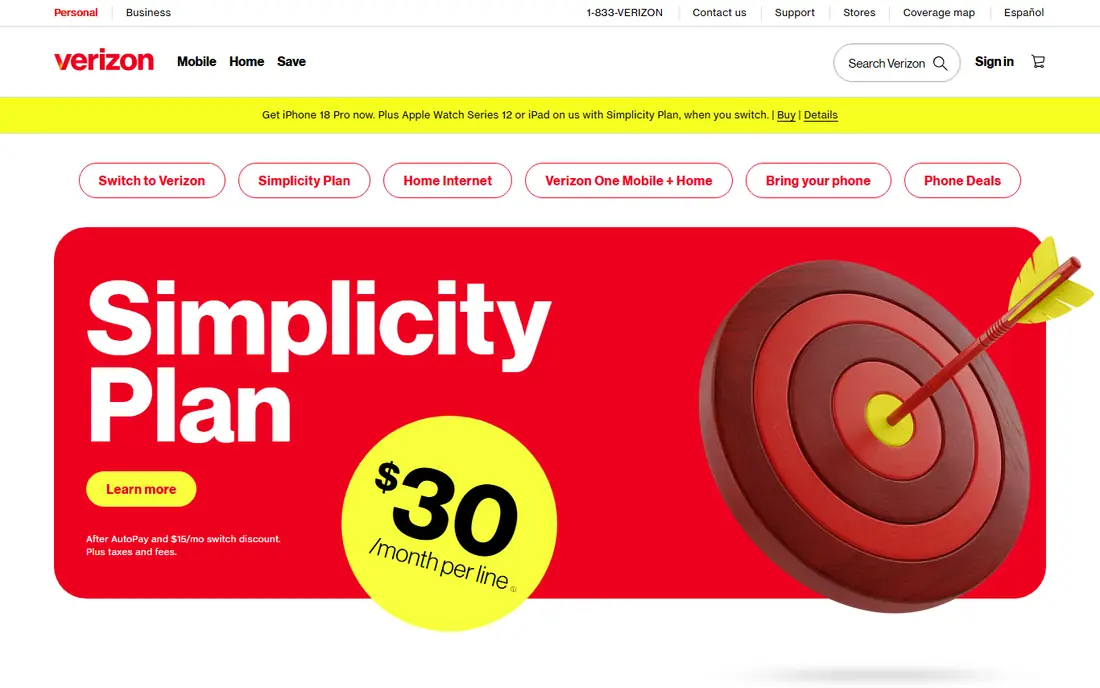
Verizon remains the safe pick when coverage matters more than saving $20 per month. Its network reaches many rural towns, highways, and buildings where smaller carriers struggle, and its premium unlimited plans include generous high-speed data and hotspot allowances. For people who travel for work, live outside a city, or need a phone that simply works in more places, that reliability is the main reason to pay more.
The downside is price. A single unlimited line can cost $65 per month or more before taxes and fees on some plans, and perks often require higher tiers. Verizon does offer cheaper options and multi-line discounts, so a family can bring the per-line cost down. If you live in a strong T-Mobile or AT&T area and rarely leave town, a cheaper carrier on that network may serve you just as well.
- Very broad nationwide coverage, including rural areas
- Strong 5G Ultra Wideband in many cities
- Good family and perk options
- Higher single-line prices than low-cost rivals
- Taxes and fees are added on many plans
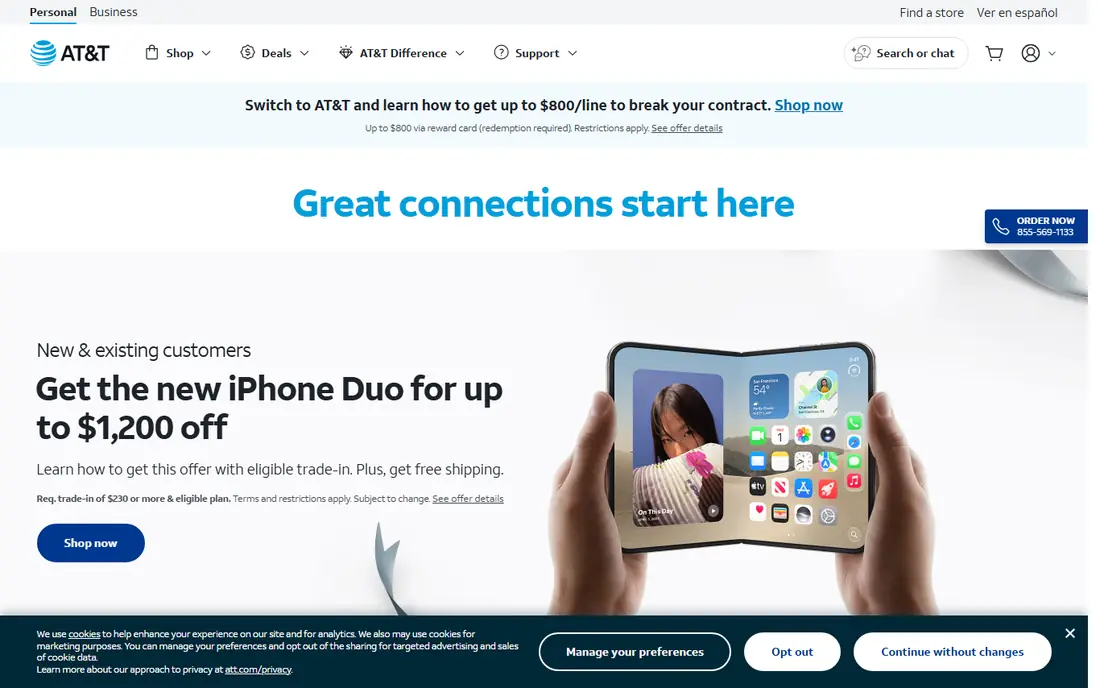
AT&T sits between Verizon on coverage and T-Mobile on price in many comparisons. Its network covers most of the country, its 5G speeds are competitive in cities, and its unlimited plans include hotspot data and streaming perks on higher tiers. For households that already use AT&T internet or TV, bundling can also lower the total bill.
Check the fine print before you choose a tier. Lower-cost AT&T plans include less high-speed data and fewer perks, and the advertised price often assumes autopay and paperless billing. AT&T is a good fit for families and professionals who want a major carrier, broad coverage, and in-store support, without paying Verizon-level prices for every line.
- Broad national coverage
- Solid 5G performance
- Useful bundling with home internet in some areas
- Single-line prices are higher than prepaid rivals
- Plan names and perks change often
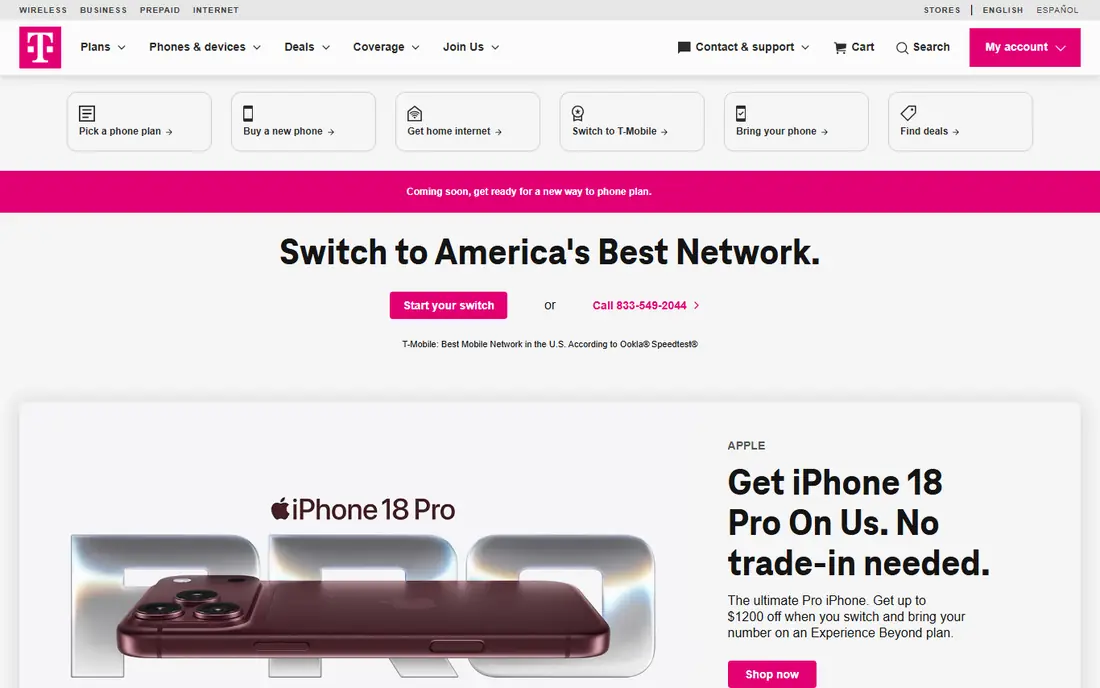
T-Mobile has become the value leader among the big three, especially for city and suburban users. Its mid-band 5G network delivers fast speeds for video, maps, and video calls in many metro areas, and its Essentials Saver plan has been listed at $25 per line for four lines. Many T-Mobile plans also include taxes and fees, which makes the advertised price closer to the real bill.
Rural coverage is the main watch point. T-Mobile has improved greatly, but some rural roads and small towns still favor Verizon or AT&T. If you spend most of your time in or near a city, T-Mobile often gives you the best mix of speed, price, and perks. Test coverage at your home and workplace during a trial or with a prepaid SIM before you port a main number.
- Fast mid-band 5G in many cities
- Taxes and fees included on many plans
- Strong family pricing
- Rural coverage can lag Verizon in some areas
- Higher tiers are needed for the best perks
US Mobile is the most flexible low-cost carrier on this list because it is not tied to one host network. You can choose the network that works best at your address, and switch networks later if coverage changes. Its Unlimited Starter plan is listed at $25 per month with taxes included, and its Unlimited Premium plan at $44 per month adds far more premium data and hotspot use.
That flexibility comes with a learning curve. Data priority, hotspot limits, and perks can differ by the network you pick, so read the plan details for your chosen network. US Mobile suits shoppers who know which network works at home, want a low total price, and are comfortable managing an account online rather than in a store.
- Lets you pick Verizon, AT&T, or T-Mobile networks
- Taxes and fees included
- Flexible plans from light data to unlimited
- Online-only support for most customers
- Premium data amounts vary by network
Mint Mobile rewards commitment. Its Unlimited plan costs $30 per month when you prepay for 12 months, and its smaller data plans start lower. Service runs on the T-Mobile network, so speeds and coverage match T-Mobile in most places, with the usual prepaid priority difference when towers are busy.
The catch is cash upfront. Paying for a year at once is a real commitment, and the monthly price rises if you choose a shorter term. Mint is a strong pick for a single user who is confident about T-Mobile coverage, wants a low monthly equivalent, and does not need in-store help. If you move often or need a family plan with mixed lines, compare US Mobile or a major carrier first.
- Low unlimited price when paid for 12 months
- Runs on T-Mobile network
- New-customer intro offers are often lower
- Requires bulk prepayment for the best price
- Taxes and fees are added
Google Fi Wireless uses the T-Mobile network and adds a flexible option that many carriers no longer offer. On Flexible, you pay $20 per month for unlimited calls and texts, plus $10 per gigabyte of data up to a cap, which suits light data users. Its Unlimited plans add more high-speed data, hotspot use, and international features for travelers.
Fi is less compelling if you use a lot of data every month, since dedicated unlimited carriers can be cheaper. It shines for people who use Wi-Fi most of the day, travel abroad, or want one simple account for a family with mixed usage. Check international rates and data priority for your plan, since both vary by tier.
- Flexible plan charges only for data used
- Good international coverage on higher plans
- Simple billing for families
- Best value depends on T-Mobile coverage
- Unlimited plans cost more than some rivals
Visible is Verizon's low-cost brand, and its pitch is simple. The base Visible plan costs $25 per month with taxes and fees included, with unlimited data on the Verizon network and no annual contract. There is no store visit, no complex tier chart, and no surprise fee at checkout for most customers.
The trade-offs are support and priority. Help is online, hotspot speeds are limited on the base plan, and data can slow behind Verizon postpaid customers when a tower is crowded. Visible Plus adds faster 5G access and more hotspot data for a higher price. Visible is our pick for a single user who wants Verizon coverage at a prepaid price and is comfortable managing everything in an app.
- Taxes and fees included
- Unlimited data on Verizon network
- No annual contract
- Online-only support
- Hotspot speeds are capped on the base plan
Cricket Wireless gives AT&T coverage without AT&T postpaid prices or complexity. Plans start at $35 per month, taxes are included on many plans, and you can walk into a store for activation, a new phone, or help with a problem. That store access matters for customers who do not want to troubleshoot a SIM swap alone.
Speed caps and priority are the limits to check. Some Cricket plans cap download speeds, and data may slow behind AT&T customers during congestion. For everyday use, calls, maps, and video, most customers will not notice. Cricket suits families and first-time smartphone buyers who want AT&T coverage, a predictable bill, and a person to talk to.
- Runs on AT&T network
- Taxes included on many plans
- Real stores for help and activation
- Data speeds can be capped on some plans
- Premium data is lower than AT&T postpaid
Metro by T-Mobile is the store-based version of a T-Mobile prepaid plan. It starts at $30 per month, includes taxes on many plans, and offers unlimited options with hotspot data and perks on higher tiers. If you like to buy a phone in person, get help porting a number, or ask a question face to face, Metro is easier than an online-only carrier.
Like other prepaid brands, Metro data can slow when T-Mobile postpaid customers fill a tower. That effect is strongest at stadiums, festivals, and rush hour in dense areas. Metro fits city and suburban users on a budget who want T-Mobile speeds, a store nearby, and no annual contract.
- Runs on T-Mobile network
- Taxes included
- Stores nationwide for support
- Data priority is lower than T-Mobile postpaid
- Higher unlimited tiers cost more
Consumer Cellular is built for people who want a phone plan without jargon. Plans start at $20 per month for a basic data plan, and its unlimited talk, text, and data plan is listed at $35 per month. Service runs on the AT&T network, and the company is often praised in public reviews for patient, US-based support, which matters for older adults and first-time smartphone owners.
Heavy data users may find better value elsewhere, since premium data and hotspot allowances are modest compared with US Mobile or Visible. Consumer Cellular is a strong pick for light to moderate users, seniors, and anyone who values clear billing and a helpful support call over the lowest possible price.
- Simple plans with no contract
- Known for helpful customer support
- Good for light and moderate users
- Unlimited plan costs more than some rivals
- Less generous hotspot on lower plans
How we picked these
We compared official carrier plan pages, coverage descriptions, and independent plan comparisons published in 2026. We kept only carriers that operate in the United States today, that offer a clear single-line or family price, and that run on one of the three national networks or operate as one of those networks. We focused on total monthly cost, high-speed data, hotspot rules, taxes, and support, rather than only the advertised headline rate.
How to choose the right carrier
A carrier ranking cannot replace a coverage check at your address, so use this short guide before you switch.
Check coverage where you actually live
Ask friends or neighbors which carrier works at your home, and use each carrier's coverage map as a starting point, not a promise. If possible, test a prepaid SIM or a trial line for a week. Pay attention to indoor signal, not just a map color, since building materials and terrain change real performance.
Match data to your real use
Light users who stay on Wi-Fi can save with a small data plan or a flexible plan. Heavy video users need a plan with a large premium data allowance, not just the word unlimited. Read the hotspot cap too, since many plans slow hotspot speeds or cap hotspot data well below phone data.
Compare the total bill
Add taxes, fees, autopay conditions, and multi-line discounts. A $25 plan with taxes included can cost less than a $30 plan that adds fees. For families, divide the total family bill by the number of lines, since per-line pricing often drops sharply with four lines.
Sources
- https://www.verizon.com
- https://www.att.com
- https://www.t-mobile.com
- https://www.usmobile.com
- https://www.mintmobile.com
- https://fi.google.com
- https://www.visible.com
- https://www.cricketwireless.com
- https://www.metrobyt-mobile.com
- https://www.consumercellular.com
- https://www.whistleout.com/CellPhones/Guides/Best-cell-phone-plans
- https://www.usmobile.com/blog/best-cell-phone-plans-august-2026/