Best Coin Value App in 2026: 9 Apps Compared
By ToolNimba Editorial Team October 30, 2026 10 min read

- Top pick
 CoinSnap
Fast photo identification
Starting priceFreeCheck out CoinSnapRead our review - Runner-up
 Coinoscope
Photo identification and valuation
Starting priceFreeCheck out CoinoscopeRead our review - Also great
 CoinIn
Simple scanning and sets
Starting priceFreeCheck out CoinInRead our review
How we researched this
We compared official pricing and feature pages, app store listings, privacy policies and public user reviews. Prices change, so check the provider's site before you pay.
Key takeaways
- Photo scanners are fastest for an unknown coin, while price guides and auction records are better for checking what a known coin may sell for.
- CoinSnap and Coinoscope lead for quick photo identification, and PCGS CoinFacts leads for detailed United States coin research.
- No app can give a final sale price, because condition, mint mark, and demand change value coin by coin.
- Numista is our pick for world coins and collection tracking, since its catalogue covers many countries and periods.
- Check at least two sources before you sell, and get a dealer opinion for any coin that looks rare or valuable.
Quick comparison
| Name | Best for | Starting price | Free plan | |
|---|---|---|---|---|
| CoinSnap | Fast photo identification | Free | Yes | Visit |
| Coinoscope | Photo identification and valuation | Free | Yes | Visit |
| CoinIn | Simple scanning and sets | Free | Yes | Visit |
 Numista | World coin catalogue | Free | Yes | Visit |
 PCGS CoinFacts | United States coin research | Free | Yes | Visit |
 NGC Coin Explorer | Certified coin lookup | Free | Yes | Visit |
 Heritage Auctions | Auction prices | Free | Yes | Visit |
 Greysheet | Dealer-level price data | See website | No | Visit |
 USA Coin Book | United States values and selling | Free | Yes | Visit |
The best coin value apps
A good coin value app first names the coin, then helps you judge condition and compare recent prices. The nine options below cover photo scanning, reference catalogues, grading data, and auction results.
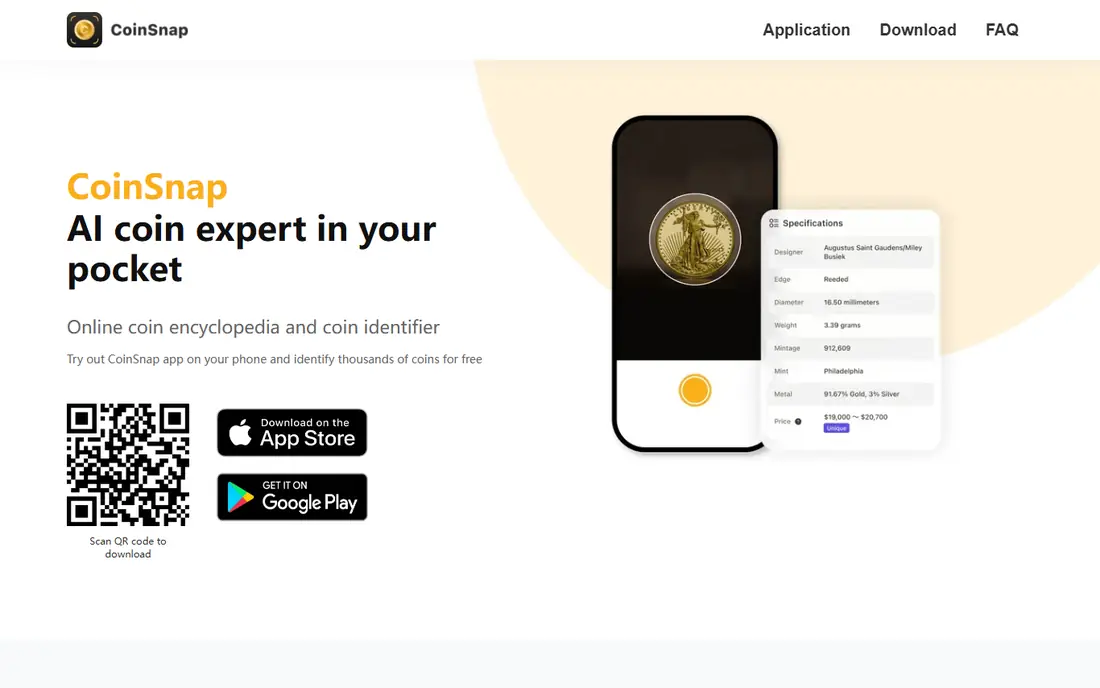
CoinSnap suits a beginner who found a coin in change, a drawer, or an inherited box and wants a fast answer. You take a photo, review the match, and save the coin to a folder so a growing collection stays in one place. The series view helps you see gaps and totals without a spreadsheet, and that structure is useful when a collection starts to grow past a few dozen pieces.
The honest limit is the estimate itself. A photo cannot prove grade, wear, cleaning, or a rare variety with certainty, so a wide price range should be read as a starting point, not a sale price. Check the year, mint mark, and condition notes against a second source, and treat any very high estimate with care until a dealer or grading guide confirms the details.
- Quick photo scan
- Collection folders by series
- Estimated value shown for identified coins
- Estimates are broad for some coins
- Full features sit behind a paid plan
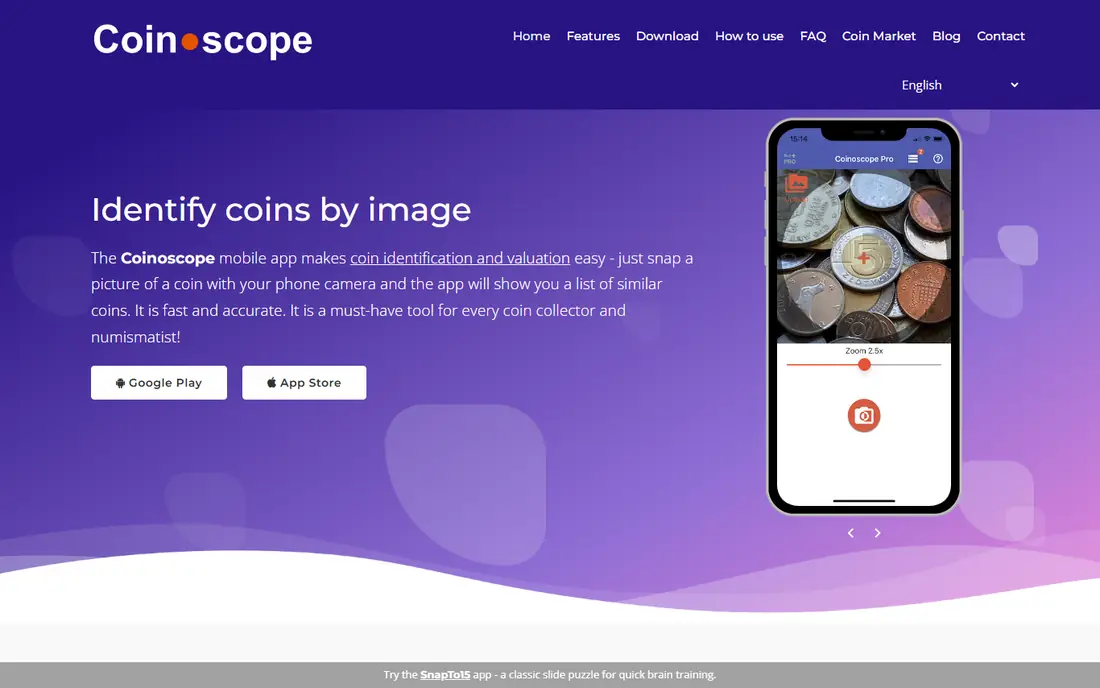
Coinoscope has been around long enough to build a large image-based search base, and that history shows in its handling of common world coins. The app returns similar coins from a photo, lets you save results, and offers an estimate feature that points you toward further collector information. For a traveler or a casual collector, that mix of speed and breadth is hard to beat.
The trade-off is that free use includes ads and some limits, and a poor photo can still produce a wrong match. Good lighting, a plain background, and photos of both sides give the search a much better chance. If the first match looks wrong, try a second photo or search by country and year before you accept a value.
- Image search for many world coins
- Collection saving
- Value estimate feature
- Needs an internet connection
- Ads appear in the free version
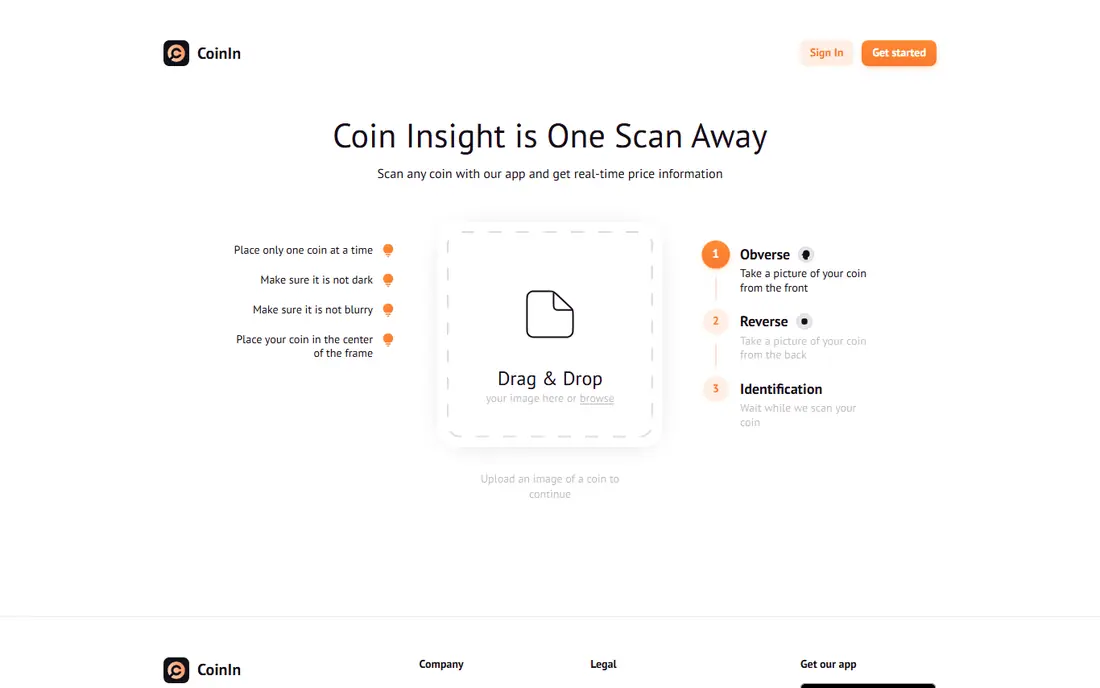
CoinIn takes a friendly approach, with scans of the front and back, a guide entry for each coin, and collections you can sort by theme. The official sets, including United States quarters and presidential dollars, give new collectors a clear goal and a reason to keep checking change. That guided structure makes it a good choice for families and for people who like completing a set.
Value figures here are reference prices, not offers, and the same caution applies as with other scanners. A coin in worn condition will not match the price of a sharp, uncirculated example of the same type. Use the guide details on size, weight, and mint year to confirm the match, then compare with a price guide before you decide to keep or sell.
- Photo scanning for both sides
- Multiple collections
- Guided coin sets
- Official website is limited
- Premium access is needed for full features
Numista is our pick when the coin is not from the United States, or when you want to manage a serious collection. Its community-built catalogue covers coins and banknotes from many countries and periods, with search filters for year, metal, and type. You can record your own pieces, add photos and notes, and look for swap partners, which makes it more than a price checker.
The main weakness is the learning curve. New users may need time to find the right catalogue entry, especially for coins with similar designs or inscriptions in another script. The forum helps here, since members often help with identification, but answers take longer than a photo scan. For depth and world coverage, though, few free tools come close.
- Very broad world catalogue
- Collection and swap tools
- Active forum
- No photo scanner as the main tool
- Interface takes time to learn
PCGS CoinFacts reads like an encyclopedia for United States coins, with history, varieties, price guide values, population by grade, and auction results in one place. If you already know the coin type, this is where you check how grade changes value and how often a coin appears at auction. High-quality photos also help you compare details such as mint marks and design differences.
Beginners may find the depth a lot at first, and world coin collectors will need another source. The value in CoinFacts comes from pairing it with a scanner: identify the coin quickly, then use CoinFacts to study the exact series, grade range, and sales history. That two-step check gives a much firmer sense of value than a single estimate.
- Deep United States coin data
- Price guide values
- Population and auction data
- Focus is mainly United States coins
- Some detail suits advanced collectors
NGC Coin Explorer is most useful when a coin is already graded and sealed, or when you want to verify a certification number before a purchase. You can look up coin types, check details, and use the grading context to understand why two coins of the same type can carry very different prices. That verification step matters in a market where counterfeits and altered coins exist.
Uncertified coins get less from this tool, since the strongest features tie to the grading record. For raw coins from change, start with a scanner or catalogue, then turn to NGC when you are weighing grading, buying a certified piece, or checking a seller claim. The combination keeps you from paying a certified price for an uncertified coin.
- Certification verification
- Coin details by type
- Grading context
- Best for certified coins
- Value detail varies by coin
Heritage Auctions gives you real sale results, which is the closest thing to market truth for many collectible coins. Past lots show photos, grades, descriptions, and hammer prices, so you can compare a coin like yours with coins that actually sold. Current auctions also show what similar pieces are listed for right now, which helps if you plan to sell.
Auction results still need careful reading. A price may reflect a rare variety, a top grade, or strong bidding on the day, and fees can change the total a buyer paid. Use several comparable lots, not the single highest result, and note grade and condition closely. For a realistic selling range, auction history beats a single app estimate.
- Large archive of past auction results
- Current auctions
- Detailed lot photos
- Auction prices include buyer fees in some cases
- Not a simple scanner
Greysheet has served dealers and serious collectors since 1963, and its price data reflects wholesale and dealer levels rather than retail hopes. That makes it a useful check when you want to know what a dealer might pay, which is often lower than a retail listing. The catalogue is large, and auction records add context for rarer pieces.
The downside is access and tone. Full data sits behind paid plans, and the site is built for people who already know coin series and grades. Beginners may find it dense, and it is not a photo scanner. If you sell often, or you hold higher-value coins, the dealer-level view is worth the cost. If you only check a few coins a year, a free guide plus auction results will do.
- Long-running dealer price data
- Large catalogue
- Auction records
- Paid access for full data
- Layout suits dealers more than beginners
USA Coin Book combines a United States price guide with a marketplace, so you can move from checking a value to seeing what sellers ask for similar coins. Values by grade help you see why condition matters, and collection tracking keeps your holdings organized. For United States collectors, that blend of guide and market is practical and easy to use.
Marketplace listings are asking prices, not completed sales, so a high listing does not prove a coin will sell for that amount. Compare listings with auction results and guide values, and watch for grade differences in photos and descriptions. Used that way, USA Coin Book is a solid final check before you list a coin or make an offer.
- United States coin values by grade
- Marketplace listings
- Collection tracking
- Focus is United States coins
- Marketplace prices vary by seller
How we picked these
We compared official feature pages, pricing pages, app store listings, privacy policies, and public reviews. We favored tools that clearly identify coins, give reference values or sale history, and work for either United States or world coins. We did not claim hands-on testing, and we dropped any suggested tool we could not verify as a real, current product.
What to check before you trust a coin value
A single estimate is never enough, because value rests on identity, condition, rarity, and demand at the same time. Start with identity, confirm the year and mint mark, then judge wear, cleaning, damage, and eye appeal. A coin with a scratch, a harsh cleaning, or heavy wear will fall well below a mint-state example, even when the type matches.
Use two sources, then a human check
Pair a scanner with a price guide or auction archive, and look for the same coin in the same grade range. If the two sources disagree by a wide margin, the lower, better-documented figure is usually safer. For any coin with a high estimate, a local dealer, a coin show, or a grading service can confirm variety and condition before you sell or insure it.
Selling a coin you found
Do not clean a coin you think may be valuable, since cleaning can lower value and is hard to reverse. Photograph both sides in good light, note the weight and diameter if you can, and keep the coin in a holder that prevents further wear. When you sell, compare dealer offers with auction results, and get more than one quote for anything above a modest value.