Best Delivery App to Work For in 2026: 10 Apps Compared
By ToolNimba Editorial Team October 30, 2026 11 min read

- Top pick
 DoorDash
Flexible food delivery in most cities
Starting priceFreeCheck out DoorDashRead our review - Runner-up
 Uber Eats
Flexible delivery by car, bike, or foot
Starting priceFreeCheck out Uber EatsRead our review - Also great
 Instacart
Grocery shopping and delivery
Starting priceFreeCheck out InstacartRead our review
How we researched this
We compared official pricing and feature pages, app store listings, privacy policies and public user reviews. Prices change, so check the provider's site before you pay.
Key takeaways
- DoorDash and Uber Eats offer the most flexible start for new drivers, with no scheduled blocks required and wide order volume in most cities.
- Amazon Flex offers the most predictable pay per block, while Instacart and Shipt can pay more per order for shoppers willing to handle groceries.
- Spark Driver, Grubhub, Roadie, GoPuff, and Favor Delivery suit drivers who want grocery, scheduled, package, or local delivery work instead of restaurant orders.
- Pay varies by market, tips, and demand, and no app guarantees earnings, so track your pay after fuel, maintenance, and taxes before judging any app.
Quick comparison
| Name | Best for | Starting price | Free plan | |
|---|---|---|---|---|
| DoorDash | Flexible food delivery in most cities | Free | Yes | Visit |
| Uber Eats | Flexible delivery by car, bike, or foot | Free | Yes | Visit |
| Instacart | Grocery shopping and delivery | Free | Yes | Visit |
 Grubhub | Scheduled dinner shifts | Free | Yes | Visit |
 Amazon Flex | Predictable package delivery blocks | Free | Yes | Visit |
 Shipt | Grocery delivery and shopping | Free | Yes | Visit |
 Roadie | Larger and longer-distance deliveries | Free | Yes | Visit |
 Spark Driver | Walmart grocery and retail delivery | Free | Yes | Visit |
 GoPuff | Short trips from a local facility | Free | Yes | Visit |
 Favor Delivery | Local delivery in Texas markets | Free | Yes | Visit |
The best delivery apps to work for
The best delivery app to work for depends on your vehicle, your city, and how much structure you want. Some apps let you go online any time, others use scheduled blocks, and a few focus on groceries or packages instead of restaurant food.
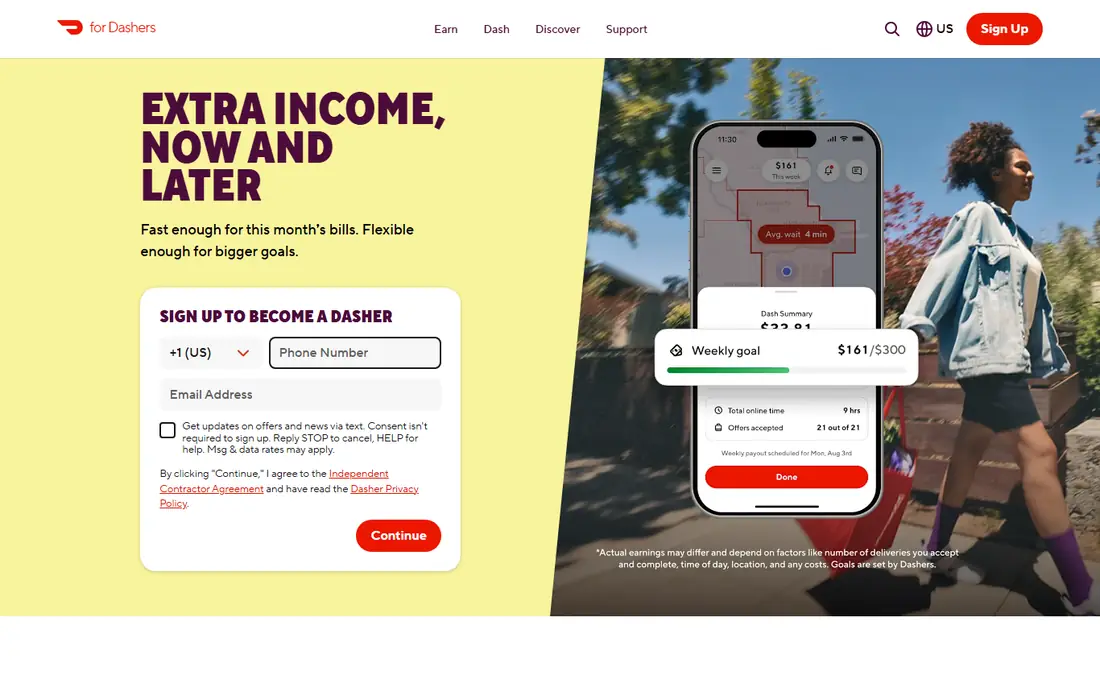
DoorDash, known to drivers as Dasher, is the easiest first app for most new drivers. Sign-up is free, you can go online when you want in many markets, and order volume is high because DoorDash holds a large share of US food delivery. Peak Pay bonuses during busy hours can lift a shift, and the app shows pay details before you accept many orders. The honest downside is tip dependence. Base pay alone rarely covers fuel and time well, so a slow night with weak tips feels very different from a busy dinner rush. Track pay per hour after costs for two weeks in your own city before you decide DoorDash is your main app.
- Largest order volume in most US cities
- Pay shown upfront for many orders
- No acceptance-rate minimum for most drivers
- Base pay is low on many orders, so income leans on tips
- Busy times and slow times differ a lot by market
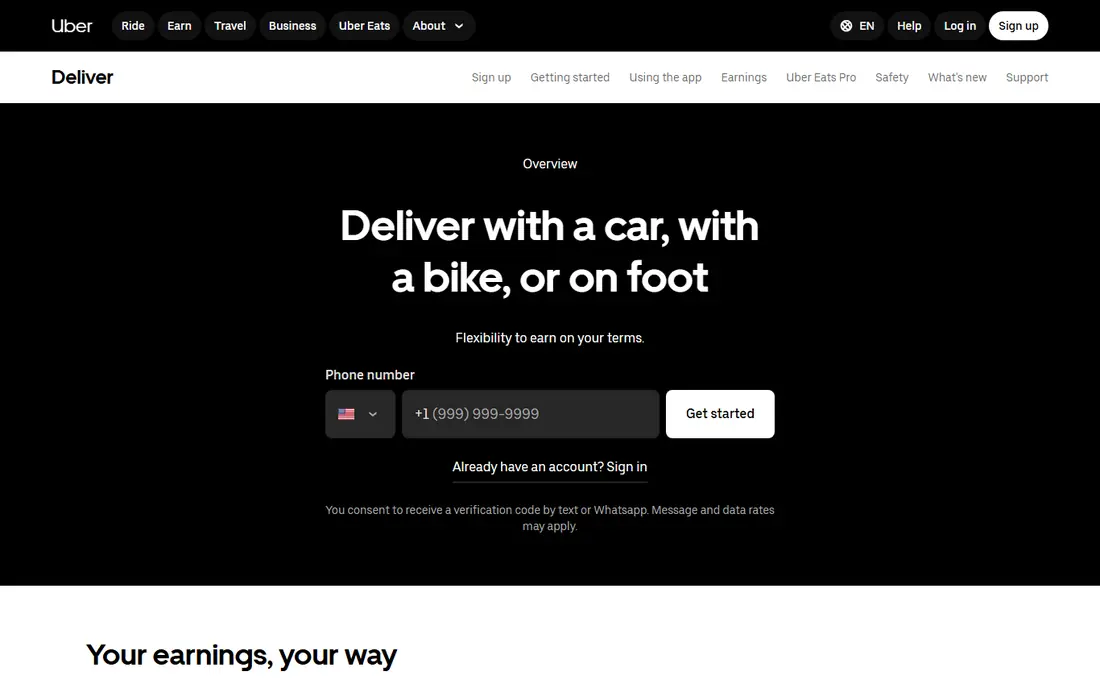
Uber Eats suits drivers who want the same flexibility as DoorDash with more vehicle options. In dense cities, bike and foot couriers can beat car drivers by avoiding parking and traffic, while car drivers cover wider suburbs. Upfront trip details, surge pricing, and Quest bonuses for completing a set number of deliveries add ways to lift a shift. Tip changes are the main frustration, since a tip shown at acceptance can change after delivery within the allowed window. Age rules also vary: car delivery usually needs you to be 19, or 21 in some states and cities. If you already drive for Uber, adding Eats in the same app is simple.
- Go online any time with no blocks
- Car, bike, scooter, or walking options in many cities
- Surge and Quest bonuses
- Customers can adjust tips for a window after delivery
- Car age and city rules vary, and approval can take time
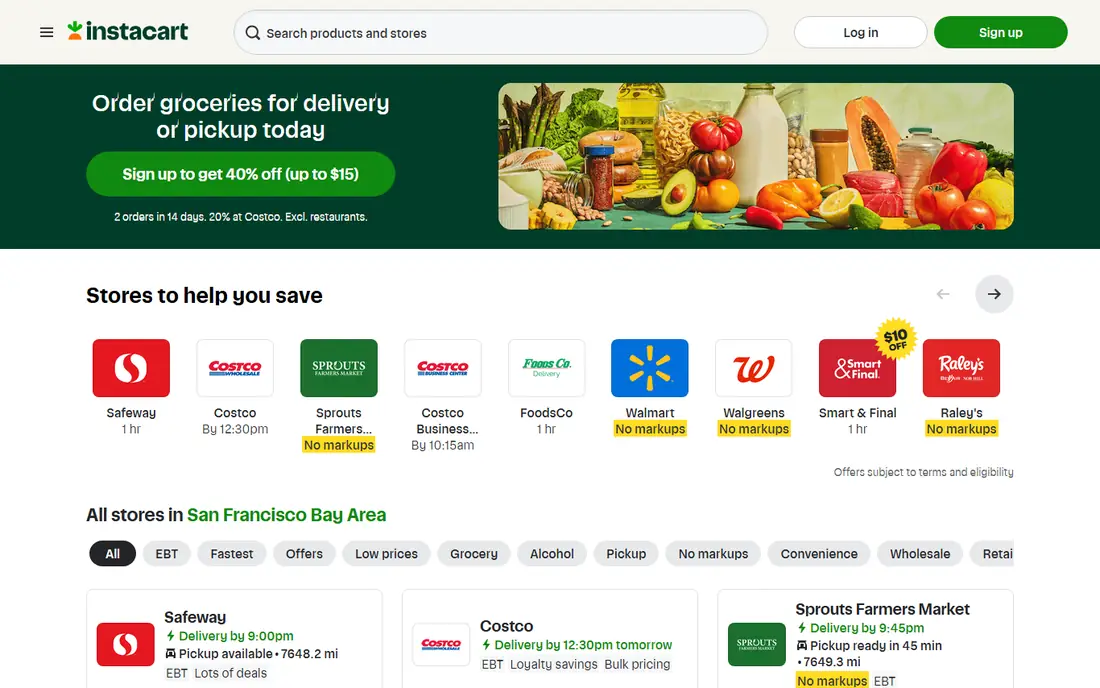
Instacart pays shoppers to pick groceries and deliver them, either as full-service shoppers or delivery-only drivers in some markets. Batch pay plus full tips can beat restaurant delivery on a good batch, especially for large orders. You choose batches from the app, so you can skip small or awkward orders. Shopping skill matters. A batch with many items, substitutions, and customer messages takes far longer than a restaurant pickup, and that time cuts your hourly rate. New shoppers should start with smaller batches, learn store layouts, and track time per batch before taking large orders.
- Pay per batch plus 100 percent of tips
- Shoppers pick batches that fit their time
- Grocery work suits drivers who like shopping
- Shopping takes longer than restaurant pickup
- Heavy bags, substitutions, and store waits add unpaid friction
Grubhub suits drivers who like structure and strong dinner shifts. You schedule blocks in advance, which makes it easier to plan around another job or classes, and some markets offer minimum-rate top-ups during scheduled blocks. Restaurant delivery is the core work, so the job is familiar. Volume is the limit. Grubhub does not match DoorDash order flow in most cities, so waiting between orders can drag down hourly pay. Use Grubhub as a second app or for dinner blocks, and keep a flexible app open for gaps, where local rules allow multi-apping.
- Scheduled blocks help plan shifts
- Some markets add pay top-ups during blocks
- Restaurant focus suits dinner drivers
- Order volume is lower than DoorDash in many cities
- Block availability and scheduling rules vary by market
Amazon Flex is the best pick for drivers who want to know what a shift pays before they start. You reserve a delivery block, pick up packages or groceries at a station, and follow a route for a set time. Amazon states most drivers earn in the 18 to 25 dollar per hour range for blocks, though actual pay varies by market and block type. Block competition is the main hurdle. In popular zones, good blocks go fast, and you cannot simply open the app and start earning at any moment. You also need a four-door vehicle and to be at least 21. If you can grab regular blocks, Flex offers steadier income than tip-based food delivery.
- Blocks show pay upfront, often in the 18 to 25 dollar per hour range
- Tips on eligible grocery deliveries
- Clear route work
- Blocks can be hard to get in busy zones
- You need to be 21 with a four-door vehicle
- No go-online-anytime option
Shipt connects shoppers with grocery and retail orders from partner stores. Like Instacart, pay combines order pay and tips, and shoppers pick orders that fit their schedule. Regular customers and familiar stores can make the work smoother over time, since you learn layouts and preferences. The work is physical. Large grocery orders mean heavy bags, stairs, and careful handling, and a slow store or long checkout line eats into your rate. Shipt suits drivers who enjoy shopping and want grocery work without restaurant rushes, but track pay per hour after costs before making it your main app.
- Grocery and retail delivery with tips
- Shoppers choose orders and schedules
- Strong fit for regular grocery customers
- Pay varies by order size and market
- Shopping and heavy lifting take time and effort
Roadie, now part of UPS, focuses on deliveries that do not fit a food bag: furniture, electronics, auto parts, and other large items, plus longer-distance gigs. Drivers browse gigs, check size and pay, and accept work that fits their vehicle and plans. That makes Roadie a useful second app for drivers with a larger car, SUV, or truck. Frequency is the trade-off. You will not get the steady stream of small orders that DoorDash offers, and a single gig can take much longer. Check item size and lifting needs before accepting, and confirm pay covers fuel for longer trips.
- Big and bulky items plus longer trips
- Drivers pick gigs that fit their vehicle and route
- Useful alongside other apps
- Gigs are less frequent than food orders
- Larger items need space, lifting, and care
Spark Driver delivers Walmart and Sam's Club orders to customers, with trip offers shown in the app. Drivers need to be at least 18, hold a valid license and insurance, use a car, SUV, minivan, or truck, and pass a background check. There is no vehicle inspection, which lowers the barrier for many drivers. Zone dependence is the key risk. If your Walmart zone is busy, Spark can pay well, but a quiet zone means long waits between offers. Many drivers pair Spark with DoorDash or Uber Eats so a slow Spark day still earns. Check whether your zone has a waitlist before counting on Spark as main income.
- Walmart and Sam's Club order volume in many zones
- Trip pay plus tips
- No vehicle inspection or model-year rule
- Volume depends on one store zone, so quiet zones mean waiting
- You must be 18 with a car, insurance, and a background check
GoPuff drivers pick up everyday essentials, snacks, drinks, and household goods from a local GoPuff facility and deliver them in a small zone. That single pickup point removes restaurant waits and store shopping, and short trips can add up during busy evenings. Drivers keep 100 percent of tips plus upfront order pay. Facility access limits who can use it. If no GoPuff facility operates near you, the app is not an option, and demand varies by city and hour. GoPuff suits drivers near a facility who want short, simple trips, ideally alongside a flexible food app for slower periods.
- Centralized pickup from a GoPuff facility
- Short delivery zones
- Upfront pay per order plus 100 percent of tips
- You must be 21 with a car and insurance
- Work depends on a nearby facility and local demand
Favor Delivery, based in Texas, serves cities across the state with restaurant, grocery, and retail delivery. Drivers, called Runners, sign up for free, pass checks, and take deliveries in their city. The local focus can mean familiar restaurants and shorter learning time for Texas drivers. Coverage is the limit. Favor does not operate nationally, so it cannot be a main app outside Texas, and even inside Texas, volume differs by city. Texas drivers should test Favor alongside DoorDash or Uber Eats and keep the app that pays best per hour after costs in their own market.
- Local Texas focus with restaurant and retail delivery
- Runners pick shifts and deliveries
- Tips plus delivery pay
- Available only in Texas markets
- Smaller coverage than national apps, so volume varies by city
How we picked these
We compared official driver pages, sign-up requirements, pay descriptions, app store listings, privacy policies, and public driver reports for each app. We weighted flexibility, order volume, pay structure, vehicle rules, and market coverage. We did not claim hands-on testing, and pay varies by market, tips, and demand, so no app on this list guarantees earnings.
How to earn more as a delivery driver
Pay per hour after costs is the only number that matters. Gross pay on the screen ignores fuel, maintenance, insurance, and taxes, so track the full picture for at least two weeks.
Track net pay, not gross pay
Log miles, fuel, and time for every shift, then divide net pay by hours online and by hours active. An app that looks generous on gross pay can rank lower after long trips and dead miles. Keep a simple spreadsheet or mileage app, and compare apps on the same weeks and hours.
Work peak times and stack apps wisely
Dinner, lunch, weekends, and bad weather usually bring more orders and bonuses, while mid-afternoon can be slow. Where local rules and app terms allow it, running two apps can cut waiting time, but do not accept orders you cannot complete on time. Declining a bad order is often better than a late delivery and a lost tip.
Protect your vehicle and taxes
Set aside money for maintenance, tires, and taxes from the start, since gig pay does not include employer tax withholding. Check your car insurance, since some personal policies limit delivery work, and keep records for tax time. A cheap shift that wears out your car is not a good shift.