Best Dropshipping Platforms in 2026: 9 Platforms Compared
By ToolNimba Editorial Team October 30, 2026 9 min read

- Top pick
 Shopify
Most dropshipping stores
Starting price$39 per monthCheck out ShopifyRead our review - Runner-up
 DSers
AliExpress dropshipping on a budget
Starting priceFreeCheck out DSersRead our review - Also great
 Spocket
US and EU suppliers and faster shipping
Starting price$39.99 per monthCheck out SpocketRead our review
How we researched this
We compared official pricing and feature pages, app store listings, privacy policies and public user reviews. Prices change, so check the provider's site before you pay.
Key takeaways
- Shopify plus one sourcing app is the simplest stack for most beginners, since the store and the supplier tool stay separate and easy to change.
- US and EU suppliers usually cost more but ship faster, which can matter more than a lower product price for customer satisfaction.
- Free plans are useful for testing, but most sellers need a paid plan once they import more than a handful of products.
- Print-on-demand is the lowest-risk route for original designs, while marketplace sourcing suits sellers chasing trending products.
Quick comparison
| Name | Best for | Starting price | Free plan | |
|---|---|---|---|---|
| Shopify | Most dropshipping stores | $39 per month | Free trial | Visit |
| DSers | AliExpress dropshipping on a budget | Free | Yes | Visit |
| Spocket | US and EU suppliers and faster shipping | $39.99 per month | Yes | Visit |
 AutoDS | Automation across many suppliers | $26.90 per month | Free trial | Visit |
 Zendrop | Branded fulfillment and custom packaging | $29 per month | Yes | Visit |
 CJ Dropshipping | Sourcing, warehousing, and private label | Free | Yes | Visit |
 Printful | Print-on-demand dropshipping | Free | Yes | Visit |
 Syncee | Suppliers in Europe and other regions | $39.99 per month | Yes | Visit |
 Dropified | One-click importing and order automation | See website | Free trial | Visit |
The best dropshipping platforms
Finding the best dropshipping platforms means balancing product cost, shipping speed, and how much manual work you are willing to do. Some tools are full store builders, while others only connect your store to suppliers. We compared both kinds so you can build a stack that fits your budget and your market.

Shopify is the storefront most dropshippers start with because it pairs a hosted store with a checkout customers already trust. You can add a dropshipping app, connect a payment provider, and list products without managing servers or security updates yourself. For a new seller, that all-in-one setup removes a lot of early friction.
The catch is the total bill. The plan is only the start, since paid apps, a custom domain, and payment fees add up each month. We still put it first because its app ecosystem covers almost every dropshipping workflow, from product import to order tracking, and that breadth is hard to match elsewhere.
- Large app store
- Built-in payments and checkout
- Many themes and integrations
- Monthly cost rises with apps
- Transaction fee with outside payment providers
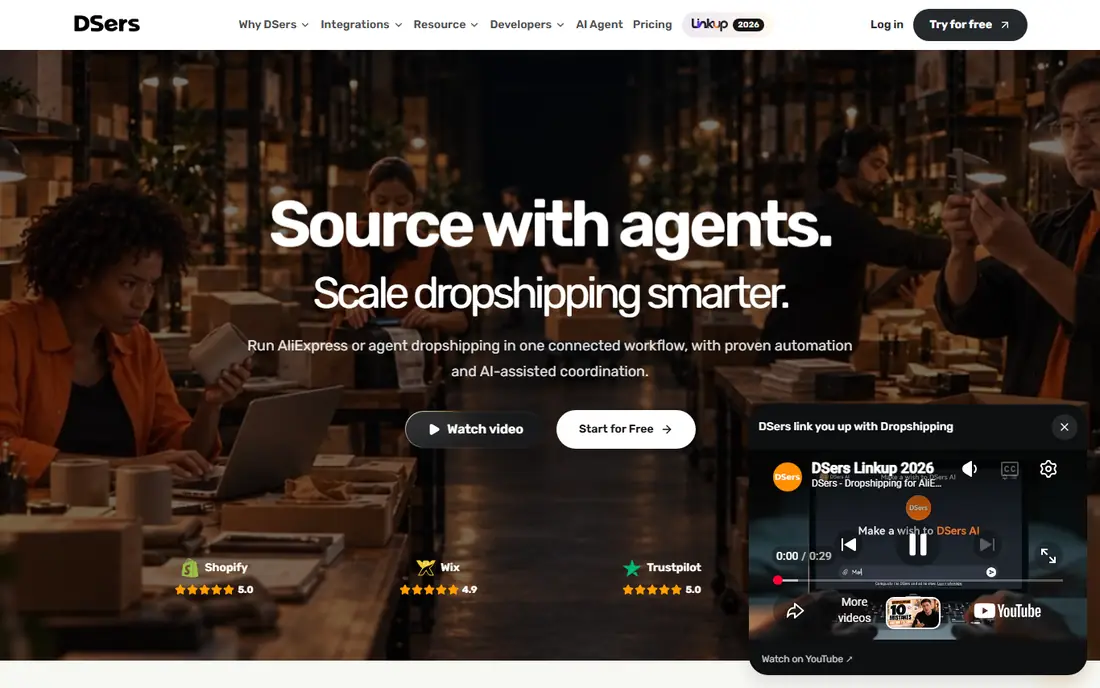
DSers is built for sellers who source mainly from AliExpress and want low-cost order handling. Its free plan covers product import and basic order management, which keeps the early cost close to zero apart from the store itself. Bulk ordering helps when several orders need to go out at once.
Shipping speed is the main trade-off. AliExpress delivery can take longer than stock held in the United States or Europe, so clear delivery estimates on product pages matter. Check seller ratings and order a sample before you scale a winning product.
- Free plan for getting started
- Bulk ordering and tracking updates
- Works with Shopify and WooCommerce
- Supplier shipping times vary
- Quality depends on the individual AliExpress seller

Spocket suits sellers who want shorter delivery times than a typical overseas marketplace offers. Its catalog leans toward suppliers in the United States and Europe, which can mean faster arrival and fewer customs surprises for customers in those regions. The supplier profiles help you judge reliability before listing.
The free plan is limited, so most serious sellers will need a paid plan to import at scale. Prices also tend to be higher than on large open marketplaces, which can squeeze margins on low-priced goods. It works best for mid-priced products where delivery speed supports the price.
- Suppliers weighted toward the US and EU
- Branded invoicing options
- Product search with supplier details
- Paid plan needed for full import features
- Product range is narrower than open marketplaces
AutoDS is for sellers who spend too much time updating prices, checking stock, and placing orders by hand. It watches supplier listings for changes and can automate much of the fulfillment flow once an order arrives. Support for more than one supplier source also helps you avoid relying on a single marketplace.
Plan limits deserve a close read, since they are tied to how many products you import rather than how many orders you take. A large catalog can push you into a higher tier even with modest sales. Start with your best sellers, then expand the catalog as revenue grows.
- Price and stock monitoring
- Automated order fulfillment
- Supports several selling channels
- Learning curve for new sellers
- Plan limits are based on imported products
Zendrop appeals to sellers who want a store that looks like a brand rather than a generic reseller. Custom packaging, branded inserts, and product sourcing support help separate a store from competitors selling the same item. Its fulfillment options are aimed at buyers who care about presentation.
The free tier is more of a catalog browser than a working tool, since it does not link products to a store. Paid plans are priced by linked product count, so a wide catalog costs more. It fits best when you focus on a small set of products you plan to promote heavily.
- Custom branding and packaging options
- Sourcing help
- US-based fulfillment options
- Higher tiers needed for larger catalogs
- Free plan does not link products
CJ Dropshipping works as a sourcing and fulfillment partner rather than just a product catalog. You can request a product, ask for a quote, store stock in a warehouse, and arrange custom packaging for repeat orders. That combination suits sellers moving from testing products to building a steadier operation.
The platform itself is free, but you still pay for goods, shipping, and any extra services you use. Delivery times depend on where stock is held and where the customer lives, so confirm the route for your main markets before promising fast shipping. Samples remain the safest way to check quality.
- Free platform with sourcing requests
- Warehousing and fulfillment services
- Custom packaging options
- Shipping from China can be slow for some items
- Service quality varies by product
Printful is a different kind of dropshipping, since you sell your own designs on shirts, mugs, posters, and other blank products. There is no stock to buy in advance, and Printful prints and ships each order after a customer buys. That model suits creators, artists, and niche brands with a loyal audience.
Margins are tighter than they look, because the base cost of each item plus shipping leaves a modest profit on low-priced goods. Design quality and mockups therefore matter a great deal. It is a strong pick for original designs, and a weak pick if you want to resell generic trending gadgets.
- No upfront inventory cost
- Wide product range
- Fulfillment and printing handled for you
- Base product costs reduce margins
- You control design, not the underlying product quality
Syncee gives sellers a marketplace of suppliers that includes European options alongside global ones. That regional mix can help stores selling into Europe with shorter transit and clearer returns. Direct contact with suppliers also helps when you need product details or bulk terms.
The free plan covers only a small number of products, so a real store will usually need a paid tier. As with any marketplace, vet each supplier, check shipping terms, and test an order before listing their full range. It rewards careful supplier selection more than fast bulk importing.
- Marketplace of suppliers in several regions
- Direct supplier contact
- Data feed management
- Paid plan needed beyond a small product limit
- Supplier quality varies by region
Dropified focuses on cutting the manual steps out of dropshipping, from finding products to fulfilling orders. Its research and import tools suit sellers who test many products and want to move quickly between winners and losers. Automation matters most once order volume rises above a handful per day.
Pricing is less transparent at a glance than some rivals, so confirm the current plan before budgeting. The tool also cannot fix weak supplier quality or slow shipping on its own. Use it to speed up a process you already understand, not as a substitute for checking suppliers.
- Automated product research and importing
- Order automation
- Works with major store platforms
- Pricing is not shown clearly without checking the site
- Advanced features may need a higher plan
How we picked these
We compared official pricing pages, app store listings, supplier coverage, and public feature descriptions for each tool on this list. We did not claim hands-on testing, and we checked that each product is still offered and fits dropshipping rather than general ecommerce alone. Prices change often, so confirm the current plan on the vendor site before you buy.
How to choose a dropshipping platform
Start with your store, then add one sourcing tool. If you already sell on Shopify or WooCommerce, pick a tool that integrates with that store instead of rebuilding elsewhere. Next, decide where your customers live and how fast they expect delivery, since that choice narrows the supplier list more than any feature list will.
Check the real monthly cost
Add the store plan, the sourcing tool, payment fees, and a sample order to your budget. A free app can still be costly if product prices are high or shipping is slow and leads to refunds. Test with a small catalog, order samples, and track delivery time and product quality before spending on ads.
Vet suppliers before you scale
Read supplier ratings, confirm return handling, and ask how damaged or missing items are resolved. A supplier who answers quickly before you buy is more likely to help after a sale. Keep a backup supplier for your best sellers, since a single source can go out of stock without warning.