Best English Learning Apps in 2026: 9 Apps Compared
By ToolNimba Editorial Team October 30, 2026 10 min read

- Top pick
 Duolingo
Building a daily study habit for free
Starting priceFreeCheck out DuolingoRead our review - Runner-up
 Babbel
Structured lessons with grammar in context
Starting priceSee websiteCheck out BabbelRead our review - Also great
 Rosetta Stone
Learning through immersion and pronunciation practice
Starting price$11.99 per monthCheck out Rosetta StoneRead our review
How we researched this
We compared official pricing and feature pages, app store listings, privacy policies and public user reviews. Prices change, so check the provider's site before you pay.
Key takeaways
- Duolingo and Busuu offer the strongest free starting points, while Babbel and Rosetta Stone suit learners who want a structured course.
- Speaking practice needs a different tool than vocabulary drills, so many learners pair a course app with a conversation app such as HelloTalk or Cambly.
- Monthly prices vary widely by billing term, so check the annual price before you judge a plan as cheap or expensive.
- No single app replaces real conversation, reading and listening in everyday English.
Quick comparison
| Name | Best for | Starting price | Free plan | |
|---|---|---|---|---|
| Duolingo | Building a daily study habit for free | Free | Yes | Visit |
| Babbel | Structured lessons with grammar in context | See website | Free trial | Visit |
| Rosetta Stone | Learning through immersion and pronunciation practice | $11.99 per month | Free trial | Visit |
 Busuu | Lessons plus corrections from native speakers | Free | Yes | Visit |
 Memrise | Vocabulary that sticks through video and repetition | See website | Yes | Visit |
 Pimsleur | Speaking and listening during commutes and walks | $20.95 per month | Free trial | Visit |
 Mondly | Everyday phrases across many topics | $9.99 per month | Yes | Visit |
 HelloTalk | Free language exchange with native speakers | Free | Yes | Visit |
 Cambly | Live one to one lessons with English tutors | See website | No | Visit |
The best english learning apps
These are the apps we would shortlist first for learning English, from a free daily habit to live tutor lessons. We compared official feature pages, pricing pages and app store listings, plus public reviews, rather than claiming a long hands-on trial of every plan.
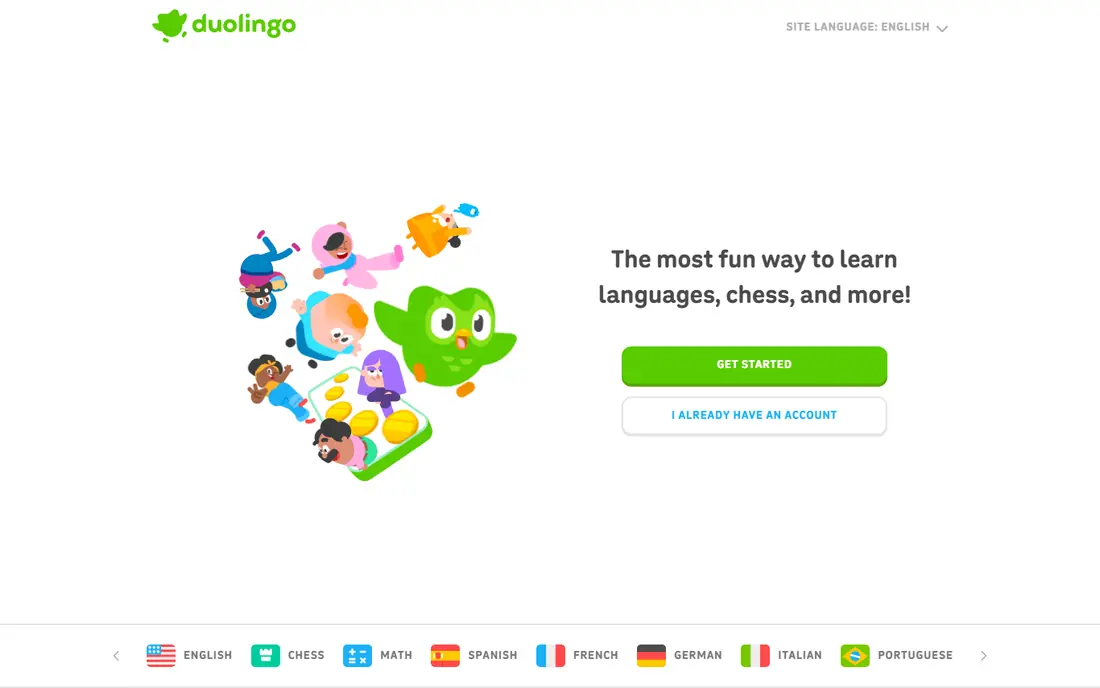
Duolingo is our pick for most people who are just starting, mainly because the barrier to entry is so low. Lessons are short, the app nudges you to return each day, and the free version covers a large amount of vocabulary and basic grammar. That makes it a good first step if you have struggled to stick with English study in the past.
The honest catch is depth. Duolingo builds a foundation, but it does not by itself teach you to hold a natural conversation at normal speed. Use it for daily practice, then add reading, listening or a conversation partner once the basics feel comfortable. The paid Super plan removes ads and adds extra features, with pricing shown on the vendor site and in app stores.
- Free core course
- Short gamified lessons
- Wide range of practice types
- Limited deep speaking practice
- Paid plan needed to remove ads and limits
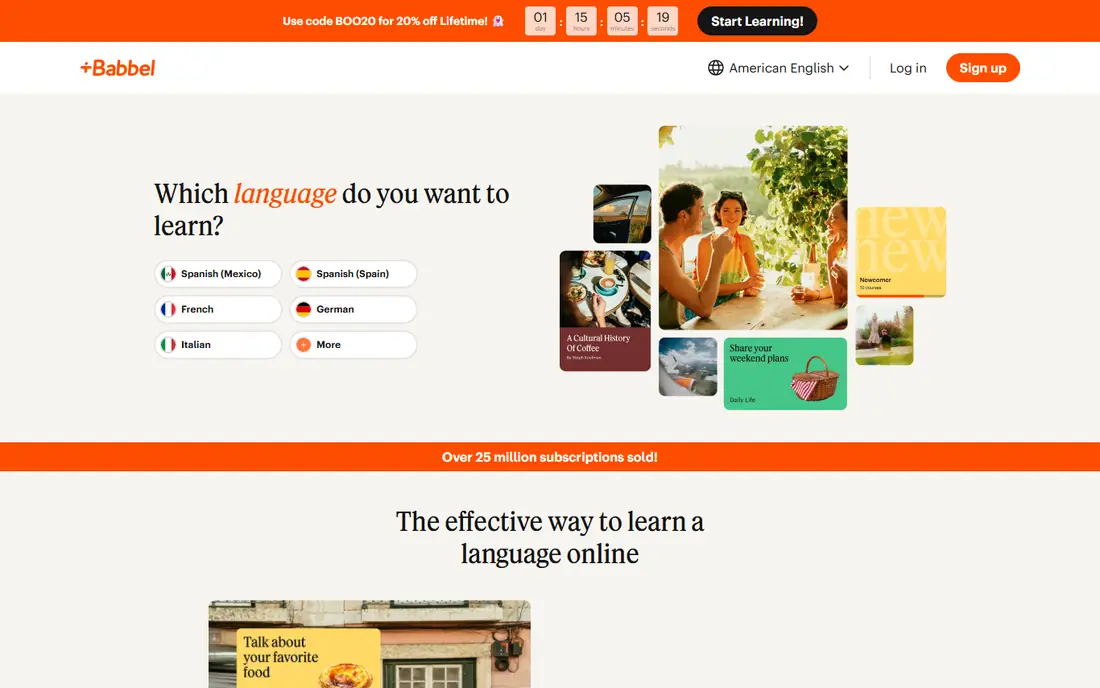
Babbel suits learners who found free apps too scattered and want a course that moves in a clear order. Lessons focus on phrases you might actually use at work, while travelling or in everyday conversation, and grammar is explained inside those examples rather than as a separate drill. That structure helps if you like to know why a sentence works, not just repeat it.
The trade-off is cost and scope. Babbel is a paid product after the first free lesson and trial content, and its catalogue is smaller than Duolingo. If you need a less common language, check the course list first. For English learners who want steady, classroom-style progress on a phone, it remains one of the strongest paid options.
- Lessons built around real situations
- Clear grammar explanations
- Review sessions
- Smaller language range than some rivals
- Full access requires a subscription
Rosetta Stone
Best for: Learning through immersion and pronunciation practice
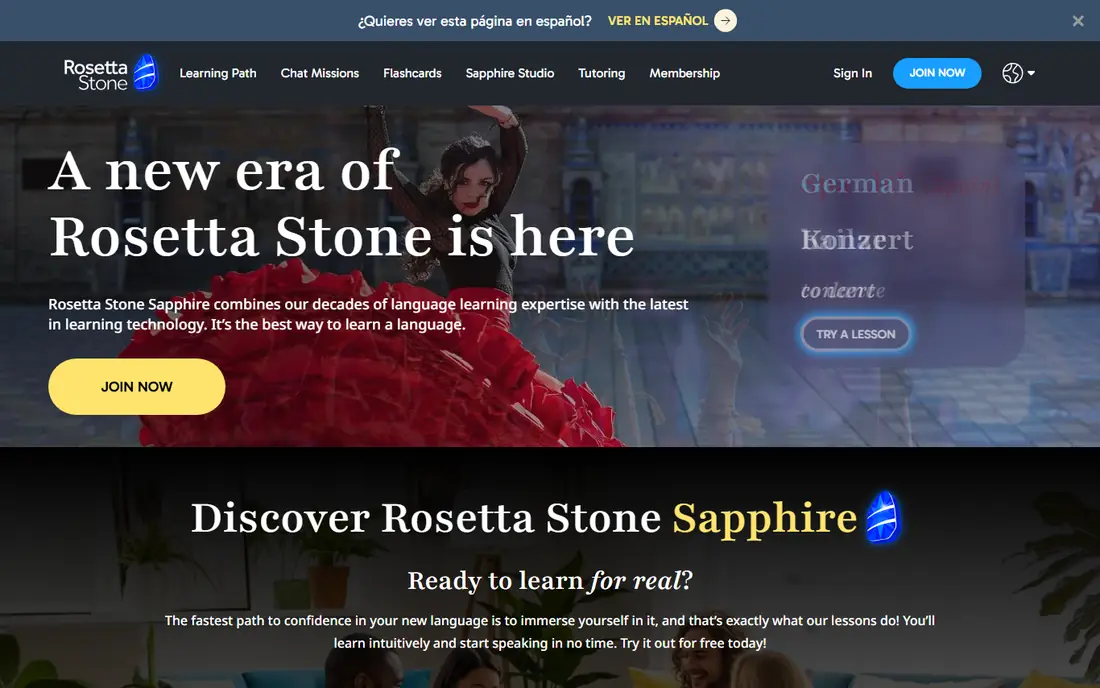
Rosetta Stone takes a different route from most rivals: it teaches through pictures, audio and context, with very little translation into your first language. That can feel strange at first, but it forces you to connect English words directly to meanings, which some learners find sticks better. Its speech recognition tool, TruAccent, gives feedback on pronunciation as you speak.
The downside is that the same method can feel slow and repetitive, especially if you prefer clear grammar rules. It also costs more than a free app, so it makes most sense for learners who like immersion and plan to study for months. A lifetime option is also listed on the vendor site for long-term learners.
- No-translation immersion method
- Speech recognition for pronunciation
- Downloadable lessons
- Slow pace for some learners
- Less explicit grammar explanation
Busuu combines short lessons with a community feature that sets it apart. You can submit writing and speaking exercises and receive corrections from native English speakers, and in return you can help others learning your language. That human feedback catches mistakes that an automated checker often misses, such as unnatural phrasing.
The free tier covers only part of the course, so serious learners will likely move to Premium or Premium Plus. Paid plans add a study plan, grammar review and offline mode, with prices shown on the vendor site. If feedback matters more to you than games or streaks, Busuu deserves a place near the top of your list.
- Free basic lessons
- Community corrections
- Personalised study plan on paid plans
- Free tier is limited
- Some advanced content sits behind Premium
Memrise is built around a simple idea: you remember words better when you hear them from real people in real clips, then review them at spaced intervals. Its Learn with Locals style videos show how English sounds in everyday speech, including contractions and natural rhythm that textbook audio can miss. That makes it a good companion to a grammar course.
On its own, Memrise is less complete than Babbel or Rosetta Stone for grammar and writing. Treat it as your vocabulary engine, not your whole curriculum, and check current pricing on the vendor site, since monthly and annual rates differ. Learners who already know basic grammar often get the most from it.
- Videos of native speakers
- Spaced repetition
- Strong vocabulary focus
- Less structured as a full grammar course
- Paid plan needed for full features
Pimsleur is the pick for learners who spend time driving, walking or doing chores and want that time to count. Each lesson is built around listening and responding out loud, with new words introduced gradually and repeated until you can recall them. That focus on speaking from memory helps learners who can understand English but freeze when they need to reply.
It is not a cheap option, and it is not the best choice if your main goal is reading or writing. There is little on-screen text work compared with app-based courses. If speaking confidence is your weak point, though, the audio method is unusually effective, and a free trial lets you test whether the pace suits you.
- Audio-first 30 minute lessons
- Strong speaking recall
- Works without a screen
- Higher monthly price
- Less reading and writing practice
Mondly covers a broad set of everyday topics, from travel and shopping to business small talk, and it adds a chatbot that lets you practise short conversations without the pressure of a live partner. Speech recognition gives quick feedback on pronunciation, which helps beginners build confidence before speaking to a real person.
At higher levels the lessons can feel less deep than a structured course, and the most useful content sits behind a subscription. Still, for beginners and lower-intermediate learners who want variety and a low-pressure way to speak, Mondly is a solid choice. Check the annual plan on the vendor site, since it is usually much cheaper per month than monthly billing.
- Wide topic range
- Chatbot conversation practice
- Speech recognition
- Lessons can feel shallow at higher levels
- Some features need a paid plan
HelloTalk turns language learning into an exchange: you help native English speakers learn your language, and they help you with English. You can chat by text or voice, correct each other inside the app, and join group discussions on shared interests. For learners who already know basic English, this is often the fastest way to move from textbook sentences to real conversation.
The catch is consistency. Partners vary in reliability and teaching skill, and the app does not provide a curriculum, so you need to set your own goals. It works best alongside a course app that supplies grammar and vocabulary. The core exchange features are free, with a paid VIP tier for extra tools.
- Large global community
- Text, voice and call exchange
- Built-in correction tools
- Quality of partners varies
- Not a structured course
Cambly is for learners who want real conversation with a tutor rather than an app alone. You can book short video lessons with native English speaking tutors at many times of day, talk about topics you choose, and get corrections in the moment. That live feedback is hard to match with automated practice, especially for pronunciation and fluency.
The price reflects that human teaching, and it rises as you add more minutes per week, so check current plans on the vendor site before committing. Cambly suits learners who already have basic English and want to practise speaking regularly. Beginners may prefer to build a base with Duolingo or Babbel first, then use Cambly to turn that knowledge into fluent speech.
- Live tutors available around the clock
- Lessons matched to your level
- Conversation focused
- No free plan
- Cost rises with lesson frequency
How we picked these
We started from apps with a real English course, a working product in October 2026, and a clear way to practise speaking, grammar or vocabulary. We compared official feature and pricing pages, app store listings and public reviews, and we favoured apps that cover different learning styles rather than nine versions of the same drill app. Prices change often, so where a price could not be confirmed from the vendor at the time of writing we wrote See website instead of guessing.
What to check before you pay
Start with your weakest skill, not the app with the longest feature list. If you understand English but cannot speak, an audio or tutor app will help more than another vocabulary game. If grammar confuses you, a structured course will save you time compared with piecing together free videos.
Try the free tier first
Use the free plan or trial for at least a week before paying. Check whether the lesson length fits your day, whether the voice recognition works with your accent, and whether you actually open the app without a reminder. A plan you abandon is expensive at any price.
Compare the annual price, not just the monthly headline
Many apps show a low monthly figure that only applies to annual billing, while monthly billing can cost far more. Look at the total for a year, check the renewal terms, and set a reminder before renewal if you are unsure you will stick with it.
Pair a course with conversation
The strongest routine we found in reviews is simple: one course app for structure, one conversation route for speaking, and regular reading or listening outside any app. That combination covers grammar, vocabulary and fluency without relying on a single product to do everything.