Best LLM SEO Checking Tools in 2026: 9 Tools Compared
By ToolNimba Editorial Team October 30, 2026 9 min read

- Top pick
 Frase
Dual SEO and GEO scoring
Starting price$45.00 per monthCheck out FraseRead our review - Runner-up
 Surfer
On-page scoring plus AI tracking
Starting price$99.00 per monthCheck out SurferRead our review - Also great
 Clearscope
Editorial semantic grading
Starting price$129.00 per monthCheck out ClearscopeRead our review
How we researched this
We compared official pricing and feature pages, app store listings, privacy policies and public user reviews. Prices change, so check the provider's site before you pay.
Key takeaways
- Frase is our pick for most teams, with dual SEO and GEO scoring plus a free checker for AI visibility.
- Surfer is the best dual-purpose checker, combining traditional on-page scoring with an AI tracker add-on.
- Clearscope is the best editorial grader, with semantic coverage reports that content teams trust.
- WordLift is the best schema checker, validating structured data and entity relationships for AI parsing.
- Checking tools validate a draft before publishing; they do not replace tracking tools that monitor visibility over time.
Quick comparison
| Name | Best for | Starting price | Free plan | |
|---|---|---|---|---|
| Frase | Dual SEO and GEO scoring | $45.00 per month | Free trial | Visit |
| Surfer | On-page scoring plus AI tracking | $99.00 per month | Free trial | Visit |
| Clearscope | Editorial semantic grading | $129.00 per month | Free trial | Visit |
 WordLift | Schema markup and entity checking | See website | Free trial | Visit |
 MarketMuse | Topical depth and authority validation | See website | Yes | Visit |
 Otterly AI | GEO audit on pages | $29.00 per month | Free trial | Visit |
 Perplexity | Manual citation simulation | Free | Yes | Visit |
 Geotoolbox | AI-readiness audit | Free | Yes | Visit |
 Screaming Frog | Technical crawl with LLM prompts | $279.00 per year | Yes | Visit |
The best LLM SEO checking tools
LLM SEO checking tools are for validation, not diagnosis and not implementation. You use them when a draft already exists and you need to decide whether it is ready to publish: whether AI systems can parse it, trust it, and cite it. That pre-publish gate covers semantic coverage, factual grounding, schema alignment, citation simulation, and content extractability. The nine tools below cover those checks from different angles.
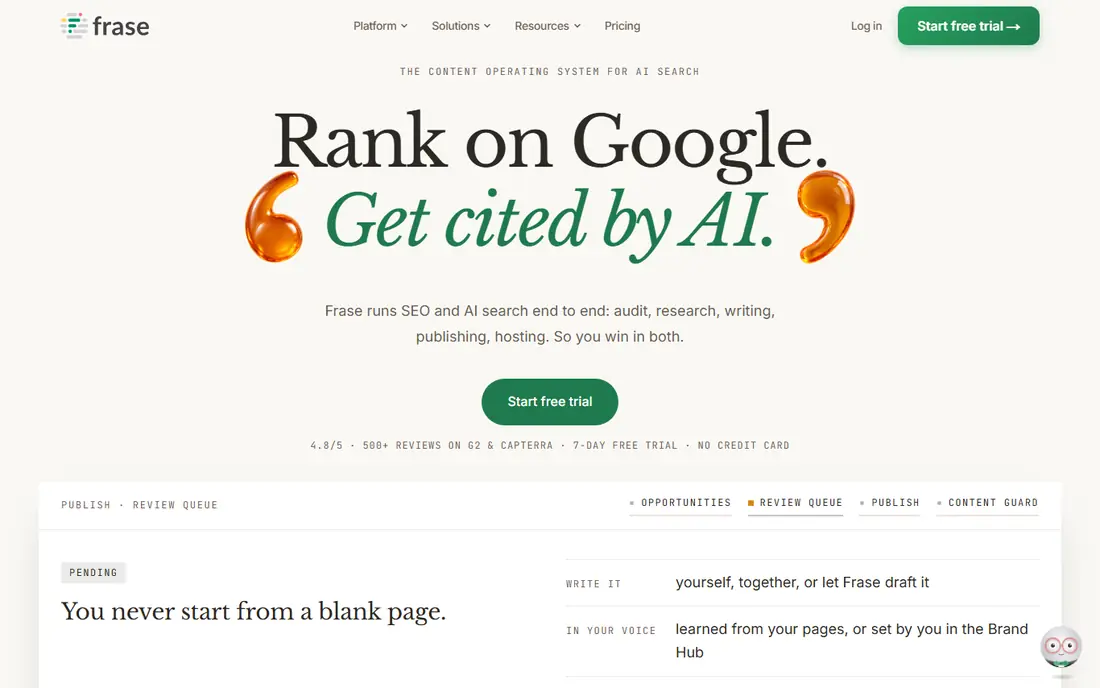
Frase scores drafts for both traditional SEO and generative engine optimization, with a free checker for quick AI visibility checks plus crawler logs, share of voice, buying stage analysis, and a weekly benchmark on paid plans. It also researches, drafts, scores, publishes to your CMS, and repairs Google decay, making it a full content workflow, not just a checker. Starter pricing is reported around 39 to 45 dollars a month billed annually.
GEO depth is below dedicated trackers like Profound, since Frase is primarily a content tool. But for teams that want one checker for both SEO and AI readiness at a budget price, Frase is the best choice.
- Dual SEO and GEO scoring
- Free checker
- Crawler logs and share of voice
- CMS publishing
- Starter price varies by source
- GEO depth below dedicated trackers
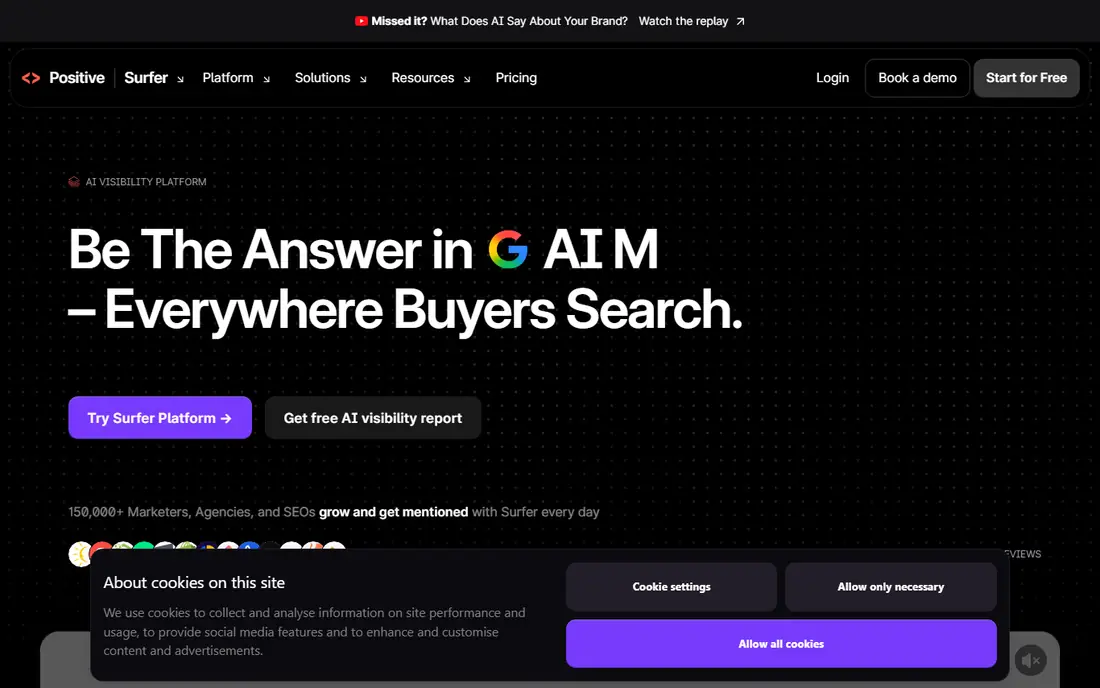
Surfer's Content Editor scores a draft against ranking pages, checking structure, heading hierarchy, keyword coverage, and content length, with a free AI visibility audit available by email report. Its AI Tracker add-on, around 95 dollars a month, adds AI visibility monitoring to the same workflow. Entry plans start around 99 dollars a month billed annually, with a Discovery tier reported in euros at a lower price in some regions.
The AI Tracker is an extra cost, and the entry price is high for solo writers. But for content teams that already score drafts with Surfer, adding AI checks in the same editor is the most efficient route.
- Content Editor scoring
- Heading and structure checks
- AI Tracker add-on
- AI Tracker costs extra at 95 dollars a month
- Entry price is high for solo writers
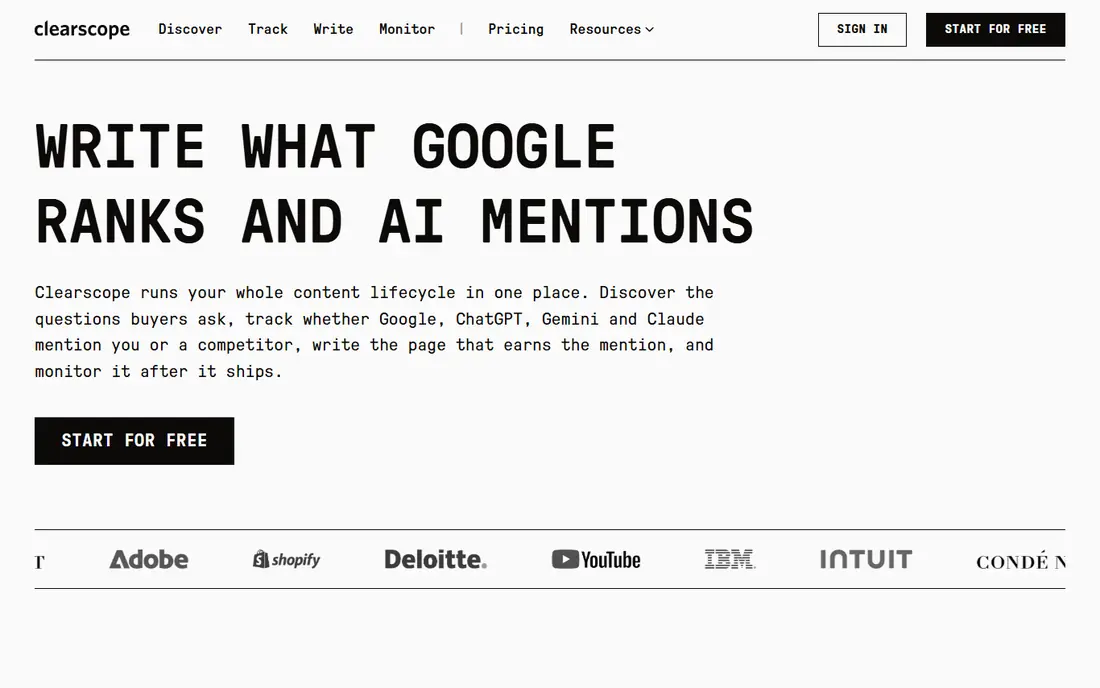
Clearscope grades drafts for semantic coverage using natural language processing, showing which related terms and topics a draft covers compared to top-ranking content, with clean reports that editorial teams trust. Essentials starts at 129 dollars a month, with Business at 399 dollars for larger teams, and a 14-day trial for testing.
It does not track AI citations, so it checks content quality, not AI visibility. But for editorial teams that want one clean grader before publishing, Clearscope is the best semantic checker here.
- Semantic coverage and NLP grading
- Clean reports
- Trusted by editorial teams
- No AI citation tracking
- Essentials price is high for small teams
WordLift checks schema markup and entity relationships, validating whether structured data correctly describes your content for search engines and AI systems. That alignment matters for AI citation, since engines rely on structured data to understand entities, authors, and facts. Pricing starts around 59 euros a month, with a free trial for testing.
It focuses on schema, not full content scoring, so pair it with Frase or Surfer for semantic checks. But for schema alignment and structured data quality, WordLift is the best dedicated checker.
- Schema validation
- Entity relationship mapping
- Structured data quality checks
- Pricing from 59 euros a month
- Focused on schema, not full content scoring
MarketMuse validates topical depth, showing whether a draft covers a topic deeply enough to be authoritative compared to competing content, and where authority gaps remain. That depth check matters for AI citation, since engines favor comprehensive, trustworthy sources. A free tier covers basic checks, with paid plans priced on request.
It does not track AI citations, and paid pricing requires a sales conversation. But for content planning and depth validation before publishing, MarketMuse is a strong, research-backed choice.
- Topical depth analysis
- Authority gap detection
- Free tier for basic checks
- Paid plans on request
- No AI citation tracking
Otterly AI, best known as a tracker, also offers a GEO audit checking 25 plus on-page factors that affect AI citation, from structure and clarity to source quality. That audit, combined with built-in citation tracking, makes Otterly a useful pre-publish checker for teams already tracking with it. Lite starts at 29 dollars a month.
Audit depth is below dedicated graders like Clearscope, and core plans refresh weekly. But for the cheapest entry with a GEO-specific audit plus tracking, Otterly is hard to beat.
- GEO audit across 25 plus on-page factors
- AI citation tracking built in
- Low entry price
- Audit depth below dedicated content graders
- Weekly refresh on core plans
Perplexity is not a checker tool, but it is the most direct way to simulate citation: ask it the questions your audience asks, and see whether it cites your pages. That manual test reveals what AI engines actually do with your content, which no scoring tool can fully predict. Free covers basic use, with Pro at 20 dollars a month for more queries and models.
It is manual and unstructured, with results that vary by prompt wording. But as a reality check before publishing, running your key questions through Perplexity is a free, essential step.
- Direct testing of citation inclusion
- Free tier
- Pro at 20 dollars a month
- Manual process
- Not a structured checker
- Results vary by prompt
Geotoolbox offers free AI Readiness and AI Crawler checks that show whether AI bots can reach, read, and parse your pages, which is the first gate for AI citation. If bots cannot crawl your content, no amount of semantic scoring matters. Its tracker starts at 99 dollars a month for ongoing monitoring.
The free audit is narrower than a full content grader, covering readiness rather than semantic depth. But as a free first check for AI crawlability, Geotoolbox is an essential starting point.
- Free AI Readiness and AI Crawler checks
- Shows whether AI bots can reach pages
- Tracker starts at 99 dollars a month
- Audit is narrower than full content scoring
Screaming Frog is a technical SEO crawler that, on its licensed version at 279 dollars a year, can run LLM prompts across crawled pages to check AI readiness at scale. Its free version covers up to 500 URLs for basic crawling. That scale suits technical teams auditing hundreds of pages for crawlability, schema, and structure issues.
It is a technical tool, not a content grader, and it needs SEO knowledge to use well. But for technical AI-readiness audits across a whole site, Screaming Frog is the best scalable checker.
- Free up to 500 URLs
- Powerful technical crawl
- LLM prompts on licensed version
- Technical tool, not a content grader
- Needs SEO knowledge to use well
How we picked these
We compared official pricing pages, checking features, and public 2026 comparisons for LLM checking tools actively available in 2026. We favored tools that validate a specific draft or URL before publishing, rather than tools that only track visibility over time. We did not claim hands-on testing; our comparison rests on published specifications, pricing, and public reviews.
How to check content before publishing
Run checks in order: crawlability first, then schema, then semantic coverage, then citation simulation. If AI bots cannot reach your page, fix that before worrying about wording. If schema is wrong, fix that before scoring semantics. Only then should you check whether the draft covers the topic deeply and whether Perplexity actually cites it for real questions.
Also check with real questions, not just scores. A draft can score well on a grader and still not be cited, because engines favor direct answers, clear structure, and trustworthy sources. Write a direct answer early in the page, use clear headings, cite sources, and keep facts current. Then re-check after publishing, since AI visibility changes as engines re-crawl and re-rank sources.