Best Nursing Student Study Apps in 2026: 9 Apps Compared
By ToolNimba Editorial Team October 30, 2026 10 min read

- Top pick
 UWorld
Realistic NCLEX questions
Starting priceSee websiteCheck out UWorldRead our review - Runner-up
 Picmonic
Visual memory aids
Starting price$12.99 per monthCheck out PicmonicRead our review - Also great
 Osmosis
Clear concept videos
Starting priceSee websiteCheck out OsmosisRead our review
How we researched this
We compared official pricing and feature pages, app store listings, privacy policies and public user reviews. Prices change, so check the provider's site before you pay.
Key takeaways
- No single app covers every need, so most students pair a question bank with videos or flashcards.
- UWorld and Archer Review are strongest for realistic practice questions, while SimpleNursing and Picmonic help with understanding concepts.
- Prices range from free for Quizlet to $59 per month or more for full NCLEX platforms, so check what a trial actually includes.
- Look for Next Generation NCLEX formats, clear rationales, and a study plan, not just a large question count.
Quick comparison
| Name | Best for | Starting price | Free plan | |
|---|---|---|---|---|
| UWorld | Realistic NCLEX questions | See website | Free trial | Visit |
| Picmonic | Visual memory aids | $12.99 per month | Free trial | Visit |
| Osmosis | Clear concept videos | See website | Free trial | Visit |
 SimpleNursing | Animated nursing school videos | $20 per month | Free trial | Visit |
 NURSING.com | Video library and practice | $59 per month | Yes | Visit |
 NCLEX Mastery | Daily mobile practice | See website | Free trial | Visit |
 Kaplan | Structured NCLEX prep | See website | Free trial | Visit |
 Archer Review | Affordable question bank | See website | Free trial | Visit |
 Quizlet | Flashcards and self-testing | Free | Yes | Visit |
The best nursing student study apps
Nursing school asks you to learn a huge amount of content and then apply it under exam pressure. The apps below help in different ways, from practice questions to short videos to flashcards you can review on a phone. We compared official feature pages, pricing pages, app store listings, and public reviews to build this list.

UWorld is often the first name nursing students mention when they talk about question banks, and for good reason. Its NCLEX-style questions are challenging, its rationales explain why each option is right or wrong, and its performance reports show weak areas by topic. That feedback loop helps you study smarter, since you can see whether pharmacology, maternity, or prioritization needs more work.
The trade-off is price and style. UWorld is a practice tool first, not a lecture library, so students who need concepts explained from scratch may want a video app alongside it. It also costs more than budget apps, and access is sold by time period rather than as a permanent purchase. If your exam is near and you need realistic practice, UWorld is a strong core choice.
- Detailed rationales for every answer
- Computer-adaptive practice tests
- Strong Next Generation NCLEX coverage
- Higher price than many apps
- Less video teaching than video-first platforms
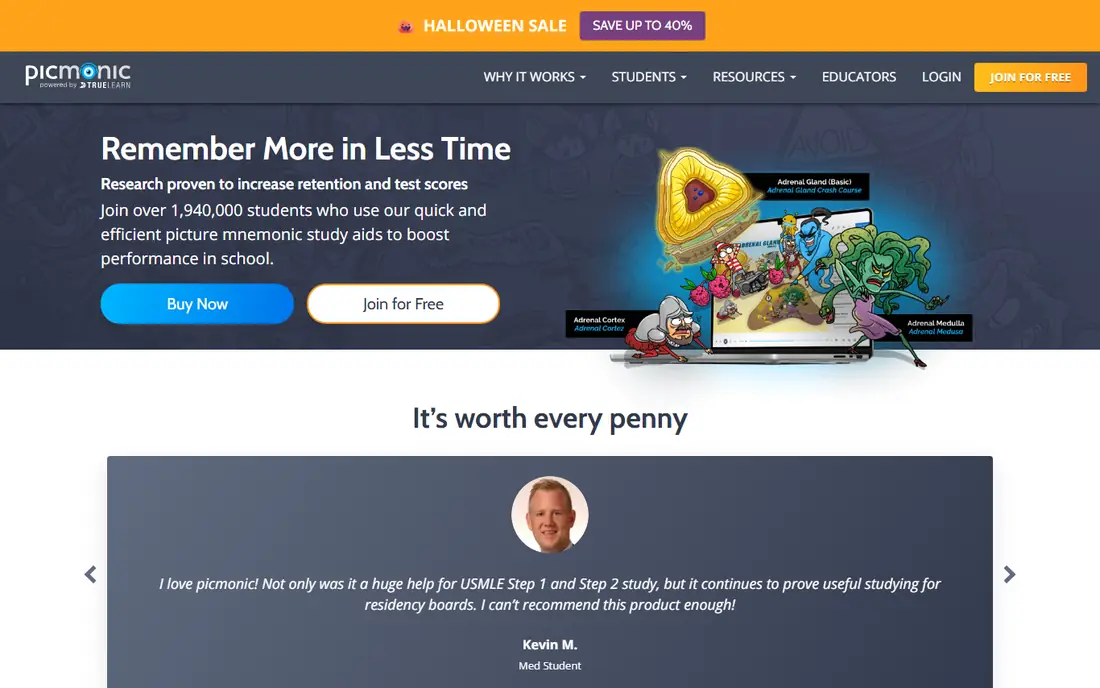
Picmonic takes a different approach to memory. Each topic becomes a short animated picture story, with characters and symbols that stand for symptoms, drugs, and side effects. Students who struggle to remember lists often find that a vivid image sticks longer than a paragraph of notes. After each video, short quizzes test recall and schedule review at spaced intervals.
Picmonic is not a complete NCLEX course on its own. It has thousands of quiz questions, but it does not claim a full computer-adaptive simulator like UWorld or Archer. It works best as a supplement, especially for pharmacology and disease topics that involve many details. At $12.99 per month, it is also one of the cheapest ways to add a second study method.
- Memorable picture stories for hard topics
- Built-in quizzes and spaced review
- Covers nursing, pharmacology, and pathophysiology
- Visual style does not suit every learner
- No full adaptive exam simulator
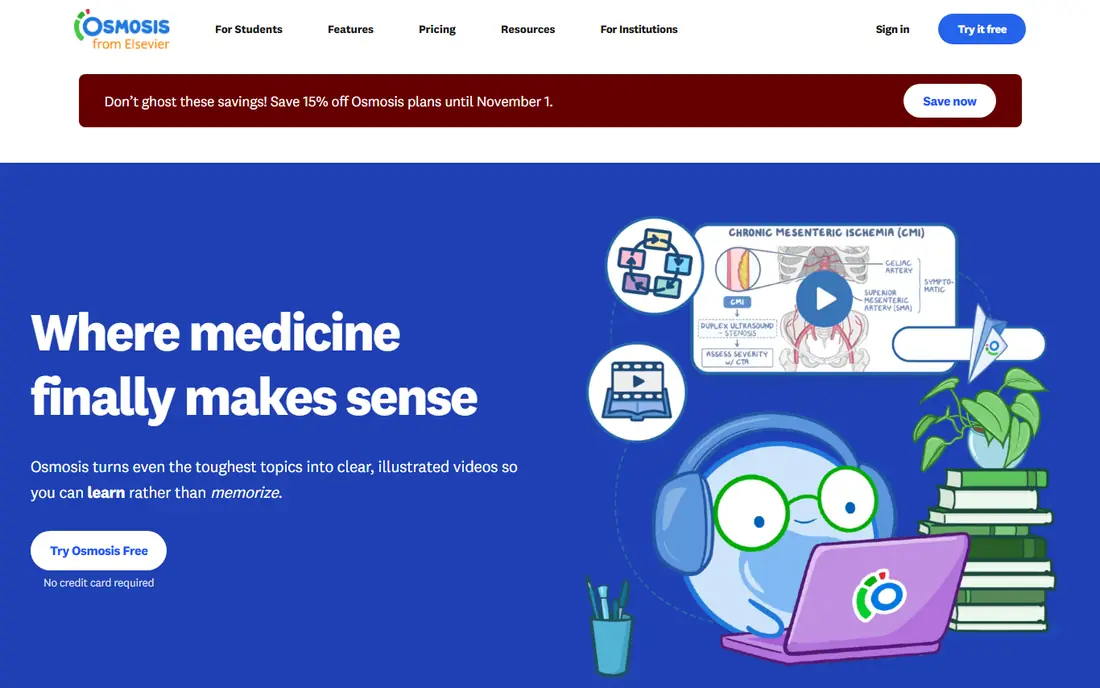
Osmosis is known for short videos that explain a disease, a drug class, or a body system in plain language with diagrams. For a student who feels lost after a dense lecture, a ten-minute Osmosis video can turn a confusing topic into a clear story. The platform also includes flashcards, notes, and practice questions, so you can test yourself right after watching.
Osmosis is broader than NCLEX prep alone, since it also serves medical and health students. That breadth is helpful in nursing school, but students close to the NCLEX may still need a dedicated question bank for exam-style practice. Use Osmosis to build understanding during the semester, then shift to timed practice as the exam approaches.
- Short, clear videos with visuals
- Flashcards and practice questions included
- Good for first-year concepts and review
- Pricing varies by plan and access
- Less NCLEX-specific drilling than a question bank
SimpleNursing combines animated videos, study guides, and thousands of NCLEX questions in one membership. Its Nursing School plan starts at $20 per month, while its NCLEX monthly plan starts higher, and longer memberships lower the monthly equivalent. Students often praise the clear, friendly teaching style, which makes long study sessions easier to sustain.
The short 5-day trial means you should test it with intent. Watch videos on a topic you find hard, try a set of questions, and check whether the study plan fits your schedule. SimpleNursing is a good all-round pick for students who want videos plus practice in one place, rather than buying two separate subscriptions.
- Engaging animated lectures
- Large NCLEX question bank with Next Generation items
- Personalized study plans
- Monthly price rises for NCLEX-specific plans
- Trial is short at 5 days
NURSING.com, formerly NRSNG, offers hundreds of video lessons, thousands of practice questions, and simulated exams that estimate readiness. Its 3-month plan has been listed at $149, and its monthly plan at $59 per month, with a pass guarantee on some plans subject to terms. A free mode lets you try materials without a card, which is rare among full NCLEX platforms.
The platform is self-paced, so it suits students who can follow a plan without live classes. If you need a teacher to keep you on track, a live course or a tutor may help more. For independent learners who want a large library, strong practice, and a readiness signal, NURSING.com is a credible single subscription.
- Large video library and question bank
- Simulated NCLEX exams with readiness feedback
- Free mode to try materials
- Higher monthly price
- No live in-person course option
NCLEX Mastery is built for the phone in your pocket. You can answer a few questions on a bus, during a break, or before bed, and each answer includes a rationale. That low-friction design helps students who study in short bursts rather than long desk sessions. The app includes thousands of questions, and a yearly plan lowers the monthly cost compared with paying month to month.
It is not a lecture replacement. If you do not understand a topic, you will still need a video, a textbook, or a class to learn it first. NCLEX Mastery works best as a daily practice habit alongside a concept app, and it is one of the most affordable ways to keep NCLEX practice consistent through a semester.
- Mobile-first design for short study sessions
- Thousands of questions with rationales
- Affordable yearly option
- Less video teaching than video platforms
- Pass guarantee terms apply
Kaplan is the structured option for students who want a course, not just an app. Its NCLEX prep includes content review, practice questions, and test-taking strategies, with live online classes on higher plans. Practice-only options start lower, while live online courses cost several hundred dollars, so the right plan depends on how much guidance you need.
Kaplan suits students who feel overwhelmed by self-study, who want a set schedule, or who have failed before and need a new strategy. It is less suited to students who only want a cheap phone app for daily questions. Check what is included in the exact plan you choose, since question counts and live hours vary by tier.
- Structured courses with live online options
- Strong test-taking strategy teaching
- Large question bank
- Higher price for live courses
- Heavier time commitment than an app alone
Archer Review has grown popular as a lower-cost question bank with a focus on Next Generation NCLEX formats. It includes thousands of questions, unfolding case studies, and adaptive practice tests that mimic the real exam format. Students who want lots of realistic practice without paying for a large video library often choose Archer as their main bank.
The trade-off is polish and teaching depth. Archer is more utilitarian than video-first apps, and students who need concepts explained may need a second resource. For exam-focused practice on a budget, especially in the final months before the NCLEX, Archer is a strong value pick. Try the free trial with timed sets to judge question style.
- Large question bank with case studies
- Computer-adaptive practice tests
- Lower price than many full courses
- Less video content than SimpleNursing
- Interface is more utilitarian
Quizlet is not an NCLEX course, but it is still one of the most useful study apps for nursing students. You can make your own flashcards for drugs, lab values, and disease signs, or use sets made by other students and teachers. Learn mode, test mode, and timed matching turn passive rereading into active recall, which helps memory far more than highlighting notes.
Quality is the watch point. User-made sets can contain errors, so verify drug doses and facts against your textbook or class notes before you trust a set. Quizlet works best for memorizing facts, terms, and lists, while a question bank like UWorld or Archer handles application and prioritization. Since the core app is free, it is an easy addition to any study plan.
- Free core flashcards
- Huge library of user-made nursing sets
- Learn, test, and match modes
- Quality varies across user-made sets
- Not a full NCLEX question bank
How we picked these
We compared official feature pages, pricing pages, app store listings, and public reviews for apps used by nursing students in October 2026. We kept only apps that exist and work today, that cover nursing school or NCLEX preparation rather than general study alone, and that publish enough detail on questions, videos, or flashcards to judge them. We favored a mix of question banks, video platforms, and flashcard tools, since different students learn in different ways.
How to build a study routine that works
An app only helps if it fits a routine you can keep for weeks, not days.
Pair one question bank with one concept tool
Use a question bank for timed, exam-style practice, and a video or visual tool for topics you get wrong. After each practice set, review every rationale, even for questions you got right by guessing. Write down the concept you missed, not just the answer, and revisit it in your concept tool the same day.
Use flashcards for facts, not for everything
Flashcards are ideal for drug names, side effects, lab ranges, and signs. They are poor for prioritization, delegation, and unfolding case studies, which need practice questions. Keep flashcard sessions short and frequent, and use spaced review rather than cramming a whole set the night before an exam.
Simulate the real exam before test day
Take full, timed practice tests in a quiet room, with breaks similar to the real NCLEX. Adaptive tests help you get used to questions that get harder as you answer correctly. Review your readiness feedback honestly. If a topic stays weak after two weeks of review, change your method for that topic instead of doing more of the same questions.