Best Online Course Platforms in 2026: 9 Platforms Compared
By ToolNimba Editorial Team October 30, 2026 9 min read

- Top pick
 Coursera
Career certificates
Starting price$59 per monthCheck out CourseraRead our review - Runner-up
 Udemy
Single courses on sale
Starting price$19.99 per courseCheck out UdemyRead our review - Also great
 edX
University courses and audit
Starting priceSee websiteCheck out edXRead our review
How we researched this
We compared official pricing and feature pages, app store listings, privacy policies and public user reviews. Prices change, so check the provider's site before you pay.
Key takeaways
- Coursera and edX are strongest for university-backed certificates, while Udemy is best for buying one specific course at a time.
- Skillshare and MasterClass suit creative learning and inspiration, but they do not replace structured career programs.
- Khan Academy remains the best free starting point for school-level math, science, and foundational skills.
- LinkedIn Learning fits professionals who want short business courses that show up on a LinkedIn profile.
- Audit a course free, or use a trial, before paying for a subscription you may not finish.
Quick comparison
| Name | Best for | Starting price | Free plan | |
|---|---|---|---|---|
| Coursera | Career certificates | $59 per month | Yes | Visit |
| Udemy | Single courses on sale | $19.99 per course | Yes | Visit |
| edX | University courses and audit | See website | Yes | Visit |
 Skillshare | Creative project classes | $167.88 per year | Free trial | Visit |
 LinkedIn Learning | Professional skills | $39.99 per month | Free trial | Visit |
 Khan Academy | Free foundational learning | Free | Yes | Visit |
 MasterClass | Learning from famous experts | $10 per month | No | Visit |
 FutureLearn | Short university courses | See website | Yes | Visit |
 Pluralsight | Tech and IT skills | See website | Free trial | Visit |
The best online course platforms
Online course platforms split into two models: subscriptions that open a large catalog, and marketplaces where you buy one course at a time. The nine platforms below cover both models, plus free learning, so you can pick based on your goal rather than the size of the catalog alone.
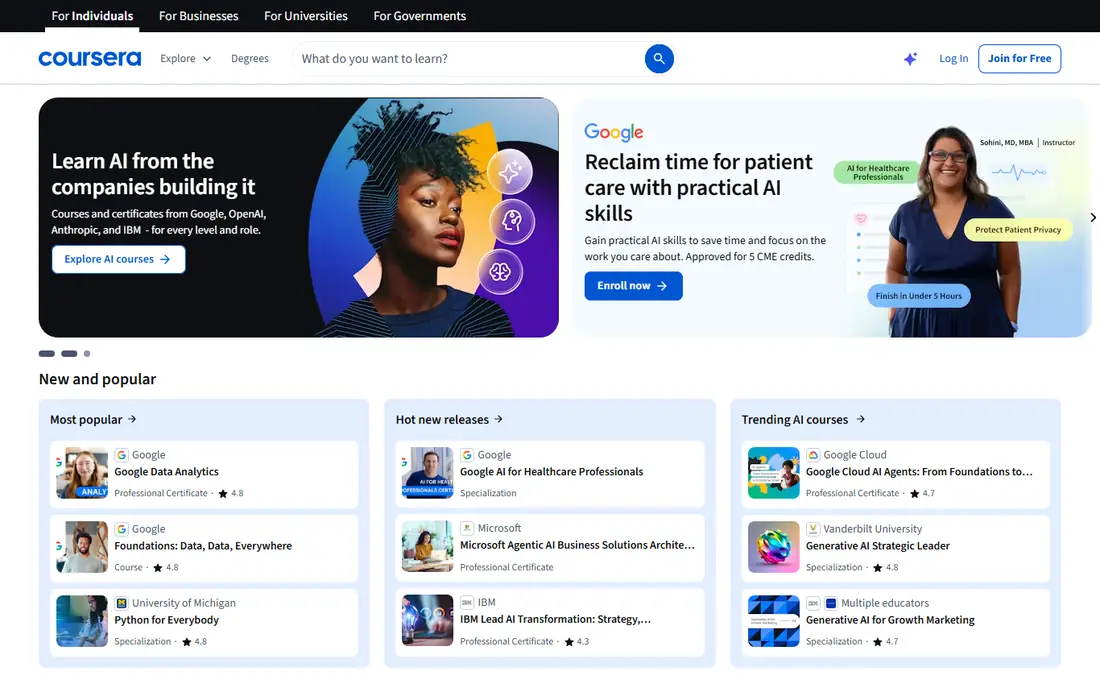
Coursera is our pick for most people who want a certificate that employers recognize. It partners with universities and companies such as Google and IBM, and its Professional Certificates offer a structured path from beginner to job-ready skills. Coursera Plus costs $59 per month or $399 per year and opens thousands of courses, specializations, and certificates, excluding degree programs.
The risk is time, not just money. A monthly plan rewards fast, steady study, while a slow pace turns a $59 month into a long bill. Audit or preview a course first, set a weekly study time, and finish one certificate before starting another.
- University and company certificates
- Free preview or audit on many courses
- Structured professional certificate paths
- Subscription keeps charging even if you pause study
- Some older courses feel dated
- Degrees cost extra
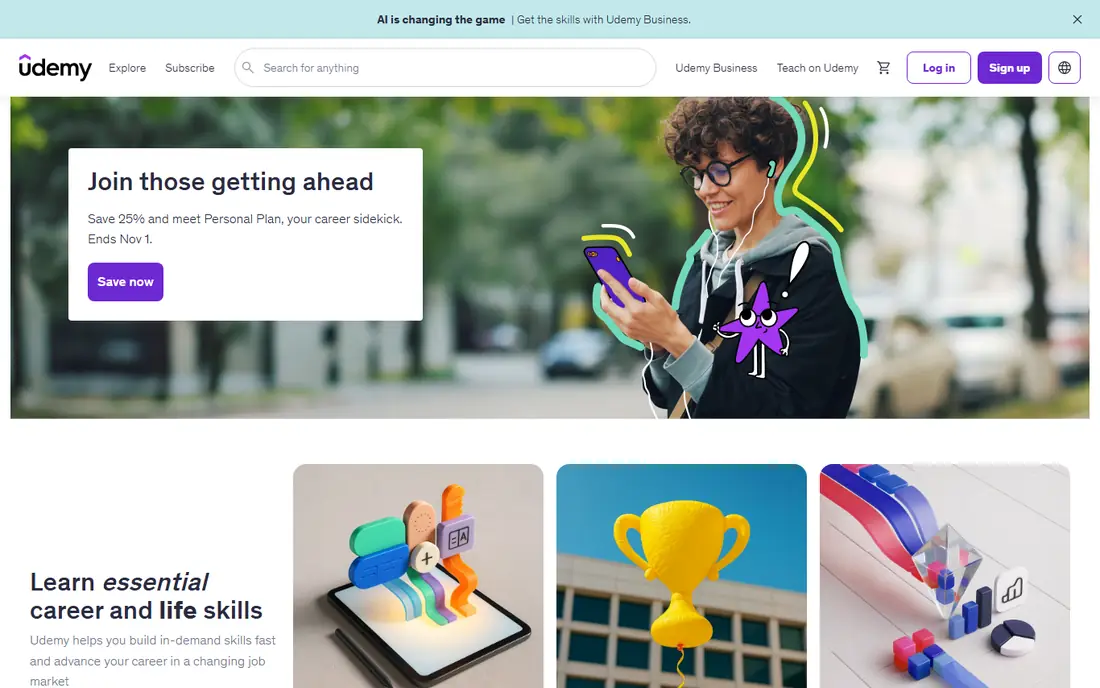
Udemy works differently from a subscription. You buy one course at a time, often for $10 to $20 during a sale, and keep it for life. That model suits a single skill, such as Excel formulas, Python basics, or photo editing, where you do not want a monthly bill for a large catalog you will not use.
Quality is the trade-off. Anyone can publish on Udemy, so check recent reviews, preview lessons, and look at the instructor's background before buying. A highly rated course with recent updates is usually a safer buy than a cheap course with old material.
- Huge catalog of specific skills
- Lifetime access to purchased courses
- Frequent sales and free courses
- Quality varies by instructor
- List prices are high before sales
- Completion certificates carry less weight than university credentials
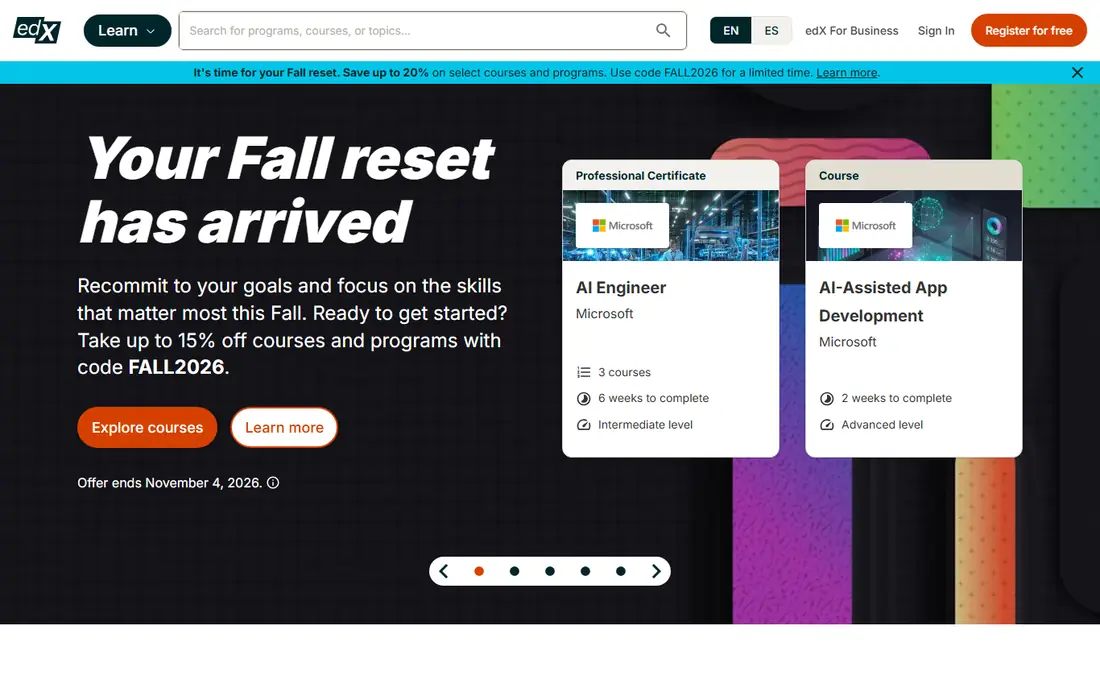
edX is a strong choice for academic depth. It offers courses from universities, and many courses let you audit the material free without graded work or a certificate. Verified certificates typically cost extra, with prices varying by course and program, so check the course page before you enroll.
The academic style is both a strength and a limit. Lectures and readings suit learners who like structure and depth, but they can feel slow if you want a quick practical skill. Use audit mode to test the teaching style, then pay only for certificates that help your resume or degree plans.
- University-level courses
- Free audit on many courses
- MicroMasters and professional programs for deeper study
- Verified certificates cost extra per course
- Pacing can feel academic
- Some programs are expensive
Skillshare focuses on creative skills taught through short classes and hands-on projects. If you want to learn illustration, photography, graphic design, or video editing by making something, its class format fits better than a long lecture series. The annual plan costs $167.88 per year, which works out lower per month than paying monthly, but only if you use it regularly.
The limit is credentials. Skillshare offers completion records, not university certificates, so it is weaker for job applications that require formal proof. Treat it as a skill-building and hobby platform, and pair it with Coursera or edX when a certificate matters.
- Short, project-based creative classes
- Good for design, illustration, and video
- Community projects add motivation
- No university-backed credentials
- Quality varies
- Annual plan at $167.88 per year suits regular users best
LinkedIn Learning suits working professionals who need a quick, reliable course on leadership, Excel, project management, or a software tool. Courses are short, production quality is consistent, and completed courses can appear on your LinkedIn profile, which helps recruiters see new skills.
The price is the main question. At $39.99 per month, it makes sense for a month of focused learning or for people whose employer or library provides access. Casual learners may get better value from a single Udemy course or a free audit on Coursera or edX.
- Short business and tech courses
- Certificates show on your LinkedIn profile
- Consistent production quality
- Monthly price at $39.99 is high for casual use
- Depth varies
- Free access depends on trial or library partnerships
Khan Academy is the best free place to start, and it should be the first stop for school-level and foundational learning. It offers structured lessons, videos, and practice in math, science, computing, history, and test preparation, all free, with progress tracking that helps students and adult learners stay organized.
The limit is scope. Khan Academy does not offer the career certificates or advanced professional programs found on Coursera or Pluralsight. Use it to build foundations for free, then move to a paid platform when you need a credential or a specialized professional skill.
- Completely free
- Structured math, science, and humanities paths
- Progress tracking and practice exercises
- No career certificates
- Less coverage of advanced professional skills
- Limited creative course catalog
MasterClass is different from the other platforms here. It sells inspiration and insight from well-known experts, with polished video lessons that are enjoyable to watch. Plans start at about $10 per month billed annually, with higher tiers adding more devices and features.
The honest catch is depth. MasterClass is strong for ideas, craft stories, and motivation, but weaker for graded practice, feedback, and job-ready certification. Buy it for creative growth and enjoyment, not as a replacement for a structured course with assignments and a certificate.
- High production quality
- Famous instructors across cooking, writing, music, and business
- Inspiring for creative hobbies
- No free trial in most cases
- Less structured skill practice
- No formal certificates
FutureLearn offers short online courses from universities and cultural institutions, often in a social format where learners discuss steps together. Many courses allow limited free access, which is useful for trying a topic before paying for full access, tests, and a certificate.
The trade-off is that free access is limited in time and features, and paid pricing can vary by plan and region, so check the course page for the current US price. FutureLearn suits learners who like short, discussion-based courses rather than long degree-style programs.
- Short courses from universities
- Social learning features
- Free limited access on many courses
- Full access and certificates need a paid plan
- Course availability varies
- Pricing differs by region
Pluralsight is built for technology professionals who need structured paths in programming, cloud, cybersecurity, and IT. Skill assessments help you find gaps, and paths guide you from foundational to advanced topics instead of leaving you to browse a large catalog alone. A 10-day trial is available, though some labs and features are excluded.
The limit is focus. Pluralsight is not a general learning platform for business, creative, or academic subjects. If your goal is tech depth, it is a strong pick, but check the current plan price on the official site, since published prices have changed over time.
- Structured tech paths
- Skill assessments
- Hands-on labs on higher plans
- Pricing varies by plan
- Less useful outside tech
- Trial excludes some labs and features
How we picked these
We compared official course catalogs, pricing pages, free audit and trial terms, certificate policies, and public reviews for platforms available to US learners. We favored platforms with a clear learning model, a usable free or trial option where offered, and a track record of current courses. We did not claim hands-on testing we did not do, and prices reflect published list prices checked in October 2026.
How to choose the best online learning platform
Match the platform to the outcome you want. For a job credential, start with Coursera or edX. For one practical skill, buy a single Udemy course on sale. For creative practice, try Skillshare. For free foundations, start with Khan Academy and add a paid platform only when you need depth or a certificate.
Check the certificate before you pay
Not all certificates carry the same weight. University-backed certificates and professional certificates tend to help more on a resume than a completion record. Before paying, check whether the certificate requires graded work, whether employers in your field recognize it, and whether the course page lists the certificate price clearly.
Finish one course before buying another
The most common waste in online learning is an unused subscription. Pick one course, set two or three study sessions per week, and use the free audit or trial to test the instructor first. If you finish the first course, you will know whether the platform fits you, and you will have something real to show for the money.