Best Online Therapy Services in 2026: 9 Services Compared
By ToolNimba Editorial Team October 30, 2026 11 min read

- Top pick
 BetterHelp
Fast matching and flexible formats
Starting price$70 per weekCheck out BetterHelpRead our review - Runner-up
 Talkspace
Insurance and messaging therapy
Starting price$69 per weekCheck out TalkspaceRead our review - Also great
 Brightside Health
Therapy plus medication
Starting price$95 per monthCheck out Brightside HealthRead our review
How we researched this
We compared official pricing and feature pages, app store listings, privacy policies and public user reviews. Prices change, so check the provider's site before you pay.
Key takeaways
- BetterHelp is the easiest out-of-pocket starting point, with video, phone, chat, and messaging in one subscription.
- Talkspace is the strongest pick if you want to use insurance, since it works with many major plans and offers psychiatry.
- Brightside and Cerebral suit people who may need therapy plus medication management in one place.
- Weekly prices look similar, but session length, messaging limits, and insurance copays change the real monthly cost.
- Online therapy is not a substitute for emergency care. If you are in crisis, contact local emergency services or a crisis line right away.
Quick comparison
| Name | Best for | Starting price | Free plan | |
|---|---|---|---|---|
| BetterHelp | Fast matching and flexible formats | $70 per week | No | Visit |
| Talkspace | Insurance and messaging therapy | $69 per week | No | Visit |
| Brightside Health | Therapy plus medication | $95 per month | No | Visit |
 Online-Therapy.com | Structured CBT tools | $48 per week | No | Visit |
 Cerebral | Therapy and medication together | See website | No | Visit |
 Grow Therapy | Finding an in-network therapist | See website | No | Visit |
 Amwell | Insurance-based video visits | $109 per session | No | Visit |
 Calmerry | Budget-friendly chat and video therapy | $57 per week | No | Visit |
 7 Cups | Free peer support to start | Free / $150 per month | Yes | Visit |
The best online therapy services
We compared official pricing pages, plan details, privacy pages, and public reviews for services that are available in the US now. We focused on licensed therapists, clear pricing, session formats, insurance options, and safety practices. Prices below are starting points, since location, plan length, and insurance can change what you pay. Note that services here are not a substitute for emergency care. If you are in crisis, contact local emergency services or a crisis line.
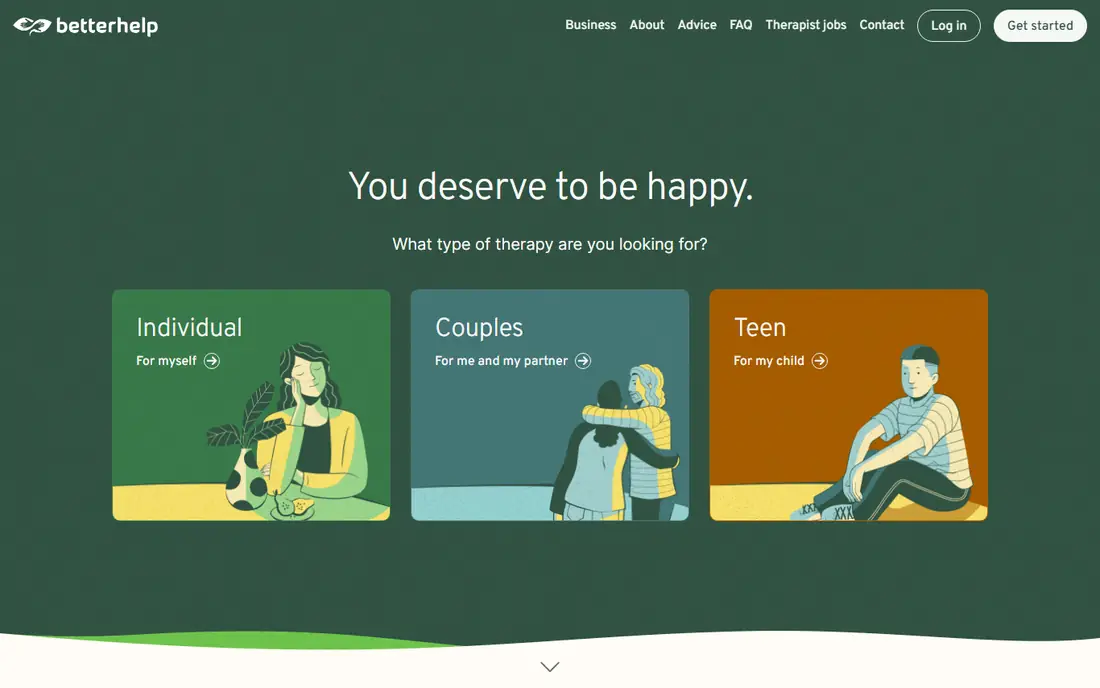
BetterHelp is the largest name in this space, and its main strength is speed and flexibility. After a questionnaire, you are matched with a licensed therapist, and you can message between sessions, join live sessions by video, phone, or chat, and switch therapists if the fit is wrong. That flexibility helps when your schedule changes or when a first match does not feel right.
Pricing is listed at 70 to 100 dollars per week, billed monthly, which works out to about 260 to 400 dollars per month without insurance. Financial aid may be available in some cases. The catch is insurance. BetterHelp has added some in-network options, but coverage depends on your plan, state, and therapist, so check your status in the sign-up flow before you assume a copay will apply.
- Large therapist network
- Video, phone, chat, and messaging
- Easy therapist switching
- Journaling and group sessions included
- No free plan
- Insurance coverage is limited and varies by state and therapist
- Therapists cannot provide an official diagnosis under its terms
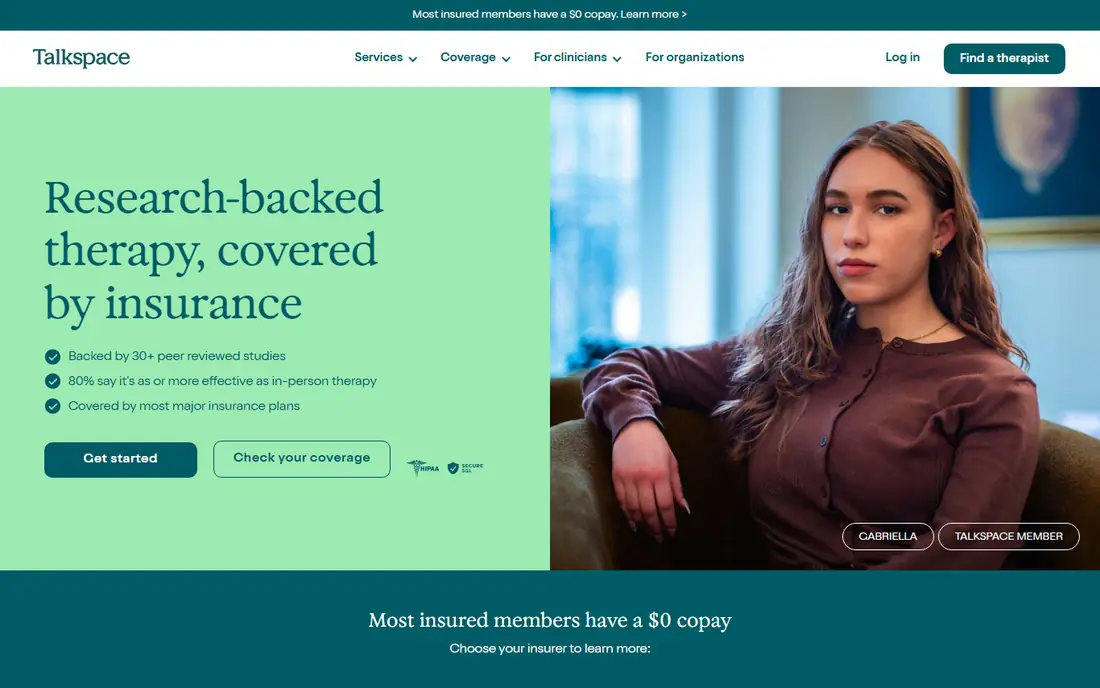
Talkspace is often the best first check if you have insurance. It accepts many major plans, and some members pay a copay per session rather than the full weekly rate. Without insurance, plans start near 69 dollars per week for messaging, with higher tiers adding live video sessions and workshops. Extra live sessions can be bought separately.
The service suits people who like to write between sessions. You can message your therapist on the platform, then meet by video for scheduled sessions. Read the tier details carefully, since messaging-only, video-plus-messaging, and workshop plans differ. If you need medication management, Talkspace also offers psychiatry, which can keep therapy and prescribing in one account.
- Works with many major insurance plans
- Messaging plus live video options
- Psychiatry available
- Clear plan tiers
- Live session length and limits vary by plan
- Out-of-pocket pricing can be confusing across tiers
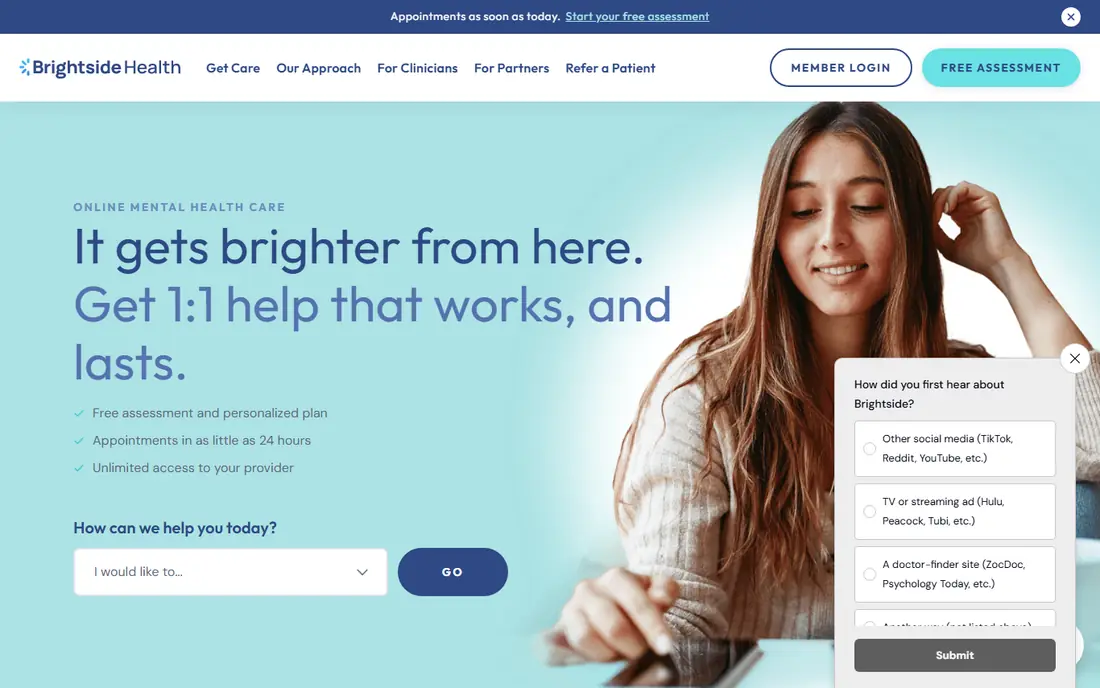
Brightside Health is built for people dealing with anxiety and depression who may need more than talk therapy alone. Plans cover psychiatry from about 95 dollars per month plus pharmacy costs, therapy from about 299 dollars per month, and combined therapy plus medication from about 349 dollars per month in recent listings. Insurance may lower the cost, with average copays reported near 25 dollars in some summaries.
The service tracks symptoms with standard measures over time, which can help you and your provider see whether treatment is helping. That structure is useful, but it also means Brightside is less of a light-touch option. If you only want weekly talk therapy and no medication, compare its therapy plan with BetterHelp or Talkspace first.
- Combined therapy and psychiatry plans
- Symptom tracking over time
- Accepts many insurance plans
- Not ideal for therapy alone at the lowest cost
- Availability and plan details vary by state
Online-Therapy.com stands out for structured cognitive behavioral therapy, or CBT. Alongside live sessions, you get worksheets, a journal, and activity plans that guide work between sessions. That structure suits people who like homework and clear steps, rather than open-ended conversation alone.
Pricing starts near 48 dollars per week in recent comparisons, with higher tiers adding more live sessions. The service does not accept insurance directly, though it may provide receipts you can submit. If you want a tool-heavy program at a lower entry price, this is a strong trial candidate. If you need insurance billing, Talkspace or Grow Therapy will fit better.
- Low starting price in many comparisons
- CBT worksheets, journal, and activity tools
- Video, voice, and messaging options
- No insurance accepted
- Fewer live session options on the lowest tier
- App availability is more limited than larger rivals
Cerebral offers therapy, medication management, or both, through video visits. That combined model appeals to people who want one provider team to handle talk therapy and prescribing, rather than coordinating two separate services. Insurance is accepted on select plans, which can lower the cost a lot compared with self-pay.
Because Cerebral has changed its plans and faced public scrutiny in past years, read the current plan page, privacy page, and prescribing terms before you sign up. Confirm whether your state is covered, what the monthly plan includes, and how messaging and follow-up visits work. For combined care, it remains a real option, but it rewards a careful check more than a quick sign-up.
- Therapy and medication management in one service
- Accepts some major insurance plans
- Video-based care
- Pricing varies by plan and state
- Medication-only and therapy plans need careful comparison
- Past public criticism means you should read current terms
Grow Therapy works differently from subscription platforms. Instead of one monthly bundle, it helps you find a licensed therapist who takes your insurance, then you book video sessions with that provider. Many users pay a copay, often in the range of zero to 30 dollars per session in recent comparisons, depending on the plan.
That model suits people who want a traditional therapist relationship, but online, and who want to use insurance. The trade-off is less bundling. You do not get the same unlimited messaging or group session library that subscription services include. If insurance is your main factor, Grow Therapy deserves a search before you pay a full subscription price elsewhere.
- Wide in-network therapist search
- You choose your own therapist
- Video sessions with licensed providers
- Price depends on your insurance and therapist
- Not a subscription bundle like BetterHelp
- Availability varies by state
Amwell is a telehealth platform that includes therapy alongside urgent care and other medical visits. Therapy visits are listed near 109 to 129 dollars per session without insurance in recent comparisons, but many insurance plans cover Amwell visits with a copay. That makes it worth checking if your employer or insurer already lists Amwell as a covered provider.
Amwell suits people who prefer scheduled video visits over ongoing messaging. It is less focused on daily messaging support than subscription therapy apps. If you already use Amwell for medical care, keeping therapy in the same account can simplify scheduling and records, but compare the per-visit cost with a monthly subscription if you plan weekly sessions.
- Accepts many insurance plans
- Video and phone visits
- Broader telehealth services beyond therapy
- Higher per-visit prices without insurance
- Less messaging-based therapy than Talkspace or BetterHelp
Calmerry is a budget option worth a look if you are paying out of pocket. Recent comparisons list prices from about 57 to 90 dollars per week, depending on the plan and billing period. You get messaging plus live chat or video sessions, with a focus on structured, CBT-style work.
The network is smaller than the largest platforms, so therapist choice may be more limited in some states. Calmerry does not bill insurance directly. For a lower-cost, message-friendly service, it is a reasonable trial, especially if you like written communication between sessions and want to keep monthly costs down.
- Lower starting price than many rivals
- Chat, video, and messaging options
- CBT-focused tools
- Smaller network than BetterHelp or Talkspace
- No insurance billing
- Plan limits vary
7 Cups is different from the rest of this list, and that is why it is here. Its free tier connects you with trained volunteer listeners for peer support by chat, which can help when you want to talk to someone soon, without a subscription or a formal intake. That low barrier matters for people who are unsure about therapy.
Peer support is not a replacement for licensed therapy, and 7 Cups is clear about that distinction in its own materials. Paid plans add access to licensed therapists, listed near 150 dollars per month in recent comparisons. Use 7 Cups as a first step, a between-session support, or a way to test whether talking helps, then move to a licensed service for ongoing clinical care.
- Free peer listeners available around the clock
- Low-pressure first step
- Paid therapy option for licensed care
- Free peer support is not therapy
- Paid therapy pricing is higher than some rivals
- Quality varies by listener
How we picked these
We reviewed official pricing pages, plan descriptions, insurance pages, and privacy pages, along with public reviews and comparison guides. We kept services that are operating in the US now, use licensed therapists for clinical care, and publish clear pricing or insurance information. We included one peer-support option because it serves a different need, and we labeled it as such. We did not claim hands-on testing, and we did not rank services by invented scores. Prices change by state and plan, so confirm the current price and insurance status before you start.
How to choose a service that fits your life
Cost matters, but fit matters more. A service you actually use beats a cheaper one you avoid.
Start with insurance, then format
If you have insurance, check Talkspace, Grow Therapy, Amwell, Brightside, and Cerebral first, since a copay can change the ranking completely. Then decide whether you prefer video, messaging, or a mix. Messaging suits people who think in writing or have odd hours. Video suits people who want face-to-face conversation and a stronger sense of presence.
Check safety, privacy, and therapist fit
Read the privacy policy for how messages are stored, whether data is shared, and how you can delete your account. Check therapist credentials and state licensing, and confirm how easy it is to switch therapists. A good service makes switching simple, explains crisis resources, and does not lock you into a long plan before you have met your therapist.
Try a short period and judge the match
Give a new therapist two or three sessions, unless something feels unsafe or clearly wrong. Notice whether you feel heard, whether sessions have direction, and whether messaging replies arrive in a useful time frame. If the fit is poor, switch therapists or switch services. Staying with a poor fit because you already paid is a common and costly mistake.
Sources
- https://www.betterhelp.com/advice/psychology/betterhelp-pricing-what-you-can-expect-to-pay-for-therapy/
- https://www.talkspace.com/blog/blog-how-much-talkspace-costs/
- https://brightside.com
- https://www.online-therapy.com
- https://cerebral.com
- https://growtherapy.com
- https://amwell.com
- https://calmerry.com
- https://www.7cups.com