Best Procurement Software in 2026: 9 Platforms Compared
By ToolNimba Editorial Team October 30, 2026 12 min read

- Top pick
 Coupa
Large enterprises managing complex spend
Starting priceSee websiteCheck out CoupaRead our review - Runner-up
 SAP Ariba
Companies already running SAP
Starting priceSee websiteCheck out SAP AribaRead our review - Also great
 Oracle Procurement
Oracle ERP customers
Starting priceSee websiteCheck out Oracle ProcurementRead our review
How we researched this
We compared official pricing and feature pages, app store listings, privacy policies and public user reviews. Prices change, so check the provider's site before you pay.
Key takeaways
- Enterprise suites such as Coupa, SAP Ariba, and Oracle Procurement suit large companies with complex approval chains, but they are priced by quote and take months to roll out.
- Precoro is the clearest mid-market option for published pricing, starting at $499 per month, while Ramp offers a free core plan for smaller US teams.
- If intake and approvals are the main bottleneck, Zip deserves a demo before you buy a full source-to-pay suite.
- No single tool fits every company, so shortlist by company size, existing ERP system, and whether you need sourcing and contracts or just purchase control.
Quick comparison
| Name | Best for | Starting price | Free plan | |
|---|---|---|---|---|
| Coupa | Large enterprises managing complex spend | See website | No | Visit |
| SAP Ariba | Companies already running SAP | See website | No | Visit |
| Oracle Procurement | Oracle ERP customers | See website | No | Visit |
 Precoro | Mid-market purchase control | $499 per month | Free trial | Visit |
 Procurify | Mid-sized teams needing live budget visibility | See website | No | Visit |
 Zip | Intake and approval bottlenecks | See website | No | Visit |
 Airbase | Purchasing plus accounts payable in one place | See website | No | Visit |
 Ramp | Smaller US teams starting with free tools | Free | Yes | Visit |
 JAGGAER | Formal sourcing and supplier management | See website | No | Visit |
The best procurement software
Procurement software covers how a company requests, approves, orders, receives, and pays for goods and services. Some tools cover only that buying chain, while full suites add sourcing events, contracts, supplier risk checks, and spend analytics. We compared official feature pages, pricing pages, and public reviews to build this list, and we did not claim hands-on trials we did not run.
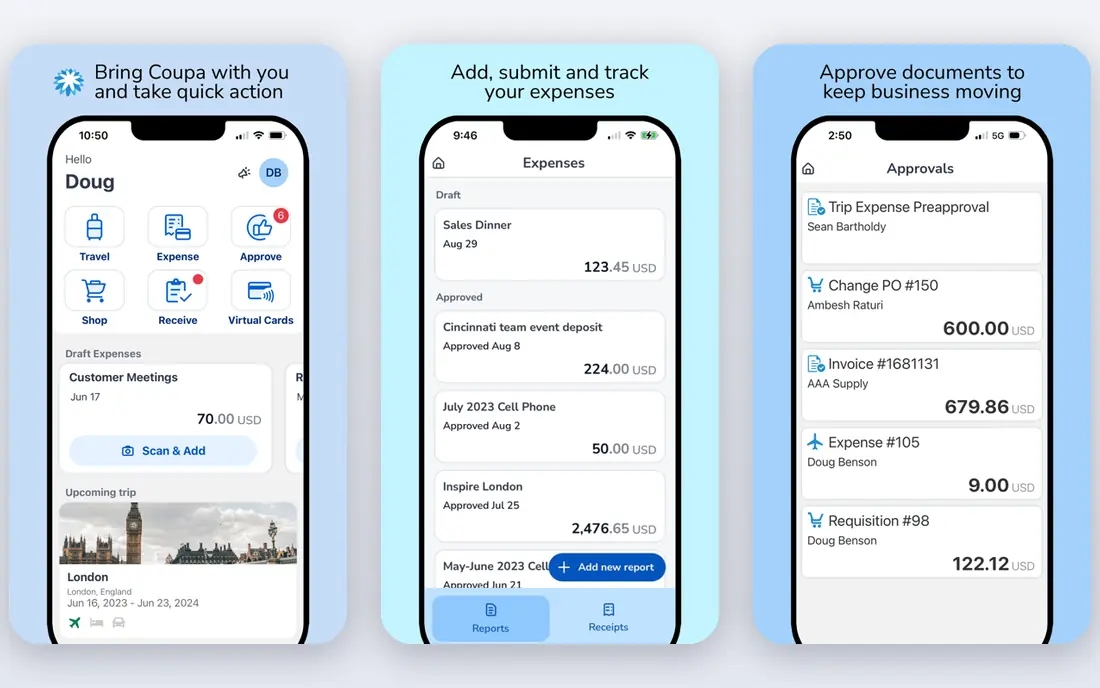
Coupa is the broadest pick on this list for a large company that wants purchasing, invoicing, expenses, and payments in one system. Its community benchmarking lets finance teams compare their spend patterns with similar companies, which is useful when you need to defend a savings target to senior leaders. The platform also covers supplier management and contract workflows, so it can replace several smaller tools at once.
The trade-off is scale and cost. Coupa is priced by quote, and published comparisons routinely put enterprise deployments in six figures per year, so it is hard to justify for a company with only a handful of buyers. Rollout also needs process design, integrations, and supplier onboarding, which means you should budget months rather than weeks. If your company is large, multi-entity, and ready for that effort, Coupa belongs at the top of the shortlist.
- Broad source-to-pay coverage
- Strong spend analytics and benchmarking
- Large buyer and supplier network
- Quote-based enterprise pricing
- Implementation can be long and involved
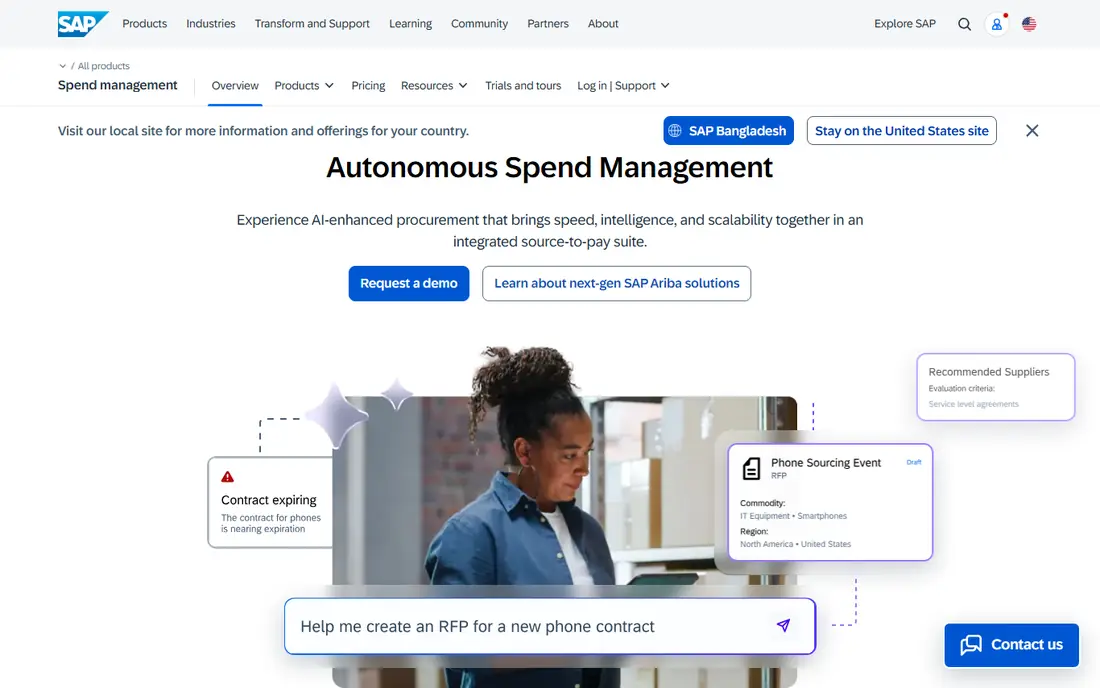
SAP Ariba makes most sense when SAP already runs the core business. Its supplier network is one of the largest in this category, which helps when you buy from many vendors across countries and need consistent onboarding and compliance checks. Sourcing events, contract management, and invoicing sit in the same family of tools, so data can move from a sourcing decision into a purchase order without a manual handoff.
For companies outside the SAP world, the same depth can feel heavy. Pricing is by quote, implementation is a major project, and smaller teams may find that they use only a small part of what they bought. The honest test is simple: if your ERP is SAP and your supplier base is global, Ariba is hard to beat. If not, a mid-market tool will usually get you live faster and for less money.
- Very large supplier network
- Deep sourcing and contract tools
- Prebuilt SAP ERP links
- Quote-based pricing
- Steep learning curve for new users
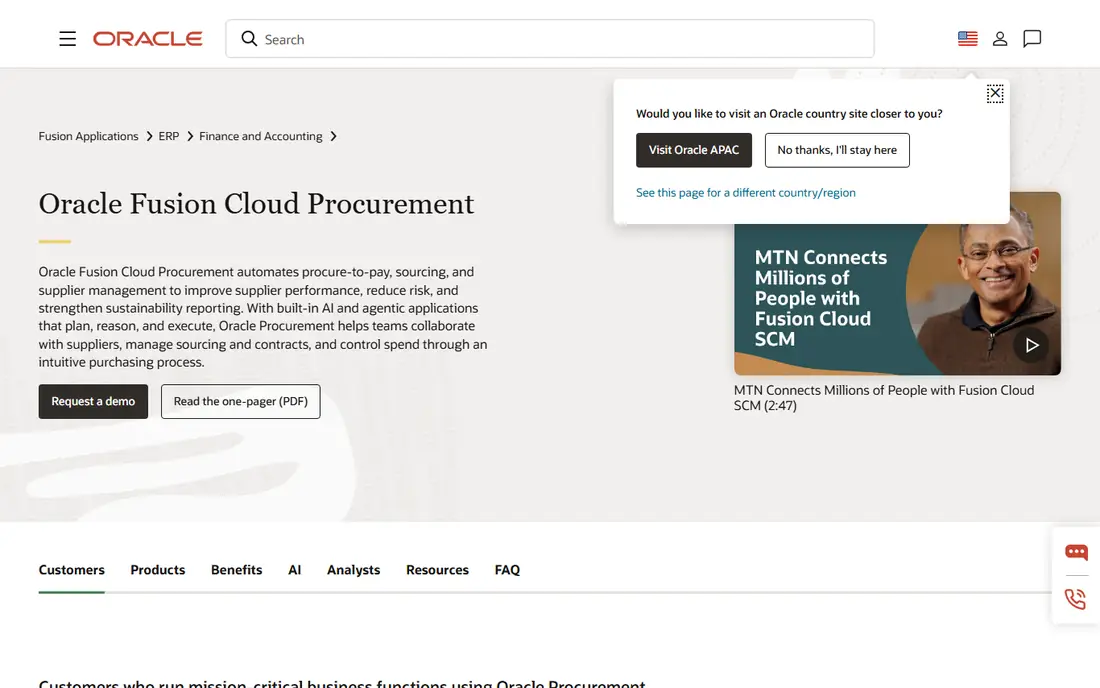
Oracle Procurement, part of Oracle Fusion Cloud, is the natural choice for companies that already run Oracle for finance and supply chain work. Purchase requisitions, approvals, supplier qualification, sourcing, and contract terms share the same data model as the ERP, which cuts down on duplicate entry and reconciliation work. Automated workflows can route approvals by amount, category, or department without a separate integration project.
Outside that ecosystem, the case weakens. Pricing depends on modules and users and is quoted rather than published, and the full value arrives only when the rest of the Oracle stack is in place. Companies that use a different ERP should compare Coupa or Ariba first, or consider a lighter intake tool on top of what they already own. For Oracle shops, though, staying inside one vendor often saves more time than any single feature.
- Tight fit with Oracle Cloud ERP
- Covers purchasing, sourcing, suppliers, and contracts
- Strong workflow automation
- Quote-based pricing
- Best value only inside an Oracle setup
Precoro stands out in this category for a simple reason: it publishes its price. The Core plan starts at $499 per month, which lets a mid-sized finance team build a business case without waiting for a sales quote. Purchase requests, multi-step approvals, budgets, purchase orders, and invoices are handled in one workflow, and managers can see spending against budget before money leaves the company.
That focus is also its limit. Precoro is a procure-to-pay tool first, not a full sourcing and supplier-risk suite, so a global manufacturer with complex tenders will still need more. For a growing company moving away from email approvals and spreadsheets, however, that focus is a strength. Setup is guided and typically measured in weeks, and the product is easy for non-procurement staff to use, which matters because requesters are often the people who resist a new system most.
- Published starting price
- Purchase orders, budgets, and approvals in one place
- Guided setup measured in weeks
- Less sourcing depth than enterprise suites
- Enterprise-grade analytics may need higher tiers
Procurify targets the same mid-market buyer as Precoro, but it puts live budget visibility at the center. When a requester submits a purchase, approvers can see at once how much budget remains for that department or project, which stops overspend before an order is placed rather than after an invoice arrives. Mobile approvals help managers who are rarely at a desk, and catalog support keeps staff buying approved items at agreed prices.
Pricing is modular and quoted, so you will need a demo and a proposal to get a firm number. That makes it harder to compare at a glance than Precoro, and smaller companies may prefer a published price. Still, if your main pain is finance losing sight of spending until month-end, Procurify is a strong demo. Ask for a walkthrough built around your own budget structure, not a generic sales demo, before you decide.
- Real-time spend against budgets
- Mobile approvals
- Catalog and PunchOut support
- Pricing is quote-based
- Advanced features depend on the chosen modules
Zip solves a narrower problem than the suites above, and it solves it well. Many companies do not struggle to create a purchase order; they struggle to get a request through finance, legal, IT, and security without it stalling in someone inbox. Zip gives employees one intake form, then routes the request to the right approvers in the right order, with status visible to everyone involved. That alone can cut cycle times sharply.
Because Zip is built to sit on top of an existing ERP rather than replace it, it is a good fit when the ERP already handles accounting and payments. It is less useful if you also need deep sourcing events, contract negotiation, or supplier onboarding in the same tool. Price is quoted, so expect an enterprise-style sales process. If approvals are your bottleneck, demo Zip before committing to a suite you may not need.
- Strong intake and orchestration
- Routes requests across finance, legal, IT, and security
- Works alongside an existing ERP
- Quote-based pricing
- Not a full sourcing suite on its own
Airbase brings purchasing, accounts payable, and corporate cards into a single workflow, which appeals to finance teams tired of reconciling three systems. A request can become an approved purchase, a virtual card, and then a matched invoice without retyping vendor or budget details. Accounting integrations pass approved bills to the general ledger, and managers approve from a phone or a browser.
The catch is pricing transparency. Airbase is quote-based, so budgeting requires a sales conversation, and the product is most mature for US-based mid-market companies. Companies outside that profile should check local payment and tax support early in a trial. For a US team that wants purchasing and AP together without buying a full enterprise suite, Airbase is a practical middle ground between Precoro and Coupa.
- Combines guided purchasing, bill pay, and cards
- Approval workflows
- Accounting integrations
- Quote-based pricing
- Strongest for US mid-market companies
Ramp is the outlier here because its core platform is free. US startups and small teams can issue cards, track expenses, pay bills, and run basic procurement workflows without a monthly platform fee, then move to paid tiers as controls and approval depth grow. That makes it the lowest-risk starting point for a company that has outgrown spreadsheets but is not ready for a quoted enterprise contract.
Free does not mean unlimited. Advanced procurement controls, deeper approvals, and some integrations require paid plans, and Ramp is built mainly for US companies. Teams outside the US should confirm availability before planning around it. Even with those limits, Ramp is our pick for most small teams: start free, learn what controls you actually use, and only pay when the volume or complexity justifies it.
- Free core plan with cards and expense tools
- Bill pay and basic procurement included
- Fast to start
- Full procurement features sit in paid tiers
- US-focused availability
JAGGAER is built for organisations where sourcing is a formal, audited process rather than a quick price check. It covers sourcing events, category strategy, supplier qualification and lifecycle management, contracts, and procure-to-pay workflows, with controls that suit regulated industries, higher education, and public-sector buyers. If your team runs structured tenders and needs a clear audit trail from requirement to contract, this depth matters.
As with other enterprise suites, pricing is quoted and full deployment is a project, not a quick signup. Smaller companies will find it more than they need, and even mid-sized teams should start with one module rather than the whole suite. For large buyers with complex supplier bases and strict compliance needs, JAGGAER is a credible alternative to Coupa and Ariba, and it deserves a place in a formal selection process.
- Deep sourcing and category management
- Supplier lifecycle tools
- Strong for regulated and public-sector buying
- Quote-based enterprise pricing
- Long implementation for full deployments
How we picked these
We compared official product and pricing pages, vendor documentation, and public reviews for tools that are live and supported in October 2026. We favored tools with a clear procurement fit, meaning purchase requests, approvals, purchase orders, or sourcing, rather than generic expense or accounting apps. Prices shown are the starting prices we could verify from vendor or reputable pricing summaries; where a vendor quotes by size and modules, we wrote See website instead of guessing a number. We did not run hands-on trials, so this list reflects documented features and pricing, not lab testing.
What to check before you buy
Match the tool to your company size
A 20-person company and a 2,000-person company do not need the same tool. Small teams should start with Ramp or Precoro and add controls as headcount grows. Large, multi-country companies should shortlist Coupa, SAP Ariba, Oracle Procurement, or JAGGAER and plan for a longer rollout.
Check your ERP fit first
Procurement software works best when it passes data cleanly to accounting. If you run SAP, Ariba has a natural edge. If you run Oracle, Oracle Procurement does. If your ERP is something else, ask each vendor for a named integration, a reference customer on the same ERP, and a written answer on how invoices and payments sync.
Demo with your own workflow
Ask vendors to run your approval chain, your budget structure, and your trickiest category, such as IT software or marketing services. A polished generic demo hides weak spots. Also confirm contract length, price rises at renewal, data export terms, and who owns supplier onboarding work, because those items drive total cost more than the headline licence fee.