Best Rental App in 2026: 9 Apps Compared
By ToolNimba Editorial Team October 30, 2026 10 min read

- Top pick
 Zillow
Broadest house and apartment search
Starting priceFreeCheck out ZillowRead our review - Runner-up
 Apartments.com
Large complexes
Starting priceFreeCheck out Apartments.comRead our review - Also great
 Apartment List
Matched shortlist
Starting priceFreeCheck out Apartment ListRead our review
How we researched this
We compared official pricing and feature pages, app store listings, privacy policies and public user reviews. Prices change, so check the provider's site before you pay.
Key takeaways
- Use more than one rental app, because inventory differs by market and by landlord type, from large complexes to small owner-listed homes.
- Zillow and Trulia offer the broadest mix of houses and apartments, while Apartments.com is strongest for large managed complexes.
- Apartment List helps when you want a matched shortlist from budget and commute, rather than endless scrolling.
- Set instant alerts on your exact filters and tour quickly, because the best listings in tight markets move within days.
- Never pay before touring in person or by live video, and verify the landlord and property before sending any deposit.
Quick comparison
| Name | Best for | Starting price | Free plan | |
|---|---|---|---|---|
| Zillow | Broadest house and apartment search | Free | Yes | Visit |
| Apartments.com | Large complexes | Free | Yes | Visit |
| Apartment List | Matched shortlist | Free | Yes | Visit |
 Zumper | Fast alerts and applications | Free | Yes | Visit |
 Realtor.com | Fresh MLS listings | Free | Yes | Visit |
 Redfin | Broker listings and tours | Free | Yes | Visit |
 HotPads | Map-based search | Free | Yes | Visit |
 Trulia | Neighbourhood detail | Free | Yes | Visit |
 Rent.com | Managed buildings | Free | Yes | Visit |
The best rental apps
Finding a rental is a speed and coverage problem. No single app lists every home, and the listing you want may appear on one platform hours before another. We compared official app listings, feature pages and public rental guides, and we focused on inventory type, alert quality, application tools and how easy it is to spot a stale or scam listing.
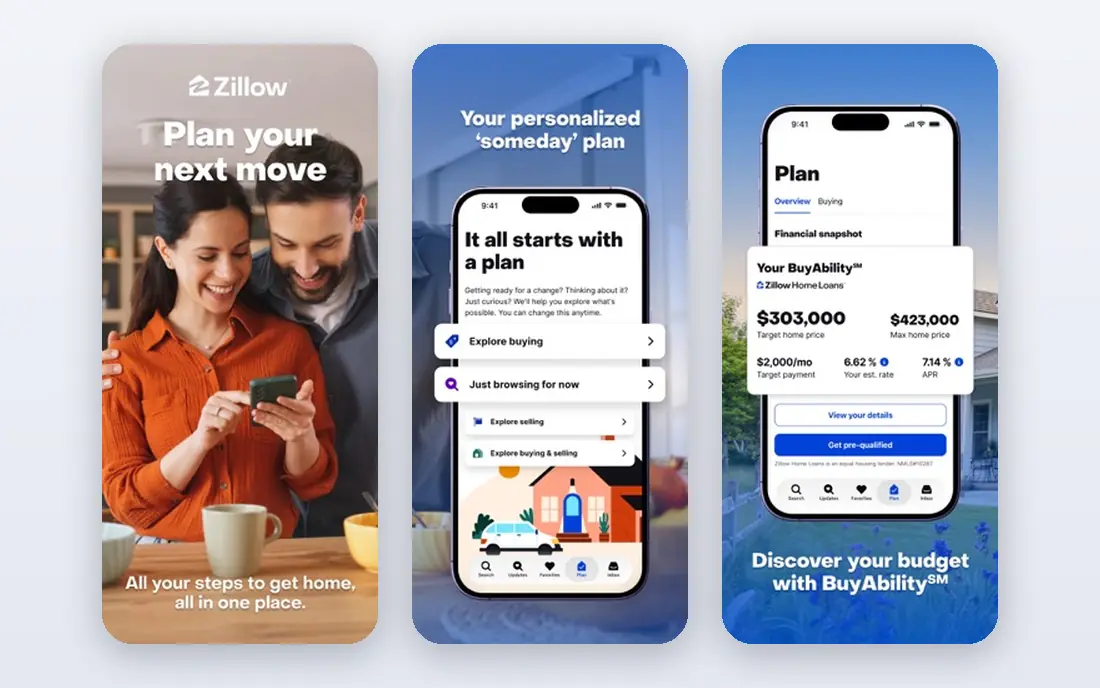
Zillow is the default starting point for most renters, because it covers houses, apartments, condos and townhomes in one search. Small landlords list alongside large property managers, so you see homes that never appear on a complex-only platform. Filters for price, bedrooms, pets, parking and commute help narrow a large result set quickly.
The weakness is freshness. A listing can stay visible after it is leased, and a home that looks available may already have applications in progress. Treat Zillow as a discovery tool, then confirm price and availability with the property before you tour. Used that way, with alerts on your exact filters, it gives you the broadest coverage in this list.
- Largest mix of houses, apartments and small-landlord listings
- Saved searches and alerts
- Tour scheduling in the app
- Some listings are stale or already leased
- Quality varies by market and landlord
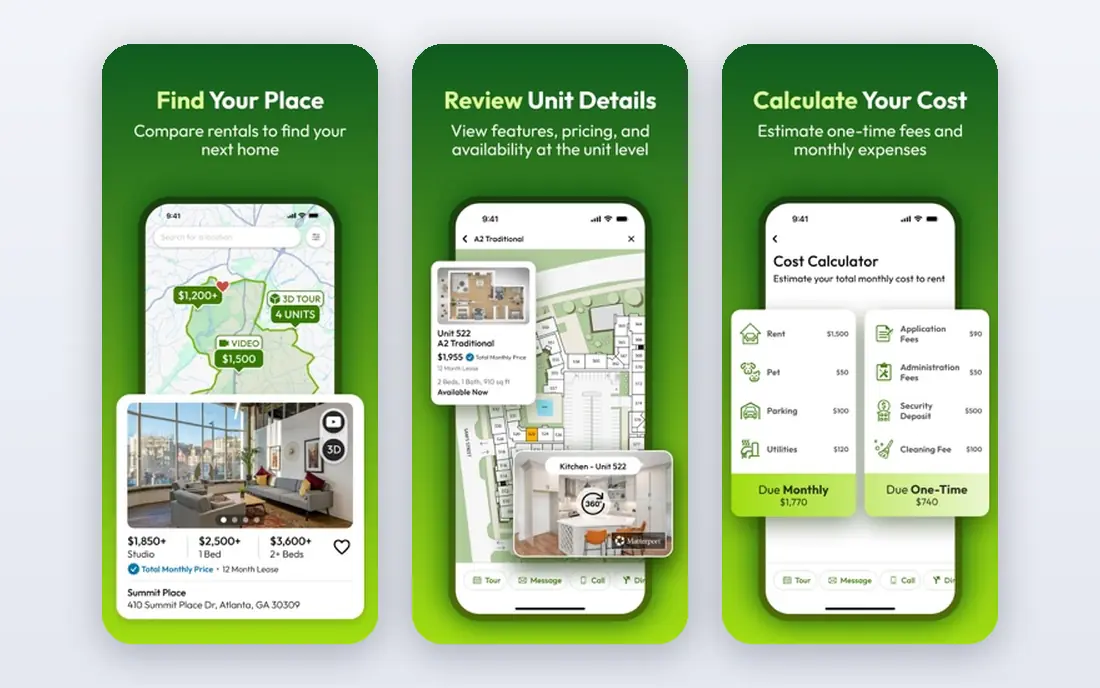
Apartments.com is strongest for apartment complexes and managed buildings, where listings include floor plans, amenities, availability and pricing in a consistent format. That consistency makes comparison easier than scrolling through owner-written listings with different levels of detail. The app also offers application, screening and lease tools for landlords, which can speed up the process once you apply.
The trade-off is coverage of houses. If you want a single-family rental from a small landlord, Zillow or a local platform may show more options. For a renter focused on complexes, though, Apartments.com is often the most efficient search, especially in cities with many large buildings. Cross-check Zillow for houses, and use Apartments.com for complexes.
- Deep inventory for large complexes
- Pricing transparency on many listings
- Application and screening tools
- Less single-family inventory than Zillow
- Some listings are for managed buildings only
Apartment List takes a different approach from a simple search box. You enter your budget cap, commute, bedrooms and must-have amenities, and the app builds a shortlist and alerts you to new matches, price drops and rent specials. That structure helps renters who feel overwhelmed by thousands of listings and want a smaller, more relevant set to review.
The limit is that a matched list is only as good as the filters you set. If you are flexible on neighbourhood or open to a house as well as an apartment, a broad Zillow search may surface options Apartment List ranks lower. Use Apartment List as your daily shortlist, and keep a second app for open-ended browsing. For many renters, that combination cuts search time without missing the best homes.
- Personalised matching from budget, commute and must-haves
- Alerts for price drops and specials
- Free for renters
- Shortlist depends on your inputs, so broad searches may miss unusual homes
- Coverage varies by city
Zumper is built for speed. Alerts arrive as new apartments post, which matters in markets where a good home gets applications within a day. The app also supports quick applications, so you can apply soon after a tour without starting a new form from scratch. That combination of alert and application is why many renters keep Zumper running alongside Zillow.
Zumper also owns PadMapper, so a single search can cover both surfaces in some markets. The weakness is market variation. In some cities Zumper is deep and fresh, while in others it is thinner than Zillow or Apartments.com. Test it in your city for a week, and keep it if alerts arrive first for homes you like. If they do not, Zillow alerts may serve you better.
- Real-time alerts as new listings post
- Quick applications
- Coverage for apartments and houses
- Audience depth varies by market
- Some listings duplicate other platforms
Realtor.com draws heavily on MLS data, which is the system agents use to list homes for sale and rent. That source tends to produce fresher, more verified listings than owner-posted boards, because agent-listed rentals follow a standard process. For renters who have been burned by stale listings, that freshness is a real advantage.
The rental pool is smaller than Zillow, especially for small landlords who do not use an agent. Realtor.com is therefore best used as a cross-check, not as your only app. When a home appears on both Realtor.com and Zillow, the Realtor.com details are a useful confirmation of price and status. When a home appears only on Realtor.com, it may be a fresh agent listing worth touring quickly.
- MLS-sourced listings that tend to be fresh
- Verified listing data
- Strong for homes listed by agents
- Smaller rental pool than Zillow
- Fewer small-landlord listings in some markets
Redfin is best known for home sales, but its rental search is useful for broker-listed homes and for renters who want tour booking built into the app. Listings include market data and pricing context, which helps you judge whether a rent is in line with nearby homes. The map search is clean, and saved searches with alerts work well for a focused area.
The limit is rental depth. Redfin does not aim to be a rental-only marketplace, so its rental pool is smaller than Zillow or Apartments.com in many cities. It is also strongest in markets where Redfin operates as a brokerage. Use Redfin when you want a broker-listed home or a tour booked quickly, and keep Zillow for broader rental coverage.
- Brokerage listings with tour booking
- Market data and pricing history
- Clean map search
- Rental inventory is smaller than sale inventory
- Coverage is strongest in Redfin-served markets
HotPads opens on a map, which suits renters who think in neighbourhoods rather than in lists. You can draw an area, filter by price and bedrooms, and see homes in that exact patch of the city. That map-first view helps when you know the streets you want, or when you are comparing two nearby neighbourhoods side by side.
HotPads is owned by Zillow, so much of its inventory overlaps with Zillow. That overlap is not a flaw if you prefer the map interface, but it means HotPads rarely shows a home Zillow misses. Treat HotPads as an interface choice, not as a separate inventory source. If you like maps, use HotPads for daily browsing and Zillow for broader filters and applications.
- Map-first search that opens on your area
- Good for neighbourhood exploration
- Saved searches and alerts
- Owned by Zillow, so inventory overlaps heavily
- Fewer unique listings than the main Zillow app
Trulia, also owned by Zillow, adds neighbourhood context to the same broad inventory. Local guides, commute information and neighbourhood detail help renters who are new to a city and need to compare areas, not just homes. Filters for price, pets, parking and property type work much like Zillow, so the learning curve is low.
The overlap with Zillow is the main limit. Trulia is best used for neighbourhood research and for a second alert channel, rather than as a source of unique listings. If you are moving to a new city, start with Trulia neighbourhood pages to narrow your areas, then run saved searches on Zillow and Apartments.com for the actual hunt. That split uses each app for what it does best.
- Neighbourhood guides, commute and local detail
- Broad house and apartment inventory
- Saved searches
- Owned by Zillow, so inventory overlaps
- Some listings can be stale, as with Zillow
Rent.com focuses on managed buildings and large complexes, and it sits within the Redfin rental network. Listings for buildings tend to include amenity, floor plan and availability detail in a consistent format, which makes it easier to compare buildings than to compare scattered owner listings. For renters who want a building with a gym, package room and on-site management, Rent.com is a useful second search.
The weakness is houses and small landlords, where Zillow is stronger. Rent.com also varies by market, with deeper coverage in cities with many managed buildings. Use it alongside Apartments.com when you are building a shortlist of complexes, and use Zillow when you want a house, a duplex or an owner-listed home. Together, they cover most rental types.
- Part of the Redfin rental network
- Strong for large managed buildings
- Clear building and amenity detail
- Less single-family inventory
- Coverage varies by market
How we picked these
We compared official app listings, feature pages and public rental guides, and we selected apps that are free for renters, available in the US in 2026, and that offer saved searches, alerts or applications. We favoured a mix of broad marketplaces, complex-focused platforms and matched shortlist tools, rather than listing nine versions of the same inventory. We did not claim hands-on testing, and we noted where inventory overlaps because several apps share a parent company.
How to search without missing the best homes
Start with your non-negotiables: maximum rent, bedrooms, pets, parking and commute time. Set those as saved searches with instant alerts on two or three apps, rather than browsing daily. A new listing alert is only useful if you act on it, so tour within 24 hours when a promising home appears, and bring your application packet with you.
Verify before you pay
Rental scams target renters who are in a hurry. Never pay an application fee, deposit or first month rent before touring in person or by live video, and never pay through gift cards, wire transfer or a payment app to a stranger. Verify the landlord or property manager, check that the person showing the home has the right to rent it, and read the lease before you sign. If a price looks far below market for the area, treat it as a warning sign, not a bargain.
Build an application packet early
Most landlords screen for income, credit, rental history and background, with gross monthly income of about 2.5 to 3 times rent as a common standard. Prepare pay stubs or an offer letter, tax returns if self-employed, bank statements, prior landlord references and ID before you start touring. A complete packet lets you apply on the spot, which matters when a landlord receives several applications for one home.