Best Spend Management Software in 2026: 9 Platforms Compared
By ToolNimba Editorial Team October 30, 2026 11 min read

- Top pick
 Ramp
Automation-first spend control
Starting priceFreeCheck out RampRead our review - Runner-up
 Brex
Startups and global teams
Starting priceFreeCheck out BrexRead our review - Also great
 Expensify
Simple expense reporting
Starting price$5 per monthCheck out ExpensifyRead our review
How we researched this
We compared official pricing and feature pages, app store listings, privacy policies and public user reviews. Prices change, so check the provider's site before you pay.
Key takeaways
- Ramp and Brex both offer a free core tier, which makes them a low-risk starting point for small teams that want cards and controls without a subscription.
- If you want to keep your current bank cards, Expensify and Zoho Expense are better fits than card-first platforms that require their own card.
- Travel-heavy teams should look closely at Navan, because it combines booking and expenses instead of treating travel as a separate receipt pile.
- Large companies with complex procurement or SAP systems will usually need Airbase or SAP Concur, even though both are priced by quote.
- Check the paid-tier limits before you commit, because free tiers often cap advanced approvals, analytics or integrations.
Quick comparison
| Name | Best for | Starting price | Free plan | |
|---|---|---|---|---|
| Ramp | Automation-first spend control | Free | Yes | Visit |
| Brex | Startups and global teams | Free | Yes | Visit |
| Expensify | Simple expense reporting | $5 per month | Free trial | Visit |
 Zoho Expense | Low-cost expense tracking | Free | Yes | Visit |
 Navan | Travel plus expenses | Free | Yes | Visit |
 BILL Spend and Expense | Budgets with BILL cards | Free | Yes | Visit |
 Airbase by Paylocity | Procurement-led mid-market teams | See website | No | Visit |
 SAP Concur | Large enterprises on SAP | See website | No | Visit |
 Pleo | Employee-friendly European spending | See website | Free trial | Visit |
The best spend management software
Spend management is not one job. It covers cards, approvals, receipts, reimbursements, bill pay and, for some teams, travel. The best platform for a five-person startup is rarely the best platform for a 500-person company with procurement rules. We compared official pricing pages, feature pages and public reviews, and we focused on what each tool controls before money leaves the account.
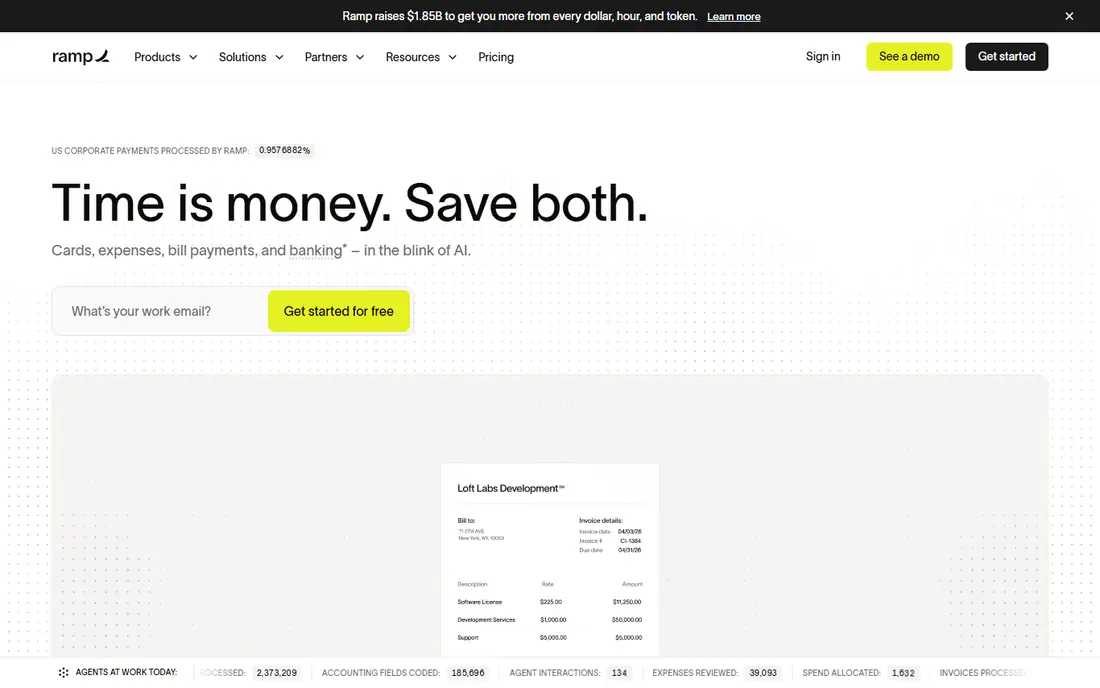
Ramp suits teams that want spending rules set before a purchase happens, not cleaned up at month end. Managers can set limits by employee, vendor or category, and virtual cards can be issued for a single vendor or project. That structure helps finance teams close the books faster, because much of the coding and receipt matching is handled as transactions arrive.
The free tier is a genuine reason to try it. It covers cards, expense management and basic controls without a monthly software fee, which keeps the cost of a pilot low. The trade-off is that Ramp Plus adds deeper automation, custom workflows and more advanced reporting, so larger teams should budget for that tier rather than assuming the free tier covers every need. Ramp also works best when the team is willing to move card spend onto Ramp, since its controls are tied to its own cards.
- Free core tier
- Strong automation for receipts and coding
- Virtual and physical cards with limits
- Advanced features sit on Ramp Plus at $15 per user per month
- You need a Ramp card for the full experience
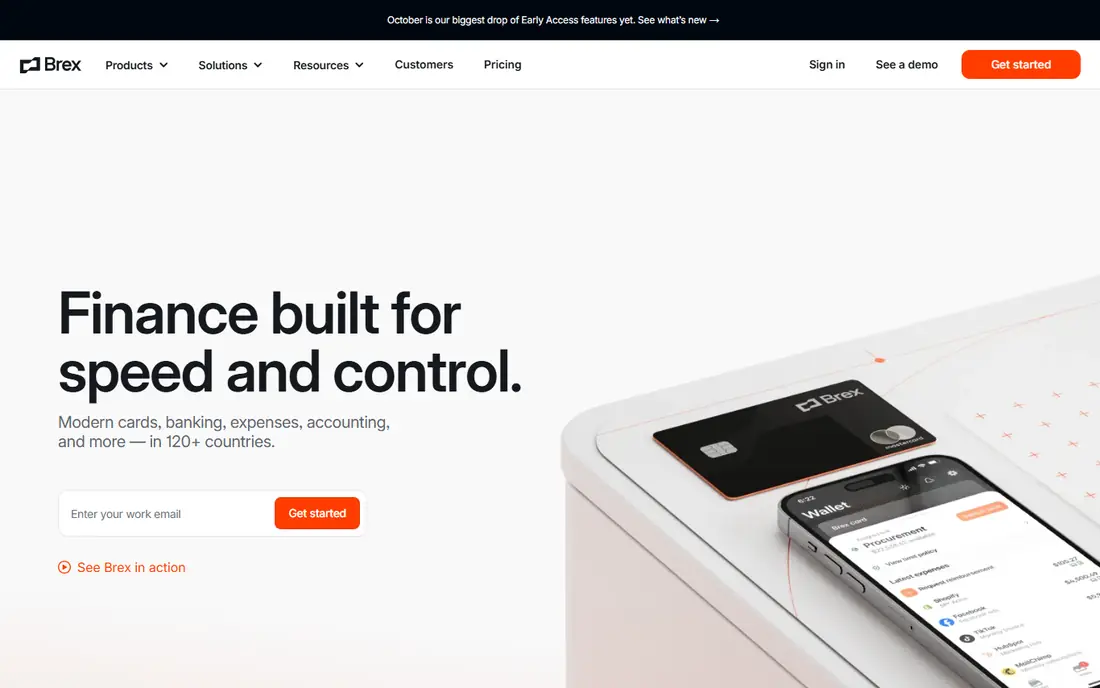
Brex is built for companies that want banking, cards and spend controls in a single account. That combination appeals to startups that do not want to stitch together a bank, a card provider and an expense tool. Employees get cards with limits, managers get real-time visibility, and finance gets expenses that are already tied to transactions.
The Essentials tier gives smaller teams a free way to start, while Premium adds more advanced controls, integrations and support. Brex is strongest for venture-backed and fast-growing companies, and for teams with entities or employees in more than one country. The honest catch is underwriting. Not every company qualifies for the same card terms, and teams that need to keep an existing bank relationship may prefer a card-agnostic tool instead.
- Free Essentials tier
- Cards, banking and expenses in one place
- Global support for distributed teams
- Premium costs $12 per user per month
- Card approval depends on underwriting
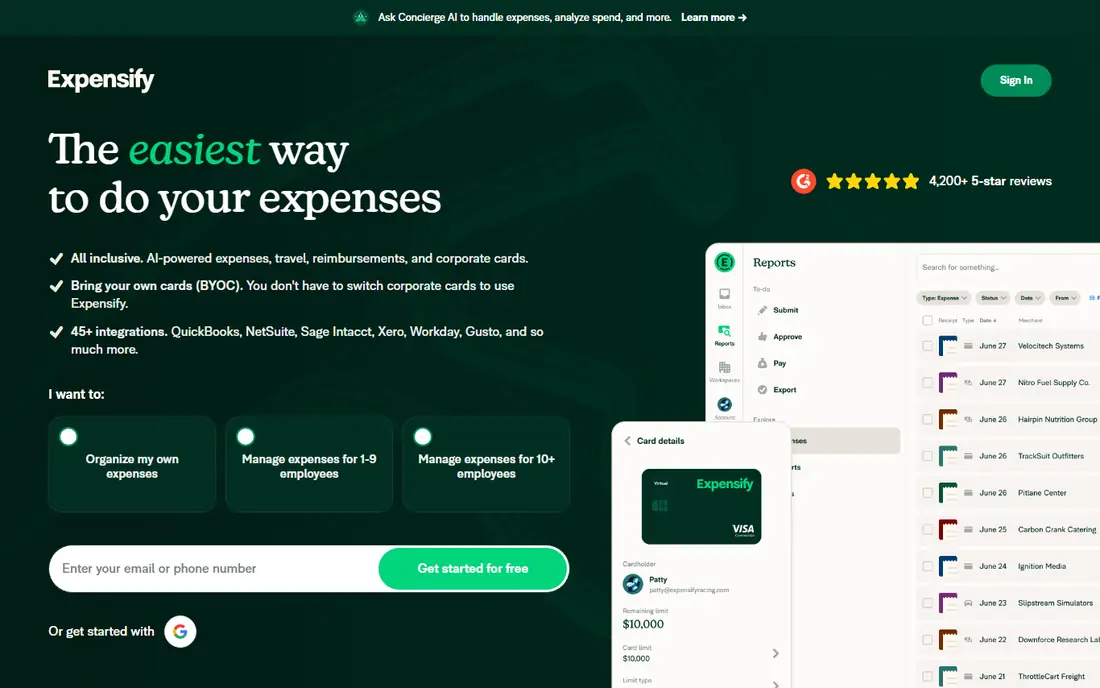
Expensify is the classic choice for teams that mainly need clean expense reports and reimbursements. Employees photograph receipts, the app reads the details, and managers approve reports in a queue that is easy to follow. It does not force a card switch, which matters for companies that already have a corporate card program they like.
That flexibility is also its limit. Expensify does not offer the same pre-spend card controls as Ramp or Brex, because it is not built around issuing its own cards. For a team with straightforward travel and meal expenses, that may not matter. For a team that wants to block out-of-policy spend before it happens, a card-first platform will feel stronger. Pricing is clear at the entry level, but costs rise with headcount, so model a full year before you sign.
- Works with existing cards
- Fast receipt scanning
- Familiar workflow for small teams
- No permanent free plan
- Collect starts at $5 per member per month and Control at $9
Zoho Expense is the budget pick in this list, and it does not feel like a stripped-down demo for a very small team. The free plan covers up to three users, which is enough for a founder and two regular spenders to test the full workflow. Receipt capture, approvals, mileage and policy checks are covered, and the interface is plain rather than flashy.
The value grows if you already use Zoho Books, because expenses flow into accounting with less manual entry. The weakness appears at scale. Companies that need deep procurement, multi-entity controls or advanced card programs will outgrow it. For a small business that wants reliable expense tracking at a low price, though, Zoho Expense is hard to beat on value.
- Free plan for up to 3 users
- Low paid pricing
- Strong fit for Zoho Books users
- Fewer advanced procurement features
- Paid tiers needed as the team grows
Navan, formerly TripActions, is the pick when travel is a large share of spend. Booking flights and hotels inside the same platform that handles expenses removes the usual gap between a booked trip and a filed receipt. Travel policy can be set in the booking flow, so employees see compliant options first instead of learning the rules after they book.
The entry tier is free for the first five expensing users at companies with up to 300 employees, which makes a trial cheap for a small team. Larger teams move to paid pricing, so the total cost depends on how many people expense regularly. If your team rarely travels, a pure expense tool may be simpler. If travel, meals and hotels dominate your reports, Navan saves time in a way a standalone expense app cannot match.
- Travel booking and expenses in one platform
- Free entry tier for smaller companies
- Clear travel policy controls
- Paid expense pricing rises to $15 per user per month after the free users
- Best value is tied to travel use
BILL Spend and Expense suits finance teams that already think in terms of bills, approvals and budgets. The card product is free at its core, and budgets can be set so that spending stops or needs approval when a limit is reached. That makes it useful for companies that want control without paying a per-user software fee from day one.
The platform is strongest when it sits alongside BILL accounts payable, because invoices, bills and card spend share one approval trail. Teams that only want a standalone expense app may find the broader BILL system more than they need. The other point to check is card qualification and the limits of the free tier, since enterprise features are priced separately. For accountant-led teams, however, the combination is practical and well organised.
- Free core card product
- Budget controls tied to cards
- Strong fit for accounts payable teams
- Full value requires BILL cards
- Advanced features are priced for larger plans
Airbase is for companies where procurement is the problem, not just receipts. Employees submit purchase requests, managers approve them, and only then does spending happen through cards or bill pay. That order matters for mid-market finance teams that need audit trails for vendors, contracts and purchase orders.
Because Airbase is now part of Paylocity, companies already running payroll there get a smoother fit. The downside is complexity and price opacity. Pricing is by quote, there is no free plan, and setup takes more work than turning on a card app. Small teams will find it heavy. Mid-market teams with real procurement volume will find the control worth the effort.
- Strong procure-to-pay workflow
- Approvals for purchase requests
- Good fit for Paylocity payroll users
- Quote-based pricing
- No free plan
- Implementation takes longer than a simple expense app
SAP Concur is the enterprise standard for a reason. It handles travel booking, expense reports, invoice management and audit controls at a scale that smaller tools cannot match. Companies already standardised on SAP get the added benefit of data flowing into finance systems without a patchwork of integrations.
The trade-offs are just as clear. Pricing is by quote, implementation is a project rather than an afternoon setup, and the interface feels built for compliance first and speed second. A 10-person team should not buy Concur. A large company with thousands of travellers, strict policy rules and auditors to satisfy will find its depth reassuring rather than excessive.
- Deep enterprise travel and expense coverage
- Strong SAP integration
- Mature policy and audit tools
- Quote-based pricing
- Long implementation
- Overkill for small teams
Pleo gives employees a card and a simple app, and gives finance real-time control over who can spend what. Receipts can be captured in the app, limits can be adjusted quickly, and spending shows up without waiting for month-end reports. That employee-friendly design is why many European teams choose it over heavier enterprise tools.
Pleo is less of a natural fit for a purely US team that needs deep US payroll or banking integration, and pricing varies by market, so get a written quote. For companies with European operations, or teams that value VAT handling and a smooth employee experience, Pleo is a strong contender. It sits between a simple expense app and a full procurement suite, which is a useful middle ground.
- Easy cards for employees
- Strong VAT and receipt handling
- Clear spending limits
- Pricing is quote-based in many markets
- Strongest coverage is in Europe
How we picked these
We compared official pricing pages, feature pages and app store listings, and we checked public reviews for recurring complaints about pricing, card qualification and implementation time. We favoured tools that are available in the US in October 2026, that clearly state their pricing model, and that cover a distinct need, from free card-first platforms to enterprise procurement suites. We did not claim hands-on testing, and we treated vendor claims about savings or automation as claims to check against the plan limits, not as guaranteed results.
What to check before you choose a spend platform
Start with the spending you actually control. List your top categories, such as travel, software, meals and vendor payments, and note which ones cause the most month-end work. If most pain comes from receipts after travel, Navan or Expensify may solve it. If pain comes from unapproved purchases, a card-first platform with pre-spend limits will help more.
Card-first or card-agnostic
Card-first platforms such as Ramp, Brex and BILL give you the strongest controls, but they require their card. Card-agnostic tools such as Expensify and Zoho Expense let you keep your bank and cards, at the cost of weaker pre-spend blocking. Choose based on how willing your team is to switch cards, not on the feature list alone.
Pricing that matches headcount
Free tiers are real, but they have edges. Count every person who will expense, not just finance staff, and ask what happens when you exceed the free user limit. For quote-based tools, ask for a full-year quote that includes platform fees, implementation and any per-transaction charges, so the comparison is fair.
Approvals, accounting and travel
Check three integrations before you buy: your accounting system, your bank or card program, and your travel booking flow if travel matters. A tool that exports cleanly to QuickBooks, Xero, NetSuite or SAP will save more time than a tool with a longer feature list but a messy export. Also test the approval flow with a real manager, because a slow approval queue will push employees back to spreadsheets.
Sources
- https://ramp.com
- https://www.brex.com
- https://www.expensify.com
- https://www.zoho.com/expense/
- https://navan.com
- https://www.bill.com
- https://www.airbase.com
- https://www.concur.com
- https://www.pleo.io
- https://ramp.com/blog/best-spend-management-software
- https://rankite.com/blog/best-corporate-spend-management-platforms