Etsy Alternatives in 2026: 9 Platforms Compared
By ToolNimba Editorial Team October 30, 2026 8 min read

- Top pick
 Shopify
Building your own branded store
Starting price$29 per monthCheck out ShopifyRead our review - Runner-up
 Amazon Handmade
Handmade sellers wanting massive reach
Starting priceFreeCheck out Amazon HandmadeRead our review - Also great
 eBay
Vintage, collectibles, and one-offs
Starting priceFreeCheck out eBayRead our review
How we researched this
We compared official pricing and feature pages, app store listings, privacy policies and public user reviews. Prices change, so check the provider's site before you pay.
Key takeaways
- Shopify is our pick for sellers ready to build their own brand, with full control over store, customers, and data.
- Amazon Handmade is the best choice for reach, giving handmade sellers access to Amazon traffic with no listing fees.
- eBay is the best option for vintage, collectibles, and one-of-a-kind items, with strong item-led search.
- WooCommerce is the best free-to-start store platform for WordPress users who want full ownership.
- Marketplaces bring buyers but charge more per sale; own stores cost less per sale but require you to find your own traffic.
Quick comparison
| Name | Best for | Starting price | Free plan | |
|---|---|---|---|---|
| Shopify | Building your own branded store | $29 per month | Free trial | Visit |
| Amazon Handmade | Handmade sellers wanting massive reach | Free | Yes | Visit |
| eBay | Vintage, collectibles, and one-offs | Free | Yes | Visit |
 WooCommerce | Free WordPress store with full control | Free | Yes | Visit |
 Wix | Easy branded store setup | $29 per month | No | Visit |
 Big Cartel | Small artist shops with low fees | Free | Yes | Visit |
 Bonanza | A second marketplace channel | Free | Yes | Visit |
 Mercari | Clearing secondhand and slow stock | Free | Yes | Visit |
 Faire | Selling wholesale to independent shops | Free | Yes | Visit |
The best Etsy alternatives
Etsy charges listing fees, transaction fees, payment fees, and sometimes offsite ad fees, which add up fast at volume. The nine alternatives below take different paths: other marketplaces, own-store platforms, and wholesale channels. We compared fees, traffic, and control to help you choose.

Shopify is the natural graduation step from Etsy for sellers ready to own their brand. You build a store with your own domain, design, and customer list, sell across online, social, and in-person channels, and use thousands of apps for print on demand, email, and fulfillment. Basic plans start at 29 dollars a month billed annually, with payment processing on top.
The trade is traffic: Shopify brings no buyers, so you must drive your own through social media, search, or ads. But once you have repeat customers, Shopify's per-sale cost is lower than Etsy's, and you keep the customer relationship. For established sellers, it is the best long-term platform here.
- Full control over branding and customer data
- Huge app ecosystem
- Multichannel selling
- No built-in marketplace traffic
- Monthly cost plus payment fees
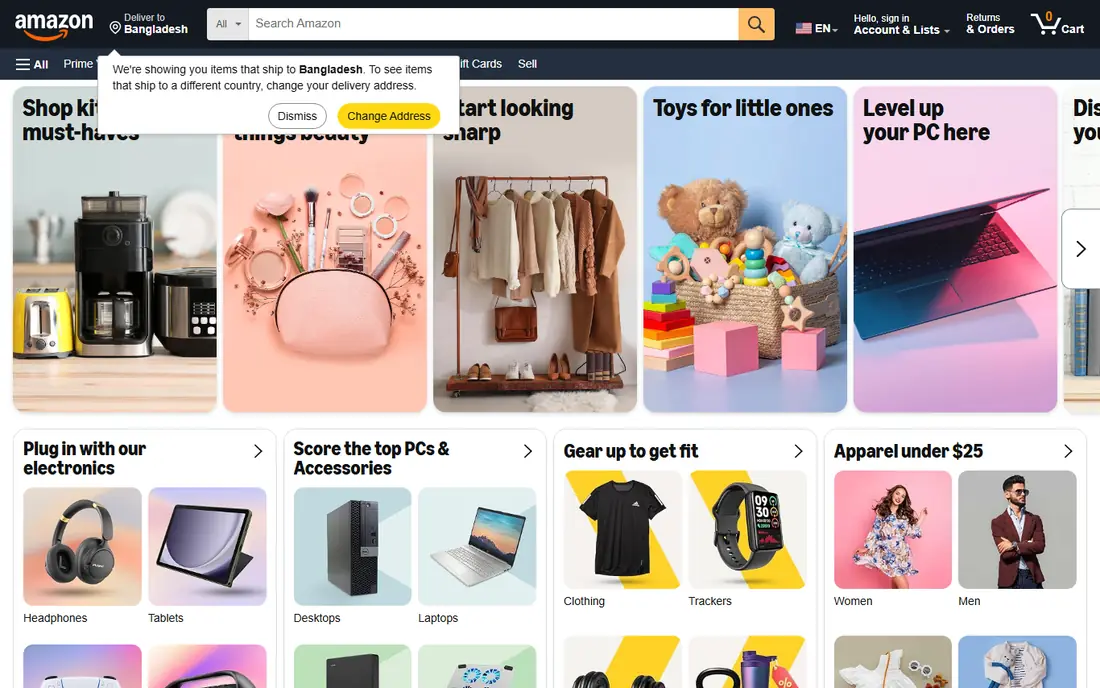
Amazon Handmade gives approved handmade sellers a storefront inside Amazon, with access to its enormous buyer base and Prime shipping options. There are no listing fees, and the professional plan fee of 39.99 dollars a month is waived after the first month for approved Handmade sellers. The referral fee is 15 percent on most categories.
That 15 percent is higher than Etsy's combined fees on many sales, and Amazon's rules and competition are demanding. But for giftable, easy-to-ship handmade products, no other platform here offers comparable built-in traffic.
- Access to Amazon traffic and Prime buyers
- No listing fees
- Handmade-only storefront
- 15 percent referral fee
- Professional plan rules apply

eBay is the best marketplace for vintage, collectibles, and one-of-a-kind items, where buyers search for specific objects rather than browsing handmade categories. Sellers get up to 250 free insertion listings a month, with further listings from 0.35 dollars, and final value fees around 13 percent plus a per-order fee.
It is less focused on handmade goods than Etsy, and fees add up on higher-priced items. But for vintage sellers, resellers, and shops with unique inventory, eBay's search-driven traffic is unmatched.
- Strong search for unique items
- Up to 250 free listings a month
- Large buyer base
- Final value fees around 13 percent plus per-order fees
- Less handmade focus
WooCommerce turns a WordPress site into a full online store, with the core plugin free and no commission on sales. You own the store, the customer data, and the design, with thousands of themes and extensions for subscriptions, bookings, and print on demand. That ownership is the point: no marketplace can change your fees or suspend your shop.
Real costs come from hosting, a domain, themes, and extensions, plus payment processing fees, so a working store usually costs more than zero. It also needs comfort with WordPress setup. For sellers who already run WordPress, WooCommerce is the most flexible store platform here.
- Core plugin is free
- Full ownership of store and data
- Deep customization
- Hosting, themes, and extensions cost extra
- Needs WordPress comfort
Wix is the easiest path to a branded store for beginners. Its drag-and-drop builder and templates produce an attractive shop quickly, with built-in payments, shipping, and marketing tools, and no extra Wix transaction fee on third-party gateways. Core commerce plans start around 29 dollars a month.
It scales less gracefully than Shopify for very large stores, and switching platforms later takes work. But for a small seller who wants a good-looking store this week without technical setup, Wix is the friendliest option here.
- Drag-and-drop builder
- Attractive templates
- No extra Wix transaction fee
- Monthly cost
- Less scalable than Shopify for large stores
Big Cartel is built for artists and small creative brands that want a simple store without marketplace fees. Its free plan covers small shops, paid plans are inexpensive, and it charges zero commission on sales, so your only per-sale cost is payment processing. Setup is quick and the design is clean.
Larger stores will outgrow its features and integrations, and it lacks the app ecosystem of Shopify. But for an artist selling a small catalog with minimal overhead, Big Cartel is the best low-cost store here.
- Free plan for small shops
- Zero commission
- Simple setup
- Limited features for larger stores
- Fewer integrations
Bonanza works best as a second marketplace alongside Etsy or eBay, with easy listing imports and a lower-effort setup. It charges final value fees from around 11 percent, with a small transaction fee, and offers membership plans for sellers who want more features. Listing on Bonanza costs little extra effort once your Etsy shop exists.
Its buyer base is much smaller than eBay or Amazon, so sales volume will be lower. But as a low-effort extra channel that can catch sales you would otherwise miss, Bonanza earns its place.
- Easy import from Etsy and eBay
- Lower effort second channel
- Final value fees from 11 percent
- Smaller buyer base than eBay or Amazon
- Fees vary by plan
Mercari is the fast, low-friction marketplace for secondhand items and slow-moving stock. Listing is free and quick, buyers make offers, and Mercari charges a 10 percent selling fee when an item sells. That simplicity suits casual sellers and shops clearing older inventory.
It is less suited to building a handmade brand, since its audience shops for deals and secondhand finds. But for turning dead stock into cash with minimal effort, Mercari is the easiest channel here.
- No listing fee
- Simple offer-based selling
- Fast listing flow
- 10 percent selling fee
- Less suited to handmade brands
Faire opens a different market: independent retailers buying wholesale. Makers list products, shops order in bulk, and Faire handles payment terms and logistics, with a 15 percent commission on wholesale orders plus a fee on a new shop's first order. There is no monthly cost to list.
Retail customers cannot buy on Faire, so it complements rather than replaces a retail channel. But for makers whose products suit shop shelves, Faire can turn one wholesale relationship into dozens of stockists.
- Access to independent retailers
- No monthly cost
- Handles wholesale terms
- 15 percent commission on wholesale orders
- Retail buyers cannot shop here
How we picked these
We compared official fee schedules, traffic models, and seller features for platforms actively available to sellers in 2026. We favored platforms with clear published fees and real seller traction, and we covered marketplaces, own stores, and wholesale. We did not claim hands-on selling experience; our comparison rests on published fees and public seller feedback.
Marketplace traffic or your own store
This is the core trade. Marketplaces like Amazon Handmade and eBay bring buyers to you, but charge 10 to 15 percent per sale and control the customer relationship. Own stores like Shopify, WooCommerce, and Wix cost less per sale and give you customer data, but you must bring your own traffic through social media, search, email, or ads.
Many successful sellers do both: keep a marketplace shop for discovery and new customers, and run an own store for repeat buyers at better margins. Start with the channel that matches your current audience, and add the second channel once the first is stable.