How Many Feet in a Mile? 5,280 Feet Explained
 By Shihab Mia June 20, 2026 4 min read

Quick answer
There are 5,280 feet in 1 mile. A mile is also 1,760 yards or about 1.609 kilometres.
If you are checking a running distance, reading a hiking sign, or just settling a friendly argument, the number you need is 5,280 feet per mile. That is the standard statute mile used across the United States and, for everyday road and walking distances, in the United Kingdom too. Below we explain where the figure comes from, how it changes between systems, and how to convert any distance quickly.
Keep this short version handy: 1 mile equals 5,280 feet, 1,760 yards, 1,609 metres, or about 1.609 kilometres. Every other answer on this page is built from those four numbers, so once you remember 5,280 the rest falls into place.
Why a mile is 5,280 feet
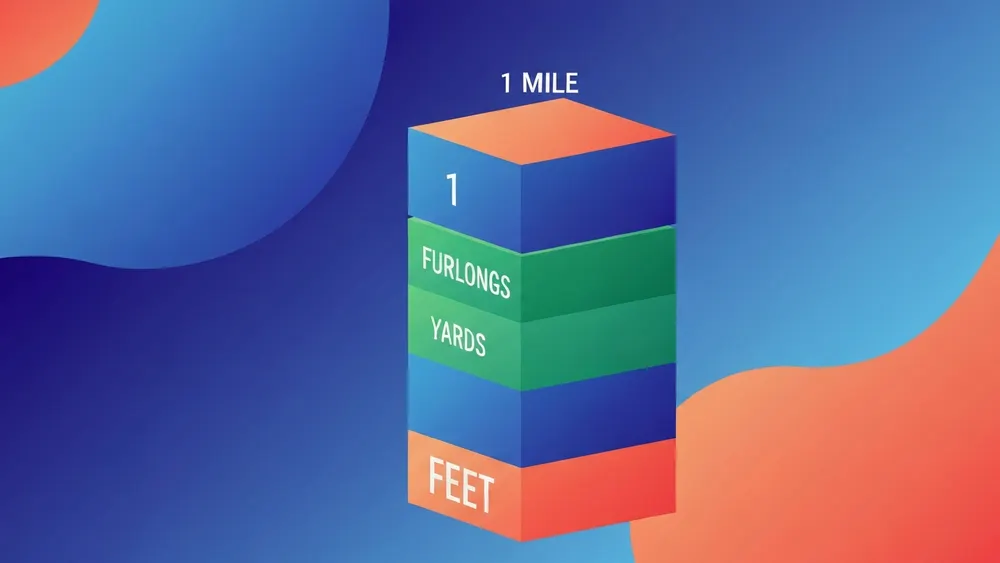
The number looks random, but it comes from history. The old English mile was defined as 8 furlongs, and each furlong measured 660 feet. Multiply 8 by 660 and you get exactly 5,280 feet, which is why the figure has stuck for centuries. The furlong itself came from farming: it was the length of a furrow a team of oxen could plough before resting, so the mile grew out of practical field work rather than tidy maths.
The word mile traces back to the Latin mille passus, meaning a thousand paces of a Roman soldier. A Roman pace was two steps, roughly 5 feet, so a thousand paces came to about 5,000 feet. When England later standardised the mile around the furlong system, the figure was rounded up to 5,280 feet so it lined up neatly with 8 furlongs.
Mile conversion chart
| Distance | Feet | Yards | Metres | Kilometres |
|---|---|---|---|---|
| 0.1 mi | 528 ft | 176 yd | 161 m | 0.16 km |
| 0.25 mi | 1,320 ft | 440 yd | 402 m | 0.40 km |
| 0.5 mi | 2,640 ft | 880 yd | 805 m | 0.80 km |
| 1 mi | 5,280 ft | 1,760 yd | 1,609 m | 1.61 km |
| 2 mi | 10,560 ft | 3,520 yd | 3,219 m | 3.22 km |
| 3.1 mi | 16,368 ft | 5,456 yd | 4,989 m | 5.00 km |
| 5 mi | 26,400 ft | 8,800 yd | 8,047 m | 8.05 km |
| 10 mi | 52,800 ft | 17,600 yd | 16,093 m | 16.09 km |
A handy reference: 1 mile is just over 1.6 kilometres, so a 5 kilometre run is about 3.1 miles and a 10 kilometre race is about 6.2 miles.
Feet in common fractions of a mile
Most everyday questions are not about a full mile but about a part of one, such as a quarter mile drag strip or a half mile walk. Because the mile splits cleanly into furlongs, the fractions come out as tidy numbers you can memorise.
| Fraction of a mile | Feet | Yards | Quick note |
|---|---|---|---|
| 1/8 mile | 660 ft | 220 yd | Exactly 1 furlong |
| 1/4 mile | 1,320 ft | 440 yd | A standard drag strip and one track lap |
| 1/3 mile | 1,760 ft | 587 yd | Common for short loops |
| 1/2 mile | 2,640 ft | 880 yd | Two laps of a 400 m track |
| 3/4 mile | 3,960 ft | 1,320 yd | Three quarters of the way |
| 1 mile | 5,280 ft | 1,760 yd | The full statute mile |
Worked example: how to convert 3.5 miles to feet
Say a trail sign reads 3.5 miles and you want the distance in feet. The rule is simple: multiply the number of miles by 5,280. So 3.5 times 5,280 equals 18,480 feet. To check yourself, you can split it: 3 miles is 15,840 feet and half a mile is 2,640 feet, and 15,840 plus 2,640 also equals 18,480 feet.
Going the other way works the same. If a fitness app logs 9,240 feet, divide by 5,280 to get 1.75 miles. For distances that need other units too, our guide on how many meters in a mile covers the metric side, and the length converter does every direction at once.
US vs UK and the metric world
The everyday mile is identical in the US and UK: both use the international statute mile of exactly 5,280 feet. The difference is mostly cultural. The United States still posts road distances and speed limits in miles, while the UK keeps miles on road signs but uses metres and kilometres for almost everything else, such as athletics tracks and map scales.
Most of the rest of the world uses the metric system, where the kilometre rules. There is also a separate nautical mile of 6,076 feet (about 1.852 km) used in aviation and at sea, which is based on the curve of the Earth rather than furlongs. Unless you are flying or sailing, the mile you want is the 5,280 foot statute mile.
One precise note for surveyors: the older US survey mile is a tiny fraction longer than the international mile, by about an eighth of an inch over a full mile. For any practical purpose you will ever meet, the two are the same. If you need exact figures across units, the length converter handles the rounding for you.
Real-world examples
Numbers stick better when you picture them. Here is what a mile of 5,280 feet looks like in everyday terms.
- A standard outdoor running track is 400 metres per lap, so 1 mile is just over 4 laps (about 1,609 metres).
- An American football field is 300 feet between goal lines, so 1 mile is roughly 17.6 football fields end to end.
- A typical city block in many US grids is about 1/8 mile, meaning 8 blocks make a mile.
- Walking at a comfortable pace of 3 miles per hour, 1 mile takes about 20 minutes.
- A 5K run is 3.1 miles, or 16,368 feet, which is why race shirts love that number.
Common mistakes
Mile conversions trip people up in a few predictable ways. Watch out for these.
- Confusing 5,280 with 5,000. The thousand paces idea gives 5,000, but the standardised mile is 5,280 feet.
- Mixing up the statute mile with the nautical mile (6,076 feet). They are different units for different jobs.
- Assuming a mile is exactly 1.6 km. It is closer to 1.609 km, so longer distances drift if you round too early.
- Forgetting that a yard is 3 feet, which is why a mile is 1,760 yards and not 5,280 yards.
- Treating kilometres and miles as interchangeable on a treadmill. A 5 mile goal is over 8 km, not 5 km.
Good to know
A few extra facts make the mile easier to use day to day. The mile is one of the last imperial units still common in daily life, which is part of why the question comes up so often. For runners and walkers, feet are rarely the unit on a watch, so it helps to connect distance to stride: most people take roughly 2,000 steps per mile, which you can read more about in our guide on how many steps in a mile.
- A mile has exactly 8 furlongs, 80 chains, or 320 rods if you ever meet those older units on a deed or map.
- Speed of 60 miles per hour means you cover 88 feet every second, a handy number for stopping distances.
- A square mile contains 640 acres, which is why farmland in the US is often measured in those blocks.
- One mile of altitude is about the cruising height where the air noticeably thins for hikers and cyclists.
Quick math you can do in your head
To turn miles into feet, multiply by 5,280. To go from feet back to miles, divide by 5,280. For a fast metric estimate, multiply miles by 1.6 to get kilometres, or divide kilometres by 1.6 to get miles. If you cook or measure a lot, you may also like our guide on how many inches are in a foot for the smaller end of the scale.
Convert any distance
For feet, yards, metres, miles and kilometres in any direction, with no rounding errors, use the length converter below.
📏 Try the free tool Length Converter Free length converter for metres, km, miles, feet, inches, cm, mm and yards. Convert metric to imperial instantly with exact factors and a quick chart.Frequently asked questions
How many feet are in a mile?
There are 5,280 feet in 1 mile. The figure comes from a mile being defined as 8 furlongs, with each furlong measuring 660 feet. Multiplying 8 by 660 gives 5,280, the standard statute mile used across the United States and on UK roads.
How many yards are in a mile?
There are 1,760 yards in 1 mile. Since each yard equals 3 feet and a mile is 5,280 feet, dividing 5,280 by 3 gives 1,760 yards. This is the same in both US and UK measurements for the standard statute mile.
How many kilometres is a mile?
One mile is about 1.609 kilometres, or roughly 1,609 metres. A quick mental shortcut is to multiply miles by 1.6. That means a 5 kilometre run is about 3.1 miles, and a 10 kilometre race is about 6.2 miles.
Is a nautical mile the same as a regular mile?
No. A nautical mile is about 6,076 feet, or 1.852 kilometres, and is used in aviation and at sea because it is based on the curve of the Earth. The everyday statute mile on road signs is 5,280 feet, which is shorter than a nautical mile.
How many feet are in half a mile?
Half a mile is 2,640 feet. Since a full mile is 5,280 feet, you simply divide by two. That also equals 880 yards or about 805 metres, which is roughly two laps of a standard 400 metre running track.
How many feet are in a quarter mile?
A quarter mile is 1,320 feet, or 440 yards. You get this by dividing 5,280 by four. This is the classic drag racing distance and is also the length of one full lap on a standard outdoor running track, which makes it easy to picture.
How do you convert miles to feet?
To convert miles to feet, multiply the number of miles by 5,280. For example, 2 miles is 2 times 5,280, which equals 10,560 feet. To convert feet back into miles, divide the number of feet by 5,280. A length converter handles any decimals without rounding errors.