Best Accounting Software for Startups in 2026: 8 Apps Compared
By ToolNimba Editorial Team November 6, 2026 10 min read

- Top pick
 Wave
Free bookkeeping for pre-revenue founders
Starting priceFreeCheck out WaveRead our review - Runner-up
 Zoho Books
Low-cost accounting inside the Zoho system
Starting price$15 per monthCheck out Zoho BooksRead our review - Also great
 QuickBooks Online
Accountant-friendly scaling for US startups
Starting price$38 per monthCheck out QuickBooks OnlineRead our review
How we researched this
We compared official pricing and feature pages, app store listings, privacy policies and public user reviews. Prices change, so check the provider's site before you pay.
Key takeaways
- Wave and Zoho Books give early startups a low-cost way to invoice, track expenses and keep clean records.
- QuickBooks Online is the safest default for a startup that expects to work with an outside accountant.
- Xero suits teams that need unlimited users and strong multi-currency handling as they grow.
- FreshBooks fits service startups that live on invoices, time tracking and simple project billing.
- A managed option like Bench can make sense when bookkeeping itself, not software, is the bottleneck.
Quick comparison
| Name | Best for | Starting price | Free plan | |
|---|---|---|---|---|
| Wave | Free bookkeeping for pre-revenue founders | Free | Yes | Visit |
| Zoho Books | Low-cost accounting inside the Zoho system | $15 per month | Yes | Visit |
| QuickBooks Online | Accountant-friendly scaling for US startups | $38 per month | Free trial | Visit |
 Xero | Growing teams and multi-currency work | $25 per month | Free trial | Visit |
 FreshBooks | Invoicing-first service startups | $23 per month | Free trial | Visit |
 Sage Accounting | Established operations with inventory needs | See website | Free trial | Visit |
 Kashoo | Simple books for first-time owners | $20 per month | Free trial | Visit |
 Bench | Done-for-you bookkeeping for busy founders | See website | No | Visit |
The best accounting software for startups
Startup accounting has two jobs, which are keeping day-to-day records clean and producing numbers an investor, lender or tax adviser can trust. We compared official pricing pages, feature lists, app store listings and public reviews, with a focus on invoicing, bank reconciliation, payroll options, reporting and the true cost as a team grows.
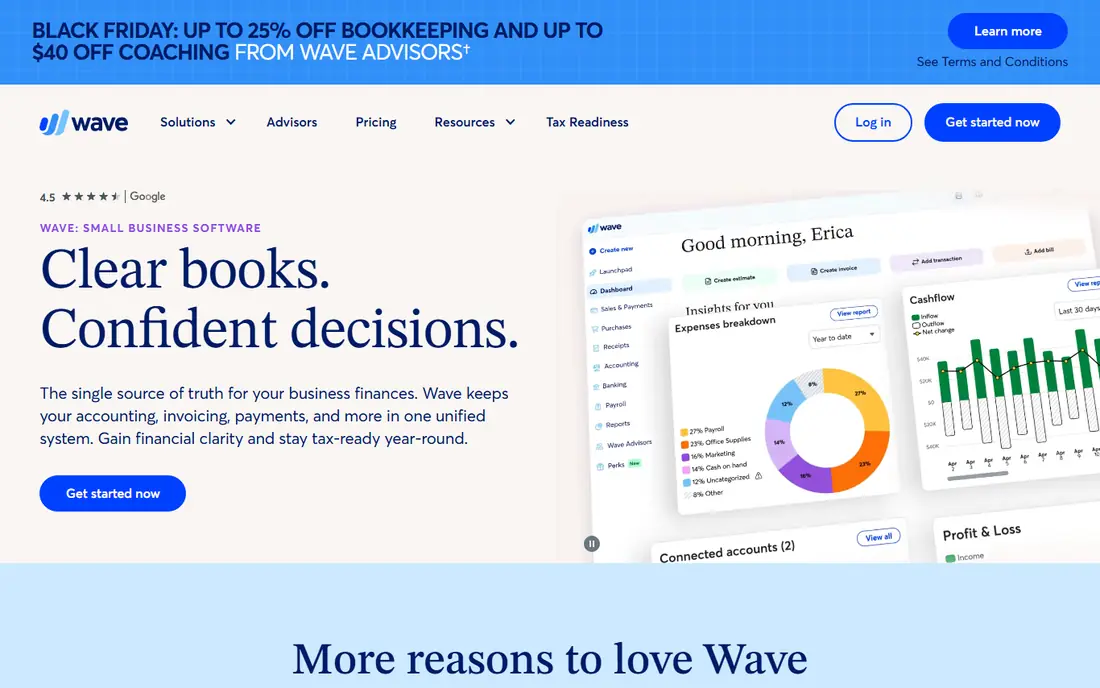
Wave is the easiest way for a pre-revenue founder to stop tracking money in a spreadsheet. You can send unlimited invoices, record expenses and keep basic books without a monthly subscription, which matters when every dollar is going into product or sales. The interface is plain and friendly, and that is a strength for a founder doing the books between other jobs.
The limits show up as volume grows. Bank connections, payroll and deeper reporting are handled through paid add-ons or higher tiers, and a startup with complex inventory or many entities will outgrow it. Start with Wave if cash is tight and your finances are simple, and move when reconciliation starts taking too much of your week.
- Free core accounting and invoicing
- Simple setup
- No monthly fee to start
- Payroll and some bank connections sit on paid tiers
- Fewer advanced reports than larger systems
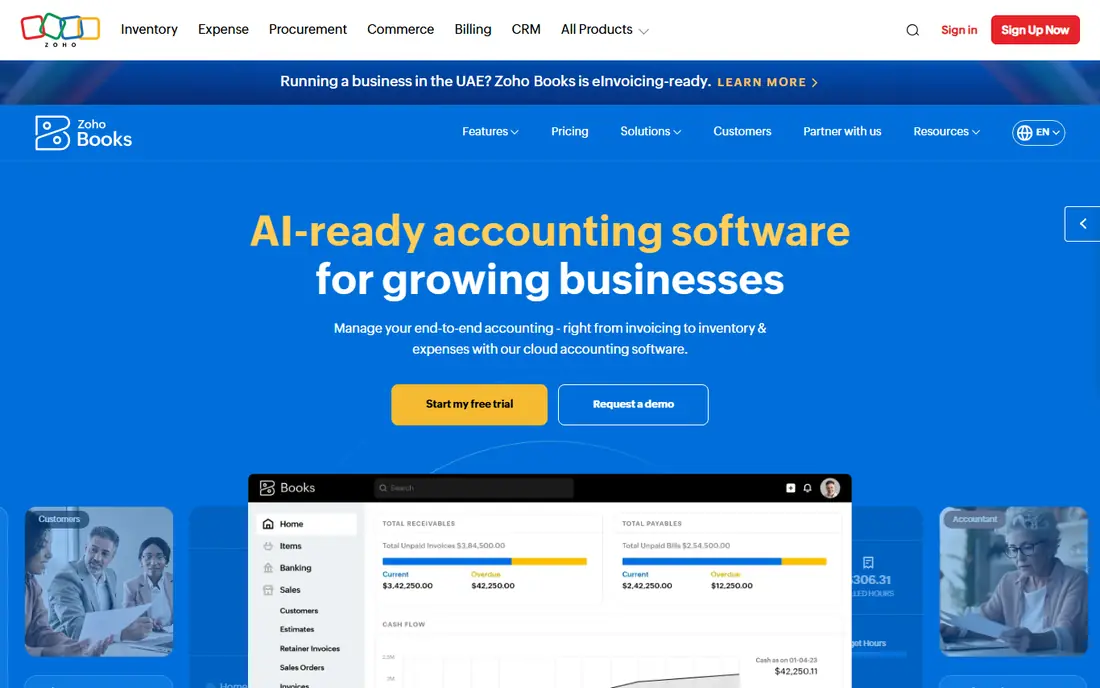
Zoho Books gives a startup a surprising amount of accounting for the price, including invoicing, expenses, inventory tracking and workflow automation. The free tier for smaller businesses makes it a practical test bed, and the paid Standard plan adds users without a sharp jump in cost. If your startup already uses Zoho for email, CRM or projects, the shared data is a real plus.
The main trade is ecosystem familiarity. Many US accountants know QuickBooks first, so check whether your accountant is comfortable with Zoho before you commit a full year of books to it. For a cost-conscious team that wants full double-entry accounting early, Zoho Books is hard to beat on value.
- Free tier for businesses under $50,000 in annual revenue
- Inventory and automation included
- Good value per dollar
- Accountant familiarity is lower than QuickBooks in the US
- Some features need other Zoho apps
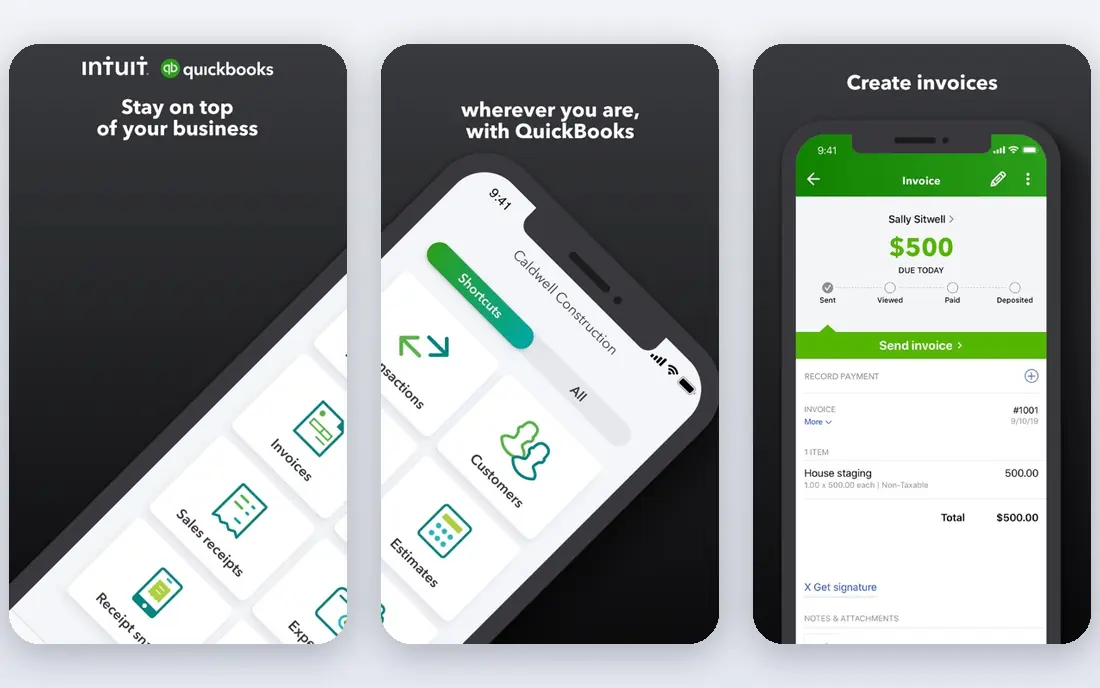
QuickBooks Online is the default many startups choose for a simple reason, which is that accountants, bookkeepers and investors already know it. Bank feeds, invoicing, expense categorisation, reporting and payroll add-ons sit in one system, and the integration list covers most tools a growing startup already uses. That familiarity reduces friction at tax time and during fundraising diligence.
It is not the cheapest option, and a founder who only sends a few invoices a month may pay for depth they do not yet need. The Simple Start tier keeps the entry cost manageable, and you can move up as headcount and transaction volume grow. If you want the top-rated accounting software for startups by accountant support, this is the usual answer.
- Largest US accountant network
- Wide integrations
- Strong reporting and payroll add-ons
- Price rises with tiers and add-ons
- Interface can feel busy for a solo founder
Xero appeals to startups that plan to hire quickly or sell across borders. Unlimited users mean you do not pay per seat as the team grows, and multi-currency invoicing and reporting are handled with less friction than in many rivals. Bank reconciliation is clean and fast, which helps a founder who reconciles weekly rather than at month end.
US payroll needs an add-on, so budget for that if you hire employees rather than contractors. Xero also rewards a team that will use its dashboard and reporting regularly. For a startup with international customers, a distributed team or a finance lead who values clean reconciliation, Xero is a strong long-term pick.
- Unlimited users on plans
- Clean bank reconciliation
- Strong multi-currency support
- Payroll is an add-on in the US
- Some advanced inventory features need integrations
FreshBooks was built around getting paid, and it shows in the invoice design, reminders and client portal. Service startups, agencies and consultants can track time, bill projects, accept online payments and see who has paid without learning full accounting language. That focus makes it a good fit for a founder-led business where cash flow depends on a handful of clients.
Complex product businesses may find its accounting and inventory depth thinner than QuickBooks or Xero. The Lite plan also limits client count, so check that ceiling against your pipeline. If invoicing and time are your daily work, FreshBooks turns those tasks into a short routine rather than a chore.
- Excellent invoicing and client experience
- Time tracking and project billing
- Easy for non-accountants
- Client limits on lower tiers
- Less depth for complex inventory or manufacturing
Sage suits a startup that already looks like an established operation, with stock to track, suppliers to pay and reports a manager needs each month. Its product range lets a business move from basic accounting to more structured systems without changing vendor, which can reduce migration pain later. The reporting and inventory tools are stronger than the simplest free options.
The trade is approach. Sage can feel more formal and less playful than Wave or FreshBooks, and you should confirm the exact plan and price for your region before budgeting. For a product-based startup that needs inventory control from the start, that structure is a benefit rather than a burden.
- Long history in small business accounting
- Inventory and reporting depth
- Scalable product range
- Pricing varies by product and region
- Setup can feel more formal than newer apps
Kashoo is for a founder who wants books done correctly without becoming an accountant. The dashboard is uncluttered, invoicing is quick, and expenses are easy to record and categorise. That simplicity helps a first-time owner build a weekly habit, which matters more than a long feature list in the early months.
As a startup adds entities, complex payroll or deep integrations, Kashoo may feel limited. It is best viewed as a clean, affordable bridge from spreadsheets to a fuller system. If you value clarity over power and your transactions are straightforward, Kashoo keeps the books tidy with little training.
- Very simple interface
- Invoicing and expense tracking in one place
- Quick setup
- Fewer integrations than larger platforms
- Limited advanced reporting
Bench is different from the rest of this list, because you are buying a service as much as software. A dedicated bookkeeping team categorises transactions, reconciles accounts and prepares monthly statements, while you review the results in an online dashboard. That can be a relief for a founder whose time is better spent on sales, product or hiring.
The cost is higher than a software subscription, and founders who want to touch every transaction may prefer a self-serve tool. Bench fits a startup with steady revenue, regular transactions and a founder who wants reliable monthly books without hiring a full-time bookkeeper. Confirm the current plan and what is included before you sign, since service scope matters more than the app alone.
- Human bookkeepers do the monthly work
- Clean financial statements
- Less founder time on books
- Higher cost than software alone
- Less hands-on control for founders who like to manage details
How we picked these
We compared official pricing and feature pages, app store listings and public reviews for tools that serve early-stage companies, not just large enterprises. A product stayed on the list if it could handle invoicing, expenses, bank reconciliation and basic reporting for a small team, and if its pricing was clear enough for a founder to budget. We gave weight to free and low-cost entry points, accountant familiarity in the US, payroll options and how well each tool scales.
We did not claim hands-on testing we did not do. Instead, we looked for consistent strengths and limits across vendor pages and independent reviews, and we noted where a paid add-on changes the real monthly cost. That approach favours tools a startup can start on today and still use after a year of growth.
How to choose startup accounting software without overpaying
Start with your transaction count, not your ambitions. A tool that fits 30 transactions a month may struggle at 500, and a tool built for 500 may waste money at 30.
Check payroll, tax and accountant fit first
Ask whether payroll is included or an add-on, how sales tax is handled, and whether your accountant already uses the system. Those three answers often decide the shortlist faster than a feature comparison. If you hire employees soon, price payroll into the first year, not as an afterthought.
Test bank reconciliation with real transactions
Connect a bank account during a trial and reconcile a full week of real activity. Clean matching, clear rules for repeat transactions and a simple way to fix a mistake will save more time than a pretty dashboard. If reconciliation feels like a fight in week one, it will not improve as volume grows.
Plan the move before you need it
Choose a tool that exports clean data and has a clear upgrade path. The best software for startup accounting is the one you can leave gracefully if you outgrow it, and the one you can grow into if you do not. Keep a monthly close routine, even when revenue is small, so your books are ready for tax season and for investor questions.
Sources
Frequently asked questions
What is the best accounting software for startups with no revenue yet?
Wave is a strong free starting point, and Zoho Books is a strong low-cost step up when you need fuller accounting. Both let you invoice and track expenses without a large monthly bill while you validate the business.
Is QuickBooks or Xero better for a startup?
QuickBooks is usually better if you work with a US accountant and want the widest integration list, while Xero is often better for unlimited users and multi-currency work. Both scale well, so choose based on your team size, accountant and whether you sell internationally.
What is the best bookkeeping software for startups that hate bookkeeping?
Bench is the closest fit if you want humans to handle monthly bookkeeping, while FreshBooks and Kashoo suit founders who will do it themselves but want a simple routine. The right choice depends on whether you want to save time or save money.
Do startups need accounting software before they have customers?
Yes, in a simple form, because clean records from day one make tax filing, expense tracking and fundraising far easier. A free tool is enough at first, and you can move to a paid plan when transactions, payroll or reporting needs grow.
What is the best startup accounting software for service businesses?
FreshBooks fits service businesses that bill by time or project, with invoicing and client tracking at the centre. QuickBooks and Xero are better if you also need deeper reporting, inventory or multi-entity handling as you grow.
How much should a startup budget for accounting software?
Many startups spend from zero to about $40 per month for software alone in the early stage, plus payroll or bookkeeping help if they add those services. Price the full stack, including add-ons and payment processing, before you compare headline monthly rates.