Best Advertising Platforms in 2026: 9 Platforms Compared
By ToolNimba Editorial Team October 31, 2026 10 min read

- Top pick
 Google Ads
Search and YouTube intent
Starting priceSee websiteCheck out Google AdsRead our review - Runner-up
 Meta Ads
Facebook and Instagram reach
Starting priceSee websiteCheck out Meta AdsRead our review - Also great
 Microsoft Advertising
Search beyond Google
Starting priceSee websiteCheck out Microsoft AdvertisingRead our review
How we researched this
We compared official pricing and feature pages, app store listings, privacy policies and public user reviews. Prices change, so check the provider's site before you pay.
Key takeaways
- Google Ads is the best starting point for intent-based search traffic, with no fixed minimum daily budget.
- Meta Ads offers the broadest social reach across Facebook and Instagram, with daily budgets starting around $1.
- LinkedIn Ads costs more per click but suits business-to-business targeting that other platforms cannot match.
- TikTok, Pinterest and Snapchat suit visual and video-first brands, while Amazon Ads suits sellers who want to reach shoppers on Amazon.
Quick comparison
| Name | Best for | Starting price | Free plan | |
|---|---|---|---|---|
| Google Ads | Search and YouTube intent | See website | No | Visit |
| Meta Ads | Facebook and Instagram reach | See website | No | Visit |
| Microsoft Advertising | Search beyond Google | See website | No | Visit |
 TikTok Ads | Short video discovery | See website | No | Visit |
 LinkedIn Ads | Business targeting | See website | No | Visit |
 Amazon Ads | Shoppers on Amazon | See website | No | Visit |
 Pinterest Ads | Visual discovery and shopping | See website | No | Visit |
 X Ads | Real-time conversation | See website | No | Visit |
 Snapchat Ads | Younger mobile audiences | See website | No | Visit |
The best advertising platforms
Advertising platforms charge mainly for clicks, views or impressions, so the platform fee is rarely the real cost. Your budget, creative quality and landing page decide the cost per customer. The platforms below cover search, social, video and retail, and each one fits a different buying moment.
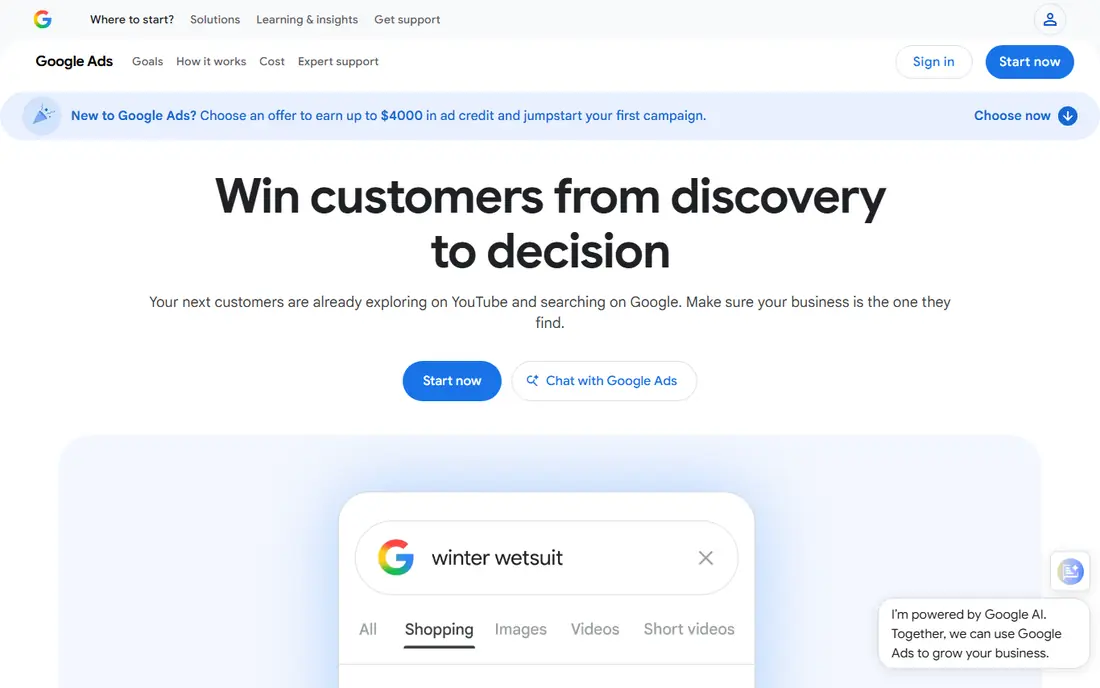
Google Ads remains the default for intent. When someone searches for a product or service, your ad can appear at that moment, which is why search clicks often convert better than social impressions. The same account also covers Shopping, Display and YouTube, so a business can move from search demand to video and remarketing without learning a new system. There is no fixed minimum daily budget, though competitive industries report median search costs above $5 per click in 2026 benchmarks.
The risk is paying for clicks that do not convert. Broad keywords, weak landing pages and missing conversion tracking can drain a budget fast. Start with a small set of high-intent keywords, send clicks to a page that matches the ad promise, and review search terms weekly. Done that way, Google Ads is the most measurable starting point for most small businesses.
- Reaches people actively searching
- Search, Shopping, Display and YouTube in one account
- No fixed minimum budget
- Competitive keywords can be costly
- Setup and tracking need care
- Results depend on landing page quality
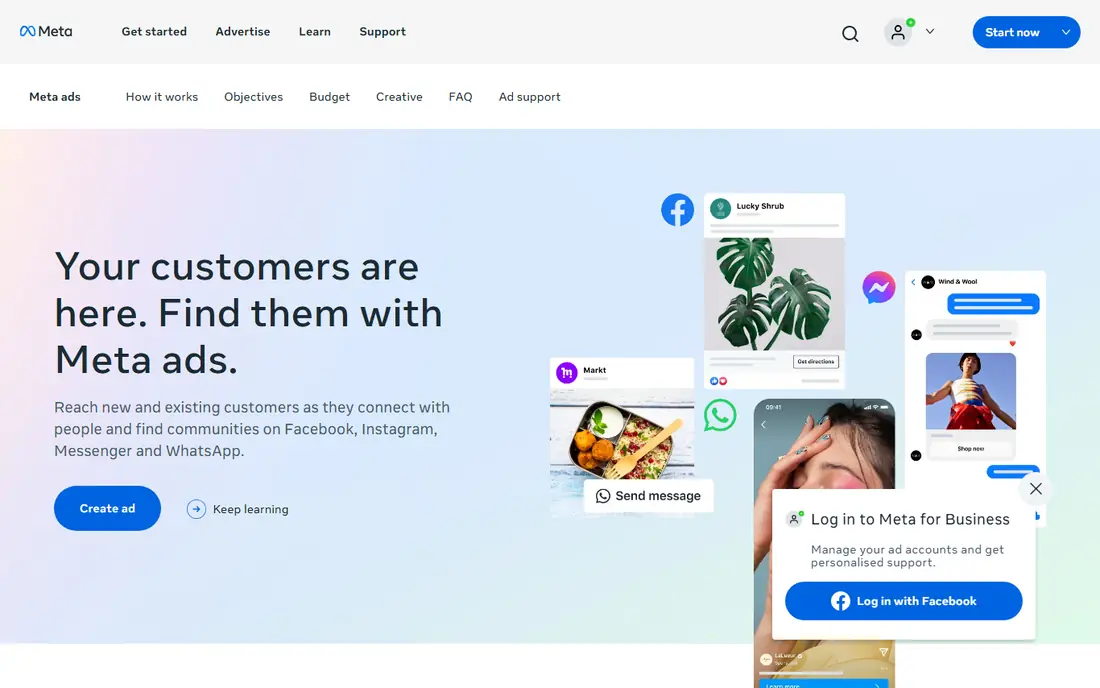
Meta Ads covers Facebook, Instagram, Messenger and Audience Network placements from one campaign system. Daily budgets can start around $1, and typical Facebook traffic costs in 2026 benchmarks sit well below Google search costs, though the visitor is scrolling rather than searching. That makes Meta strong for discovery, retargeting and offers, especially for visual products, local services and direct-to-consumer brands.
Creative is the bottleneck. The same ad shown too often stops working, so plan several images or videos, test hooks early, and refresh winners before performance fades. Tracking also needs care after privacy changes, so pair Meta reporting with your own site analytics. For most consumer brands, Meta is the second platform to test after Google search.
- Huge audience across Facebook and Instagram
- Detailed interest and behavior targeting
- Strong video and image formats
- Costs vary sharply by audience
- Creative fatigue is common
- Tracking changes can affect reporting
Microsoft Advertising, formerly Bing Ads, reaches searchers on Bing, Yahoo and partner sites, including users on Windows devices and in workplaces where Bing is the default. Campaigns can be imported from Google Ads, which lowers setup time, and many advertisers report lower costs per click than Google for similar keywords, with benchmarks around $1.54 to $2.71 in 2026.
Volume is the limit. You will not match Google traffic, and the audience skews older, which suits some businesses and not others. Treat Microsoft as an incremental channel: import a proven Google campaign, adjust budgets to its volume, and keep it running as long as cost per customer stays competitive. It rarely replaces Google, but it often improves total search coverage.
- Reaches Bing and partner search traffic
- Can import Google Ads campaigns
- Often lower costs per click
- Smaller volume than Google
- Audience skews older
- Fewer ad format options
TikTok Ads suits brands that can tell a story in short video. Ads appear in the feed alongside creator content, so a polished TV-style spot often underperforms a native, phone-shot video with a clear hook in the first seconds. Campaign budgets commonly start at $50 per day, with ad group minimums above $20 per day, so TikTok needs a real test budget rather than a token spend.
The work is creative, not just targeting. Plan a batch of videos, test different openings and offers, and expect to replace tired ads often. TikTok also suits creator partnerships, where a creator demonstrates a product in their own style. If your product is visual, fun or easy to demonstrate, TikTok can drive discovery that search cannot. If it needs long explanation, pair it with search or a landing page that does the explaining.
- Strong discovery for video-first brands
- Creator-style ads feel native
- Detailed interest targeting
- Campaign minimums are higher
- Creative must be native video
- Performance depends on frequent refreshes
LinkedIn Ads is the most expensive platform here per click, and that is also its point. You can target by job title, seniority, company size and industry in a way no other major platform allows, which makes it valuable for software, consulting, recruiting and other business services where one customer is worth a lot. Daily budgets start around $10, with a $100 lifetime minimum for new campaigns in many setups.
Do not use LinkedIn for cheap consumer traffic. Use it when lead quality matters more than click volume, and when your offer, such as a demo, white paper or event, fits a professional audience. Lead forms that prefill profile data can lift conversion, but you still need fast follow-up, because a costly lead left unanswered is wasted spend.
- Job title, company and industry targeting
- Lead forms built in
- Strong for business services
- High costs per click, often above $5
- Minimum daily budget around $10
- Smaller audience than Meta
Amazon Ads is a retail media platform, not a general awareness tool. Sponsored Products put your listing in search results on Amazon, Sponsored Brands promote your brand and range, and Sponsored Display retargets shoppers across the web. Daily budgets can start around $10, and typical Sponsored Products costs in 2026 benchmarks range from about $1.20 to $2.50 per click, varying by category.
The catch is product readiness. Ads sent to a listing with poor images, few reviews or stock problems will convert poorly, no matter how good the targeting is. Fix the listing first, then test Sponsored Products on your best sellers, and expand to brand and display formats once the basics work. For Amazon sellers, this platform is essential. For businesses that do not sell on Amazon, it is not relevant.
- Reaches shoppers ready to buy
- Sponsored Products, Brands and Display
- Clear sales attribution
- Only useful if you sell on Amazon
- Costs vary by category
- Retail readiness affects results
Pinterest Ads reaches people planning purchases, from home projects to weddings to recipes, often weeks before they buy. Promoted Pins blend into the feed, link to products or articles, and work well for visually driven categories. Daily budgets can start very low, with minimums around $0.01 per day in budget guides, though real test budgets need to be higher to learn anything useful.
The format demands good visuals. Vertical images, clear text overlays and a landing page that matches the Pin matter more than clever targeting alone. Pinterest will not replace search for urgent needs, such as an emergency plumber, but for planning-led purchases it can deliver lower costs and longer-lived traffic, since Pins keep circulating after the campaign ends.
- High-intent visual discovery
- Strong for home, fashion, food and planning
- Shopping links built in
- Smaller audience than Meta
- Creative must be vertical and visual
- Less suited to urgent search demand
X Ads, formerly Twitter Ads, lets advertisers reach users by interests, keywords, followers and conversation topics, with formats for promoted posts, video and trends. Minimum daily budgets can be very low, and typical costs per click in older benchmarks ranged from about $0.50 to $5, varying sharply by audience and creative. It suits news, sports, tech and entertainment brands that already live in real-time conversation.
Brand safety and volatility are real concerns. Advertisers should review placement controls, monitor replies, and test with a small budget before scaling. X will not suit every brand, and some will prefer to stay with Meta, Google and TikTok. For brands with a strong voice on the platform, it can still drive timely traffic at a modest cost.
- Real-time and interest targeting
- Video and text formats
- Low minimum daily budgets
- Audience and brand safety concerns for some advertisers
- Volatile performance
- Smaller reach than Meta
Snapchat Ads reaches a younger, mobile-first audience with full-screen vertical video, stories and interactive lenses. Daily budgets start around $5, and the platform suits fashion, beauty, food, entertainment and app installs where a playful, visual ad fits the audience. Lenses and filters can also drive sharing in a way standard video ads cannot.
The audience skew is the limit. If your customers are mainly older or business buyers, Snapchat will waste budget. Creative also needs to be native to the app, fast and vertical, not a reused TV spot. For the right brand, Snapchat is a useful third social channel after Meta and TikTok. For others, it is safe to skip.
- Strong reach among younger users
- Full-screen vertical video
- Lenses and filters for engagement
- Daily minimum around $5
- Audience skews young
- Less suited to older or business audiences
How we picked these
We compared official platform pages, minimum budget guides and 2026 cost benchmarks for platforms that serve US advertisers today. We favored platforms with self-serve buying, clear targeting, and a distinct audience or buying moment, rather than listing every small network. We did not claim hands-on testing, and we listed platform pricing as See website where costs are auction-based and vary by industry.
How to test without wasting budget
Pick one intent channel and one discovery channel, then give each a fair test. For most businesses, that means Google Ads for search demand and Meta Ads for discovery, with a landing page that matches each ad. Run for at least a few weeks, judge by cost per customer rather than cost per click, and cut the channel that cannot hit your target after creative and landing page fixes.
Set a kill rule before you start
Decide in advance how much you will spend to learn, and what cost per lead or sale would make you stop. Write it down before the campaign launches, so a few cheap clicks do not keep a losing campaign alive. Review search terms, placements and creative weekly, and move budget to the best performer rather than spreading it thinly across five platforms.