Best AEO Tracking Tools in 2026: 8 Tools Compared
By ToolNimba Editorial Team October 31, 2026 8 min read

- Top pick
 Profound
Enterprise AI visibility tracking
Starting priceSee websiteCheck out ProfoundRead our review - Runner-up
 Peec AI
Daily brand tracking for B2B and SaaS
Starting priceSee websiteCheck out Peec AIRead our review - Also great
 Otterly.AI
Affordable AI search monitoring
Starting price$29 per monthCheck out Otterly.AIRead our review
How we researched this
We compared official pricing and feature pages, app store listings, privacy policies and public user reviews. Prices change, so check the provider's site before you pay.
Key takeaways
- Otterly.AI and Rankscale offer the lowest credible entry points, while Profound and AthenaHQ target enterprise depth.
- Semrush and Ahrefs suit teams already paying for those suites, since their AEO features avoid a new vendor.
- AEO scores are directional trends, not exact measurements, so judge tools on prompt coverage, citation data, and reporting you will actually use.
Quick comparison
| Name | Best for | Starting price | Free plan | |
|---|---|---|---|---|
| Profound | Enterprise AI visibility tracking | See website | Free trial | Visit |
| Peec AI | Daily brand tracking for B2B and SaaS | See website | Free trial | Visit |
| Otterly.AI | Affordable AI search monitoring | $29 per month | Free trial | Visit |
 Scrunch | Monitoring plus content fixes | $250 per month | Free trial | Visit |
 Semrush AI Visibility Toolkit | AEO inside an existing SEO suite | $99 per month | Free trial | Visit |
 Ahrefs Brand Radar | Brand mentions in AI and web answers | $199 per month | Free trial | Visit |
 Rankscale | Flexible pay-per-check AEO tracking | $20 per month | Free trial | Visit |
 AthenaHQ | AEO command center with hallucination checks | $295 per month | Yes | Visit |
The best aeo tracking tools
Answer engine optimization, or AEO, means tracking how a brand appears in AI answers from ChatGPT, Gemini, Perplexity, and Google AI Overviews. This list includes only tools that genuinely track that visibility, with prompt monitoring, citation analysis, and competitor data, rather than general SEO tools with a single AI chart.
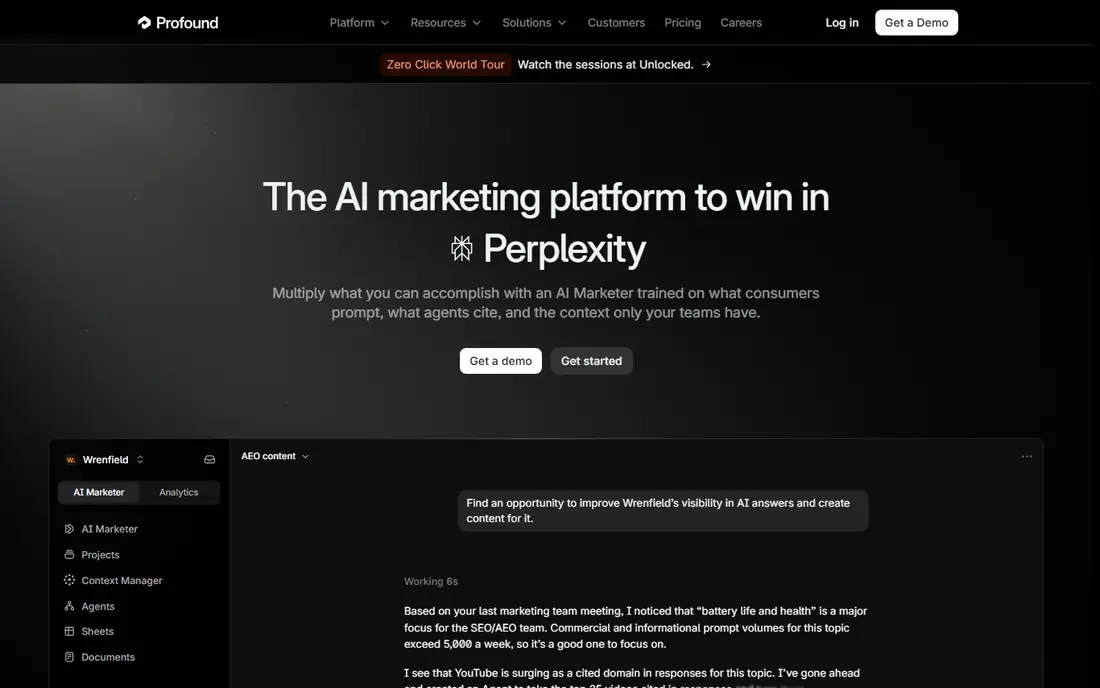
Profound fits enterprise brands that need deep, ongoing tracking of how they appear in AI answers. It monitors prompts across ChatGPT, Gemini, Perplexity, and other engines, then reports visibility, citations, and competitor position. Depth and reporting are the strengths for teams that must show AI visibility to leadership. The catch is access, since pricing is now quote-led after earlier self-serve plans were withdrawn, so smaller teams should request a trial first. Check the export or sharing step early, because a tool that feels fast while you edit can still add friction at delivery.
- Tracks brand visibility across major AI engines
- Prompt and citation analysis
- Enterprise reporting
- Pricing is quote-led
- Entry tiers changed during 2026, so confirm current plans
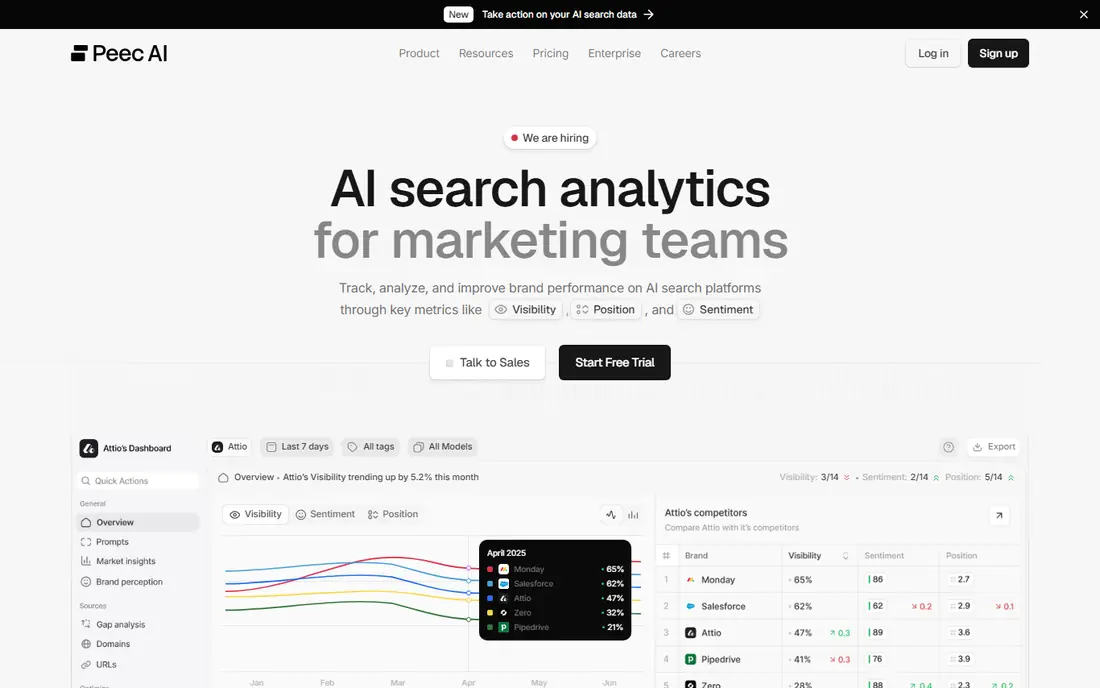
Peec AI fits B2B and SaaS teams that want daily tracking of brand position in AI answers, not just a monthly snapshot. It reports visibility, position, sentiment, citations, and share of voice, with competitor comparisons to show where rivals appear. Daily data helps teams spot a drop or gain quickly and link it to content changes. The catch is pricing transparency, since public rates are limited, so get a written quote for your prompt volume. Try the free tier or trial on a small job first, and note what is locked behind a paid plan before you build a workflow around it.
- Daily prompt tracking
- Position, sentiment, and share of voice
- Competitor data
- Public pricing is limited
- Costs vary by workspace and plan
Otterly.AI fits small teams that need credible AEO tracking without an enterprise budget. Its entry plan covers prompt research and AI search analytics, with monitoring across major engines and content auditing features. The low starting price makes it the easiest credible first step into answer engine tracking. The catch is engine coverage, since some engines cost extra on lower plans, so check your priority engines. Before you commit, test it on one real project with your usual files and export settings, so you can see where it slows down before it matters.
- Low entry price
- Prompt research
- AI search analytics across engines
- Some engines cost extra on lower plans
- Depth lags enterprise tools
Scrunch fits teams that want tracking tied to fixes, not just a dashboard of scores. It monitors how a brand appears across AI platforms, diagnoses visibility gaps, and guides content changes that improve citations. That link from measurement to action is useful when a content team owns the follow-up. The catch is price, since the entry plan suits teams already investing in content, not casual testers. Check the export or sharing step early, because a tool that feels fast while you edit can still add friction at delivery.
- Tracks citations and visibility gaps
- Crawler analytics
- Content optimization guidance
- Entry price is high for small teams
- Best value with an active content program
Semrush AI Visibility Toolkit
Best for: AEO inside an existing SEO suite
Semrush AI Visibility Toolkit fits SEO teams already paying for Semrush who want AI visibility without adding a separate vendor. It tracks prompts per domain, shows where a brand appears in AI answers, and connects that data to existing keyword and content workflows. For Semrush users, that integration avoids duplicate setup and reporting. The catch is total cost, since the add-on is per domain and sits on top of the base plan. Try the free tier or trial on a small job first, and note what is locked behind a paid plan before you build a workflow around it.
- AI visibility tracking per domain
- Grounded in real prompt data
- Pairs with SEO tools
- Add-on cost sits on top of a Semrush plan
- Per-domain pricing adds up
Ahrefs Brand Radar fits teams already using Ahrefs who want brand visibility in AI answers alongside traditional search data. It tracks brand mentions and AI answer presence, helping teams see how often and where their brand is cited. Grounding prompts in real query data is a practical strength for content planning. The catch is pricing structure, since costs rise per index and per platform, so confirm coverage before buying. Before you commit, test it on one real project with your usual files and export settings, so you can see where it slows down before it matters.
- Brand mention tracking across AI platforms
- Pairs with Ahrefs SEO data
- Per-index pricing can grow
- Full multi-platform coverage costs more
Rankscale fits startups that want to test AEO tracking with flexible, lower-cost checks before committing to an enterprise plan. Its entry plan offers a low-cost way to monitor brand visibility in AI answers and compare against competitors. Flexibility is the point, since you can scale checks as your prompt list grows. The catch is maturity, because a newer tool may lack the reporting depth of larger platforms. Check the export or sharing step early, because a tool that feels fast while you edit can still add friction at delivery.
- Low entry price
- Flexible checks
- Suitable for startups testing AEO
- Newer and smaller than enterprise rivals
- Reporting depth varies
AthenaHQ fits teams that want a central AEO command center with checks for hallucination and citation quality. It tracks brand visibility across AI platforms, analyzes citations, and flags cases where AI answers misstate a brand. Hallucination detection is a useful extra for brands where accuracy affects trust. The catch is price, since the entry plan is aimed at serious teams rather than solo testers. Try the free tier or trial on a small job first, and note what is locked behind a paid plan before you build a workflow around it.
- Brand visibility tracking
- Citation analysis
- Hallucination detection
- Competitor intelligence
- Entry price is high
- Some plans require sales contact
How we picked these
We compared official feature pages, current pricing pages, app store listings, privacy policies where they mattered, and public reviews. We kept only products that exist and work today, and that fit the topic directly rather than loosely. Where a price was unclear or changed by plan, we used See website instead of guessing, and we treated free tiers as useful only when they cover real work, not just a demo. We also weighed the honest trade-offs. A strong feature set means less when the price, the learning curve, or the export options make everyday use harder. That is why each write-up below names a catch alongside the strengths, so you can match the tool to your budget, skill level, and the kind of output you actually need.
How to choose an AEO tracking tool
List your priority engines and prompts first
Write down the engines your buyers use and the questions they ask, then check which engines and prompt counts each plan actually includes. Entry-tier coverage often differs from homepage claims.
Judge citation data, not just a score
A useful AEO tool shows which sources AI answers cite, how your brand compares with competitors, and how scores change over time. A single visibility number without that detail is hard to act on.
Plan who will act on the data
Tracking only helps when someone owns content fixes, such as clearer pages, structured data, and quotable facts. If no one owns follow-up, start with a cheap plan and a small prompt list.