Best AI Conversion Rate Optimization Tools for 2026
By ToolNimba Editorial Team November 19, 2026 7 min read
We did not test these tools hands-on. Picks are based on vendor documentation and public information. Read our editorial policy and disclosure.

- Top pick
 Optimizely
AI-assisted content and experimentation
Starting priceSee websiteCheck out OptimizelyRead our review - Runner-up
 VWO
Unified experimentation and behavior analytics
Starting priceSee websiteCheck out VWORead our review - Also great
 Adobe Target
Enterprise personalization and testing
Starting priceSee websiteCheck out Adobe TargetRead our review
How we researched this
We compared official pricing and feature pages, app store listings, privacy policies and public user reviews. Prices change, so check the provider's site before you pay.
Direct answer
Optimizely is the first pick for teams that want AI-assisted content creation and experimentation in one place. VWO suits teams needing unified testing and behavior analytics, while Convert.com fits those prioritizing a straightforward testing tool. Seven options are compared here.
Key takeaways
- Optimizely combines AI content creation with testing and personalization for digital teams.
- VWO unifies experimentation, personalization and behavior analytics in a single platform.
- Adobe Target ties A/B testing to personalization and data-driven insights for enterprise use.
- Convert.com focuses on reliable split testing with advanced goals and fast support.
Quick comparison
| Name | Best for | Starting price | Free plan | |
|---|---|---|---|---|
| Optimizely | AI-assisted content and experimentation | See website | See website | Visit |
| VWO | Unified experimentation and behavior analytics | See website | See website | Visit |
| Adobe Target | Enterprise personalization and testing | See website | See website | Visit |
 Convert.com | Straightforward split testing with support | $299 per month | Free trial | Visit |
 Kameleoon | AI-assisted experiment building | $495 per month | Free trial | Visit |
 SiteSpect | Enterprise experimentation across channels | See website | See website | Visit |
 Mutiny | Sales-focused personalization | $50 per month | Yes | Visit |
AI Conversion Rate Optimization Tools, one by one
Choosing an AI conversion rate optimization tool means matching testing depth, personalization and analytics to how your team works. ToolNimba compared documented features and vendor-stated limits across seven platforms to help you shortlist.
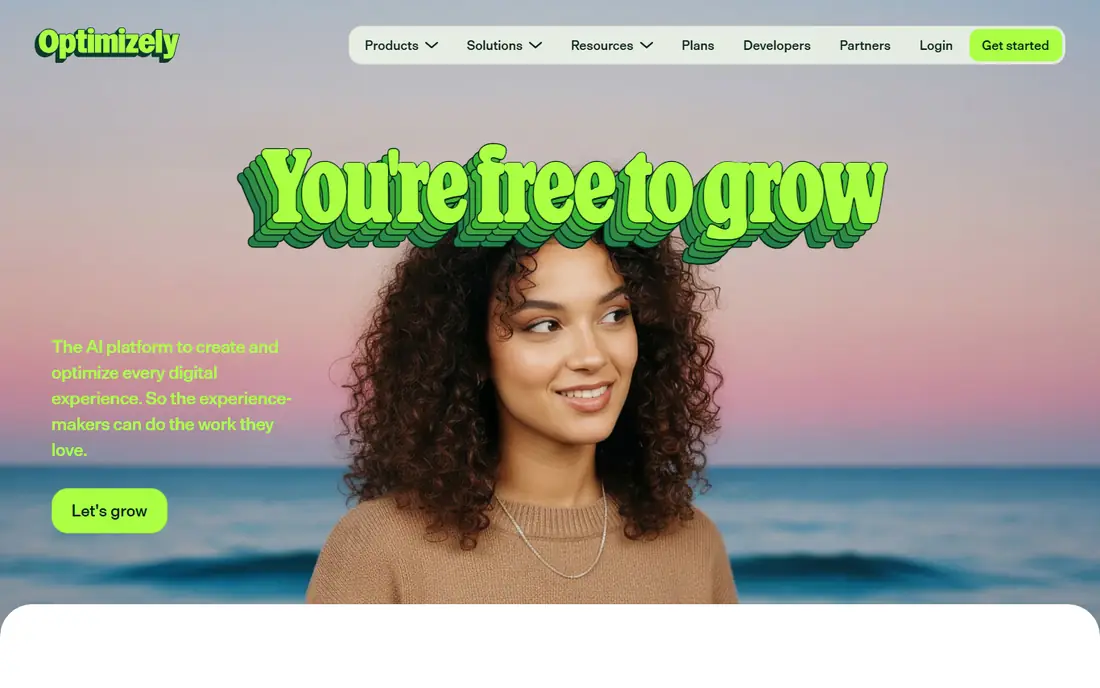
Optimizely presents itself as an AI platform for creating and optimizing digital experiences. Its homepage emphasizes everything marketing and digital teams need to create content fast, test and personalize, and prove business impact. This makes it a fit for teams that want content creation and experimentation workflows in one environment rather than stitching separate tools together. It suits mid-size to large digital teams with clear ownership of both content and testing.
Because Optimizely spans content, testing and personalization, smaller teams may find the scope broader than they need for simple A/B tests. Getting value depends on having enough traffic and process to run ongoing experiments. If your priority is a narrowly focused testing tool with minimal setup, a simpler option may be easier to adopt.
- AI content creation tools
- Testing and personalization combined
- Impact measurement features
- Broad platform may overwhelm small teams
- Setup requires planning
VWO is described as an AI-powered platform for digital experience optimization that unifies experimentation, personalization, feature management and behavior analytics. That combination fits teams that want to move from insight to test to rollout without switching tools. It is often considered by product, marketing and growth teams that run a steady cadence of experiments and want analytics alongside testing.
The range of capabilities means onboarding and governance take effort, and results depend on sufficient traffic for statistical confidence. Teams that only need basic split testing may prefer a lighter tool. Consider VWO when you want experimentation and behavior analytics under one roof.
- Experimentation and personalization in one
- Behavior analytics included
- Feature management support
- Feature breadth can take time to learn
- Needs traffic for reliable tests
Adobe Target is positioned as A/B testing software that helps optimize user experiences with personalized, data-driven insights. It fits organizations already working within Adobe's experience ecosystem or those needing testing tied closely to personalization at scale. Marketing and optimization teams in larger enterprises are the typical audience, especially where governance and integration matter.
Adobe Target is enterprise-oriented, so implementation and ongoing management require technical resources. Smaller teams or those without Adobe tooling may find it heavier than necessary. If you need a quick, self-serve testing tool, a simpler platform may be a better starting point.
- A/B testing with personalization
- Data-driven insights focus
- Fits Adobe experience stack
- Enterprise-oriented complexity
- Requires implementation resources
Convert.com describes its A/B testing tool as offering split testing, personalization, advanced goals and fast support with monthly payments. It fits teams that want a reliable testing tool without a sprawling feature set. The homepage stresses reliability and affordability, which appeals to growth teams and agencies running frequent experiments who value responsive help.
Convert.com is more focused on testing and personalization than on AI-driven content creation or broad experience analytics. Teams needing deep behavior analytics or feature management may need to pair it with other tools. Choose it when straightforward split testing and support are the main priorities.
- Split testing and personalization
- Advanced goal options
- Fast support emphasis
- Less emphasis on AI content creation
- May suit testing-focused teams best
Kameleoon presents an AI platform that lets teams build, test and roll out impactful experiments in one place, with the homepage highlighting building experiments in minutes by chatting with AI. It fits teams curious about AI-assisted workflows and those wanting control from the first test through final release. Product and growth teams running iterative experiments are the natural audience.
The chat-based experiment building is a newer workflow, so teams may need time to adapt their process. Organizations with very simple testing needs might not use the AI capabilities fully. Consider Kameleoon when experiment velocity and AI assistance are priorities.
- Chat-based AI experiment building
- Test and roll out in one place
- Control from first test to release
- AI chat workflow may need adjustment
- Less suited to simple static tests
SiteSpect's Maestro is described as enterprise experimentation built for today's teams, enabling experimentation across channels within Monetate's experience optimization platform. It fits larger organizations that need to run experiments beyond a single website and want an enterprise-grade foundation. Teams with dedicated optimization resources and cross-channel programs are the typical fit.
As an enterprise offering, SiteSpect involves implementation effort and ongoing resource commitment. Smaller teams or those focused only on basic website A/B tests may find it more than they need. Choose it when cross-channel experimentation at enterprise scale is the goal.
- Enterprise experimentation focus
- Cross-channel testing support
- Part of Monetate platform
- Enterprise-oriented setup
- May require dedicated resources
Mutiny is described as a sales assistant built for customer-facing work, helping enterprise sales teams be memorable to buyers. It fits organizations that want to personalize buyer-facing experiences and support sales conversations rather than run classic website experimentation. Sales and revenue teams are the primary audience.
Mutiny is not a general-purpose A/B testing or conversion optimization suite, so teams seeking broad experimentation features may need a different tool. It is best suited to sales-led personalization. Consider it when aligning conversion efforts with sales outreach is the priority.
- Built for customer-facing sales work
- Personalization for buyer experiences
- Aimed at enterprise sales teams
- Not a traditional A/B testing suite
- Focused on sales use cases
How the list was put together
ToolNimba compared documented features, vendor homepage descriptions and stated limits for each tool. We focused on what each platform says it does rather than hands-on testing. Details can change, so confirm current capabilities on vendor sites before deciding. The ordering is editorial and reflects fit for common conversion optimization needs, not a formal ranking.
What to confirm before you sign up
- Check that the tool supports the experiment types you plan to run, such as A/B, multivariate or personalization.
- Confirm integration with your analytics, CRM and content systems before committing.
- Ask how traffic volume affects test reliability and what guidance the vendor provides.
- Review implementation effort and whether you need developer resources for setup.
- Verify support responsiveness and documentation quality for your team's workflow.
Sources
Official websites of the products reviewed above. Features and prices were checked against these sites when the guide was written, and they can change, so confirm on the vendor site before you buy.
Frequently asked questions
What should I look for in an AI conversion rate optimization tool?
Look for the experiment types you need, integration with your existing analytics and content systems, and whether AI features actually support your workflow. Also consider implementation effort and how much traffic you have for reliable tests. Match the tool's scope to your team's resources.
How do testing-focused tools differ from personalization platforms?
Testing-focused tools like Convert.com emphasize split testing and goals, while personalization platforms such as Adobe Target and Mutiny tailor experiences to segments or accounts. Some platforms, including VWO and Optimizely, combine both. Choose based on whether you need broad experimentation or targeted personalization.
Do I need a developer to set up these tools?
It depends on the tool and your site. Enterprise options like Adobe Target and SiteSpect often require implementation resources, while simpler testing tools may need only a snippet. Check vendor documentation and support options to estimate the effort for your team.
Can I use these tools together with my analytics stack?
Most platforms describe integrations with common analytics and marketing tools, but the specifics vary. Confirm that your analytics, CRM and content systems are supported before committing. Integration depth is a key factor in whether you can act on test results quickly.