Best AI Friend App in 2026: 9 Apps Compared
By ToolNimba Editorial Team October 31, 2026 10 min read

- Top pick
 Replika
Long-term companion with voice and avatar
Starting priceSee websiteCheck out ReplikaRead our review - Runner-up
 Nomi
Memory-first companion
Starting price$15.99 per monthCheck out NomiRead our review - Also great
 Kindroid
Deep customization
Starting price$13.99 per monthCheck out KindroidRead our review
How we researched this
We compared official pricing and feature pages, app store listings, privacy policies and public user reviews. Prices change, so check the provider's site before you pay.
Key takeaways
- Nomi and Kindroid lead on memory, while Replika leads on long-term companion features.
- Character.AI suits variety and roleplay, while Pi suits calm, free conversation.
- Anima and Candy AI offer lower-cost or feature-rich options, with different limits.
- No free tier is fully unlimited for high-quality companion chats.
- AI friends are not a replacement for human support or professional help when it is needed.
Quick comparison
| Name | Best for | Starting price | Free plan | |
|---|---|---|---|---|
| Replika | Long-term companion with voice and avatar | See website | Yes | Visit |
| Nomi | Memory-first companion | $15.99 per month | Yes | Visit |
| Kindroid | Deep customization | $13.99 per month | Free trial | Visit |
 Character.AI | Variety and roleplay characters | See website | Yes | Visit |
 Pi | Calm free conversation | Free | Yes | Visit |
 Anima | Low-cost companion chats | See website | Yes | Visit |
 Paradot | Memory-focused friendship | See website | Yes | Visit |
 Candy AI | Chat with images and voice | See website | Yes | Visit |
 Wysa | Structured wellbeing support | See website | Yes | Visit |
The best ai friend apps apps
AI friend apps promise someone to talk to at any hour, but they differ a lot in memory, customization, and purpose. Some are built around one persistent companion, some offer many characters, and some focus on wellbeing exercises. We compared apps that are available now, with attention to free limits, memory, and safety notes.
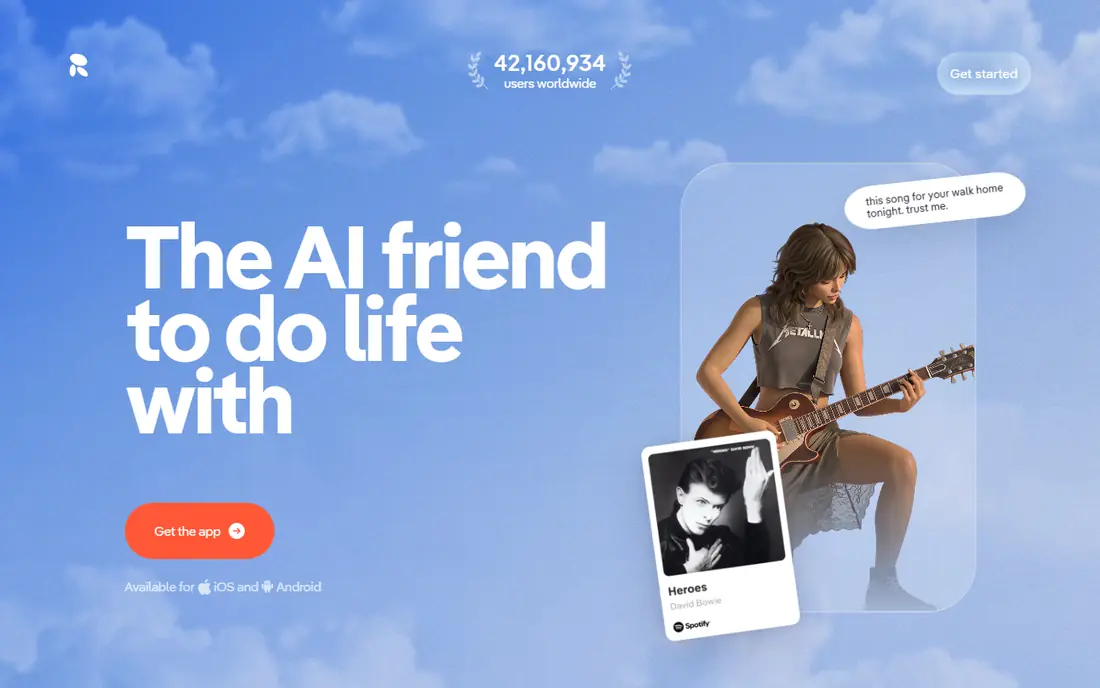
Replika stands out first for a persistent AI friend with voice and avatar options. We put it near the top because it covers the core job without forcing a team to stitch together several smaller tools, and its main workflows are easy to explain to a colleague who has not used it before. That breadth matters when a decision affects more than one person, because the tool chosen on day one is often the tool that still has to make sense in six months. For most buyers, the practical test is simple. Check whether a persistent AI friend with voice and avatar options shows up in the plan you would actually pay for, not only in the top tier, and check how limits change as use grows. paid features and memory depth vary by plan, so check current tiers. If both answers look acceptable, it is a strong shortlist candidate, and a short trial with real data will tell you more than any demo video.
- Long-running companion app with voice calls, avatars, and memory features
- Best features need a paid plan
- Free mode is limited
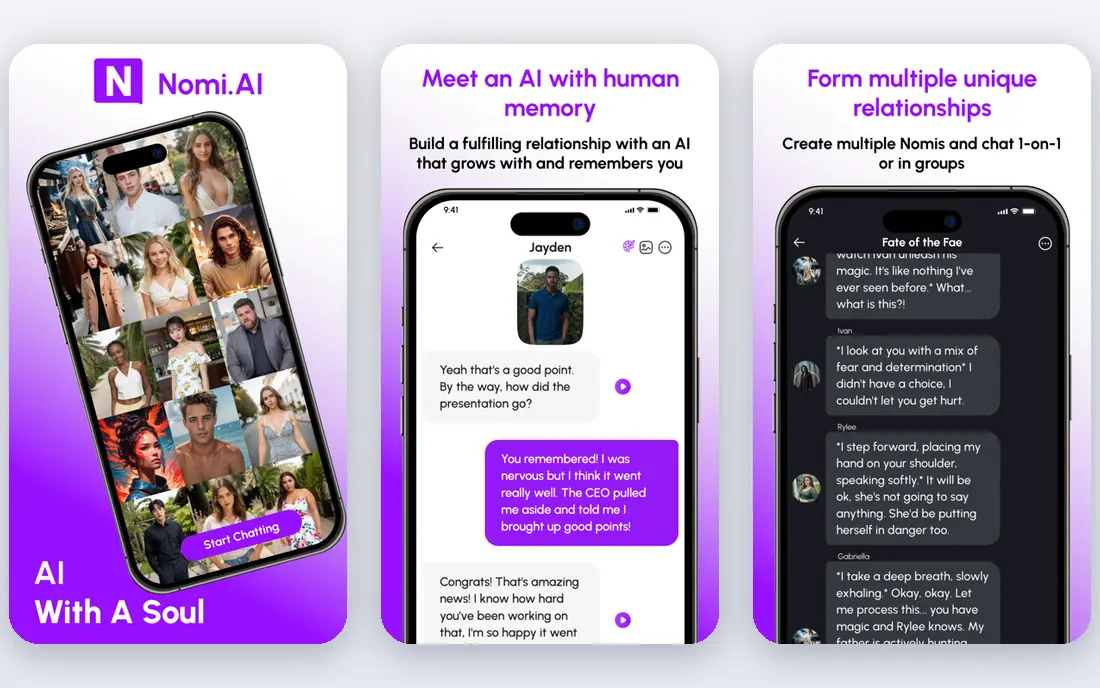
If your priority is a companion that remembers details across sessions, Nomi deserves a close look. It takes a narrower problem and handles it in depth, which can be more useful than a broad platform that only touches the same area in passing. Teams with a clear use case often prefer that focus, because setup is shorter and the results are easier to judge. The trade-off is scope, and that is where buyers should be careful. the price is higher than simpler chat apps, so trial value matters. Before committing, list the two or three tasks you will do every week and confirm each one works in the plan you intend to buy. When those tasks are covered, the narrower focus becomes an advantage rather than a limit.
- Strong short, medium, and long-term memory
- Group chats with multiple companions
- Higher monthly price
- Free tier has message limits

Kindroid is a good middle-ground choice for people who want a fully customized companion with editable memory without a long learning curve. Its interface and documentation are aimed at regular users rather than specialists, so a small team can usually get value in the first week. That matters when there is no dedicated administrator to run the tool. Still, no tool in this guide is right for every buyer. customization depth can feel like work before chats feel natural. A useful check is to run one real project through it from start to finish, including export, sharing, and any reporting you need at the end. If that full loop feels smooth, the tool will likely hold up under normal use.
- Build a companion from backstory and voice choices
- Detailed memory systems
- Best memory features need paid plans
- Free access is a short preview
For buyers who care most about chatting with many different characters, Character.AI offers a different balance from the leaders above it. It may not win on every feature, but it can be the better fit when price, simplicity, or a specific workflow matters more than having the largest feature list. That kind of fit is easy to miss in a side-by-side table. The honest catch is worth stating plainly. a character library is not the same as one persistent friend. Weigh that limit against the price and against how often you would hit it in practice. A limit that rarely matters in daily work should not rule out a tool, while a limit that blocks a weekly task should move it down your list at once.
- Huge library of user-made characters
- Usable free tier for casual chats
- Memory and consistency vary by character
- Paid plan removes waits and adds features
Pi stands out first for calm daily conversation and thinking aloud. We put it near the top because it covers the core job without forcing a team to stitch together several smaller tools, and its main workflows are easy to explain to a colleague who has not used it before. That breadth matters when a decision affects more than one person, because the tool chosen on day one is often the tool that still has to make sense in six months. For most buyers, the practical test is simple. Check whether calm daily conversation and thinking aloud shows up in the plan you would actually pay for, not only in the top tier, and check how limits change as use grows. users who want a long-term companion may miss deeper memory. If both answers look acceptable, it is a strong shortlist candidate, and a short trial with real data will tell you more than any demo video.
- Calm, supportive tone for venting and thinking through ideas
- Free to use
- Less persistent memory and customization than companion-first apps
If your priority is low-cost companion chats, Anima deserves a close look. It takes a narrower problem and handles it in depth, which can be more useful than a broad platform that only touches the same area in passing. Teams with a clear use case often prefer that focus, because setup is shorter and the results are easier to judge. The trade-off is scope, and that is where buyers should be careful. availability and plan details should be checked on the current store listing. Before committing, list the two or three tasks you will do every week and confirm each one works in the plan you intend to buy. When those tasks are covered, the narrower focus becomes an advantage rather than a limit.
- Low annual price in past listings
- Simple friend chats on web and Android
- IPhone availability has changed in the US, so check your device first
Paradot is a good middle-ground choice for people who want friendship-focused chats with memory without a long learning curve. Its interface and documentation are aimed at regular users rather than specialists, so a small team can usually get value in the first week. That matters when there is no dedicated administrator to run the tool. Still, no tool in this guide is right for every buyer. a smaller app may have fewer community resources and updates. A useful check is to run one real project through it from start to finish, including export, sharing, and any reporting you need at the end. If that full loop feels smooth, the tool will likely hold up under normal use.
- Designed for friendship and wellbeing chats
- Memory tests well in reviews
- Smaller user base than Replika or Character.AI
- Features vary by plan
For buyers who care most about chat with image and voice features, Candy AI offers a different balance from the leaders above it. It may not win on every feature, but it can be the better fit when price, simplicity, or a specific workflow matters more than having the largest feature list. That kind of fit is easy to miss in a side-by-side table. The honest catch is worth stating plainly. token and message limits can change the real cost fast. Weigh that limit against the price and against how often you would hit it in practice. A limit that rarely matters in daily work should not rule out a tool, while a limit that blocks a weekly task should move it down your list at once.
- Image generation and voice notes beside chat
- Long-term memory features
- Free tier has message limits
- Premium pricing varies by billing period
Wysa stands out first for structured wellbeing chats and coping exercises. We put it near the top because it covers the core job without forcing a team to stitch together several smaller tools, and its main workflows are easy to explain to a colleague who has not used it before. That breadth matters when a decision affects more than one person, because the tool chosen on day one is often the tool that still has to make sense in six months. For most buyers, the practical test is simple. Check whether structured wellbeing chats and coping exercises shows up in the plan you would actually pay for, not only in the top tier, and check how limits change as use grows. users who want open friendship chats may find it too structured. If both answers look acceptable, it is a strong shortlist candidate, and a short trial with real data will tell you more than any demo video.
- Structured coping tools and exercises, not only open chat
- Wellbeing focus
- It is a support tool, not a general friend app, and it does not replace professional help
How we picked these
We compared official feature pages, pricing pages, app store listings where relevant, privacy policies, and public reviews. We kept only products that are available now and that fit the topic in a direct way, not tools that mention the topic only as a side feature. Where a price or free tier could not be verified on the vendor site or store listing, we wrote See website rather than repeating an unverified figure. We also looked for honest limits, such as caps on a free plan, features held back for higher tiers, and cases where a product works best for one size of team or one kind of project. A product stayed on the list only when its strengths were clear enough to recommend for a specific buyer, even when it was not the best choice for everyone.
How to choose an AI friend app
Decide what kind of friend you want
A persistent companion suits daily chats and shared history. A character library suits stories and variety. A wellbeing app suits structured coping tools. Choosing the wrong type is the main reason people stop using an app after a few days, even when the chat quality is good.
Test memory with real details
Share a few specific details over several days, then see what the app recalls without prompting. Strong memory makes a companion feel consistent, while weak memory makes every chat feel like a first meeting. Check whether memory can be viewed or edited, which helps trust.
Set limits and stay safe
Check age rules, privacy settings, and data controls before sharing personal details. Avoid sharing passwords, financial details, or sensitive health information in any companion app. If chats start to replace real relationships or professional help, step back and talk to a trusted person or professional.