Best AI Investing Apps in 2026: 8 Apps Compared
By ToolNimba Editorial Team October 29, 2026 10 min read

- Top pick
 Wealthfront
Hands-off tax-smart investing
Starting price0.25% per yearCheck out WealthfrontRead our review - Runner-up
 Betterment
Goal-based automated investing
Starting price0.25% per yearCheck out BettermentRead our review - Also great
 Fidelity Go
Small balances
Starting priceFree under $25,000Check out Fidelity GoRead our review
How we researched this
We compared official pricing and feature pages, app store listings, privacy policies and public user reviews. Prices change, so check the provider's site before you pay.
Key takeaways
- Wealthfront and Betterment are our picks for most hands-off investors, thanks to low fees, tax-loss harvesting, and clear goal planning.
- Fidelity Go and Schwab Intelligent Portfolios suit fee-sensitive investors, but check minimums and how much cash each portfolio holds.
- Acorns and Magnifi suit different ends of the market, with Acorns for spare-change saving and Magnifi for AI research and idea screening.
- This is not financial advice; trading carries risk, and past performance does not guarantee future returns. Check fees and fund costs before you invest.
Quick comparison
| Name | Best for | Starting price | Free plan | |
|---|---|---|---|---|
| Wealthfront | Hands-off tax-smart investing | 0.25% per year | No | Visit |
| Betterment | Goal-based automated investing | 0.25% per year | No | Visit |
| Fidelity Go | Small balances | Free under $25,000 | Yes | Visit |
 Schwab Intelligent Portfolios | No advisory fee | Free | No | Visit |
 SoFi Automated Investing | SoFi members | 0.25% per year | No | Visit |
 Acorns | Spare-change investing | $3 per month | No | Visit |
 Vanguard Digital Advisor | Low-cost retirement investing | About 0.20% per year | No | Visit |
 Magnifi | AI research and idea screening | See website | Free trial | Visit |
The best AI investing apps
The phrase AI investing covers two different products, and the distinction matters for your money. Some apps use automation and algorithms to build and rebalance a diversified portfolio for you. Others use AI to research stocks, screen ideas, and suggest trades, while you keep control of each decision. We compared official fee schedules, minimums, and product pages to sort the apps below by that difference. This is not financial advice; trading carries risk, and you should only invest money you can afford to leave invested for the long term.
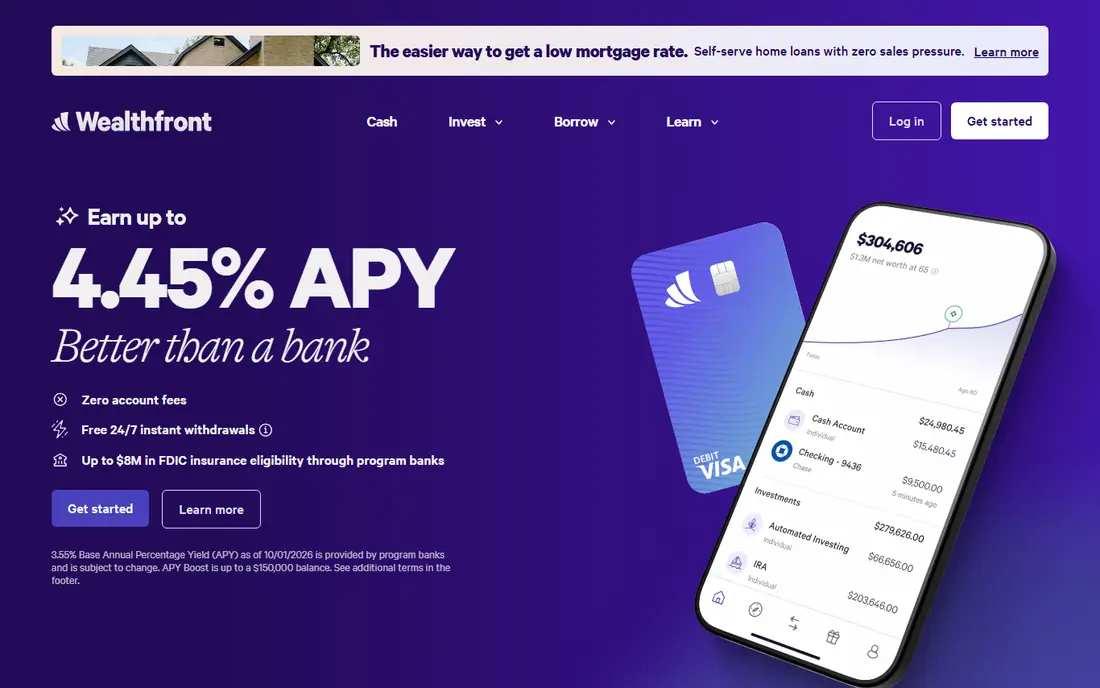
Wealthfront is the most complete hands-off pick on this list for investors who want automation to do the work. You answer questions about goals and risk, Wealthfront builds a diversified ETF portfolio, and it rebalances, reinvests dividends, and harvests tax losses in taxable accounts. At higher balances it also offers direct indexing, which can improve tax efficiency further for some investors.
The limits are clear. The automated portfolio needs a $500 minimum, and there is no human advisor to call for planning help. The 0.25% annual advisory fee is competitive, but fund expenses sit on top of it, as they do at every provider here. For an investor who wants a low-cost, tax-aware portfolio and does not need a person to talk to, Wealthfront is our first pick.
- Automated diversified portfolios
- Tax-loss harvesting
- Direct indexing at higher balances
- $500 minimum for the automated portfolio
- No human advisor access
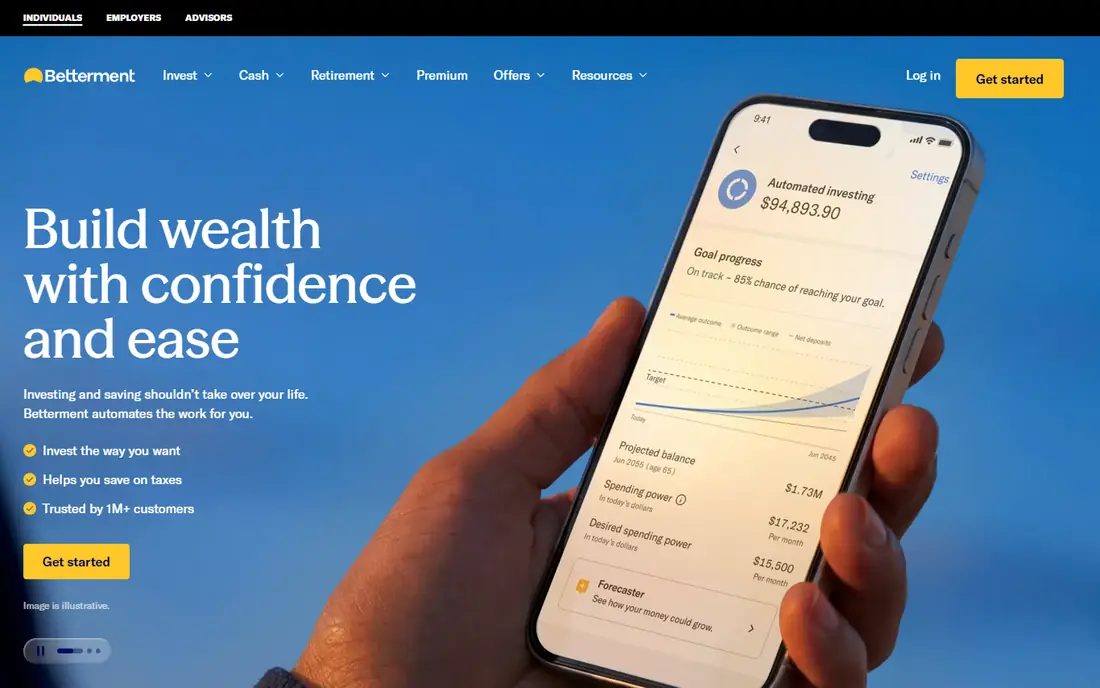
Betterment suits investors who think in goals rather than in tickers. You can set up separate goals for retirement, a house deposit, or a safety net, and Betterment builds and manages a portfolio for each one, with rebalancing and tax-loss harvesting in taxable accounts. Its planning tools, including retirement projections, help a new investor see whether their saving rate is on track.
The pricing needs a careful read. The standard digital fee is 0.25% per year, but small accounts that do not meet deposit or balance conditions can face a monthly fee instead, so check the current terms for your balance. Human advisor access also sits on a higher tier. For goal-based investors who want a clean app and strong planning tools, Betterment remains one of the best automated options, and it pairs well with a regular monthly deposit.
- Clear goal planning and retirement tools
- Tax-loss harvesting
- Cash and checking options alongside investing
- Small-account fee rules can raise the effective cost
- Human advice needs a higher tier

Fidelity Go is the easiest automated option to start with a small amount of money. There is no advisory fee on balances under $25,000, and the account minimum is low, so a new investor can open an account, set a goal, and let Fidelity build a portfolio without worrying about a monthly bill eating into a small balance. The Fidelity brand and customer service also give cautious first-time investors extra comfort.
The catch arrives as the balance grows. Above $25,000 the advisory fee is 0.35% per year, which is higher than Wealthfront or Betterment, and coaching from a human advisor needs a still higher balance. Fund expenses also apply, although Fidelity Go uses funds with no expense ratio in some cases. For a beginner with a small balance, Fidelity Go is excellent. For a larger portfolio, compare the fee at your actual balance before you stay.
- No advisory fee under $25,000
- Backed by a large, established broker
- Simple onboarding
- Advisory fee rises to 0.35% above $25,000
- Human coaching needs a higher balance
Schwab Intelligent Portfolios appeals to fee-sensitive investors for a simple reason, which is that it charges no advisory fee. You answer questions about goals and risk, Schwab builds an ETF portfolio, and it rebalances automatically. Investors who already bank or trade with Schwab also get the convenience of seeing everything in one place.
The two catches deserve attention. The minimum is $5,000, which rules out very small starters, and the portfolios hold a cash allocation that can be sizable. Cash does not fall with the market, but it also does not grow with it, and Schwab earns money on that cash, which is part of how it can waive the advisory fee. For an investor with $5,000 or more who wants no advisory fee and accepts the cash trade-off, Schwab is a strong choice.
- No advisory fee
- Large broker with banking and brokerage under one roof
- Automatic rebalancing
- $5,000 minimum
- Portfolios hold a meaningful cash allocation that can drag returns
SoFi Automated Investing suits people who already use SoFi for banking, lending, or student loans and want investing in the same app. The minimum is low, the fee is 0.25% per year, and members can talk with a financial planner, which is a real advantage for a first-time investor with questions. The onboarding is simple, and the portfolio is diversified across ETFs.
The main weakness is tax efficiency. SoFi Automated Investing does not offer tax-loss harvesting, which puts it behind Wealthfront and Betterment for taxable accounts. Portfolio customization is also more limited. For a retirement account, where tax-loss harvesting does not apply, that gap matters less. For a taxable account, and for investors who already bank with SoFi, it is still a solid, simple option.
- Low minimum
- Access to financial planners for members
- Simple app alongside banking and lending
- No tax-loss harvesting
- Portfolio options are less customizable than some rivals
Acorns is built for people who struggle to start, not for people who already invest large sums. Its Round-Ups feature rounds up card purchases and invests the spare change into a diversified ETF portfolio, so saving happens without a monthly decision. The minimum is $5, and the app is deliberately simple, with portfolios chosen by risk level rather than by individual stocks.
The flat fee is the catch. At $3 per month for the Bronze tier, the annual cost is $36, which is a large percentage of a $200 balance, even though it becomes trivial as the balance grows. Acorns also does not offer tax-loss harvesting, and investors have little control over the exact holdings. For a beginner who needs a habit more than a strategy, Acorns is a good on-ramp. For a larger portfolio, a percentage-fee robo-advisor will usually cost less in relative terms.
- Round-Ups turn spare change into investing
- Very low minimum
- Simple portfolios for beginners
- Flat monthly fee is costly on a tiny balance
- No tax-loss harvesting
- Limited control over holdings
Vanguard Digital Advisor is the low-cost, no-nonsense option for retirement savers. It builds a portfolio from Vanguard index funds, manages rebalancing, and charges an all-in fee of about 0.20% per year, which is lower than most rivals on this list. The minimum is $100, so it is accessible to new savers, and the focus on long-term retirement planning suits investors who want to set a contribution and leave it alone.
The trade-off is flexibility. Customization is limited, and the app is less polished than Betterment or Wealthfront for goal tracking and everyday use. Human advisor access needs a higher balance. For an investor who already trusts Vanguard, or who wants the lowest fee for a retirement account, Digital Advisor is a strong, boring choice, and boring is often what retirement investing needs.
- Low all-in fee
- Vanguard index funds
- Retirement-focused planning
- $100 minimum and limited customization
- Human advice needs a higher balance
Magnifi is the closest app on this list to a true AI investing assistant, and it works differently from the robo-advisors above. Instead of managing a portfolio for you, it lets you ask questions in plain language, screen stocks, ETFs, and funds, and compare ideas, which suits a self-directed investor who wants research help. That makes it a complement to a brokerage account, not a replacement for one.
The risk is also different. Magnifi does not guarantee that an idea will perform, and its AI output is research, not a recommendation for your situation. You still decide what to buy, when to sell, and how much risk to take, and you still pay your broker's fees on top of any Magnifi subscription. For an investor who enjoys research and wants AI help to narrow a long list, Magnifi is worth a trial. For an investor who wants a portfolio managed for them, pick Wealthfront or Betterment instead.
- Natural-language AI search across stocks, ETFs, and funds
- Screening and comparison tools
- Useful for self-directed investors
- You still make every trade decision
- Subscription cost is extra on top of brokerage fees
- AI ideas are not advice
How we picked these
We compared official fee schedules, account minimums, and product pages, and we favored apps that are still available to US investors in October 2026. We included both automated portfolio managers and one AI research tool, because the search term covers both, but we kept the distinction clear in every write-up. We did not rely on marketing claims about returns, and we did not treat any AI feature as a promise of profit. This is not financial advice; trading carries risk, and fees, fund expenses, and taxes all affect what you keep.
How to choose without overpaying
Start by deciding how much control you want. If you want a portfolio managed for you, compare robo-advisors by fee at your actual balance, by minimum, and by whether you need tax-loss harvesting in a taxable account. If you want to pick your own investments, compare research tools and brokerage fees, and be honest about how much time you will spend on research each month.
Then check the total cost, not just the headline fee. Fund expenses, cash allocations, monthly fees on small balances, and any advice tier all change the real price. Finally, set a contribution you can keep through a market fall, because the best app is the one you still use after a bad month. No AI feature removes market risk, and no app can promise a return.