Best AI Overview Tracking Tools in 2026: 9 Tools Compared
By ToolNimba Editorial Team October 29, 2026 9 min read

- Top pick
 Semrush
All-in-one SEO plus AI visibility
Starting price$99 per monthCheck out SemrushRead our review - Runner-up
 Ahrefs
Brand tracking inside Ahrefs
Starting priceSee websiteCheck out AhrefsRead our review - Also great
 BrightEdge
Large enterprise sites
Starting priceSee websiteCheck out BrightEdgeRead our review
How we researched this
We compared official pricing and feature pages, app store listings, privacy policies and public user reviews. Prices change, so check the provider's site before you pay.
Key takeaways
- Semrush and Ahrefs are the safest picks for teams that already pay for SEO software, since AI Overview tracking sits inside a wider suite.
- ZipTie and SE Ranking give smaller teams the most tracked prompts per dollar, which matters when every keyword needs daily checking.
- BrightEdge, seoClarity and Conductor suit large sites, but expect quoted pricing and longer contracts rather than instant signup.
- Prompt limits, refresh frequency and citation data matter more than headline price, so compare plans on those three points first.
Quick comparison
| Name | Best for | Starting price | Free plan | |
|---|---|---|---|---|
| Semrush | All-in-one SEO plus AI visibility | $99 per month | Yes | Visit |
| Ahrefs | Brand tracking inside Ahrefs | See website | Yes | Visit |
| BrightEdge | Large enterprise sites | See website | No | Visit |
 seoClarity | Large-scale rank and AI tracking | See website | No | Visit |
 Conductor | Enterprise content and AI search | See website | No | Visit |
 SE Ranking | Affordable AI tracking bundled with SEO | $99 per month | No | Visit |
 Moz | Prompt volume at a lower price | $99 per month | No | Visit |
 ZipTie | Simple usage-based tracking | See website | No | Visit |
 Rank Ranger | Agency reporting on AI Overviews | See website | No | Visit |
The best ai overview tracking tools
Google AI Overviews now appear on many searches, and a ranking report that ignores them misses part of the picture. These tools track whether your pages are cited in an AI Overview, which prompts trigger one, and how that changes over time.
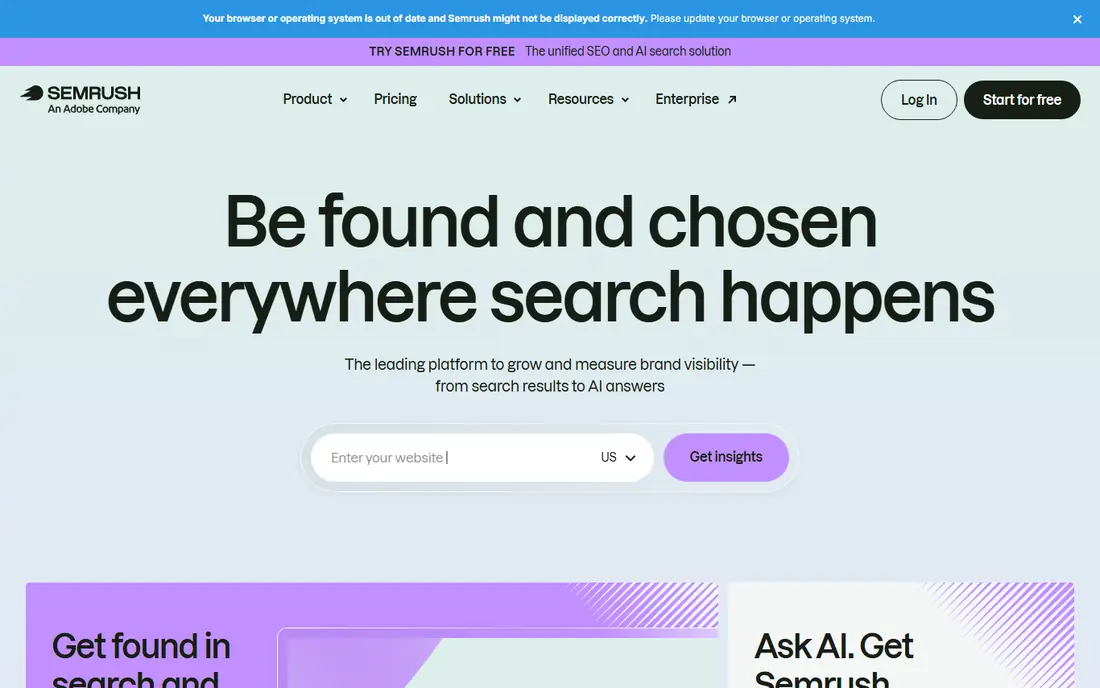
Semrush folds AI Overview tracking into a platform most SEO teams already know. Its AI Visibility Toolkit follows a set of prompts each day and shows whether your brand appears, which competitors appear instead, and how your share of voice moves. Because the same subscription covers keyword research, audits and backlink data, one report can connect an AI Overview citation to the page and the ranking behind it.
The weakness is scope creep. Semrush sells many toolkits, and the bill grows when a team adds seats or extra domains. For a team that only needs AI Overview checks, a focused tracker may be cheaper, but for a team already using Semrush for SEO, adding AI tracking here avoids a second login and a second contract.
- AI Visibility Toolkit tracks prompts daily
- Huge keyword and backlink data in the same login
- Competitor comparison included
- Costs add up with extra users and add-ons
- Smaller teams may pay for tools they never open
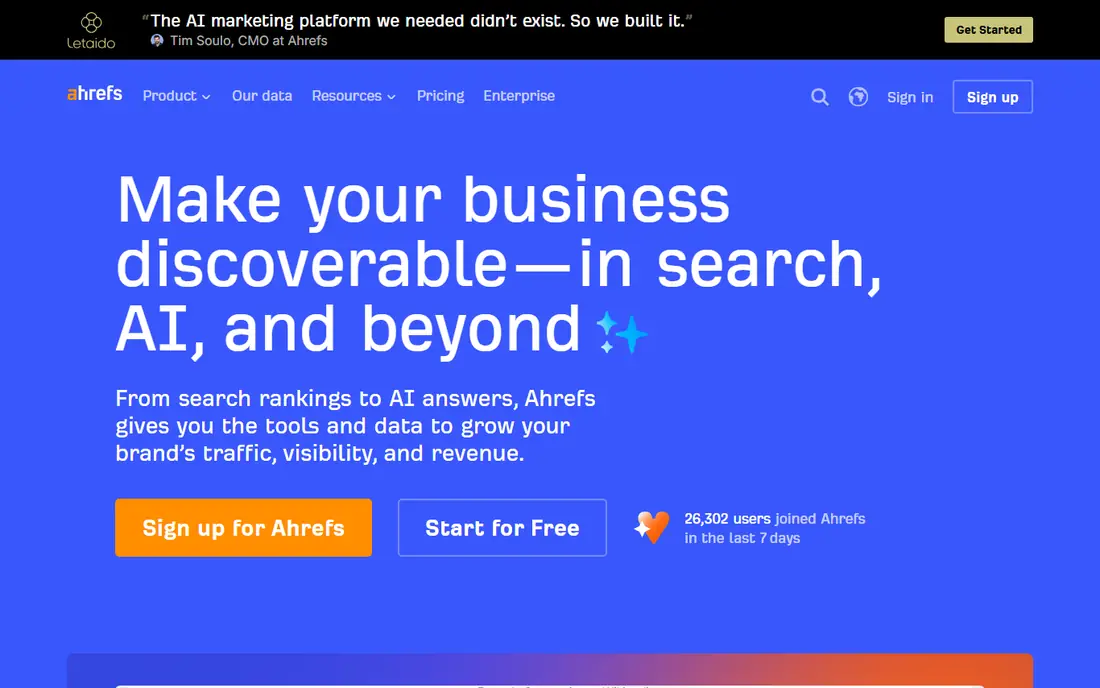
Ahrefs approaches AI Overviews through Brand Radar, which records brand mentions, citations and sentiment across AI answers and search results. That framing suits brand teams more than pure rank trackers, because it answers whether the AI answer names you at all, not just where a page ranks. The backlink index underneath it remains one of the strongest reasons to keep Ahrefs in the stack.
Prompt limits are the catch. Lower plans include only a handful of tracked AI prompts, and growing that allowance means paying for prompt packages. Teams with hundreds of priority prompts should price the full package, not the entry plan, before comparing Ahrefs with a dedicated tracker.
- Brand Radar tracks AI mentions and citations
- Best-in-class backlink index
- Free Webmaster Tools for site owners
- Prompt allowances are modest on lower plans
- Extra prompt packages cost extra
BrightEdge is built for large organisations that manage thousands of pages and many stakeholders. Its AI features track how AI Overviews and other AI answers treat a brand's content, and they connect those findings to content recommendations and reporting. For an enterprise team, that link between measurement and action is the main selling point.
Smaller teams will struggle with the model. Pricing is quoted after a sales conversation, contracts tend to run annually, and onboarding takes time. BrightEdge belongs on the shortlist when scale, governance and reporting matter more than a quick self-service start.
- AI Pulse tracks AI Overviews at enterprise scale
- Strong content recommendations
- Deep reporting for large teams
- Quote-based pricing
- Long contracts are common
- Too much platform for a small site
seoClarity has long served agencies and enterprises that track huge keyword volumes, and its AI Overview tracking fits that same pattern. Daily data across many keywords and locations helps a large site spot which prompts trigger an Overview and whether its pages are cited. Reporting tools let teams slice that data by section, market or competitor.
The platform is not a casual purchase. Pricing is quoted, setup takes longer than a self-service tool, and the interface rewards users who already think in large keyword sets. For a site with thousands of priority terms, that depth pays off, but a small blog will get more value from a cheaper tracker.
- Built for very large keyword sets
- Daily rank and AI Overview data
- Strong enterprise reporting
- Quote-based pricing
- Learning curve for new users
- Overkill below enterprise scale
Conductor positions itself as an enterprise platform for search and AI visibility, with content tools that turn tracking data into briefs and recommendations. That matters when the problem is not just knowing you lost a citation, but knowing which page to fix and what to change. Teams with a content pipeline can feed those recommendations straight into production.
As with other enterprise tools here, pricing is custom and the sales cycle is longer. Conductor is best judged on whether its content workflow saves real editorial time, not on its entry price, since there is no published entry price to compare.
- Full answer-engine platform
- Content guidance tied to AI visibility
- Strong for large content teams
- Custom pricing
- Implementation effort
- Not aimed at solo marketers
SE Ranking appeals to agencies and mid-size teams that want AI Overview data without an enterprise contract. Its AI tracker follows prompts daily and reports visibility across AI engines, while the wider suite covers rank tracking, audits and keyword research. White-label reporting on every plan is a genuine advantage for agencies that send reports to clients.
Read the plan details carefully, because AI tracking can sit behind an add-on depending on the tier. Even with that add-on, the total often stays below enterprise rivals, which is why SE Ranking frequently wins on prompts per dollar for teams that also need classic SEO tools.
- AI visibility tracker with many prompts
- Full SEO suite in the same plan
- White-label reports on all plans
- AI tracking is an add-on on some plans
- Backlink index is smaller than Ahrefs or Semrush
Moz has made AI search tracking a core part of its plans rather than an expensive extra. Its Standard plan includes AI Overviews by keyword and a large number of tracked prompts, checked weekly, across AI engines including Google AI Mode. For a small team that wants a broad prompt set without paying enterprise rates, that allowance is hard to ignore.
The trade-off is depth. Moz does not match Ahrefs on backlinks or Semrush on breadth, and weekly checks are slower than daily tracking when a prompt changes fast. If daily freshness matters more than prompt count, a daily tracker may suit you better, but for steady weekly monitoring Moz is strong value.
- AI Overviews by keyword on every plan
- Generous tracked prompt allowance
- Beginner friendly interface
- Rank updates and data depth lag larger rivals on some features
- Extra prompts cost extra
ZipTie takes a different approach from the suites on this list. It focuses on AI visibility tracking and charges based on usage, which suits small teams that only need to follow a defined set of prompts. Setup is quick, and the dashboard stays focused on mentions, citations and visibility rather than dozens of unrelated SEO tools.
The limit is breadth. ZipTie will not replace a full SEO suite, so teams that also need audits, backlinks and keyword research will still need another tool. Judge it on cost per tracked prompt and on whether its engine coverage matches the AI answers your customers actually see.
- Usage-based pricing so you pay for what you track
- Simple setup
- Covers several AI engines
- Fewer SEO extras than a full suite
- Pricing varies with usage, so bills need watching
Rank Ranger comes from rank tracking, and that heritage shows in its reporting. Agencies can track AI Overviews alongside classic rankings and present both in client reports, which helps when a client asks why traffic moved even though rankings look stable. Location and device options support local and mobile reporting too.
Pricing is less transparent than self-service rivals, and the interface is more functional than modern. Rank Ranger earns its place for agencies that already value its reporting, rather than for teams that want the slickest new AI dashboard.
- Strong rank tracking heritage
- Agency-friendly reporting
- Tracks AI Overviews as a SERP feature
- Pricing is quoted on many plans
- Interface feels dated next to newer trackers
How we picked these
We compared official feature pages, pricing pages and public reviews, and we kept only tools that track Google AI Overviews or AI answers in a way a user can verify from the vendor's own description. We favoured tools with published prompt limits or clear plan structures, and we marked quoted pricing as such instead of inventing a figure. Tools that only claim AI tracking without a described product were left out.
How to choose the right tracker
Start by listing the prompts that actually drive business, not every keyword you rank for. A tool that tracks 50 prompts daily may beat one that tracks 500 weekly if those 50 prompts decide most of your enquiries. Then check which engines and locations are included on the plan you would buy, since entry plans often cover fewer engines than the marketing page suggests.
Finally, ask what happens after the report. The best tool is the one whose citation data points to a page you can improve, with the source the AI answer used. A pretty share-of-voice chart that never leads to an edit is a cost, not an asset, so trial the reporting workflow before committing to a year.