Best AI Search Visibility Checking Software in 2026: 9 Tools Compared
By ToolNimba Editorial Team October 31, 2026 10 min read

- Top pick
 Otterly AI
Low-cost checking
Starting price$29 per monthCheck out Otterly AIRead our review - Runner-up
 Peec AI
Source and competitor detail
Starting price85 euros per monthCheck out Peec AIRead our review - Also great
 Profound
Enterprise checking
Starting priceSee websiteCheck out ProfoundRead our review
How we researched this
We compared official pricing and feature pages, app store listings, privacy policies and public user reviews. Prices change, so check the provider's site before you pay.
Key takeaways
- Otterly AI is the lowest-cost credible start for checking AI search visibility, with daily tracking across core engines.
- Peec AI suits teams that need detailed source and competitor analysis, while Profound suits enterprise programs with broad engine coverage.
- AthenaHQ offers a free plan to test with real prompts, while Goodie AI and Scrunch AI add actions and technical checks beyond monitoring.
- Visibility scores are directional: compare trends, mentions, citations, and cited pages over time rather than treating one score as exact.
Quick comparison
| Name | Best for | Starting price | Free plan | |
|---|---|---|---|---|
| Otterly AI | Low-cost checking | $29 per month | Free trial | Visit |
| Peec AI | Source and competitor detail | 85 euros per month | Free trial | Visit |
| Profound | Enterprise checking | See website | Free trial | Visit |
 Scrunch AI | Monitoring plus site checks | $250 per month | Free trial | Visit |
 AthenaHQ | Free test plus broad coverage | $295 per month | Yes | Visit |
 Goodie AI | Checking plus optimization | $399 per month | Free trial | Visit |
 Semrush AI Visibility | SEO suite users | $99 per month | Free trial | Visit |
 Ahrefs Brand Radar | Research at scale | See website | Free trial | Visit |
 Rankscale | Budget multi-engine checks | 20 euros per month | Free trial | Visit |
The best AI search visibility checking software
AI search visibility checking software answers a simple question: when people ask an AI tool about your topic, does it mention you, recommend you, or cite your pages. The tools below run prompts across engines such as ChatGPT, Perplexity, Gemini, Claude, Copilot, and Google AI features, then report mentions, citations, sentiment, and competitor share. We compared official pages and recent vendor comparisons, and we kept only tools with real multi-engine checking.
Otterly AI is the best place to start checking AI search visibility on a small budget. Its Lite plan, listed at $29 per month, tracks 15 prompts daily across ChatGPT, Google AI Overviews, Perplexity, and Copilot, with unlimited team members. That set covers a brand, a few product questions, and key competitors, which is enough to learn whether AI search is a real channel for you.
The limits are prompt count and engine choice. Claude, Gemini, and Google AI Mode sit on higher plans or add-ons in recent comparisons, so a team that needs full coverage will pay more. Otterly also focuses on monitoring and recommendations rather than deep content execution. For a first visibility check, it is affordable, clear, and easy to justify.
- $29 entry plan
- Daily tracking
- Unlimited team members
- Only 15 prompts on Lite
- Some engines are paid add-ons
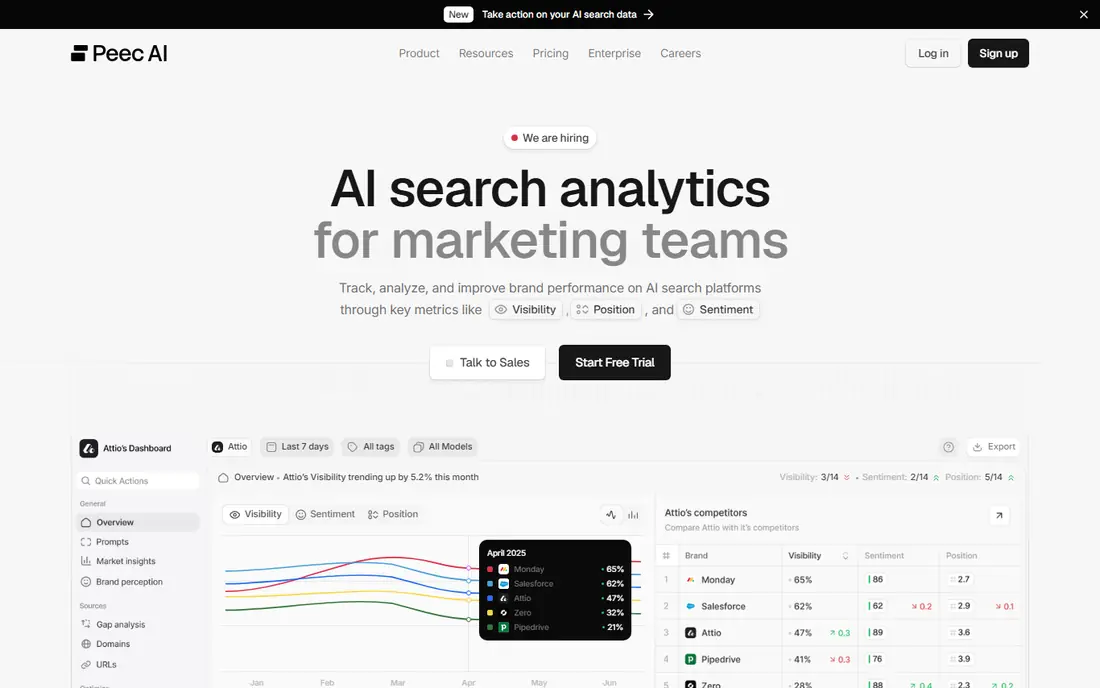
Peec AI suits teams that want to dig into the evidence behind a visibility score. Its Starter plan tracks 50 prompts daily on three models of your choice, with unlimited users, and it shows which sources AI answers cite and how competitors compare. That detail helps a content team fix the right page or earn a better mention, rather than reacting to a single number.
The entry plan does not cover every engine at once, so teams must choose the models that matter most or buy a higher tier. Prices are shown in euros, which adds a conversion step for US buyers. For source-level checking at a mid-market price, Peec AI offers a strong balance of depth and usability.
- Daily prompt checks
- Citation source analysis
- Unlimited users
- Entry plan covers three models of your choice
- Pricing is in euros
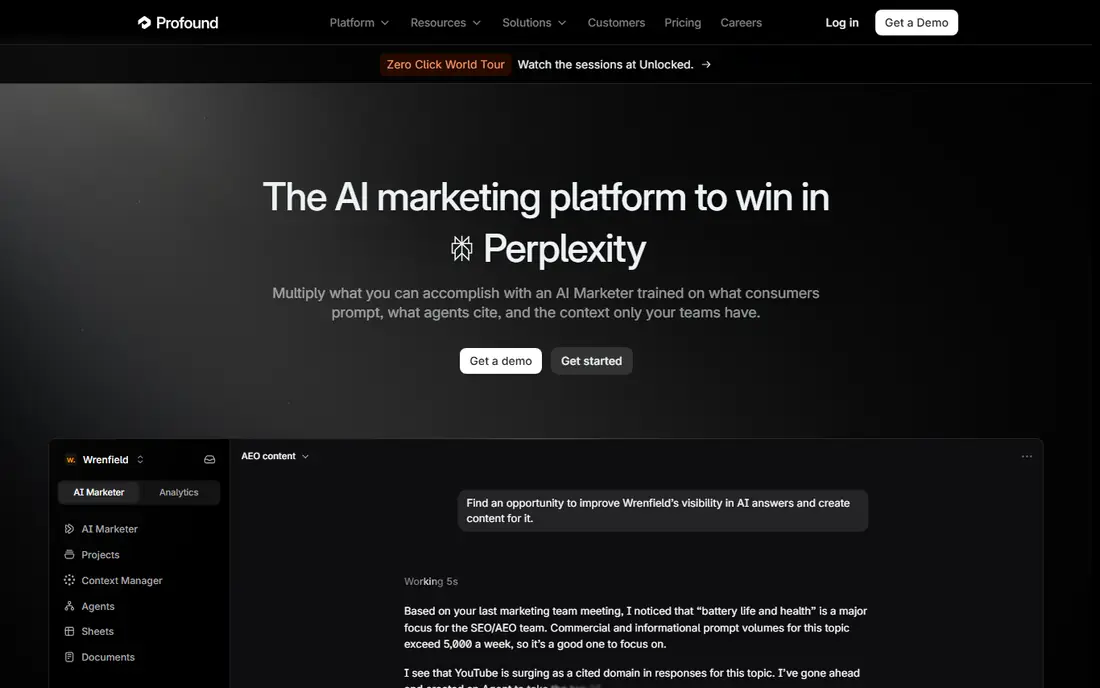
Profound is the enterprise end of AI search checking. On Enterprise it tracks up to nine engines in recent comparisons, including ChatGPT, Perplexity, Gemini, Claude, Copilot, Grok, DeepSeek, and Google AI features, with citation, sentiment, and share-of-voice reporting. Crawler analytics add server-log insight into how AI agents visit a site, which helps technical teams as well as marketers.
The barrier is access and price transparency. The free trial covers a limited engine set, and brand pricing is quoted, so a team should expect a sales process and an enterprise budget. For a large brand with many markets, prompts, and competitors, Profound offers the broadest checking on this list.
- Broad engine coverage on Enterprise
- Citation, sentiment, and share of voice
- Crawler analytics
- No published brand price
- Trial covers only three engines in recent comparisons
Scrunch AI goes beyond checking answers by also checking whether a site works well for AI agents. Its Core plan, listed at $250 per month, tracks 125 prompts across engines including ChatGPT, Perplexity, Google AI Overviews, and Copilot, and it adds crawler analytics and an Agent Experience Platform for site optimization. That mix suits a technical team that wants visibility data and site fixes together.
The entry price is higher than Otterly or Peec, and 125 prompts may feel tight for a large brand. Scrunch was acquired by Sitecore in June 2026, so buyers should confirm the current roadmap. For monitoring plus technical checks, Scrunch is a strong mid-market to enterprise option.
- 125 prompts on Core
- AI crawler analytics
- Site diagnostics for AI agents
- Higher entry price
- Prompt cap may limit large programs
AthenaHQ is useful because it lets a team test AI search checking with real data before paying. Its free Essential plan includes a credit amount in recent comparisons, and Starter is listed at $295 per month with coverage of many models. Analytics links, including GA4 and Shopify on some plans, help a team connect visibility to traffic and sales questions.
Credit-based usage is the main watch point. Teams must plan answer volume, and API access may cost extra on Starter. That model suits a team with a fixed prompt list, but it can surprise a team that adds prompts freely. For broad coverage with a free trial path, AthenaHQ is worth testing first.
- Free Essential plan
- Many models on paid plans
- Analytics and revenue links
- Credit-based usage needs planning
- API may cost extra on Starter
Goodie AI suits brands that want checking to lead to work, not just a report. It tracks engines including ChatGPT, Perplexity, Google AI Overviews, AI Mode, and Copilot in recent comparisons, and it pairs visibility data with optimization actions and revenue links. On some plans, strategist support adds a human layer to the action list.
The entry price, listed at $399 per month, is high for small teams, and billing terms may be quarterly or annual in some comparisons. For a mid-market or larger brand that wants monitoring plus a clear next step for each gap, Goodie offers a more complete workflow than a tracker alone.
- Many engines including AI Mode
- Optimization actions
- Revenue attribution
- High entry price
- Billing may be quarterly or annual
Semrush AI Visibility is the logical choice for teams that already use Semrush for keyword, backlink, and content work. It is listed at $99 per month per domain, with 25 prompts on the entry tier, plus prompt discovery, competitor benchmarking, and sentiment analysis across ChatGPT, Google AI, Gemini, and Perplexity in recent comparisons. Keeping AI checks inside the SEO suite helps a team reuse keyword research for prompts.
Per-domain pricing and a small prompt allowance are the limits. A team with many domains or a large prompt list will need a higher tier. Semrush is also a broad suite, so its AI checker may feel less focused than a specialist tool. For a Semrush household, it is the fastest way to add AI search checking.
- Fits Semrush workflows
- Prompt discovery and competitor benchmarking
- Sentiment checks
- Priced per domain
- Only 25 prompts on entry tier
Ahrefs Brand Radar stands out because it can research any brand, which helps agencies and competitive teams. It tracks mentions, citations, AI share of voice, and cited pages across engines including ChatGPT, Gemini, Perplexity, Copilot, Claude, and Google AI Mode in recent comparisons, and it can build prompts from Ahrefs keyword data and People Also Ask questions.
Pricing depends on the Ahrefs plan, and custom prompt cadence varies, with some summaries noting daily, weekly, or monthly options and a monthly re-tested index. That structure suits a team already on Ahrefs. For a team without Ahrefs, a specialist checker may be simpler and cheaper for a single brand.
- Research any brand, not just your own
- Large keyword data
- Competitor share of voice
- Pricing depends on Ahrefs plan
- Prompt cadence varies by plan type
Rankscale suits startups and small teams that want multi-engine checking without a $100-plus monthly bill. It is listed from 20 euros per month in recent comparisons, with a free trial on higher tiers, and it lists nine or more engines for question tracking. That price point makes it a useful test tool for a team that is still learning whether AI search matters for its market.
The trade-off is clarity and scale. Per-plan engine coverage is less clearly stated in some comparisons than for larger vendors, and support and reporting depth may be thinner. Buyers should run a trial with their exact prompt set and check which engines are included. For budget multi-engine checking, Rankscale is a credible low-cost option.
- Low entry price
- Many engines listed
- Pay-per-check flexibility
- Smaller vendor
- Per-plan engine coverage is less clearly stated in some comparisons
How we picked these
We compared official pricing and product pages and recent vendor comparisons for AI search visibility tools, and we kept only tools that check real AI answers across multiple engines. We weighed engine coverage, prompt allowance, refresh cadence, citation detail, sentiment, competitor tracking, and price transparency. We did not claim hands-on testing, and where pricing varied across sources we used the most recent comparison figure and wrote See website where no reliable published price applied.
How to check AI search visibility well
Start with questions people actually ask, not just your brand name. Include best-for questions, comparisons, problem questions, and product questions, since AI tools answer each type differently. A set of 25 to 100 prompts is a good start for most brands, with competitors included so share of voice means something.
Use trends, citations, and sentiment together
A single visibility score can mislead, since AI answers vary by day and prompt wording. Look at mention rate over four weeks, citation rate, which pages are cited, and sentiment around each mention. A brand that is mentioned often but cited rarely needs different work from a brand that is cited but described poorly.
Turn gaps into content work
When a competitor is cited for a question you should win, check the cited page: is it clearer, newer, or more detailed than yours. Update your page with a direct answer, a comparison, and facts a third party can cite. When no one is cited, the gap may be a content opportunity. Re-check the same prompts after four weeks to see whether the answer changed.