Best App to Learn French in 2026: 8 Apps Compared
By ToolNimba Editorial Team October 29, 2026 10 min read

- Top pick
 Duolingo
Free daily habit for beginners
Starting priceFreeCheck out DuolingoRead our review - Runner-up
 Babbel
Structured course with grammar in context
Starting price$17.99 per monthCheck out BabbelRead our review - Also great
 Rosetta Stone
Immersion and pronunciation practice
Starting price$19.99 per monthCheck out Rosetta StoneRead our review
How we researched this
We compared official pricing and feature pages, app store listings, privacy policies and public user reviews. Prices change, so check the provider's site before you pay.
Key takeaways
- Duolingo is the best free starting point for building a daily French habit, but it stalls before advanced conversation.
- Babbel is our pick for a structured course, with grammar in context and lessons built by language teachers.
- Rosetta Stone and Pimsleur suit learners who want pronunciation and listening first, with less English in the lesson.
- For real speaking progress, pair an app with italki lessons or another live tutor, since no app alone replaces conversation.
Quick comparison
| Name | Best for | Starting price | Free plan | |
|---|---|---|---|---|
| Duolingo | Free daily habit for beginners | Free | Yes | Visit |
| Babbel | Structured course with grammar in context | $17.99 per month | Free trial | Visit |
| Rosetta Stone | Immersion and pronunciation practice | $19.99 per month | Free trial | Visit |
 Pimsleur | Audio lessons for commutes and speaking | $20.95 per month | Free trial | Visit |
 Busuu | Structured lessons with community feedback | $13.99 per month | Yes | Visit |
 Memrise | Vocabulary with videos of native speakers | $24.99 per month | Yes | Visit |
 Mondly | Playful vocabulary and phrase practice | $12.99 per month | Yes | Visit |
 italki | Live lessons with real French tutors | From $4 per lesson | No | Visit |
The best apps to learn French
We compared official pricing pages, app store listings, course descriptions, and public reviews, looking for full French courses at beginner level and a clear path beyond it.
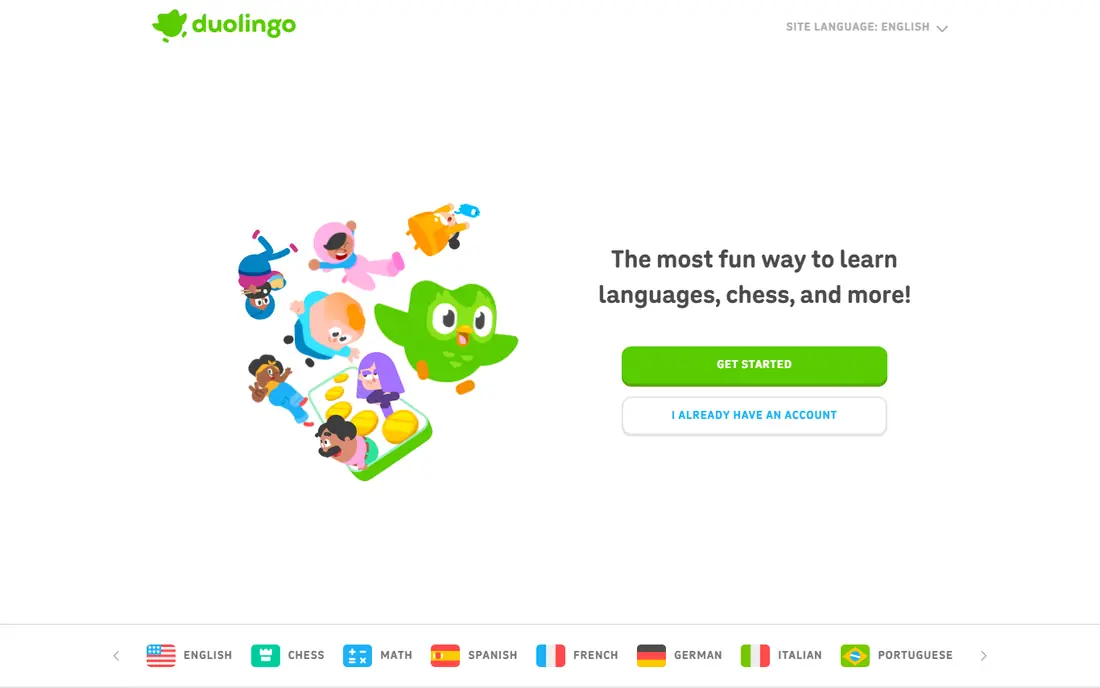
Duolingo is the easiest French app to start, and that is its main strength. Lessons are short, the course is free with ads, and the streak system keeps many learners coming back daily. For a complete beginner, the first months of vocabulary and basic sentences are clear and well paced.
The limit shows up later. Duolingo does not take most learners to confident conversation, and its free speaking practice is limited. Paid Super removes ads and limits, while Max adds AI conversation features at a higher price. Use Duolingo as a daily warm-up, and add a course or tutor when you want to speak.
- Free core course with ads
- Short, game-like lessons
- Streaks and reminders help habit building
- Limited depth past intermediate
- Speaking practice is thin without the paid Max tier
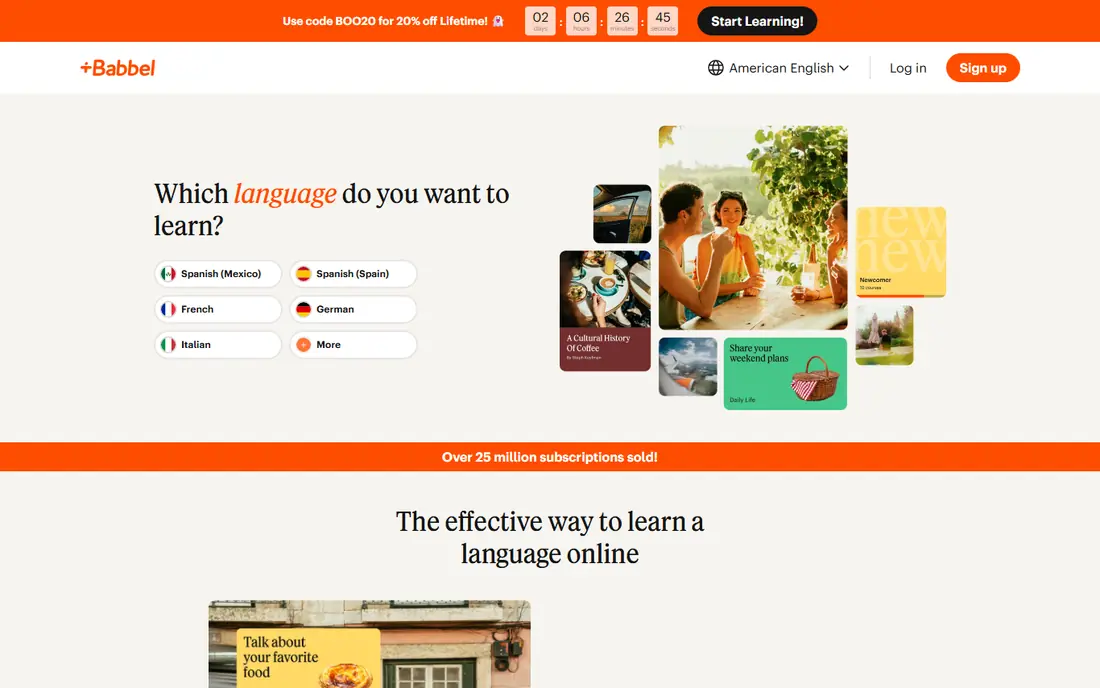
Babbel takes a classroom-like approach without feeling like a textbook. Lessons teach grammar through dialogues and real situations, such as ordering food or asking directions, rather than through isolated drills. That structure helps learners who want to understand why a sentence works, not just repeat it.
The monthly price is steep, so the annual plan is the better value if you plan to stick with it. Babbel also offers a first lesson free in each course, which lets you test the teaching style. For a learner who wants a clear path from beginner to conversational French, Babbel is our top paid pick.
- Lessons built by language teachers
- Grammar explained in context
- Review system included
- Monthly price is high without an annual plan
- Speaking practice needs a partner or tutor
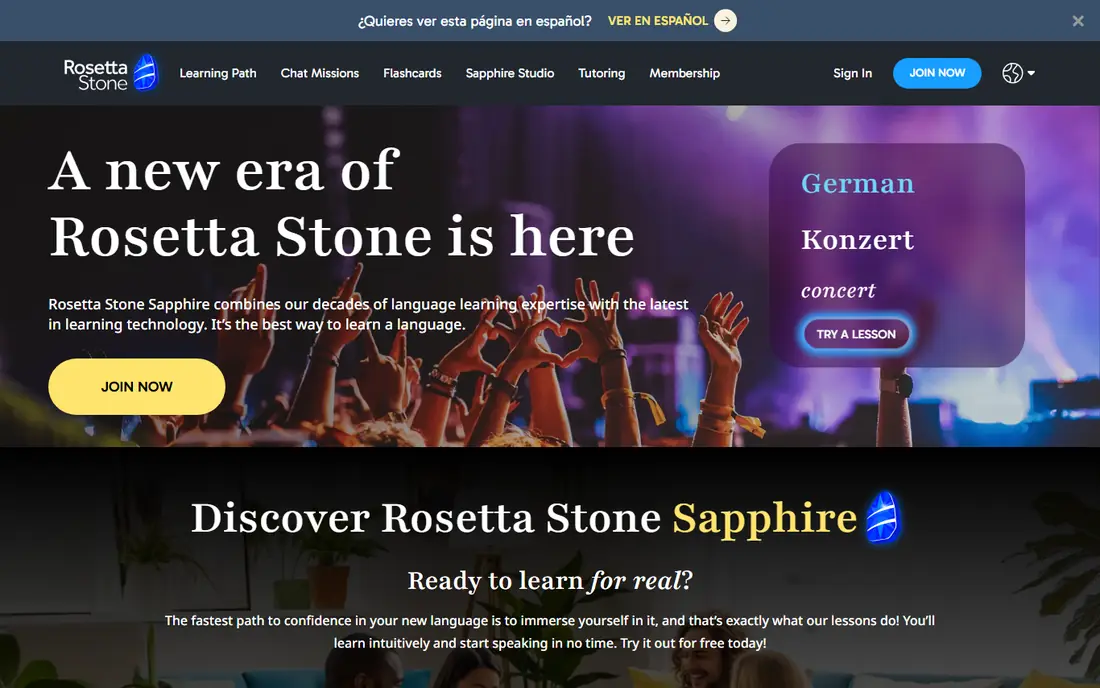
Rosetta Stone teaches French the way it teaches every language: through pictures, sounds, and matching, with almost no English. That immersion approach suits learners who get distracted by translation and who want to train their ear from day one. The TruAccent speech tool gives feedback on pronunciation, which is useful for French sounds that do not exist in English.
The same method is also the weakness. Learners who want grammar rules explained will not find them here, and some will feel stuck without a clear explanation. A short trial helps you decide if immersion clicks for you. If it does, Rosetta Stone is a calm, consistent way to build listening and speaking basics.
- Immersion method with little translation
- TruAccent pronunciation feedback
- Offline lessons
- No grammar explanations by design
- Higher price than some rivals
Pimsleur is built for people who learn by listening and speaking, not by tapping a screen. Each lesson is about 30 minutes, with prompts that ask you to answer in French, which trains recall and pronunciation. That format fits commutes, walks, and chores, where other apps are hard to use.
Reading and writing are secondary here, so pair Pimsleur with a reading app or a course if you need to read French well. The subscription is also among the most expensive on this list, though an annual plan lowers the monthly cost. For speaking confidence, Pimsleur remains one of the best audio-first choices.
- 30-minute audio lessons built around speaking
- Strong pronunciation training
- Offline access
- One of the pricier subscriptions
- Reading and writing get less attention
Busuu mixes a structured course with a community of native speakers who can correct your writing and speaking exercises. That feedback is the feature that sets it apart, since most apps only grade you with software. Lessons progress from beginner to advanced, with grammar reviews and vocabulary practice along the way.
The free tier gives a useful taste, but Premium opens the full course and feedback. Response times from the community can vary, so do not rely on it for urgent corrections. For a learner who wants course structure plus human feedback without paying for a tutor, Busuu is a strong middle option.
- Free tier with core lessons
- Feedback from native speakers on Premium
- Grammar reviews included
- Full course needs Premium
- Community feedback speed varies
Memrise focuses on vocabulary, and it does that job with short videos of native speakers using words in real phrases. Seeing and hearing a word in context helps it stick better than a flashcard alone. The free tier covers much of the core content, with ads, while Pro removes ads and adds premium content.
The monthly subscription is expensive compared with the annual rate, so pay yearly only if you plan to use it for months. Memrise is not a full grammar course, so pair it with Babbel or Duolingo for structure. As a vocabulary booster, especially before a trip, it earns its place.
- Native-speaker videos show words in real use
- Free tier covers core content
- Spaced repetition built in
- Monthly price is high
- Recent interface changes frustrated some users
Mondly feels close to Duolingo in style, with short, game-like exercises and a chatbot for basic conversation practice. Speech recognition checks your pronunciation, and the lesson topics cover travel, work, and daily life. The annual plan gives access to all languages, which suits learners who study more than one language.
For French alone, Mondly is less deep than Babbel, and its grammar coverage is lighter. It works best as a fun supplement for vocabulary and phrases, or as a low-pressure first app for a hesitant learner. Try the free lessons first to see if the game style keeps you coming back.
- Game-like lessons and chatbot conversations
- Speech recognition included
- 41 languages on some plans
- Depth is thinner than Babbel
- Free version covers only initial lessons
Italki is not an app course in the usual sense. It connects you with human tutors for live video lessons, priced per lesson, with trial lessons from many tutors. That human conversation is what breaks the plateau that app-only learners hit, since a tutor can correct pronunciation, explain grammar in context, and adapt to your level.
The trade-off is structure and cost. You need to pick a tutor, agree on goals, and pay per lesson, so weekly lessons cost more than a subscription over time. For best results, combine italki with a course app: use the app for daily practice, and use italki once a week for speaking. That pairing is the fastest route to real conversation on this list.
- One-to-one lessons with native tutors
- Prices vary by tutor
- Trial lessons available
- No set curriculum unless your tutor provides one
- Cost adds up with weekly lessons
How we picked these
We compared official pricing pages, app store listings, course descriptions, and public reviews for each app. We favored apps with a full French course for beginners, a clear free tier or trial, and a path beyond beginner level. We left out apps with no French course, general video sites, and tools that only translate text.
We did not claim hands-on testing that did not happen. Prices were checked against vendor pages and recent app store listings, and they vary by platform and billing period, so confirm the current price on the official site before you pay.
How to learn French fast with an app
No app makes you fluent in a month, but a focused routine can move you from zero to basic conversation in a few months. The key is daily practice plus real speaking, not a single perfect app.
Pick one core app and one speaking tool
Choose Babbel for structure, Duolingo for a free habit, or Pimsleur for audio, and stick with it for at least 30 days. Add italki or a conversation partner once a week, even for 30 minutes, so you practice speaking early. A second app for vocabulary, such as Memrise, is optional, not required.
Study in short, daily sessions
Short daily sessions beat long weekend sessions for memory. Aim for 20 to 30 minutes a day, split between new lessons and review, and use the app's review system rather than skipping it. Listen to French audio, such as songs or short podcasts, outside the app when you can, since listening skill grows with exposure.
Set a concrete goal for each month
A vague goal such as learning French rarely survives week three. Set a concrete goal instead, such as ordering food in French, introducing yourself, or holding a five-minute conversation. Test yourself against that goal each month, and switch apps only if your core app clearly fails to move you toward it.
Sources
- https://bestlanguageapp.com/
- https://global.nexteuropa.com/skill-development/best-language-learning-apps/
- https://techbullion.com/best-app-to-learn-french-in-2026/
- https://www.mindomax.com/duolingo-cost
- https://www.italki.com/en/blog/alternatives-to-duolingo-for-french
- https://www.topconsumerreviews.com/best-french-lessons/compare/busuu-vs-mondly.php
- https://www.duolingo.com
- https://www.babbel.com
- https://www.rosettastone.com
- https://www.pimsleur.com
- https://www.busuu.com
- https://www.memrise.com
- https://www.mondly.com
- https://www.italki.com