Best App to Sell Clothes in 2026: 8 Apps Compared
By ToolNimba Editorial Team October 29, 2026 9 min read

- Top pick
 Depop
Vintage and streetwear
Starting priceFreeCheck out DepopRead our review - Runner-up
 Poshmark
Social fashion selling
Starting priceFreeCheck out PoshmarkRead our review - Also great
 Vinted
Everyday clothes with no seller fee
Starting priceFreeCheck out VintedRead our review
How we researched this
We compared official pricing and feature pages, app store listings, privacy policies and public user reviews. Prices change, so check the provider's site before you pay.
Key takeaways
- Vinted and Depop keep the most money in the seller pocket on a typical sale, while Poshmark charges the highest headline commission.
- Poshmark and eBay offer larger buyer pools, which can mean faster sales and higher prices for some items despite higher fees.
- Depop suits vintage and streetwear, Poshmark suits fashion and social selling, and Vinted suits everyday clothes at budget prices.
- Consignment apps like ThredUp do the work for you, but payouts are lower and slower than peer-to-peer selling.
- Our pick for most sellers is Depop for trendy clothes and Vinted for everyday clothes, with Poshmark as a second listing for fashion items.
Quick comparison
| Name | Best for | Starting price | Free plan | |
|---|---|---|---|---|
| Depop | Vintage and streetwear | Free | Yes | Visit |
| Poshmark | Social fashion selling | Free | Yes | Visit |
| Vinted | Everyday clothes with no seller fee | Free | Yes | Visit |
 Mercari | General used clothes and goods | Free | Yes | Visit |
 eBay | Large buyer pool and auctions | Free | Yes | Visit |
 ThredUp | Hands-off consignment selling | Free | Yes | Visit |
 Vestiaire Collective | Designer and luxury resale | Free | Yes | Visit |
 Facebook Marketplace | Local sales with no shipping | Free | Yes | Visit |
The best app to sell clothes
Selling clothes online is a trade between fees, audience, and effort. Some apps charge little but need you to do everything, while consignment services do the work and take a larger cut. The apps below cover that full range.
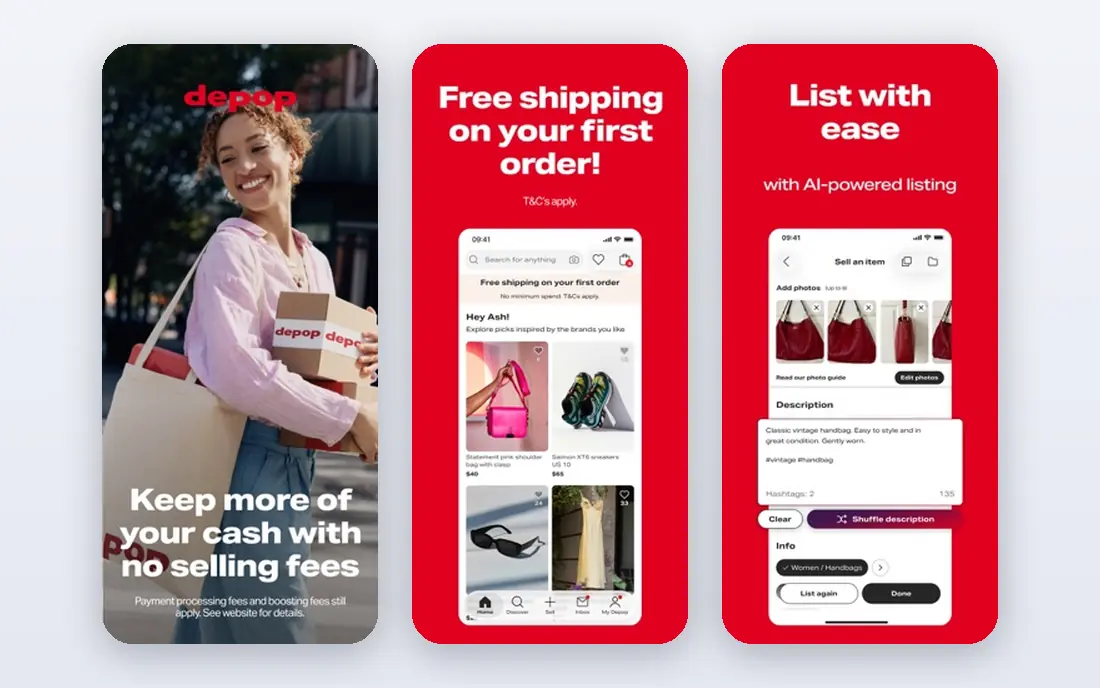
Depop is the home of vintage, streetwear, and Y2K fashion, and its feed rewards good styling over keyword-stuffed titles. Sellers list with photos, buyers discover through a social-style feed, and payment processing in the US is around 3.3 percent plus $0.45, with no separate seller commission. That fee structure keeps more of each sale than Poshmark or eBay.
The catch is audience fit. Everyday basics and unbranded clothes can sit unsold while a well-styled vintage piece moves quickly. Depop works best when you know your niche, photograph items well, and price for a trend-aware buyer. If your closet is mostly vintage and streetwear, start here.
- No seller commission in the US and UK, only payment processing
- Feed-based discovery suits styled listings
- Strong with younger buyers
- Generic clothes sell slowly
- Buyers expect trend-aware photos and descriptions
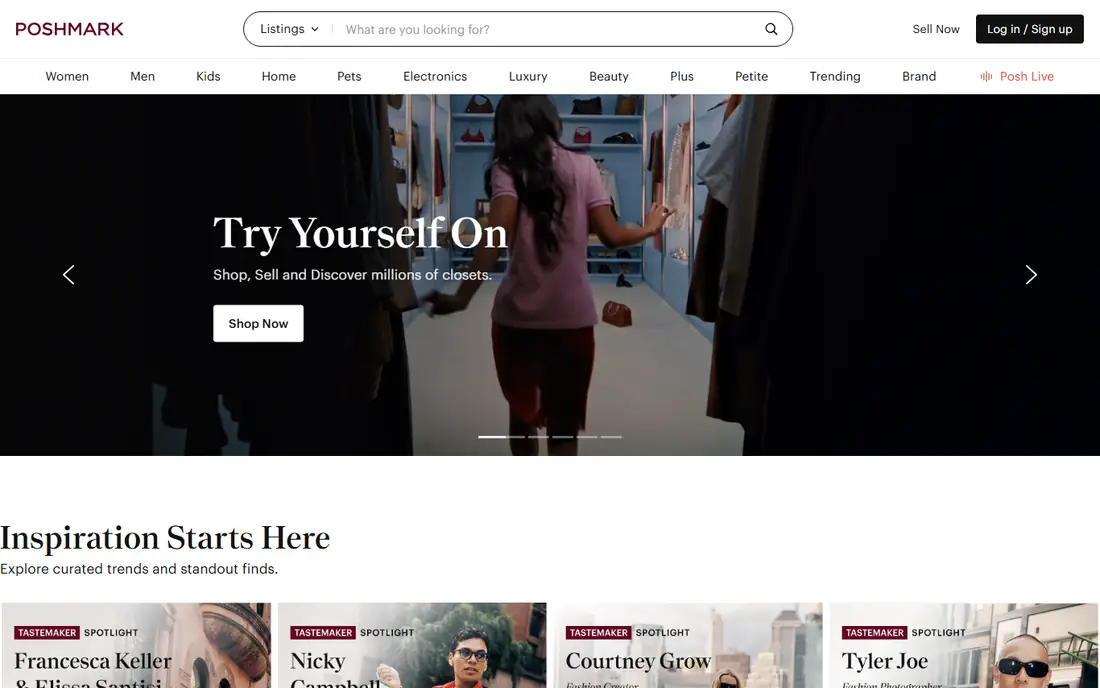
Poshmark is a social marketplace for fashion, where sharing, following, and Posh Parties help listings get seen. Sellers list clothes, shoes, and accessories, and buyers pay shipping through a prepaid label system. That social discovery helps fashion items sell, especially women's, men's, and kids clothing from known brands.
Fees are the honest downside. Poshmark takes 20 percent on sales of $15 or more, which is the highest headline rate among peer-to-peer apps here. For a $50 sale, that is $10 before any other costs. Poshmark still makes sense when its audience pays more or buys faster, but price your items with that commission in mind.
- Large US fashion audience
- Social sharing and parties help discovery
- Prepaid shipping label included for buyers
- 20 percent commission on sales of $15 or more, or $2.95 under $15
- Fees cut deeply into low-price items
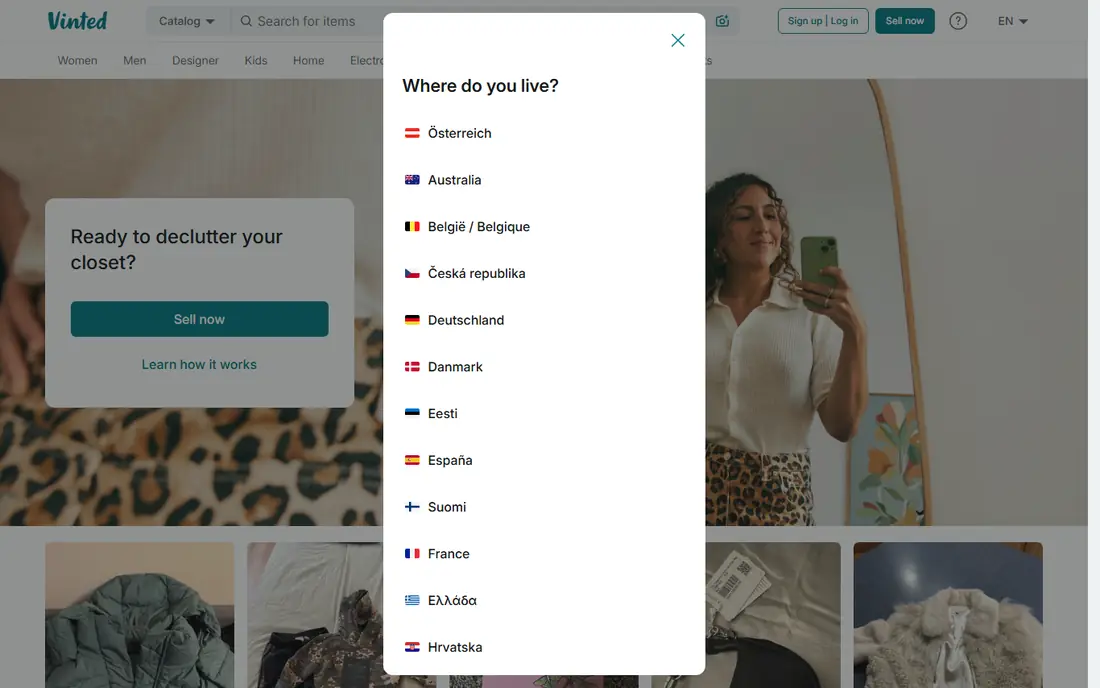
Vinted flips the usual fee model: sellers keep the full listed price on standard sales, while buyers pay a protection fee at checkout. That makes Vinted the cheapest peer-to-peer option for sellers, and it suits everyday clothes, shoes, and accessories at budget prices. Shipping uses prepaid labels, and buyers cover shipping in most cases.
Lower fees do not guarantee higher prices. Vinted buyers expect bargains, so a designer piece may fetch less here than on Vestiaire Collective or eBay, even after fees. For clearing everyday clothes quickly and keeping what you list, Vinted is hard to beat. For high-value fashion, list elsewhere as well.
- No seller fees on standard sales
- Buyers pay a protection fee
- Prepaid labels and buyer-paid shipping help sellers
- Buyer fees can deter some buyers
- Prices tend to be lower for everyday items
Mercari is a general marketplace where clothes sit alongside electronics, home goods, and collectibles. Listing is quick, the audience is broad and deal-focused, and sellers can ship with prepaid labels. That breadth helps when you are clearing a mix of clothes and other items in one place.
Fees changed in recent years, with a 10 percent seller commission in current summaries, plus buyer service fees. That total is lower than Poshmark but higher than Vinted or Depop for sellers. Mercari suits sellers who want one app for many categories and who price with fees in mind, rather than fashion-only sellers chasing the highest audience premium.
- Simple listing flow
- Broad US audience for clothes and general goods
- Prepaid labels available
- 10 percent seller commission returned in recent fee changes
- Buyers also pay service fees, which can affect demand
eBay remains the largest general marketplace, and that scale matters for clothes that need a specific buyer. A rare vintage jacket, a collectible sneaker, or a sought-after brand can find its buyer faster on eBay than on a niche app, and auctions let demand set the price. Sellers get 250 free listings per month in many cases, with fees charged on sale.
Fees and complexity are the trade-offs. Final value fees around 13.6 percent plus $0.40 per order in most categories, in public fee summaries, take a real cut, and seller policies, returns, and shipping choices need care. For high-demand or niche clothes, the larger pool often outweighs the fee. For everyday basics, Vinted or Depop may net more with less effort.
- Massive global buyer pool
- Auction and fixed-price options
- Strong for branded, vintage, and collectible clothes
- Final value fees around 13.6 percent plus a per-order fee in most categories
- More complex seller rules
ThredUp is consignment, not peer-to-peer selling. You order a clean-out bag, fill it, send it in, and ThredUp photographs, lists, and ships accepted items. That hands-off model suits people who want to clear a closet without photographing and messaging buyers for weeks.
Payouts are the catch. ThredUp keeps a large share, and the seller percentage varies with item price, so low-priced clothes may earn little or nothing after processing. You also give up control over price and timing. Choose ThredUp for convenience and volume, not for maximizing the price of a single valuable piece.
- Platform handles photos, listing, and shipping
- Clean-out bags make selling easy
- Good for clearing many items at once
- Payouts are a percentage that falls sharply on lower-priced items
- Selling is slower and less controlled than peer-to-peer
Vestiaire Collective is built for designer and luxury resale, where trust matters more than speed. Sellers list designer clothes, shoes, and bags, and authentication checks help buyers trust high-value purchases. That trust supports higher prices for genuine designer pieces than a general marketplace might achieve.
Everyday clothes do not belong here, and fees, authentication, and shipping steps mean a sale takes longer than a peer-to-peer listing. For a designer coat, bag, or pair of shoes, though, Vestiaire Collective is the safer route to a buyer who will pay a luxury price. For everything else, use Depop, Poshmark, or Vinted.
- Authentication for designer items
- Global luxury buyer pool
- Strong for high-value fashion
- Fees and authentication steps add time and cost
- Not suited to everyday or unbranded clothes
Facebook Marketplace is the local option. Listing is free, local pickup sales carry no selling fee, and the audience is anyone nearby browsing on Facebook. That makes it ideal for bulky items, bundles, and quick local sales where shipping would eat the profit.
Shipped orders are a different story, with a selling fee around 5 percent and a minimum in public summaries, plus the usual marketplace messaging and negotiation. Local buyers may also flake on pickup. Use Marketplace to clear clothes locally and quickly, and use a dedicated fashion app when you want a national buyer pool or a structured checkout.
- Free for local pickup sales
- Huge local audience
- No shipping needed for nearby buyers
- Shipped orders carry a selling fee
- Local buyers can be unreliable and price negotiation is common
How we picked these
We compared official fee pages and public fee summaries checked in October 2026, audience focus, listing and shipping models, and whether each app truly fits selling clothes. We kept only apps that exist today, allow clothing sales in the US, and offer a usable seller experience. We did not claim hands-on testing we did not do, and fees are shown as current public summaries, so sellers should confirm the exact rate on the app before pricing a sale.
How to get the best price for your clothes
Photograph clothes in daylight, on a hanger or a person, with front, back, label, and any flaws shown clearly. Honest flaw photos build trust and reduce returns, which cost more than a slightly lower price. Write titles with brand, size, color, and style, and describe condition plainly instead of using vague terms like good condition alone.
Price with fees in mind. Work backward from what you want to keep, add the platform fee and shipping cost if you pay it, and check sold listings for the same item before you set a price. List a valuable item on two apps where rules allow it, but remove it from the other app as soon as it sells. Finally, ship quickly and pack clothes cleanly, because fast shipping and good ratings bring repeat buyers and fewer disputes.
Sources
- https://www.depop.com
- https://www.poshmark.com
- https://www.vinted.com
- https://www.mercari.com
- https://www.ebay.com
- https://www.thredup.com
- https://www.vestiaire.com
- https://www.facebook.com/marketplace
- https://www.voolist.com/blog/marketplace-fees-comparison-2026
- https://checkthat.ai/brands/poshmark/alternatives
- https://flowlister.com/reselling-websites/