Best Apps for Farm Productivity in 2026: 9 Apps Compared
By ToolNimba Editorial Team October 29, 2026 10 min read

- Top pick
 Climate FieldView
Field data, imagery, and yield analysis
Starting priceFreeCheck out Climate FieldViewRead our review - Runner-up
 John Deere Operations Center
John Deere machine and field data
Starting priceFreeCheck out John Deere Operations CenterRead our review - Also great
 Granular Insights
Field-level profit and operations analysis
Starting priceSee websiteCheck out Granular InsightsRead our review
How we researched this
We compared official pricing and feature pages, app store listings, privacy policies and public user reviews. Prices change, so check the provider's site before you pay.
Key takeaways
- Climate FieldView and John Deere Operations Center suit row-crop farms that need field maps, machine data, and imagery.
- Farmbrite and Tend suit smaller diversified farms that need crops, livestock, tasks, and finances in one place.
- AgriWebb is built for livestock records and compliance, while Local Line focuses on farm sales and customer orders.
- Check offline use, equipment compatibility, and per-acre or per-user pricing before you commit, since farm apps price very differently.
Quick comparison
| Name | Best for | Starting price | Free plan | |
|---|---|---|---|---|
| Climate FieldView | Field data, imagery, and yield analysis | Free | Yes | Visit |
| John Deere Operations Center | John Deere machine and field data | Free | Yes | Visit |
| Granular Insights | Field-level profit and operations analysis | See website | Yes | Visit |
 Farmbrite | Small farms managing crops and livestock | $29 per month | Free trial | Visit |
 AgriWebb | Livestock records and compliance | $50 per month | Free trial | Visit |
 Trimble Ag Software | Precision mapping with Trimble equipment | Free | Yes | Visit |
 Tend | Diversified crop planning and tasks | Free | Yes | Visit |
 Local Line | Farm sales, CSAs, and wholesale orders | $87 per month | Free trial | Visit |
 farmOS | Free open-source farm records | Free | Yes | Visit |
The best apps for farm productivity
Farm productivity apps cover a wide range of work. Some map fields and track machines, some record livestock, and some manage sales, tasks, and money. The right app depends on your farm type, size, and whether you work mostly in the field, in the office, or at a market stall. We compared vendor pricing pages, feature pages, and farm software guides to build a list for US farms of different sizes.
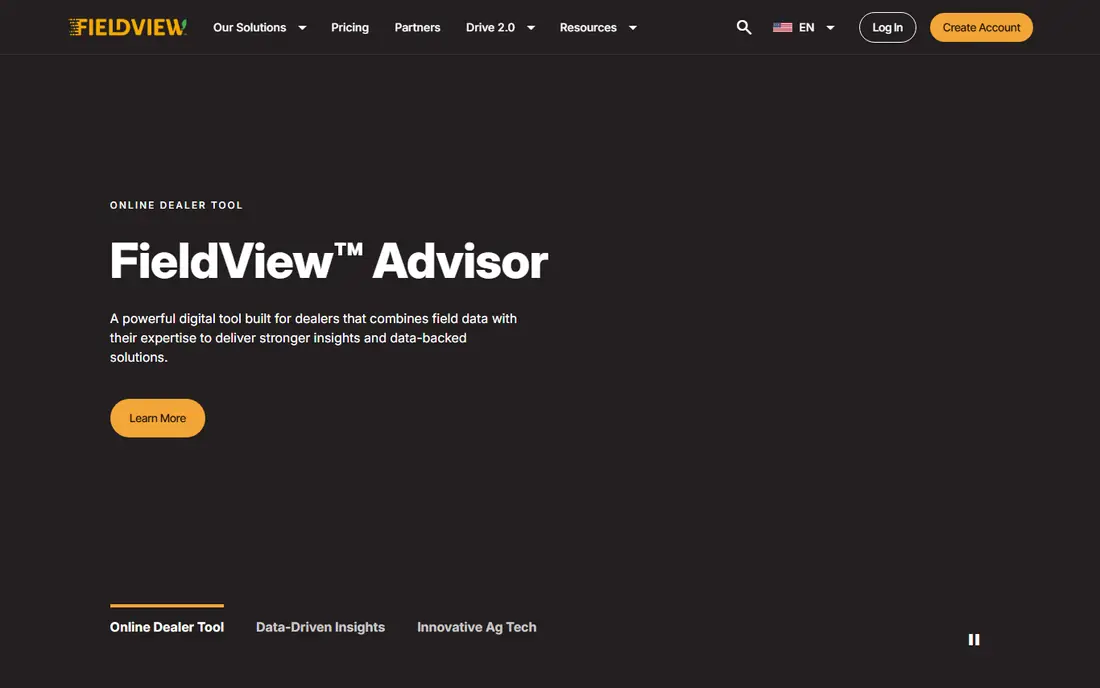
Climate FieldView is a leading digital farming platform for row-crop growers. It collects field data, maps operations, and adds satellite imagery and yield analysis so you can compare fields and seasons. Equipment compatibility across brands is a key strength, since many farms run mixed fleets.
The free trial tier covers basic data gathering, while the full paid plan starts at $499 per year on the vendor pricing page, with higher tiers for premium services. Machine data may also need a FieldView Drive device. For a crop farm that wants imagery and analytics without switching equipment brands, FieldView is a strong first look.
- Works with many equipment brands
- Field health imagery and yield tools
- Free trial tier to start
- Full paid plan starts at $499 per year in recent vendor pricing
- Hardware may be needed for machine data
- Bayer ownership concerns some growers
John Deere Operations Center
Best for: John Deere machine and field data

John Deere Operations Center is the free hub for farms running John Deere machines. It gathers machine data, maps fields, tracks equipment, and adds weather and maintenance reminders. An account is free to create, though getting machine data requires connected equipment or a shared farm link.
Mixed-fleet farms can still use it, but the deepest links sit with John Deere displays and machines. That is fine if your fleet is mainly green, and less ideal if it is not. For a John Deere farm that wants one place for field and machine records, this free hub is hard to beat.
- Free account for basic data
- Deep John Deere machine links
- Maps, weather, and maintenance reminders
- Most value comes with John Deere equipment
- Advanced tools and partners may add cost
- Setup takes time for mixed fleets
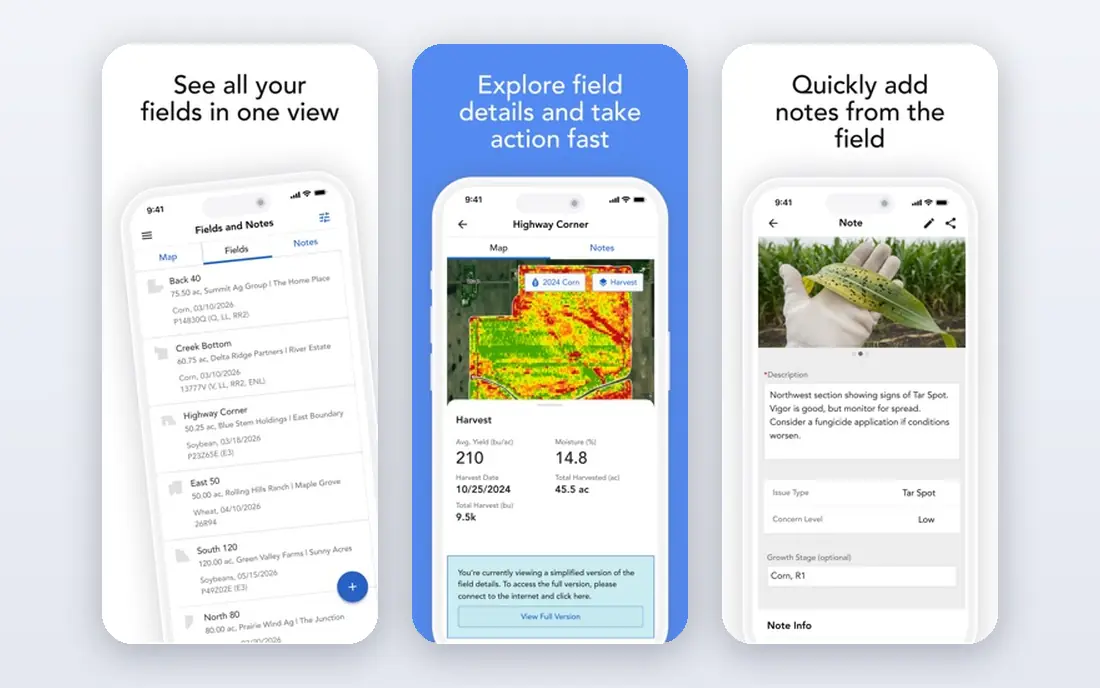
Granular Insights, from Corteva, answers a business question: which fields actually make money. It combines machine data, invoices, and field work into profit-per-field views, with satellite imagery and scouting tools for in-season decisions. That financial clarity sets it apart from a pure mapping tool.
The focus is mainly US row crops, so livestock or diversified vegetable farms will find less fit. Pricing also needs a current vendor check, since tiers and acreage limits change. For a corn, soybean, or wheat operation that wants profit answers, Granular Insights is a serious option alongside FieldView.
- Field-level profit views from machine and invoice data
- Directed scouting tools
- Works with many equipment brands
- US row-crop focus
- Pricing and tiers need a vendor check
- Less suited to small diversified farms
Farmbrite is an all-in-one farm management app for small and mid-size farms. It tracks planting, harvest, livestock, equipment, expenses, and orders, with reports that show profit by crop or animal group. The interface is simpler than an enterprise system, which helps a small team adopt it fast.
Plans start at $29 per month for single-focus essentials, with a 14-day free trial, and the complete suite costs more. Precision analytics are also lighter than a dedicated field platform. For a diversified farm that wants one app for daily records and money, Farmbrite is a practical and well-rounded pick.
- Covers crops, livestock, inventory, finances, and sales in one app
- Mobile use with offline help
- Simple interface
- No permanent free plan
- Full crop plus livestock suite costs more
- Less deep precision analytics than FieldView
AgriWebb is built for livestock producers. It records animal movements, treatments, weights, and breeding, with compliance and audit tools that matter for sales and inspections. Field recording works offline, which is essential in areas with weak signal, and data syncs when you return to coverage.
Crop farms will find the crop tools thinner than a dedicated crop app, and pricing from $50 per month scales with size and features. For a cattle or sheep operation that needs clean, auditable livestock records, AgriWebb is one of the strongest choices in this guide.
- Built for cattle and sheep records
- Compliance and audit tools
- Offline recording in the field
- Crop features are secondary
- Pricing scales with farm size
- Best value for livestock-focused farms
Trimble Ag Software
Best for: Precision mapping with Trimble equipment
Trimble Ag Software suits precision farms that already use Trimble displays and guidance. It offers field mapping, yield tracking, and input analysis, with a free Farmer Starter plan and a paid Core plan at $199 per year in recent guides. That starter tier gives a low-cost way to test the system.
The catch is hardware. Full value depends on Trimble equipment, and display connections can add a yearly fee per display. For a farm already invested in Trimble, the integration is a clear win. For a farm without that hardware, a brand-neutral tool may be simpler and cheaper.
- Free starter tier
- GPS mapping and yield tracking
- Links to Trimble displays and equipment
- Most value needs Trimble hardware
- Display connection can add cost
- Setup is more technical than Farmbrite
Tend is made for diversified vegetable and crop farms. It helps plan plantings, assign tasks, track fields, and manage sales, which suits market gardens and CSAs that juggle many crops and customers. The free plan gives a useful way to test planning before paying.
Paid plans from $30 per month add advanced features, and livestock management is not the focus. For a diversified crop farm that lives by a planting plan and a task list, Tend is a clean and focused alternative to a broader farm suite.
- Free plan for planning
- Crop plans, tasks, and field tracking in one place
- Sales tools for direct-market farms
- Advanced features need a paid plan from $30 per month
- Less livestock depth
- Smaller user base than Farmbrite
Local Line focuses on the selling side of a farm. It handles online stores, CSA subscriptions, wholesale orders, inventory, invoicing, and delivery or pickup, which helps a farm move from spreadsheets and email orders to a single sales system. That focus is its strength.
It is not a field planning tool, so you will still need another app for crop plans and field records if you need them. Pricing from $87 per month on annual billing is also higher than a general farm app. For a farm whose main bottleneck is sales and orders, Local Line is a strong, purpose-built choice.
- Built for farm e-commerce, CSA subscriptions, and wholesale
- Inventory and order management
- Invoicing and reporting
- Higher starting price
- Not built for field or crop planning
- Best for farms that already sell direct or wholesale
farmOS is a free, open-source farm record system. It lets you log plantings, harvests, animal records, equipment work, and observations, with maps and flexible record types. That openness suits farms, researchers, and cooperatives that want to own their data and adapt the system.
The trade-off is setup. Running farmOS yourself needs technical skill, and hosted plans add cost. The interface is also more practical than polished, and support relies on community help and documentation. For a tech-comfortable farm that values free software and data ownership, farmOS is a valuable option.
- Free and open source
- Flexible records for crops, livestock, and equipment
- Community modules and mapping
- Needs technical setup or a hosted plan
- Interface is practical rather than polished
- Support comes mainly from the community
How we picked these
We compared vendor pricing and feature pages and farm software guides, and we favored apps that are still available, state a clear farm type, and explain offline use, equipment links, and pricing. We did not claim hands-on testing. Farm app pricing often depends on acres, animals, users, or sales volume, so confirm the current quote for your farm size before you commit.
How to choose the right farm app
Start with your main bottleneck. A row-crop farm needs field and machine data. A livestock farm needs animal records and compliance. A direct-market farm needs sales and orders. One app rarely does all three well, so pick for the bottleneck first.
Check offline use and equipment fit
Field apps must work without signal and sync later. Check whether your tractors, displays, and sensors connect to the app, and whether a device purchase is needed. An app that cannot collect your data in the field will not help, no matter how good its dashboards look.
Compare pricing by your farm size
Some apps charge per month, some per year, some per acre, and some per user. Ask for a quote at your acreage, animal count, or sales volume. A low headline price can rise fast once your real farm size is entered.
Test with one season of data
Use a free plan or trial with a small set of fields, animals, or orders. Check that records are easy to enter in the field, that reports answer a real question, and that your team will keep using it after the first month. A farm app only pays when records stay current.