Best Apps for Workout Tracking in 2026: 8 Apps Compared
By ToolNimba Editorial Team October 31, 2026 8 min read

- Top pick
 Hevy
All-round strength logging
Starting price$23.99 per yearCheck out HevyRead our review - Runner-up
 Strong
Simple minimalist logging
Starting price$29.99 per yearCheck out StrongRead our review - Also great
 Fitbod
Workouts built for you
Starting price$79.99 per yearCheck out FitbodRead our review
How we researched this
We compared official pricing and feature pages, app store listings, privacy policies and public user reviews. Prices change, so check the provider's site before you pay.
Key takeaways
- Hevy is our pick for most lifters, with a generous free tier, fast logging and a useful muscle heatmap.
- Strong suits lifters who want the fastest, simplest log with no extra clutter.
- Fitbod is best if you want workouts built for you, while JEFIT suits data lovers with a huge exercise library.
- Nike Training Club and FitOn are the best free routes to guided workouts, rather than pure strength logging.
Quick comparison
| Name | Best for | Starting price | Free plan | |
|---|---|---|---|---|
| Hevy | All-round strength logging | $23.99 per year | Yes | Visit |
| Strong | Simple minimalist logging | $29.99 per year | Yes | Visit |
| Fitbod | Workouts built for you | $79.99 per year | Free trial | Visit |
 JEFIT | Huge library and analytics | $69.99 per year | Yes | Visit |
 Nike Training Club | Free guided workouts | Free | Yes | Visit |
 Boostcamp | Following proven programs | $59.99 per year | Free trial | Visit |
 Caliber | Coach-designed strength plans | $36 per year | Yes | Visit |
 FitOn | Free workout classes | Free | Yes | Visit |
The best apps for workout tracking
A workout tracker should be fast between sets, clear over months, and honest about what you actually did. We compared official pricing, app store listings and feature pages, with a focus on logging speed, routine limits on free tiers, exercise libraries and progress charts. The best app is the one you still open in month three.
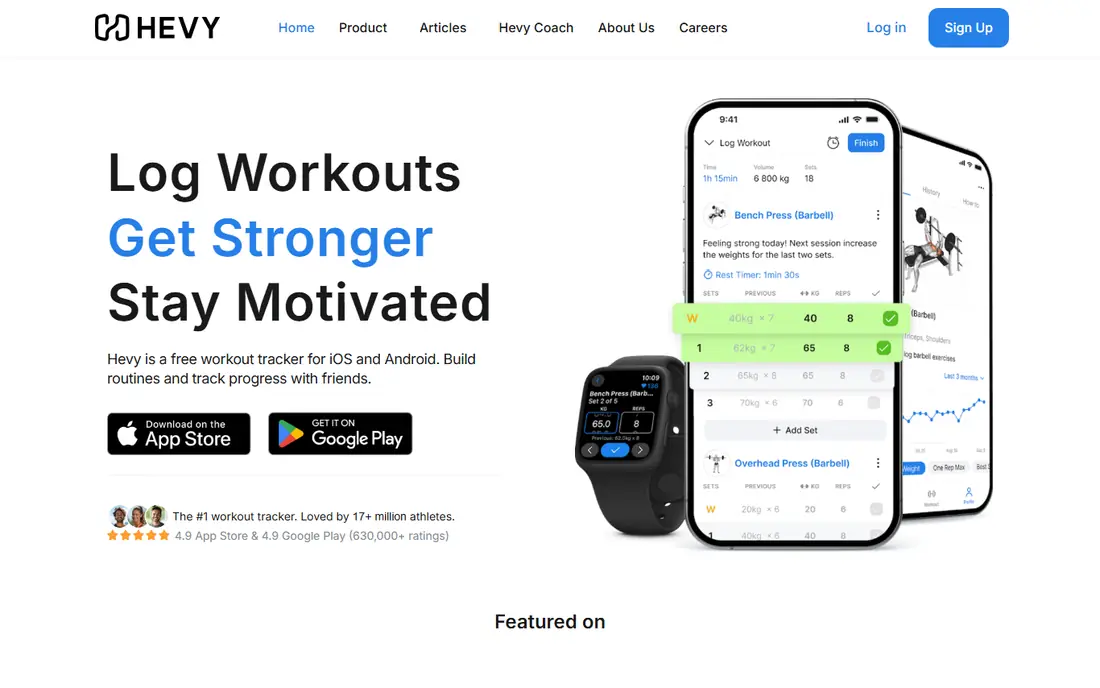
Hevy strikes a balance that suits most gym goers. Logging a set takes a couple of taps, rest timers and plate details stay out of the way, and the muscle heatmap shows which groups you trained recently. The free tier covers unlimited workouts, which is more generous than many rivals, and the social feed adds light accountability if you want it.
Free routines are capped, so lifters with many programs will need Pro. Advanced analytics and program building also sit behind the paid plan. For a lifter who wants a clean log, clear progress and a low yearly price, Hevy is the easiest recommendation in this list.
- Fast set logging
- Generous free tier
- Muscle heatmap and social feed
- Routine caps on the free tier
- Best analytics need Pro
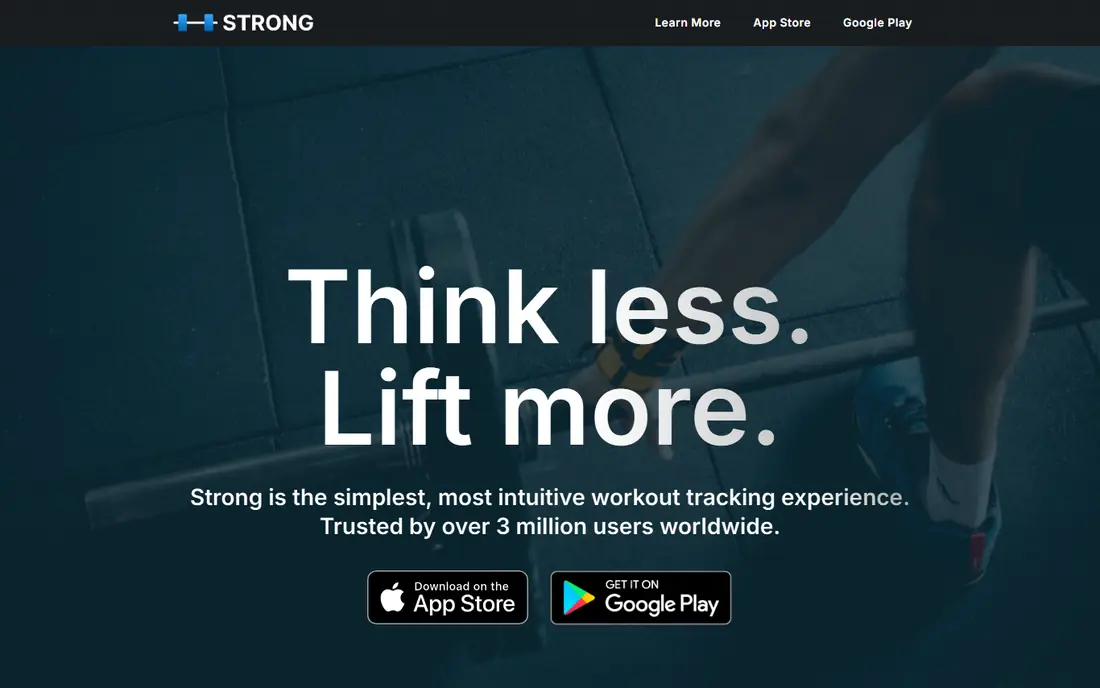
Strong is built for lifters who want to log and move on. The interface is plain, sets are entered quickly, and a plate calculator plus one-rep-max estimates cover the basics without extra menus. Workout history is easy to read, and data can be exported for backup or analysis elsewhere.
The free tier caps custom routines, so lifters who rotate many programs will hit the limit. Analytics are also simpler than in Hevy or JEFIT, with less detail on volume by muscle group. If speed and simplicity matter more than charts, Strong is the best minimalist log here.
- Very fast logging
- Plate calculator and 1RM estimates
- Clean history and exports
- Free routines capped at three
- Analytics are simpler than Hevy or JEFIT
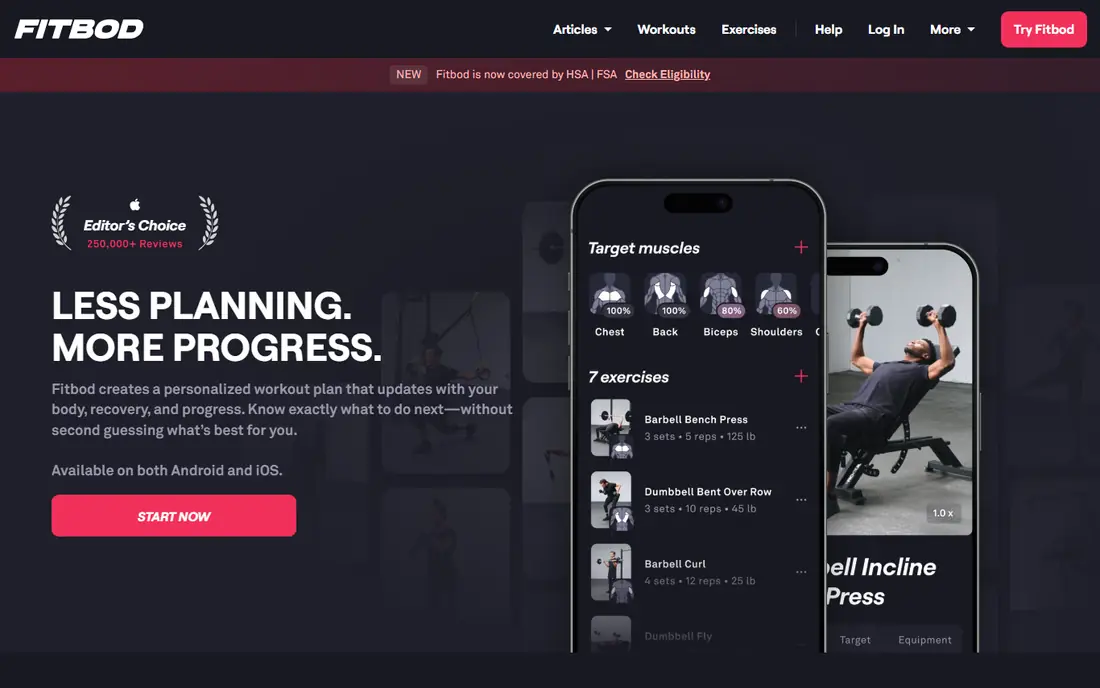
Fitbod builds each session for you, choosing exercises, sets and weights based on your equipment, recovery and training history. That suits lifters who do not want to plan every session, and it helps balance muscle groups over weeks. The exercise library covers a wide range of gym and home equipment.
Fitbod costs more than simple loggers and offers no ongoing free tier beyond a trial. Experienced lifters with a fixed program may also chafe at algorithmic choices. If you want the app to do the planning while you do the lifting, Fitbod is the strongest option here.
- Algorithmic workout generation
- Recovery and muscle balance logic
- Large exercise library
- Subscription only
- Less control for experienced lifters with fixed programs
JEFIT is the data-heavy choice, with a large exercise library, detailed progress charts and community programs to follow. Lifters who like to study volume, personal records and body measurements over time will find more here than in simpler loggers. The app also covers a wide range of training styles, from bodybuilding to general fitness.
The free tier is ad-supported, and the interface packs in more menus than minimalist rivals. New lifters may feel overwhelmed at first. For experienced lifters who want depth, custom programs and long-term analytics, JEFIT rewards the learning curve.
- More than 1,400 exercises
- Detailed charts
- Community programs
- Free tier shows ads
- Interface is busier than Strong or Hevy
Nike Training Club is the best free route to guided workouts, with video sessions led by trainers, plus plans for strength, cardio, mobility and yoga. There are no in-app purchases on the main app, which makes it easy to recommend without caveats about paywalls. Sessions need little or no equipment in many cases.
Nike Training Club is not a gym log. It will not track your barbell sets, personal records and volume over months in the way Strong or Hevy do. Pair it with a logger if you lift seriously, or use it alone if guided sessions are what keep you moving. As a free starter, it is hard to beat.
- Fully free
- Guided video workouts
- Training plans for many levels
- Not a strength log
- No detailed set and rep tracking for gym programs
Boostcamp takes well-known strength programs and runs them for you, handling progression, deloads and exercise order without a spreadsheet. That suits intermediate lifters who want structure but do not want to build a program from scratch. The app logs each session and shows progress across a full program cycle.
Boostcamp offers a trial rather than an ongoing free tier, so the yearly price is part of the decision from the start. Freestyle lifters who train by feel may find program structure limiting. For lifters who want to follow a proven plan to the letter, Boostcamp removes the planning work.
- Runs proven programs automatically
- Clear progression
- Good for intermediate lifters
- Trial only on the free side
- Less flexible for freestyle training
Caliber combines free workout logging with coach-designed strength programs at a low starting price. The plans are built for progressive strength training, and the app tracks sets, reps and personal records in a clean layout. Higher tiers add coaching feedback, which suits lifters who want a human eye on their training.
Coaching tiers cost more than the base plan, and Caliber is strength-first rather than a general fitness class app. Cardio and guided video workouts are thinner here than in Nike Training Club or FitOn. For lifters who want a structured strength plan at a modest price, Caliber is a strong value pick.
- Free logging
- Coach-designed programs
- Strength-focused plans
- Higher tiers cost more
- Less suited to cardio or class-based training
FitOn offers a large library of free workout classes, from cardio and strength to yoga and stretching, with social features and challenges to keep users consistent. The free tier covers a lot of content, which makes it a good companion to a logger or a standalone option for home training.
FitOn is a class app, not a barbell log, so serious lifters will still want Hevy, Strong or JEFIT for set tracking. Some features, such as meal plans and premium content, need a paid plan. For free guided training at home, FitOn is one of the best options available.
- Large free class library
- Cardio, strength and yoga
- Social challenges
- Not a detailed gym log
- Premium features need a paid plan
How we picked these
We compared official pricing, app store listings and feature pages, and we favored apps that log individual sessions with history, show progress over time, and state their free tier limits clearly. We included pure loggers, program builders, coach-led plans and free class apps, because workout tracking means different things to a powerlifter and a home exerciser. Prices are starting annual rates where annual billing applies.
What to check before you commit
Start with how you train. A barbell lifter needs fast set logging and personal records, while a home exerciser may care more about guided classes. Check free tier limits on routines, since a cap of three or four routines frustrates lifters with varied programs. Also check whether the app works on your watch, since logging from a wrist is far easier than from a phone between sets.
Next, test the export and history views. A good tracker should show what you lifted last month without digging through menus, and should let you take your data with you if you switch. Try the free tier for two weeks of real workouts before paying for a year. The app you keep using beats the app with the longest feature list.