Best Apps to Learn English in 2026: 9 Apps Compared
By ToolNimba Editorial Team October 29, 2026 8 min read

- Top pick
 Duolingo
Free daily practice
Starting priceFreeCheck out DuolingoRead our review - Runner-up
 Babbel
Structured courses
Starting priceSee websiteCheck out BabbelRead our review - Also great
 Rosetta Stone
Immersion and pronunciation
Starting price$11.99 per monthCheck out Rosetta StoneRead our review
How we researched this
We compared official pricing and feature pages, app store listings, privacy policies and public user reviews. Prices change, so check the provider's site before you pay.
Key takeaways
- Duolingo is the best free starting point, with gamified daily lessons that build a habit.
- Babbel suits learners who want structured grammar and conversation skills in a proper course.
- Rosetta Stone focuses on immersion and pronunciation, with its TruAccent feedback for speaking.
- italki and Cambly add real human conversation, which no app alone can replace for fluency.
- ELSA Speak targets pronunciation specifically, scoring individual sounds, stress and intonation.
- No single app makes you fluent: pair a core app with speaking practice and real conversation for the best results.
Quick comparison
| Name | Best for | Starting price | Free plan | |
|---|---|---|---|---|
| Duolingo | Free daily practice | Free | Yes | Visit |
| Babbel | Structured courses | See website | Yes | Visit |
| Rosetta Stone | Immersion and pronunciation | $11.99 per month | Free trial | Visit |
 Busuu | Community feedback | See website | Yes | Visit |
 Memrise | Vocabulary and listening | See website | Yes | Visit |
 Cambly | Live native speaker chats | See website | Free trial | Visit |
 italki | One-on-one tutors | See website | No | Visit |
 ELSA Speak | Pronunciation coaching | See website | Yes | Visit |
 HelloTalk | Language exchange | Free | Yes | Visit |
The best apps to learn English
Learning English well needs vocabulary, grammar, listening, speaking and real conversation, and different apps cover different parts. We compared official feature pages, pricing pages and public documentation to build this list, covering free apps, structured courses, tutors and pronunciation tools.
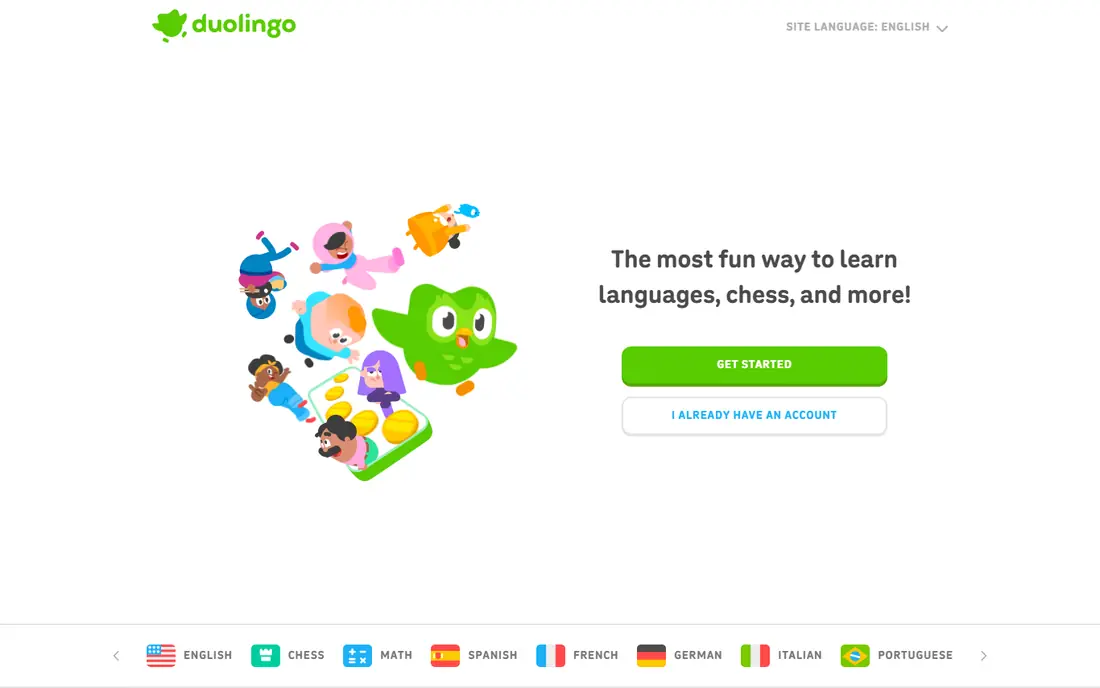
Duolingo is the best free starting point for learning English, with short gamified lessons covering vocabulary, grammar, listening and speaking. Streaks, leagues and bite-size sessions make daily practice a habit, which matters more than any single feature.
The free version is fully functional with ads, while Super removes ads and adds offline lessons, and Max adds AI roleplay conversations. Duolingo builds a foundation well, but it underplays natural conversation speed, so pair it with speaking practice for fluency.
- Free core lessons
- Streaks and gamification build habits
- Covers 40 plus languages
- Free version has ads and energy limits
- Light on real conversation practice
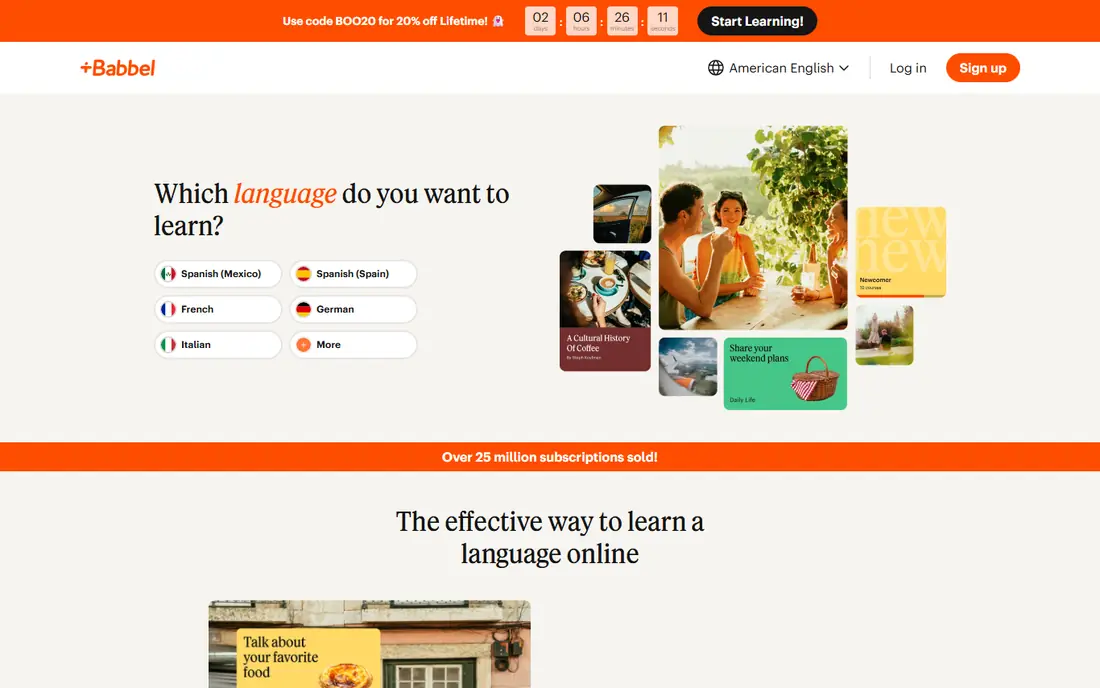
Babbel offers structured English courses built by linguists, with lessons that explain grammar and build toward real conversations rather than just drilling words. Speech recognition gives pronunciation feedback, and review sessions reinforce what you learned.
Pricing varies by plan and region, with monthly and annual options, and the first lesson of each course is free. Babbel suits learners who want a proper course with progression, not just a game. It covers fewer languages than Duolingo, but English is a core focus.
- Courses built by linguists
- Grammar explained clearly
- Speech recognition practice
- First lesson only free
- Fewer languages than Duolingo
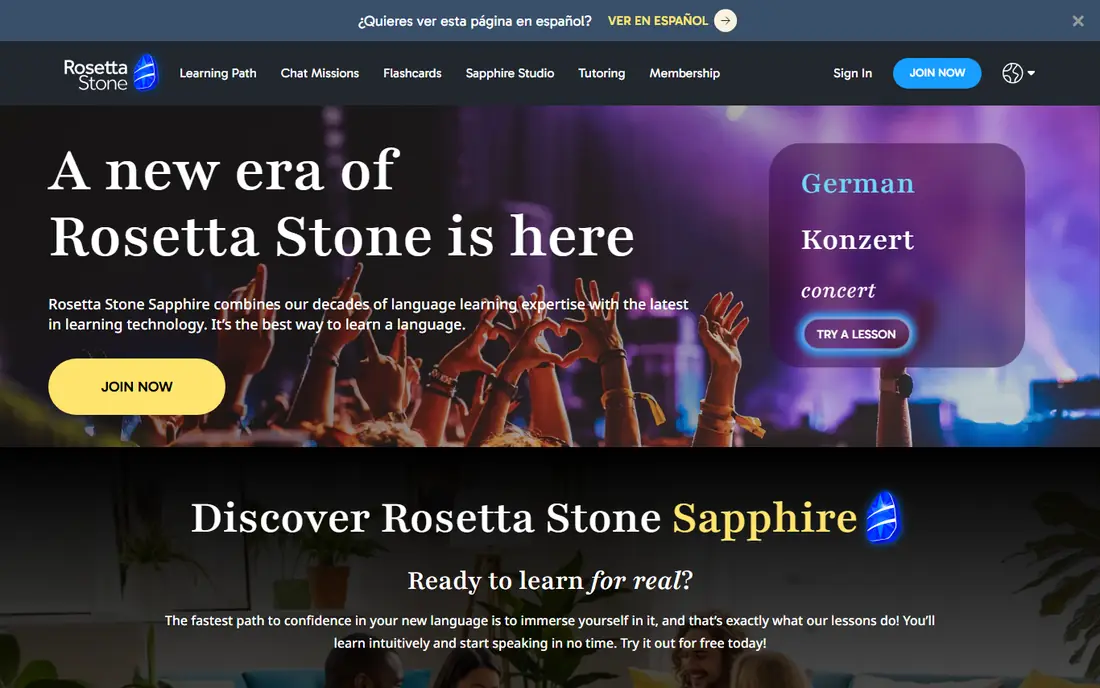
Rosetta Stone teaches English through immersion: images, audio and text in English only, so you learn by association rather than translation. The TruAccent engine gives syllable-level pronunciation feedback, which suits learners who want to sound natural.
Pricing starts at 11.99 dollars per month, with a lifetime option for long-term learners. The method feels slow to some, since it avoids explicit grammar explanations, but for pronunciation and intuitive learning it remains a respected choice.
- Immersion method with no translation crutch
- TruAccent pronunciation feedback
- Lifetime option
- No permanent free tier
- Method can feel slow for some learners
Busuu combines structured English courses with a community: native speakers correct your writing and speaking submissions, which gives feedback no algorithm fully replaces. Courses follow CEFR levels from beginner to upper intermediate, with grammar review and vocabulary tools.
The free tier covers a limited set of lessons, while Premium opens full courses and offline mode. Pricing varies by plan and region. For learners who value human feedback alongside lessons, Busuu is a strong pick.
- Native speaker corrections
- CEFR leveled courses
- Grammar review tools
- Free tier is limited
- Premium needed for full courses
Memrise teaches English vocabulary with video clips of native speakers, spaced repetition and listening exercises that expose you to real accents and speeds. The approach suits learners who want to understand everyday speech, not just textbook sentences.
A free tier covers core lessons, while Pro adds offline mode, an AI conversation partner and more content. Grammar depth is thinner than Babbel, so pair Memrise with a structured course if grammar is your weak point.
- Native-speaker video clips
- Spaced repetition for vocabulary
- Engaging listening practice
- Less grammar depth than Babbel
- Full features need Pro
Cambly connects learners with native English speaking tutors for live video conversation, on demand or scheduled. You pick tutors by accent, interests and availability, and lessons focus on speaking rather than drills.
Pricing runs on subscription plans with different minute allowances, plus trial lessons for new users. Tutor quality varies, so try a few before settling on favorites. For learners who need speaking confidence, Cambly delivers what apps cannot: real conversation.
- Instant access to native tutors
- Flexible scheduling
- Conversation focused
- Subscription pricing varies
- Quality varies by tutor
italki is a marketplace of professional teachers and community tutors for one-on-one English lessons, paid per lesson with no subscription. Lessons start from a few dollars with community tutors, while professional teachers cost more, and trial lessons are discounted.
The pay-per-lesson model suits learners who want a tutor weekly or occasionally without a monthly bill. Finding the right tutor takes a few trials, but the choice across accents, prices and specialties is unmatched. For serious learners, italki is the best route to real fluency.
- Pay per lesson with no subscription
- Huge tutor choice
- Lessons from a few dollars
- No free tier
- Scheduling and tutor search take effort
ELSA Speak uses AI to score your pronunciation sound by sound, flagging which phonemes, word stress and intonation patterns need work, then assigns targeted lessons. It suits learners whose grammar and vocabulary are fine but whose accent holds them back.
A free tier allows a couple of lessons a day, while paid plans open full access. ELSA will not teach you English from scratch, but as a pronunciation coach alongside a core app, it is the most focused tool here.
- Detailed pronunciation scoring
- Focuses on sounds, stress and intonation
- Structured lessons
- Narrow focus on pronunciation
- Full access needs a subscription
HelloTalk connects you with native English speakers who want to learn your language, so you trade messages, voice notes and calls, correcting each other as you go. Built-in translation, transliteration and correction tools support the exchange.
The core app is free, with a VIP tier adding extras like unlimited translation and advanced search. Partner quality varies, and there is no curriculum, so HelloTalk works best as a speaking supplement to a structured app, not as your only tool.
- Free language exchange with native speakers
- Text, voice and corrections
- Huge community
- Quality varies by partner
- Not a structured course
How we picked these
We compared official feature pages, pricing pages and public documentation for each app, and favored products that are actively sold and supported in October 2026. We mixed free apps, structured courses, live tutors and pronunciation tools so the list covers every part of learning English. Prices come from vendor pricing pages, and where pricing varies by region or store we say so plainly rather than guessing.
How to learn English with apps
Layer your tools: one core app for daily vocabulary and grammar, one speaking tool for pronunciation or conversation, and ideally a weekly chat with a real human. Fifteen to thirty minutes daily beats occasional long sessions, and consistency matters more than the app you pick.
Set a realistic routine
Start with Duolingo or Babbel daily, add ELSA a few times a week for pronunciation, and book a Cambly or italki session weekly for conversation. Review mistakes, not just streaks, and switch apps if one stops challenging you.
Speak from week one, even badly. Learners who only tap through lessons often read well but freeze in conversation, while learners who speak early build confidence alongside vocabulary. Use the app's speaking exercises, repeat phrases aloud, and record yourself monthly to hear progress that daily practice hides. Pair the app with one weekly conversation, and your learning speed will surprise you.