Best Apps to Learn Korean in 2026: 9 Apps Compared
By ToolNimba Editorial Team October 29, 2026 10 min read

- Top pick
 Duolingo
Daily habit for beginners
Starting priceFreeCheck out DuolingoRead our review - Runner-up
 LingoDeer
Grammar explained clearly
Starting price$14.99 per monthCheck out LingoDeerRead our review - Also great
 Talk To Me In Korean
Structured lessons from beginner to advanced
Starting priceFreeCheck out Talk To Me In KoreanRead our review
How we researched this
We compared official pricing and feature pages, app store listings, privacy policies and public user reviews. Prices change, so check the provider's site before you pay.
Key takeaways
- No single app covers speaking, grammar, reading, and vocabulary well, so most learners do best with one main app plus one supplement.
- LingoDeer and Talk To Me In Korean explain grammar best, while Duolingo is the easiest free way to build a daily habit.
- Drops and Memrise are strong for vocabulary, but they do not teach full sentences or conversation on their own.
- Pimsleur is the best audio-only option for speaking practice, but it teaches little reading and writing.
- HelloTalk and KoreanClass101 help once you know basics, since real conversation and longer lessons need a foundation first.
Quick comparison
| Name | Best for | Starting price | Free plan | |
|---|---|---|---|---|
| Duolingo | Daily habit for beginners | Free | Yes | Visit |
| LingoDeer | Grammar explained clearly | $14.99 per month | Yes | Visit |
| Talk To Me In Korean | Structured lessons from beginner to advanced | Free | Yes | Visit |
 Drops | Quick visual vocabulary | Free | Yes | Visit |
 Memrise | Vocabulary with native speaker video | Free | Yes | Visit |
 Pimsleur | Audio speaking practice | $19.95 per month | Free trial (7 days) | Visit |
 KoreanClass101 | Large audio and video library | Free | Yes | Visit |
 Rosetta Stone | Immersion without translation | See website | No | Visit |
 HelloTalk | Language exchange with native speakers | Free | Yes | Visit |
The best apps to learn korean
Korean grammar and word order differ a lot from English, so an app that explains rules will save you frustration later. The apps below are live in 2026 and cover different learning styles.
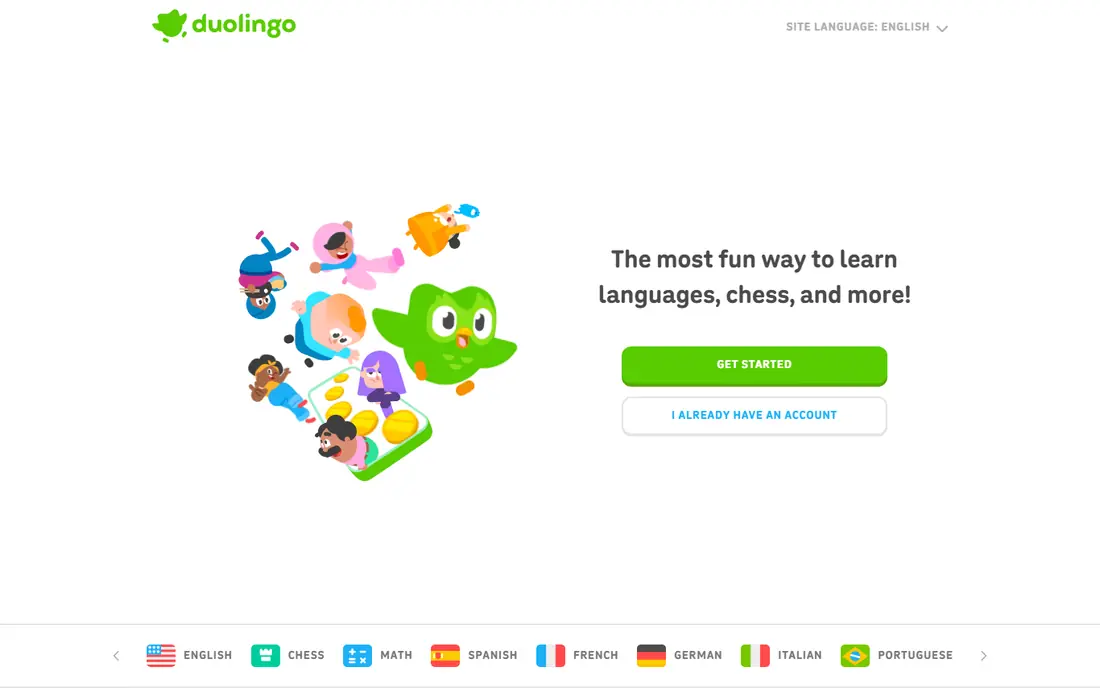
Duolingo is our pick for most people who are not sure they will stick with Korean, because it is free, fast, and easy to open every day. Lessons mix reading, listening, writing, and speaking, and the Korean course now includes a hangeul tab plus alphabet sessions along the learning path. Sentences can also show romanized text, which helps at the very start.
The limit is depth. Duolingo leans on pattern recognition, so you may answer correctly without knowing why a sentence is built that way. The free tier also caps practice in a sitting, and Super Duolingo, listed near 12.99 dollars a month, removes ads and lifts those limits. Use Duolingo to build the habit, then add a grammar app when you want to understand the rules.
- Free to start
- Short lessons
- Korean course now covers hangeul and runs to an upper-intermediate level
- Grammar explanations are thin
- Free tier limits practice with hearts or energy
- Ads on the free plan
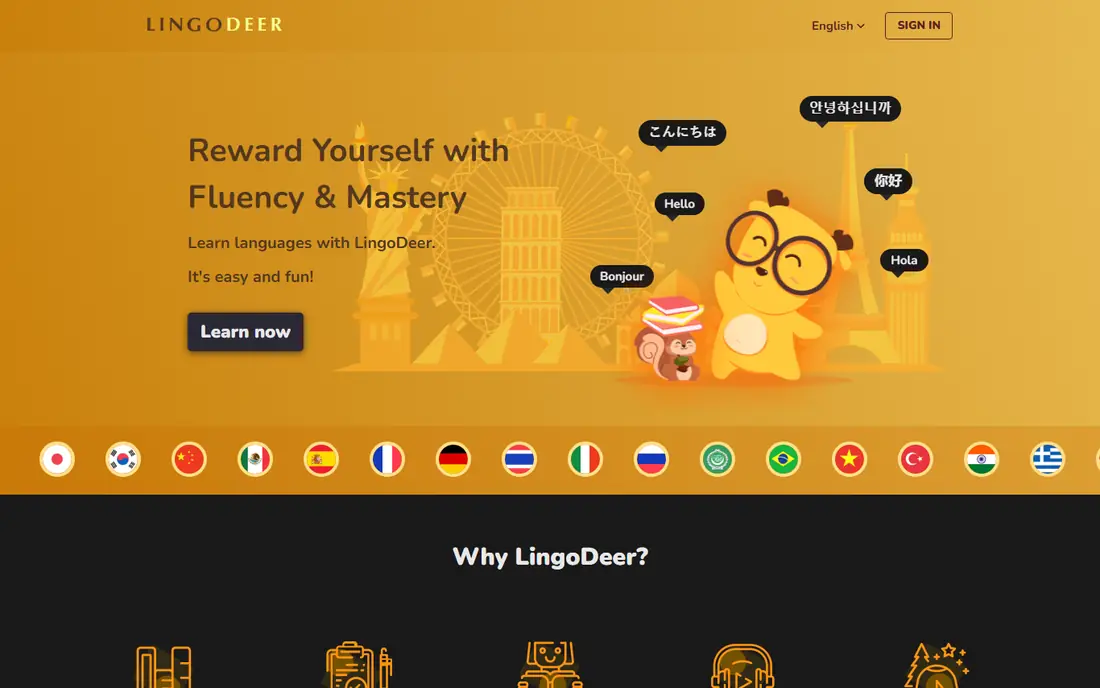
LingoDeer is the app we recommend when Duolingo starts to feel like guessing. It was built for Asian languages, and the difference shows in the first lessons, which explain Korean particles, verb conjugation, and honorific speech levels instead of leaving you to infer them. That structure helps a lot, since Korean word order and endings work differently from English.
The trade-off is speaking. LingoDeer has stories and practice, but it does not replace talking with a real person. Premium is listed near 14.99 dollars a month, with yearly and lifetime options that vary by store. If you want to understand why sentences work, not just repeat them, LingoDeer is worth paying for.
- Built for Asian languages
- Explains particles, verb forms, and speech levels
- Structured path from basics upward
- Less speaking practice than a tutor or exchange app
- Premium cost adds up
- Some extra content may need a separate add-on
Talk To Me In Korean
Best for: Structured lessons from beginner to advanced

Talk To Me In Korean, often shortened to TTMIK, is a long-running Korean learning site and app with free audio lessons and paid courses. Its strength is depth: lessons move step by step from the alphabet through advanced grammar, with explanations in plain language. That makes it a good second app for Duolingo users who want real grammar teaching.
The catch is that the free audio alone will not drill vocabulary or test you the way a gamified app does. Paid courses, listed near 17 dollars a month in recent comparisons, add structure, but prices and bundles change. Pair TTMIK with a vocabulary app, and you cover both understanding and recall.
- Free audio lessons
- Clear grammar path from beginner to advanced
- Large lesson library built over many years
- Full courses and books cost extra
- App experience varies by course
- Less gamified than Duolingo or LingoDeer
Drops is a snack, not a meal, and it knows it. Sessions last five minutes and use images and quick matching to teach vocabulary, which suits learners who want a low-effort daily top-up. The free tier gives a short daily session, while the paid plan is listed near 11 dollars a month in recent comparisons.
Do not rely on Drops alone. It will not teach you how to build a sentence, choose a speech level, or hold a conversation. As a supplement to LingoDeer or TTMIK, though, it is excellent for keeping words fresh. Use it on a commute or during a break, and let your main app handle grammar.
- Five-minute visual sessions
- Strong for word recall
- Easy to fit into a busy day
- Free tier limits daily time
- Teaches words, not full grammar or conversation
- Needs a main course alongside it
Memrise focuses on memory, using spaced repetition to bring words back just before you forget them. Its native speaker videos show real phrases in use, which helps with listening and pronunciation in a way that text alone cannot. Many features are free, and Pro is listed near 8.49 dollars a month, with yearly and lifetime options.
The limit is structure. Memrise is not a grammar course, and it will not walk you through verb endings or particles in order. It works best as a vocabulary partner to a structured app, especially for learners who forget words fast. If you already use Duolingo, Memrise can fill the gap between recognizing a word and recalling it on your own.
- Spaced repetition for recall
- Videos of native speakers
- Many courses and word lists
- No full grammar course
- Pro features cost extra
- Course quality can vary by list
Pimsleur is the best choice if your goal is to speak, not to read menus yet. Each lesson is about 30 minutes of listening and repeating, with sentences broken down and rebuilt so you can say them yourself. A 7-day free trial lets you test whether the audio method suits you before paying, with plans listed near 19.95 dollars a month.
The trade-off is clear. Pimsleur teaches little hangeul reading or writing, and the Korean can sound formal at times. It also repeats a lot, which some learners find dull. Use it for speaking confidence on walks or drives, and pair it with a reading app if you want to read Korean text as well.
- Audio-first method builds speaking confidence
- 30-minute lessons suit driving or walking
- Structured repetition
- Little reading and writing practice
- Formal tone in some lessons
- Higher monthly cost than most apps here
KoreanClass101 offers one of the largest Korean lesson libraries, with audio and video lessons across levels. The free tier lets you sample lessons before paying, and paid plans are listed in a wide range, from a few dollars a month on sale to over 20 dollars a month for higher tiers. That library is useful for learners who like to listen to real dialogues and cultural notes.
The risk is drift. With so many lessons, it is easy to jump around without finishing a level, and the drilling is weaker than a structured app. Pick one pathway, finish it, and use KoreanClass101 as a listening supplement rather than your only course. For learners who enjoy audio lessons, it is a strong addition.
- Huge audio and video lesson library
- Lessons from absolute beginner upward
- Free tier to test the style
- Paid tiers and frequent sales make pricing confusing
- Lesson quality varies
- Less structured drilling than LingoDeer
Rosetta Stone teaches through immersion, matching images and audio without translation, and it includes speech recognition for pronunciation practice. That method suits learners who want to think in Korean rather than translate every word, and the app has been used for language learning for many years.
For Korean, immersion alone is a harder path. Without explanations, particles and speech levels can stay unclear, and the price is higher than most apps here, with lifetime plans often promoted instead of a simple monthly rate. Check the current price on the vendor site before buying. Rosetta Stone works best for learners who already know basics and want immersion practice, not for absolute beginners.
- Immersion method with images and audio
- Speech recognition for pronunciation
- Long track record in language learning
- No English explanations, which can frustrate Korean beginners
- Pricing is on the higher side
- Weaker for Korean grammar specifics
HelloTalk is a language exchange app, not a course, and that distinction matters. You chat with native Korean speakers who want to learn your language, using text, voice, and correction tools. The free plan covers basic exchange, and VIP is listed near 6.99 dollars a month in recent comparisons.
The catch is readiness. If you cannot yet form simple sentences, exchange chats can stall, and partner quality varies. HelloTalk works best after a month or two with a structured app, when you can ask questions and hold a short conversation. Used at the right stage, it is the fastest way to turn study into real speaking.
- Chat with native Korean speakers
- Text, voice, and correction tools
- Free to start
- Needs basic Korean before it is useful
- Partner quality varies
- VIP features cost extra
How we picked these
We compared official app pages, app store listings, pricing pages, and recent 2026 reviews for the main Korean learning apps. We favored apps that are live now, offer a Korean course (not just a general language list), and state a free tier or trial clearly. We checked whether each app teaches grammar, vocabulary, speaking, or exchange, and we left out apps that do not offer Korean at all.
Building a routine that sticks
One app rarely covers everything, so plan for two roles: a main course and a supplement.
Start with the alphabet
Learn hangeul first, even if it feels slow. Duolingo, LingoDeer, and TTMIK all cover it, and reading Korean script makes every later lesson easier. Avoid relying on romanized text for long, since it hides spelling and pronunciation patterns.
Pair grammar with words
Use LingoDeer or TTMIK for grammar, and Drops or Memrise for vocabulary. A short daily session in each beats a long session once a week, and spaced repetition helps words stay. Review yesterday words before learning new ones.
Add speaking at the right time
Pimsleur builds speaking confidence early, while HelloTalk works best once you can form sentences. Do not wait until you feel ready, since that day rarely comes. A short, imperfect conversation teaches more than another week of silent study.
Sources
- https://today-note.co.kr/en/best-apps-to-learn-korean-en/
- https://k-crush.com/apps-to-learn-korean-compared/
- https://82crafted.com/language/best-apps-learn-korean
- https://www.duolingo.com
- https://www.lingodeer.com
- https://www.talktomeinkorean.com
- https://www.languagedrops.com
- https://www.memrise.com
- https://www.pimsleur.com
- https://www.koreanclass101.com
- https://www.rosettastone.com
- https://www.hellotalk.com