Best Calisthenics App in 2026: 9 Apps Compared
By ToolNimba Editorial Team October 31, 2026 8 min read

- Top pick
 Calisteniapp
All-round library
Starting priceSee websiteCheck out CalisteniappRead our review - Runner-up
 Thenics
Skill progressions
Starting priceSee websiteCheck out ThenicsRead our review - Also great
 Hybrid Calisthenics
Free beginner routine
Starting priceSee websiteCheck out Hybrid CalisthenicsRead our review
How we researched this
We compared official pricing and feature pages, app store listings, privacy policies and public user reviews. Prices change, so check the provider's site before you pay.
Key takeaways
- The best calisthenics app for beginners gives a clear progression, not just a list of workouts, so you know when to move to a harder variation.
- Calisteniapp and Thenics suit different goals: the first covers breadth, the second covers skill progressions like muscle-ups and handstands.
- Free apps can carry you a long way, especially Hybrid Calisthenics and Calistree, but structured coaching usually needs a subscription.
- A pull-up bar helps, but most beginner programs start with floor work you can do at home.
Quick comparison
| Name | Best for | Starting price | Free plan | |
|---|---|---|---|---|
| Calisteniapp | All-round library | See website | Yes | Visit |
| Thenics | Skill progressions | See website | Yes | Visit |
| Hybrid Calisthenics | Free beginner routine | See website | Yes | Visit |
 Madbarz | Workout variety | See website | Yes | Visit |
 Movement Athlete | Assessment-based coaching | See website | No | Visit |
 Caliverse | Friendly beginner entry | See website | Yes | Visit |
 Calistree | Free simple training | See website | Yes | Visit |
 Nike Training Club | Free general bodyweight workouts | Free | Yes | Visit |
 Fitloop | Reddit routine tracking | $9.99 per month | Yes | Visit |
The best calisthenics apps
Calisthenics rewards patience. Push-ups, pull-ups, dips, and squats all scale from easy to hard, but only if you progress in the right order. The apps below differ in how much structure they give, how they handle skills, and how much they cost, so match the app to your starting level.
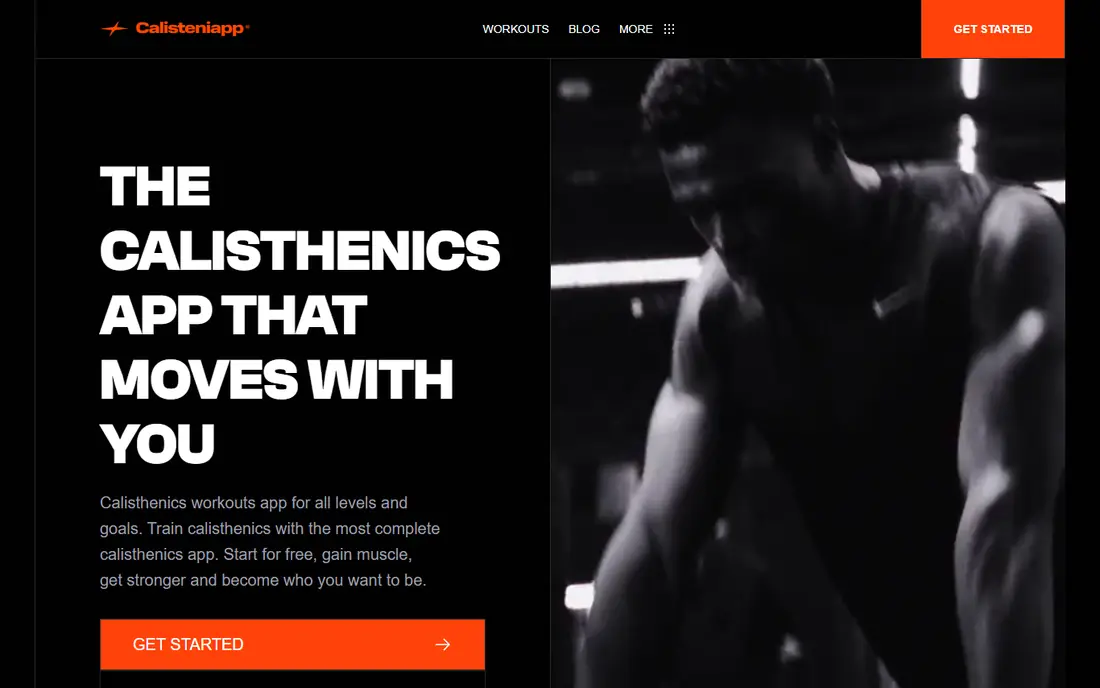
Calisteniapp is our top pick for most people because it covers the basics and the next steps in one place. Beginners get guided routines, while more experienced users can browse skills, build custom workouts, and track progress. The library size matters here, since calisthenics training gets dull fast if you repeat the same three workouts.
The catch is that breadth can feel like choice overload at first. Start with a beginner program rather than browsing the full library, and let the program decide your progression for the first few weeks.
- Large exercise and routine library
- Programs for different levels
- Clear exercise videos
- Free tier limits some programs
- Less coaching than assessment-based apps
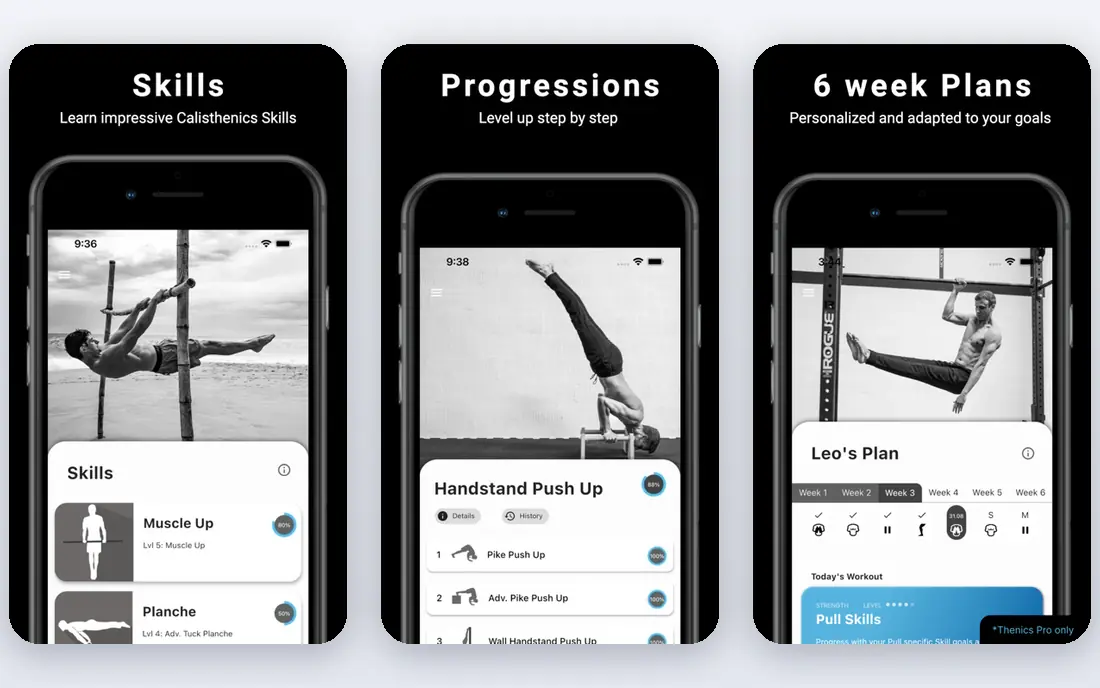
Thenics is built around skills, not just workouts. If your goal is a first muscle-up, a handstand, or a front lever, it breaks each skill into steps you can train in order. That progression view helps you see what comes next and why a step matters, which is missing from many workout libraries.
If you only want general strength and fitness, Thenics may feel too focused. For skill chasers, though, that focus is the point, and it keeps training purposeful over months.
- Step-by-step skill progressions
- Muscle-up, handstand, and front lever paths
- Technique videos
- Skill focus may feel narrow if you want general fitness
- Some content is paid

Hybrid Calisthenics, created by Hampton Liu, is one of the best free starting points in this list. The routine is published free, with sensible progressions for push-ups, pull-ups, squats, and bridges. The tone is friendly to people who have never trained, which matters when the first weeks feel awkward.
The app adds tracking and a supporter option, but the core routine stays free. The limit is coaching: you judge your own readiness to move up a step. If you want an app to make that call for you, look at Movement Athlete or Calisteniapp programs instead.
- Full routine free on the website
- Kind, beginner-friendly progressions
- App available for tracking
- Less coaching than paid apps
- You decide when to progress
Madbarz is one of the older calisthenics apps, and its strength is variety. You can pick workouts, build custom routines, and train with minimal equipment. That freedom suits people who already know the basics and want fresh sessions without a strict plan.
Beginners may find the freedom less helpful, since Madbarz is more of a workout selector than a coach. If you like choosing your own training and tracking it yourself, it remains a useful, low-cost option.
- Long-running bodyweight library
- Custom routine builder
- Solid free tier
- Less structured as a progression program
- App updates vary by platform
Movement Athlete starts with an assessment, then builds a program around your level for skills such as handstand, planche, and front lever. That personal placement is its main advantage over a fixed routine, since two beginners rarely start at the same strength level.
The price and the assessment make it a commitment, not a casual download. If you train regularly and want a coach-like plan, the structure pays off. If you train once a week for general fitness, a free routine may serve you better.
- Assessment places you at the right level
- Deep skill paths
- Structured progression
- Subscription-based
- Assessment step may feel long for casual users
Caliverse is a gentle entry point for complete beginners. It moves from very easy steps, such as assisted pull-up progressions, toward intermediate skills, with a clean layout that does not overwhelm. Community features and challenges add a reason to keep showing up.
Intermediate users chasing a specific static skill will outgrow it faster than Thenics or Movement Athlete. For a first three months of training, though, its friendly structure is a real advantage.
- Beginner-friendly progression
- Clean interface
- Community and challenges
- Skill progressions less deep than specialist apps
- Some programs feel generic
Calistree appeals to people who want a simple, free way to train without a complex subscription. It covers core calisthenics movements and lets you build sessions without paying for extras you may not use. That simplicity is refreshing if other apps feel bloated.
The trade-off is guidance. You get a tool for training, not a coach that plans every week for you. Pair it with a known routine, such as the Hybrid Calisthenics progression, if you want more structure.
- Free to use
- Simple workout structure
- Good for self-directed training
- Smaller feature set than paid apps
- Less guided coaching
Nike Training Club is not a calisthenics app, but it earns a place as a free starting point for bodyweight training. It offers guided workouts at many levels, with clear video and audio coaching. If you are not sure calisthenics is for you, it lets you test bodyweight training at no cost.
The limit is specificity. You will not get a muscle-up progression or a front lever path here. Use Nike Training Club to build a base, then switch to a calisthenics app when you want skill progressions.
- Free
- Large workout library
- Sessions from well-known trainers
- Not calisthenics-specific
- Limited skill progression tracking
Fitloop tracks the well-known bodyweight Recommended Routine, which gives beginners a proven full-body structure. The core app stays free with no ads, which is rare, and the layout makes each session easy to follow. If you have already chosen that routine, Fitloop removes the spreadsheet work.
The limit is scope: everyone starts with the same routine, whatever their history or injuries. A paid upgrade adds AI features, but the core value is simple, clean tracking of a good program.
- Built around the popular Recommended Routine
- Core tracking free with no ads
- Clear session layout
- Single routine focus
- Paid features needed for AI tools
How we picked these
We compared official app pages, app store listings, program outlines, and public reviews for calisthenics apps. We favored apps with real progression paths, clear exercise instruction, and a working free tier or trial where claimed. We left out apps that only list exercises with no progression, and apps with no recent updates or a broken store listing.
How to choose a calisthenics app for your level
Start with honesty about your current level. If you cannot do a full push-up or a dead hang yet, pick a beginner progression app and stay there for a few weeks. If you can do sets of pull-ups and dips, a skill app will give you more to aim for.
Equipment and safety basics
Most beginner work needs only floor space, and a doorway pull-up bar covers most pulling work. Rings help later for dips and rows, but they are not needed on day one. Warm up, keep reps clean rather than rushed, and stop a set when form breaks down. Soreness for a day or two is normal; sharp joint pain is a sign to rest and, if it persists, seek advice from a qualified professional.
How to progress without stalling
Progress one step at a time, and only when you can do the current step with good form for the target reps. A common beginner mistake is jumping to a harder variation too soon, which stalls progress and raises injury risk. Track reps and sets in the app, and review them weekly to see whether you are actually moving forward.