Best Competitor Analysis Tools in 2026: 9 Tools Compared
By ToolNimba Editorial Team October 29, 2026 9 min read

- Top pick
 Semrush
All-in-one SEO and PPC research
Starting price$139 per monthCheck out SemrushRead our review - Runner-up
 Ahrefs
Backlink and content gaps
Starting price$129 per monthCheck out AhrefsRead our review - Also great
 Similarweb
Traffic and channel mix
Starting price$199 per monthCheck out SimilarwebRead our review
How we researched this
We compared official pricing and feature pages, app store listings, privacy policies and public user reviews. Prices change, so check the provider's site before you pay.
Key takeaways
- Semrush is our pick for most teams, because it covers organic, paid, and content gaps in one workspace.
- Ahrefs is the stronger choice when backlinks and top pages matter more than ad data.
- SpyFu gives small teams useful PPC history at a much lower price than the big suites.
- Similarweb is best for traffic and channel mix, but its numbers are modelled, not exact.
- Crayon and Klue serve a different job: tracking what competitors say and change, not just how they rank.
Quick comparison
| Name | Best for | Starting price | Free plan | |
|---|---|---|---|---|
| Semrush | All-in-one SEO and PPC research | $139 per month | Free trial | Visit |
| Ahrefs | Backlink and content gaps | $129 per month | Yes | Visit |
| Similarweb | Traffic and channel mix | $199 per month | Yes | Visit |
 SpyFu | Affordable PPC history | $39 per month | Yes | Visit |
 BuzzSumo | Top performing content | $199 per month | Free trial | Visit |
 Crayon | Messaging and pricing changes | See website | No | Visit |
 Klue | Competitive enablement | See website | No | Visit |
 Owler | Company monitoring | $39 per month | Yes | Visit |
 Moz Pro | Authority metrics and tracking | $99 per month | Free trial | Visit |
The best competitor analysis tools
Competitor analysis is not one job. Some tools show which keywords a rival ranks for, others show where its traffic comes from, and others track when it changes a price or a homepage headline. Pick the tool that matches the question you ask most often, and you will get value from it every week.
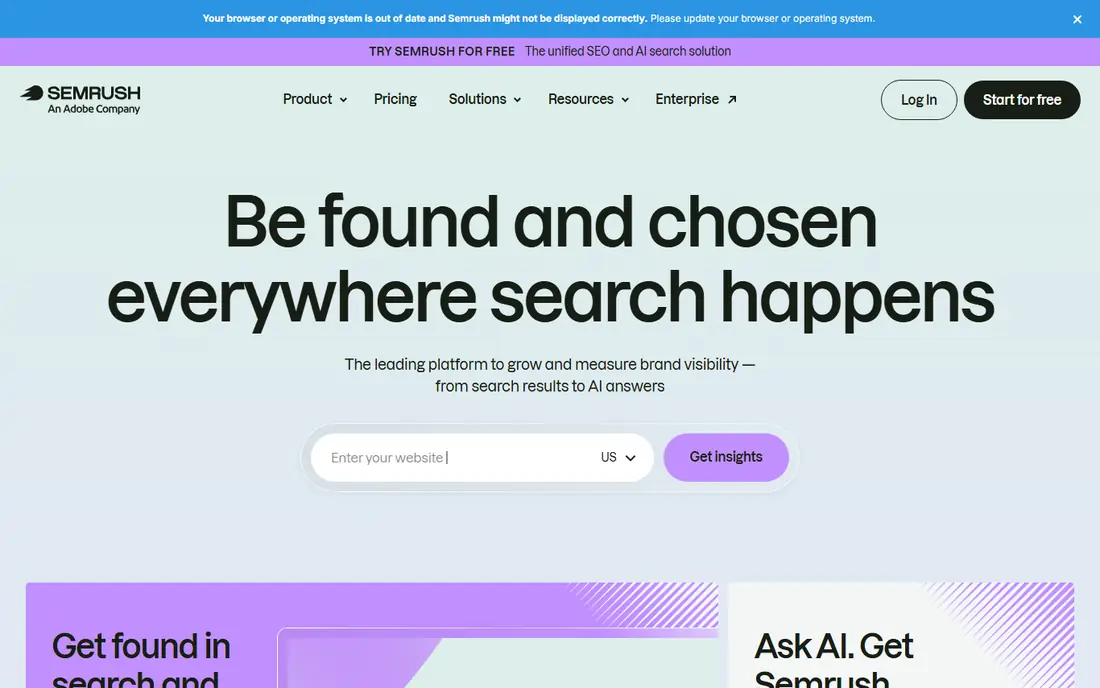
Semrush is the default for teams that want one login for competitor work. Enter a rival domain and you can see its top organic keywords, paid keywords, ad copy, backlinks, and traffic estimate in one place. The Keyword Gap tool is especially useful, because it shows terms rivals rank for that you do not, which turns a vague goal into a concrete content list.
The limit is scope control. With 500 tracked keywords and a small project count on the entry plan, a team tracking many rivals will need a higher tier. It is still our pick for most teams, because the breadth saves a second subscription, but budget for growth rather than the entry price alone.
- Keyword Gap and Backlink Gap tools
- Traffic Analytics
- PPC and organic data together
- Entry plan caps projects and keywords
- Cost rises with seats and add-ons
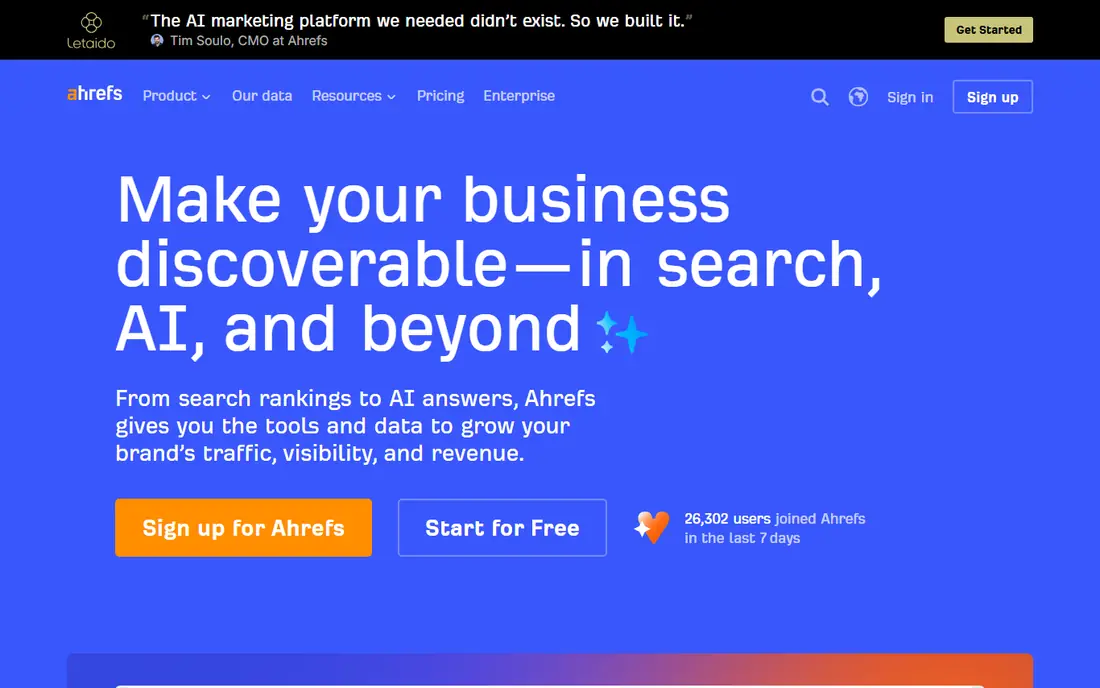
Ahrefs is the tool we reach for when the question is about links and content. Site Explorer shows which pages earn links for a rival, which anchors are used, and which pages lost links over time. Content Gap then shows keywords where rivals rank and you do not, filtered to pages you could realistically compete for.
It is less strong on paid search history, and its reporting is built for analysts rather than sales teams. If your main rival battle is in search results and link building, Ahrefs is the sharper tool. If paid ads drive most of your market, pair it with SpyFu or Semrush.
- Large backlink index
- Site Explorer depth
- Content Gap for rival pages
- PPC data is lighter than Semrush
- Credits and seats add cost
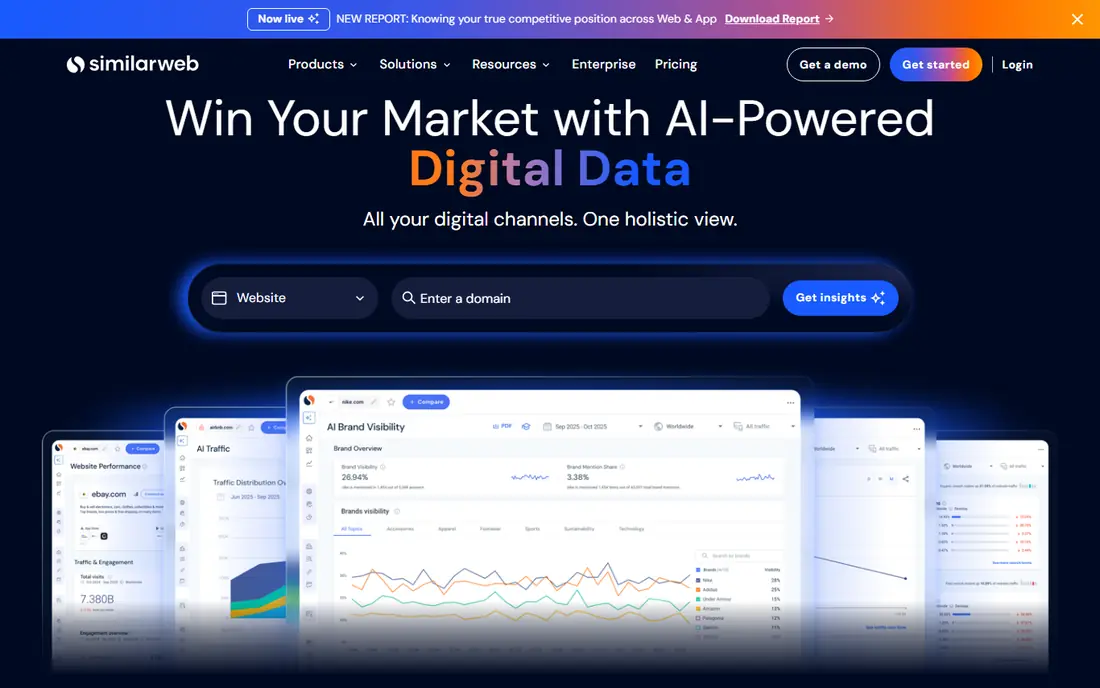
Similarweb answers a different question: how big is a rival, and where does its audience come from. You can compare direct, search, social, referral, and paid shares, and see which channels a rival leans on. That view helps a marketing lead decide where to invest, rather than which keyword to target next.
Treat the numbers as estimates, not accounts. Similarweb models traffic from panels and partnerships, so small sites and niche markets will be less accurate than large ones. Use it for direction and benchmarking, then confirm keyword and link details in Semrush or Ahrefs.
- Traffic, channel, and audience estimates
- Market share benchmarking
- App data
- Traffic figures are modelled estimates
- Full plans are expensive
SpyFu is the best value pick for paid search research. It shows every keyword a rival has bought on Google Ads, its ad variations, and its ranking history over many years. Kombat lets you compare up to three domains and split shared keywords from unique ones, which is a fast way to find gaps in a PPC account.
The trade-off is depth outside paid search. Its backlink index is smaller than Ahrefs, and data centers on English-language and US markets. For a US-focused team on a budget, that is a fair trade. For global link work, keep a specialist tool alongside it.
- Long ad history
- Kombat keyword overlap
- Low entry price
- Backlink data is thinner
- International coverage is weaker
BuzzSumo is for teams that compete on content, not just rankings. Search a topic or a rival domain and you see which articles earned the most shares and links, which headlines worked, and which formats repeat. That is useful before you commission a piece, because you can see what the audience already rewarded.
It does not replace an SEO suite. There is no deep rank tracking or site audit here, so budget for it as a second tool, not your only one. Teams that publish weekly will use it constantly. Teams that publish rarely will struggle to justify the price.
- Finds top content by shares and links
- Content alerts
- Influencer and journalist search
- Not a full SEO suite
- Price is high for content research alone
Crayon watches what competitors say and do, rather than how they rank. When a rival changes a pricing page, a homepage headline, a feature list, or a job posting pattern, Crayon captures it and alerts your team. Sales teams can then use battlecards that explain how to answer rival claims in a call.
Pricing is custom and aimed at larger teams, so this is not a casual purchase. It fits companies where product marketing and sales need a shared, current view of the field. A small team can get much of the value from manual checks and alerts in cheaper tools.
- Tracks website, pricing, and messaging changes
- Battlecards for sales teams
- Alerts
- Enterprise pricing
- Overkill for a solo marketer
Klue is built for competitive enablement, which means turning research into material sales people actually use. It centralizes battlecards, win-loss interviews, and market notes, so a rep can find the current position on a rival before a call, rather than digging through old docs. Win-loss analysis is a real strength, because it shows why deals were won or lost, not just what rivals claim.
Like Crayon, it is priced for teams, not individuals, and it only works if someone owns it. Without regular updates, battlecards go stale fast. Buy it when sales enablement is a named job, not a side task.
- Battlecards and win-loss analysis
- Central intel hub
- Sales integration
- Custom pricing
- Needs internal ownership to stay current
Owler is a company tracker first and a marketing tool second. Follow a rival and you get news, funding, leadership changes, and acquisitions in a feed, plus a simple list of similar companies. That is useful for strategy and sales prospecting, and the free tier covers basic monitoring.
Do not expect SEO depth. Owler will not show you a rival keyword gap or backlink profile. Use it as a cheap early-warning system, then dig into marketing details with Semrush, Ahrefs, or SpyFu when a change matters.
- Company news and funding alerts
- Simple competitor lists
- Low cost
- Limited tactical marketing data
- No deep keyword or link research
Moz Pro remains a solid, familiar option for teams that benchmark with Domain Authority. Link Explorer lets you compare link profiles, Keyword Explorer supports gap work, and rank tracking keeps rival movement visible week to week. For small teams that want a classic suite at a lower entry price than Semrush or Ahrefs, it is a credible pick.
The limits are scale and freshness. Its index is smaller, and newer AI search tracking sits on higher tiers or not at all on the base plan. If AI answers are now a core channel for you, check that gap before you buy, and consider a dedicated AI visibility tool alongside it.
- Domain Authority benchmarking
- Link Explorer
- Rank tracking and audits
- Smaller link index than Ahrefs
- AI search features are limited on base plans
How we picked these
We compared official pricing pages, feature pages, and public reviews for tools that research rivals as a core job. We kept tools that cover distinct angles, including organic, paid, traffic, content, messaging, and company news, so a reader can build a stack rather than buy three tools that do the same thing. We left out generic AI chat tools, because they are not a native data source for rival research.
What to check before you pay
Start by writing down the three rival questions you ask most. If they are about keywords and links, buy a suite. If they are about traffic share, buy Similarweb. If they are about pricing and messaging, buy Crayon or Klue. A tool that answers a question you rarely ask will sit unused, no matter how good its demo looks.
Build a small stack, not a single hero tool
Most teams need two tools: one suite for search, and one specialist for their main channel. A common stack is Semrush plus BuzzSumo for content teams, or Ahrefs plus SpyFu for search and paid teams. Add Owler for cheap company alerts, and only add Crayon or Klue when sales needs battlecards every week.
Check data freshness and coverage for your market
Ask how often data updates, how far back history goes, and whether your country and language are well covered. A tool with deep US data may be thin in smaller markets, and a tool with weekly updates may miss a fast pricing change. Trial each tool on your top three rivals, not on a demo account, before you commit.