Best Compliance Management Software in 2026: 9 Platforms Compared
By ToolNimba Editorial Team November 8, 2026 9 min read

- Top pick
 Vanta
Broad framework coverage
Starting priceSee websiteCheck out VantaRead our review - Runner-up
 Drata
Continuous control monitoring
Starting priceSee websiteCheck out DrataRead our review - Also great
 Secureframe
Guided onboarding for smaller teams
Starting priceSee websiteCheck out SecureframeRead our review
How we researched this
We compared official pricing and feature pages, app store listings, privacy policies and public user reviews. Prices change, so check the provider's site before you pay.
Key takeaways
- Most leading platforms are sold on custom annual quotes, so budget for the software plus a separate audit fee.
- Vanta and Drata suit cloud companies chasing SOC 2 or ISO 27001 quickly, while AuditBoard and LogicGate suit larger teams with wider risk programs.
- Automated evidence collection is the main time saver, but someone still has to own policies, access reviews and vendor checks.
- Small teams should start with one framework and add more only after the first audit cycle runs cleanly.
Quick comparison
| Name | Best for | Starting price | Free plan | |
|---|---|---|---|---|
| Vanta | Broad framework coverage | See website | No | Visit |
| Drata | Continuous control monitoring | See website | No | Visit |
| Secureframe | Guided onboarding for smaller teams | See website | No | Visit |
 Sprinto | First audit with hands-on help | See website | No | Visit |
 AuditBoard | Enterprise audit and risk programs | See website | No | Visit |
 LogicGate | Flexible risk and compliance workflows | See website | No | Visit |
 Hyperproof | Multi-framework program management | See website | No | Visit |
 OneTrust | Privacy and data compliance | See website | No | Visit |
 Scytale | Smaller teams needing expert support | See website | No | Visit |
The best compliance management software
Compliance work used to live in spreadsheets and shared folders. These platforms pull evidence from your cloud tools, track controls in one place and keep an audit trail your auditor can follow. Pick by framework, team size and how much hand-holding you want.
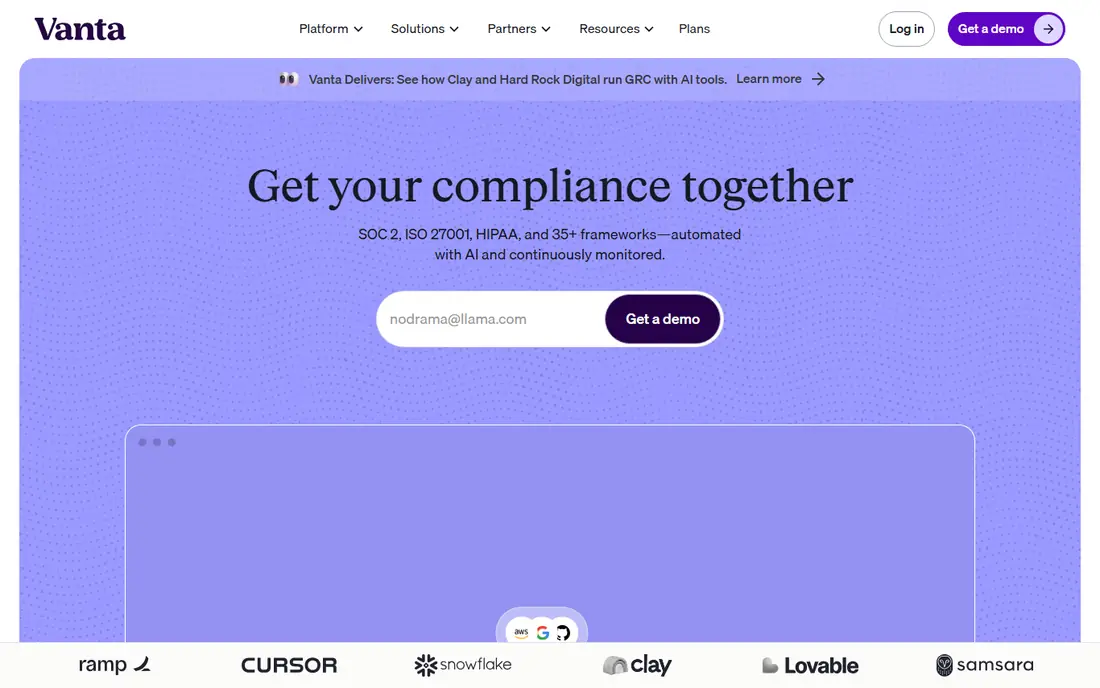
Vanta is the default shortlist pick for software companies that need SOC 2, ISO 27001 or HIPAA and need it soon. It connects to cloud services, code tools and HR systems, then checks controls on a schedule instead of waiting for a quarterly scramble. That steady monitoring makes gaps visible early, when they are cheaper to fix.
The trade-off is price and scope discipline. Vanta sells on a custom quote, and audit fees sit on top of the software cost. Our pick for most cloud startups is Vanta when buyers ask for a recognized report and the team can staff the program, but smaller firms should confirm the full first-year cost before signing.
- Wide integration library
- Continuous control monitoring
- Large auditor network
- Pricing is quote-based
- Costs rise with frameworks and headcount
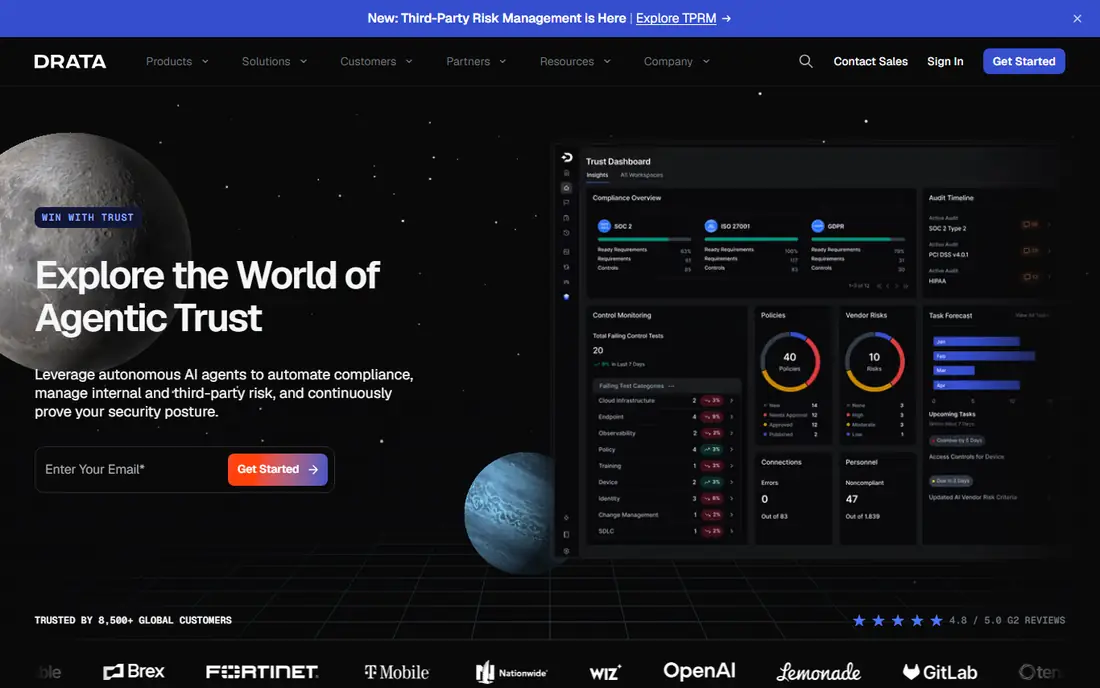
Drata appeals to engineering-led teams because it treats compliance controls like systems to monitor, not documents to file. It pulls evidence automatically, flags failing controls and gives auditors a structured workspace. The trust center feature also helps sales teams answer security questionnaires without starting from scratch each time.
Drata is less appealing if your budget is tight or your main need is a single simple framework. Get a written quote that covers every framework you plan to add in year one, since that is where the total can grow.
- Strong automation for evidence collection
- Clear control status views
- Trust center publishing
- Quote-based pricing
- Custom frameworks can add cost
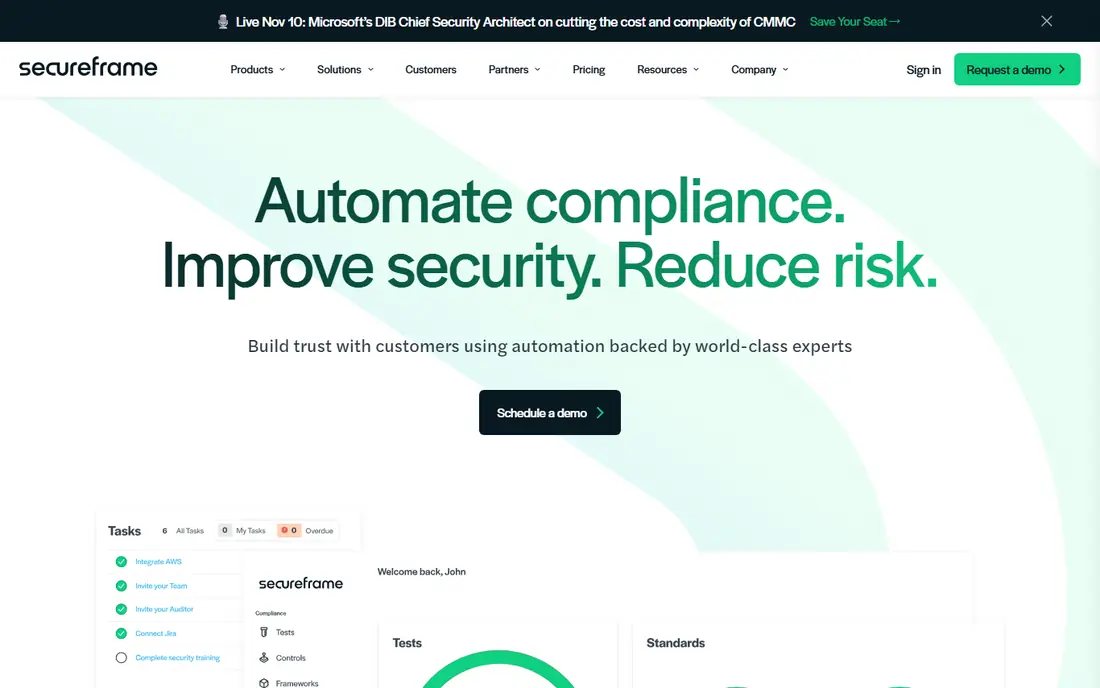
Secureframe positions itself as the friendlier route into compliance for small and mid-sized companies. Templates, guided onboarding and a clear task list reduce the guesswork for a team doing its first SOC 2 or ISO 27001 project. It also covers vendor risk and personnel training in the same workspace, which keeps related work from scattering.
The catch is the same as with most rivals: pricing is custom and audit fees are separate. Secureframe fits teams that want structure and support more than a bare toolkit they must configure alone.
- Guided setup and policy templates
- Broad framework library
- Auditor partner network
- Quote-based pricing
- Deeper customization takes time to learn
Sprinto is built for companies that want a guided first audit rather than a self-serve dashboard. Its team helps with setup, policy drafting and audit preparation, which matters when no one in-house has run a compliance program before. Integrations with cloud, HR and ticketing tools feed evidence into controls automatically.
Sprinto works best for startups and growing firms that value support over brand recognition. Larger enterprises with complex risk programs may still prefer a full governance suite, so compare the control library against your exact framework list first.
- Guided onboarding
- Multi-framework support
- Integrations with common business tools
- Quote-based pricing
- Smaller auditor network than the largest rivals
AuditBoard is a different kind of product from Vanta or Drata. It is a full governance, risk and compliance suite used by internal audit and risk teams at larger organizations. It handles audit planning, control testing, issue tracking and board-level reporting in one system, which suits companies juggling SOX, internal audit and enterprise risk at once.
That depth brings weight. Implementation takes longer, and pricing is enterprise-level. AuditBoard fits organizations with dedicated risk staff, not a ten-person startup chasing its first SOC 2 report.
- Mature audit, risk and controls modules
- Strong reporting
- Suited to large teams
- Enterprise pricing
- Heavier setup than automation-first tools
LogicGate stands out for teams that need compliance workflows shaped around their own process, not a fixed template. You can build risk assessments, control tests, issue workflows and approvals that match how your organization actually works. That flexibility helps in regulated industries where one standard checklist never fits every business unit.
Flexibility has a cost in setup time. Teams that want a ready-made SOC 2 path with minimal configuration may move faster on an automation-first platform. LogicGate earns its place when process fit matters more than speed to a first report.
- Configurable workflows
- Risk and compliance in one platform
- Good reporting options
- Quote-based pricing
- Setup effort grows with customization
Hyperproof focuses on running a compliance program across many frameworks without duplicating work. A single control can map to several frameworks, so evidence collected once counts in more than one place. Auditors get a dedicated workspace, which cuts down on email chains and version confusion during an audit.
Hyperproof is a program management pick rather than a pure automation pick. If your main pain is evidence collection from dozens of cloud tools, compare its integration list carefully against Vanta or Drata before choosing.
- Cross-framework control mapping
- Audit collaboration workspace
- Clear program views
- Pricing not published
- Less automated evidence collection than some rivals
OneTrust is the pick when the compliance problem is privacy first: consent management, data subject requests, data mapping and AI governance. It covers privacy regulations across regions and gives large teams workflows for requests, assessments and vendor privacy reviews. Companies with heavy data protection duties will find more depth here than in a SOC 2 automation tool.
The breadth can overwhelm a small team that only needs SOC 2. OneTrust fits organizations where privacy is a core risk, not a side task, and where a dedicated privacy team will run the platform.
- Deep privacy and consent tooling
- Broad regulatory coverage
- Enterprise scale
- Broad platform can feel complex
- Pricing is quote-based
Scytale combines compliance software with expert guidance, which suits small and mid-sized companies that want a person to call when an audit question gets tricky. It covers common frameworks such as SOC 2 and ISO 27001, tracks controls and evidence, and leans on its team to keep the program moving.
Scytale is not the pick for a company that wants the deepest automation library on the market. It is a good fit when support and a manageable price discussion matter more than having hundreds of integrations on day one.
- Expert-led support
- Multi-framework coverage
- Simpler entry point than enterprise suites
- Smaller integration library than the largest platforms
- Quote-based pricing
How we picked these
We compared official feature pages, framework lists, integration pages and pricing pages for the leading compliance platforms, plus public reviews about onboarding and audit experience. We favored products that are actively sold and supported in 2026, cover recognized frameworks, and offer real automation rather than a shared spreadsheet. Where vendors do not publish prices, we say so instead of guessing a number.
What to check before you buy compliance software
Start with the framework your customers or regulators actually ask for, then check that the platform supports it fully, including the controls, evidence types and auditor workflow you will need. Ask for a demo using your own tools: connect your cloud provider, identity system and HR tool, and see whether evidence flows in without manual uploads.
Price the whole program, not just the software. Ask what the first year costs including audit fees, implementation help and each extra framework. Confirm who owns the program internally, because even the best automation needs someone to review access, approve policies and chase overdue tasks. Finally, check exit terms: you should be able to export your evidence and control history if you switch vendors later.
Sources
- https://www.vanta.com
- https://www.drata.com
- https://www.secureframe.com
- https://www.sprinto.com
- https://www.auditboard.com
- https://www.logicgate.com
- https://www.hyperproof.com
- https://www.onetrust.com
- https://www.scytale.ai
- https://underdefense.com/blog/compliance-automation-software/
- https://kurums.com/best-grc-compliance-software-2026-comparison/?v=653f5ac96a69
Frequently asked questions
What is compliance management software?
It is software that organizes controls, policies, evidence and audit tasks for frameworks such as SOC 2, ISO 27001, HIPAA or PCI DSS. Instead of tracking everything in spreadsheets, teams get automated checks, reminders and an auditor workspace in one place.
How much does compliance management software cost?
Most leading platforms use custom annual quotes, and audit fees are usually separate. Small teams should expect a four or five figure annual software cost, while enterprise governance suites cost substantially more. Always ask for a written quote covering every framework you plan to run.
Do I still need an auditor if I buy compliance software?
Yes. The software prepares evidence and tracks controls, but a licensed auditor or assessor still performs the audit and issues the report. Some vendors bundle audit partners, but the audit itself remains a separate service and fee.
What is the difference between compliance automation and GRC software?
Compliance automation focuses on getting audit-ready fast, with evidence collection and control monitoring. GRC software covers governance, risk and audit more broadly for larger organizations. Small cloud companies usually start with automation, while enterprises with dedicated risk teams lean toward GRC suites.
Can one platform cover SOC 2, ISO 27001 and HIPAA at once?
Many platforms can, and they map shared controls across frameworks so work is not repeated. Check the exact control mapping for your frameworks, because coverage varies and some mappings still need manual evidence.
How long does it take to get audit-ready?
It depends on company size and starting point. Small teams with clean cloud setups may be ready in weeks, while larger or more complex organizations often need several months. Automated evidence collection shortens the work, but policy writing, access reviews and training still take real time.