Best Concept Testing Platforms for CPG Companies in 2026: 8 Platforms Compared
By ToolNimba Editorial Team October 31, 2026 9 min read

- Top pick
 Zappi
Large CPG programs
Starting priceSee websiteCheck out ZappiRead our review - Runner-up
 Conjointly
Advanced methods
Starting priceFreeCheck out ConjointlyRead our review - Also great
 Attest
Fast global studies
Starting priceSee websiteCheck out AttestRead our review
How we researched this
We compared official pricing and feature pages, app store listings, privacy policies and public user reviews. Prices change, so check the provider's site before you pay.
Key takeaways
- Zappi is our pick for large CPG teams that need repeatable concept, pack, and creative tests with benchmarks across markets.
- Conjointly suits teams that want advanced methods such as conjoint and MaxDiff without building a study from scratch each time.
- Attest and Upsiide are strong for fast screening, with Attest offering broad consumer reach and Upsiide offering mobile-first idea screening.
- NielsenIQ BASES remains the choice for a final launch gate when a volume forecast, not just a preference score, is needed.
Quick comparison
| Name | Best for | Starting price | Free plan | |
|---|---|---|---|---|
| Zappi | Large CPG programs | See website | No | Visit |
| Conjointly | Advanced methods | Free | Yes | Visit |
| Attest | Fast global studies | See website | No | Visit |
 Qualtrics | Enterprise research depth | See website | No | Visit |
 NielsenIQ BASES | Volume forecasting | See website | No | Visit |
 Upsiide | Fast idea screening | See website | No | Visit |
 Suzy | Always-on consumer feedback | See website | No | Visit |
 Highlight | In-home product testing | See website | No | Visit |
The best concept testing platforms for CPG companies
Concept testing for consumer packaged goods is not one job. Early screening, pack testing, claim testing, and a final sales forecast each need a different tool. We compared official product pages, method guides, and pricing pages, and we kept only platforms that serve CPG teams with real consumer panels or validated models.
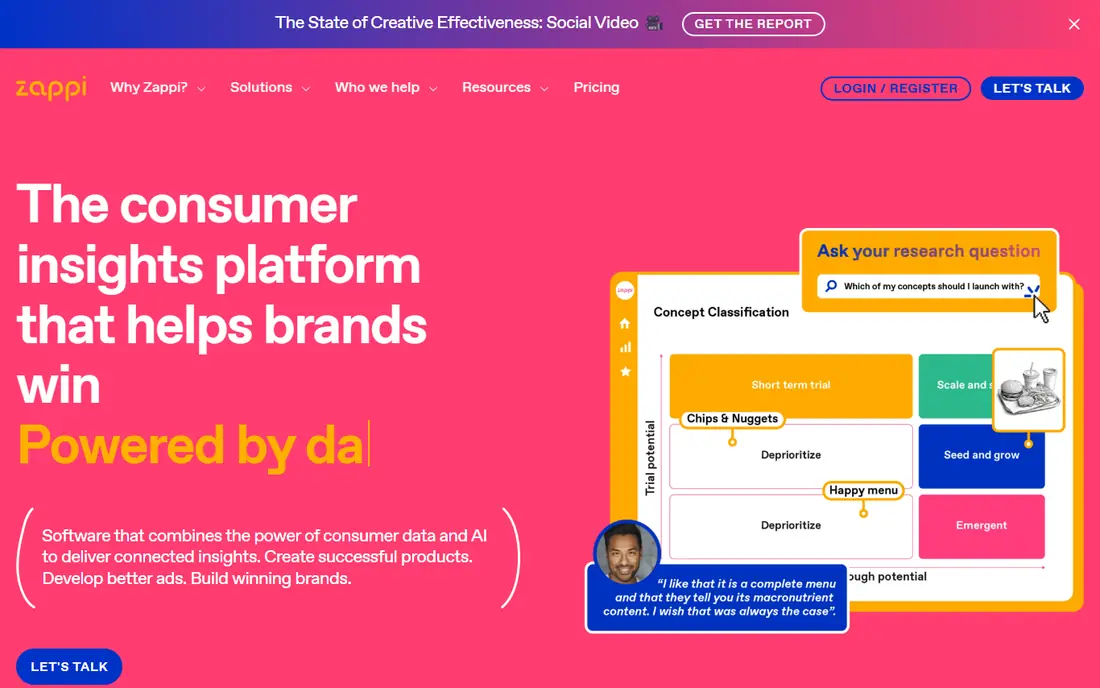
Zappi fits large CPG organizations that test many concepts, packs, and ads across markets and need results they can compare over time. Its standardized frameworks reduce setup variation, and its normative database gives context that a raw preference score cannot: a team can see how a concept compares with past tests rather than judging one number alone. Automated reporting also helps insights teams share results fast with brand and innovation partners.
The main limits are cost transparency and flexibility. Pricing is quoted rather than published, so smaller brands may find the entry point high. Teams with a highly custom research design may also feel constrained by templates. For a scaled CPG program that values repeatability and benchmarks, those trade-offs are often acceptable, and Zappi remains the platform we would shortlist first.
- Standardized CPG tests
- Large normative database
- Automated reporting dashboards
- Pricing is not published
- Standardized flows can feel rigid for custom studies
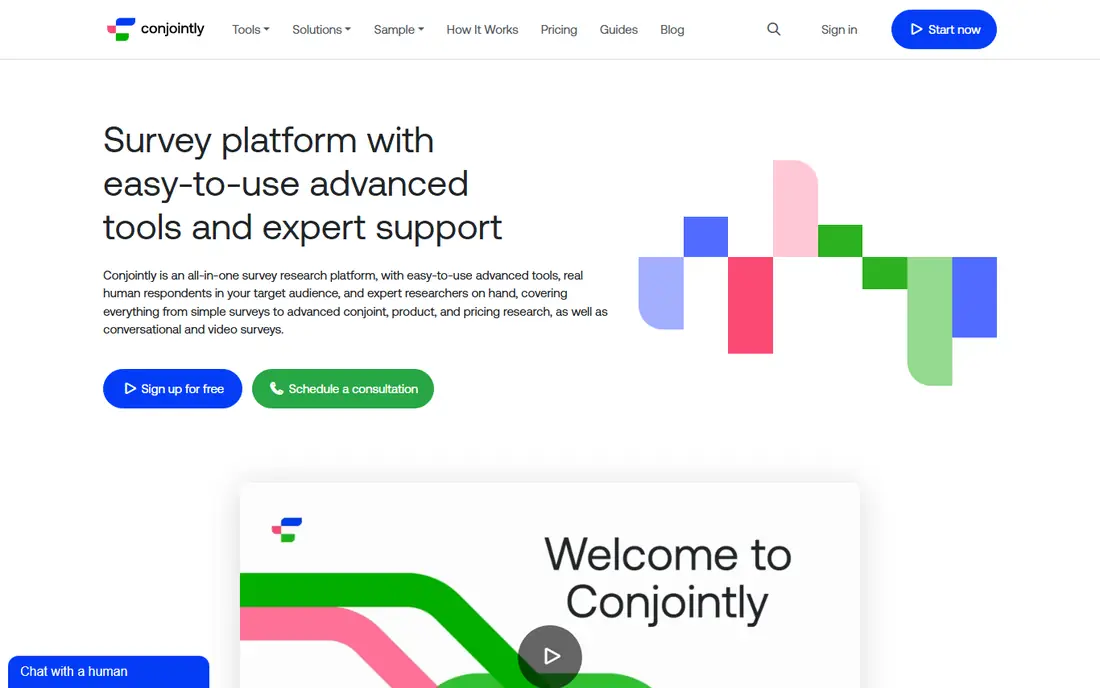
Conjointly appeals to teams that need more than a simple vote. It supports conjoint analysis for trade-offs, MaxDiff for ranking features, Kano for delight versus basic needs, and claims tests for pack copy. The free basic tier lets a team run simple surveys without advanced methods, which is useful for learning the tool before buying. Method documentation also helps non-specialists choose a sound design.
The catch is total cost. The professional plan is listed at $2,895 per year, and respondent sampling is an added cost on top of that for many studies. Teams that test rarely may prefer a pay-per-study option instead. For CPG teams that run pricing, pack, and feature trade-off studies through the year, Conjointly offers a strong mix of method depth and self-serve control.
- Conjoint, MaxDiff, Kano, and claims tests
- Free basic tier
- Clear method guidance
- Paid professional plan is costly for small teams
- Panel costs add to subscription price
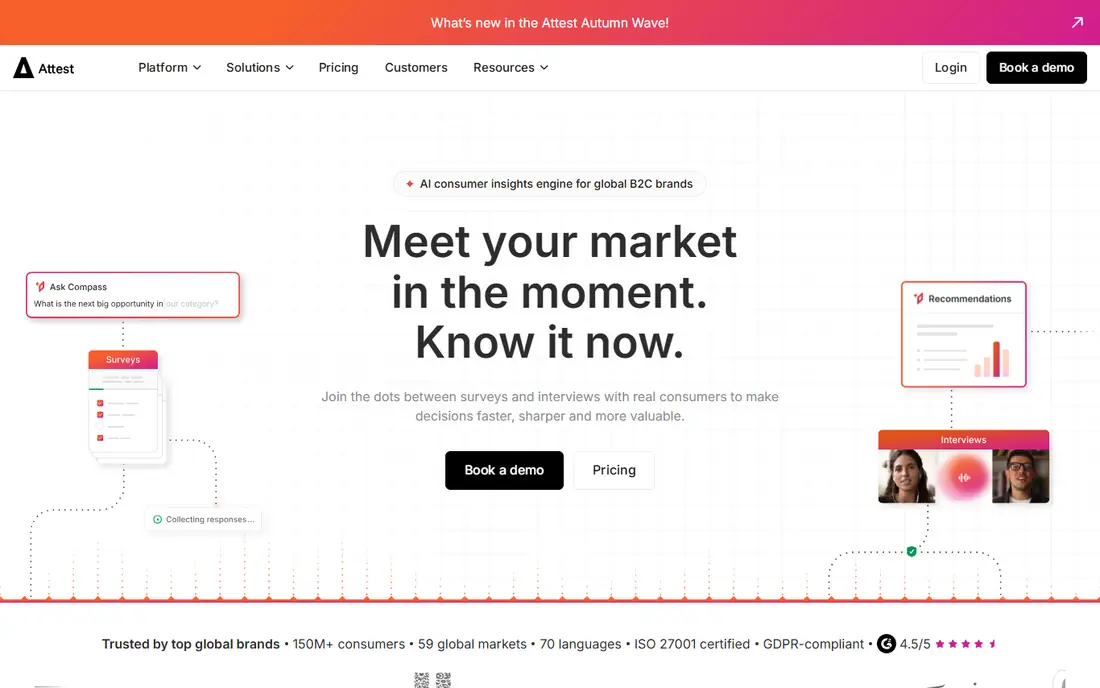
Attest suits CPG teams that need a credible consumer read in days rather than weeks. Its panels cover many countries, and its dashboards present results in a form that brand teams can use without waiting for a long report. Concept testing, brand tracking, and campaign checks can run on the same platform, which helps teams that test through the year rather than once.
The main drawback is pricing clarity. Most teams need a quote, so budgeting takes a sales conversation rather than a quick web check. Attest is also built mainly for consumer audiences, so a CPG team testing a trade or professional buyer concept may need another panel source. For mainstream consumer concepts, speed and reach make it a strong contender.
- Large consumer panels across many countries
- Fast turnaround
- Clear dashboards
- Pricing is quote-based for most teams
- B2B audiences are thinner than consumer panels
Qualtrics fits large enterprises that already use its experience platform and need statistical depth. Concept tests can use monadic, sequential, and comparative designs, with conjoint, TURF, and predictive modeling for trade-offs. Results can also connect with brand and customer data elsewhere in the platform, which helps teams that track a concept from test to launch to post-launch tracking.
That depth comes with effort. Studies take longer to set up, and the platform assumes research skill on the team. Occasional testers may find it heavy for a quick screen. For a CPG company with a central insights function, standardized templates, and governance needs, Qualtrics offers control and rigor that simpler tools cannot match.
- Advanced survey logic and analysis
- Conjoint and predictive models
- Enterprise controls
- Setup takes longer
- Pricing is enterprise level and not published for full programs
NielsenIQ BASES plays a different role from the screening tools on this list. It is built for the launch gate, where the question is not only whether shoppers like a concept but how much volume it might sell. Its forecasting models draw on a long history of CPG launches, and that record is why many large manufacturers still use it before a major investment in production and media.
The trade-off is speed and cost. BASES work is project-based and priced by scope, so it is not a tool for testing twenty early ideas in a week. Teams should use faster screeners first, then bring the strongest one or two concepts to BASES. Used that way, it reduces the risk of a costly launch miss, even though it adds time and budget at the end of the process.
- Audited volumetric forecasting
- Long CPG track record
- Go or no-go decision support
- Project-based and costly
- Slower than agile screening tools
Upsiide suits innovation teams with a long list of ideas and a short window to cut it down. Its mobile-first surveys feel natural on a phone, and its market simulator helps teams see share of choice rather than a simple like score. That makes it easier to compare a dozen pack or flavor ideas and keep only the strongest few for deeper testing.
Upsiide is not a replacement for a forecast or a deep conjoint study. Teams that need detailed price trade-offs or a volume estimate will still need Conjointly or BASES later. Pricing also requires a conversation, which can slow a first trial. For early screening, though, speed and a clear ranking are exactly what most CPG teams need.
- Mobile-first concept screening
- Share-of-choice simulator
- Fast results for many ideas
- Pricing is not published
- Less suited to deep pricing or forecasting work
Suzy fits CPG teams that test often and want one panel they can return to all year. Its owned audience supports fast quantitative reads, and its live interview option adds qualitative color when a score needs explaining. That mix helps when a concept tests well on numbers but the team still needs to hear why shoppers reacted that way.
The catch is commitment. Suzy is priced as an annual platform, so a team that tests once or twice a year may not get full value. It also works best for consumer concepts rather than niche trade audiences. For a brand team with a steady pipeline of concepts, packs, and claims, an always-on panel can cut fieldwork time and keep learning inside one system.
- Owned consumer panel
- Fast quant reads
- Live qualitative interviews available
- Annual pricing can be high for small brands
- Best value needs regular use
Highlight answers a question that screen-based tests cannot: what happens when a shopper actually uses the product at home. Teams ship physical samples, collect usage and survey feedback, and learn about taste, scent, texture, pack handling, and repeat intent. That evidence is valuable for food, beverage, personal care, and household products where the first use decides repeat purchase.
In-home testing takes longer than a digital concept screen and costs more once shipping and recruitment are included. It is also best used after digital screening has narrowed the field. For a final check before launch, or for a reformulation where taste and use matter most, Highlight adds a layer of proof that a picture of a pack cannot provide.
- Real in-home use testing
- Physical product feedback
- Survey plus usage data
- Slower than digital concept screens
- Cost depends on product shipping and panel size
How we picked these
We compared official product pages, method guides, and pricing pages for platforms that serve CPG concept testing, and we kept only tools with real consumer reach, CPG-relevant methods, or validated forecasting. We weighed panel quality, method range, speed, benchmark data, reporting, and price transparency. We did not claim hands-on testing, and where pricing was not published we wrote See website rather than repeating an unverified figure from a review site.
How to match a platform to your stage
Early ideas need speed and volume. A screener such as Upsiide or Attest can rank many concepts fast, and a team should be willing to drop most of them at this stage. The goal is not a perfect score; it is a shortlist that deserves more time and money.
Mid-stage tests
Once the list is short, method depth matters more. Conjointly helps with price and feature trade-offs, Qualtrics supports complex designs, and Suzy adds qualitative follow-up. Pack and claim tests also belong here, since a strong product idea can fail on shelf if the pack or claim confuses shoppers.
Final gate
Before a launch investment, use a forecast. NielsenIQ BASES is the established choice, and Highlight adds in-home proof for products where use experience drives repeat purchase. A team that skips this stage saves time now but risks a launch that looks good in a survey and weak in stores.
Budget and panel checks
Ask about panel source, sample size, quotas, and how incentives work, since panel quality affects every result. Confirm whether sampling, incentives, and reporting are included in the quoted price. For global tests, check country coverage and language support before you sign, not after fieldwork starts.
Sources
- https://www.zappi.io
- https://www.conjointly.com
- https://www.askattest.com
- https://www.qualtrics.com
- https://nielseniq.com
- https://www.upsiide.com
- https://suzy.com
- https://www.letshighlight.com
- https://www.articos.com/blog/concept-testing-tools-for-cpg-brands
- https://rwazi.com/blog/best-concept-testing-platforms