Best Concept Testing Platforms in 2026: 8 Platforms Compared
By ToolNimba Editorial Team October 29, 2026 10 min read

- Top pick
 Zappi
Large consumer brands testing many concepts
Starting priceSee websiteCheck out ZappiRead our review - Runner-up
 Qualtrics
Enterprise research with custom surveys
Starting priceSee websiteCheck out QualtricsRead our review - Also great
 SurveyMonkey
Quick concept surveys for small teams
Starting priceSee websiteCheck out SurveyMonkeyRead our review
How we researched this
We compared official pricing and feature pages, app store listings, privacy policies and public user reviews. Prices change, so check the provider's site before you pay.
Key takeaways
- Concept testing works best when you test early, before packaging, pricing, and media spend lock in a weak idea.
- Zappi and Qualtrics suit large teams that need benchmarks and repeatable studies, while Maze and Lyssna suit product teams testing screens and flows.
- A free plan helps for small, unmoderated tests, but recruited respondents usually cost extra on top of the platform fee.
- Ask how results are scored before you buy, because a percentile, a preference share, and a task success rate answer different questions.
- Our pick for most small teams is Maze for speed, with Lyssna as a lower-cost second option for surveys and first-click tests.
Quick comparison
| Name | Best for | Starting price | Free plan | |
|---|---|---|---|---|
| Zappi | Large consumer brands testing many concepts | See website | No | Visit |
| Qualtrics | Enterprise research with custom surveys | See website | Free trial | Visit |
| SurveyMonkey | Quick concept surveys for small teams | See website | Yes | Visit |
 Maze | Fast prototype and concept tests | $99 per month | Yes | Visit |
 UserTesting | Video feedback on concepts | See website | Free trial | Visit |
 Lyssna | Low-cost surveys and first-click tests | $165 per month | Yes | Visit |
 Optimal Workshop | Card sorts and tree tests for ideas | See website | Free trial | Visit |
 Conjointly | Pricing and preference testing | See website | Free trial | Visit |
The best concept testing platforms
Concept testing means showing people an idea, a name, a pack, an ad, or a prototype, then measuring which version they prefer and why. The tools below cover that job in different ways, from large survey platforms to quick unmoderated tests.
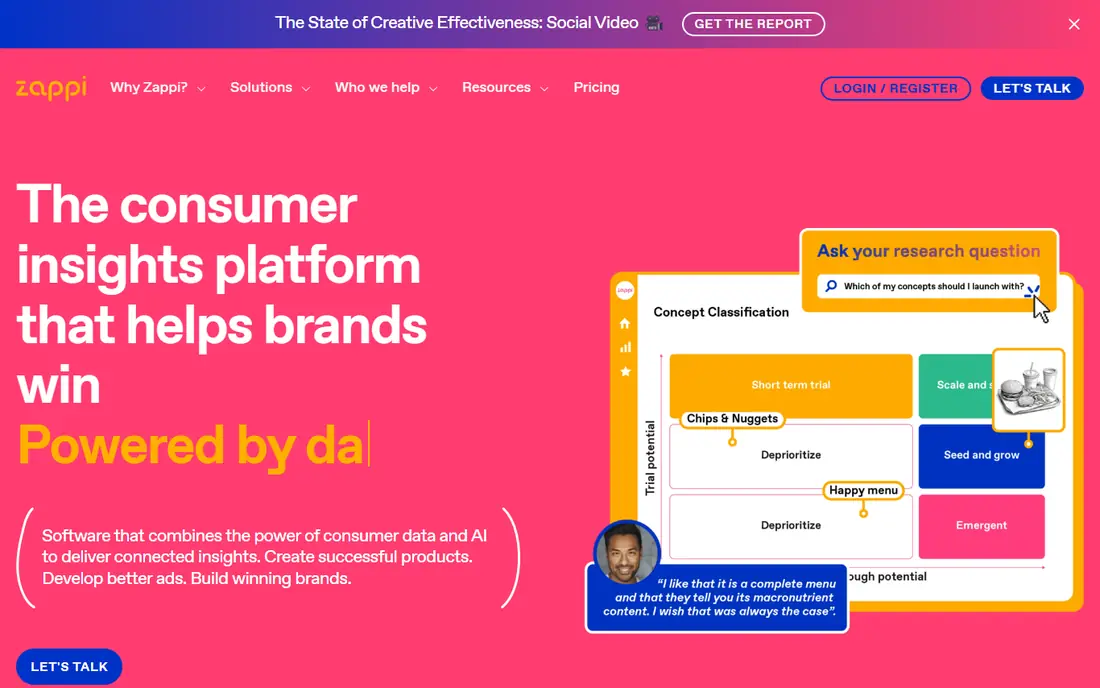
Zappi is built for teams that test concepts in volume. Instead of building each study from scratch, you use templated tests for concepts, ads, and packs, then compare scores against category norms. That structure matters when a team must decide between dozens of ideas each quarter and needs every result scored the same way.
The trade-off is access and cost. Pricing is not published, so budgeting requires a sales conversation, and the platform is aimed at enterprise buyers rather than a solo founder with one idea. If your volume is low, a simpler survey or prototype tool will give you a usable answer for far less money and effort.
- Automated concept, ad, and packaging tests
- Normative benchmarks for comparison
- Fast turnaround on established accounts
- Pricing is quote based
- Less suited to small one-off tests
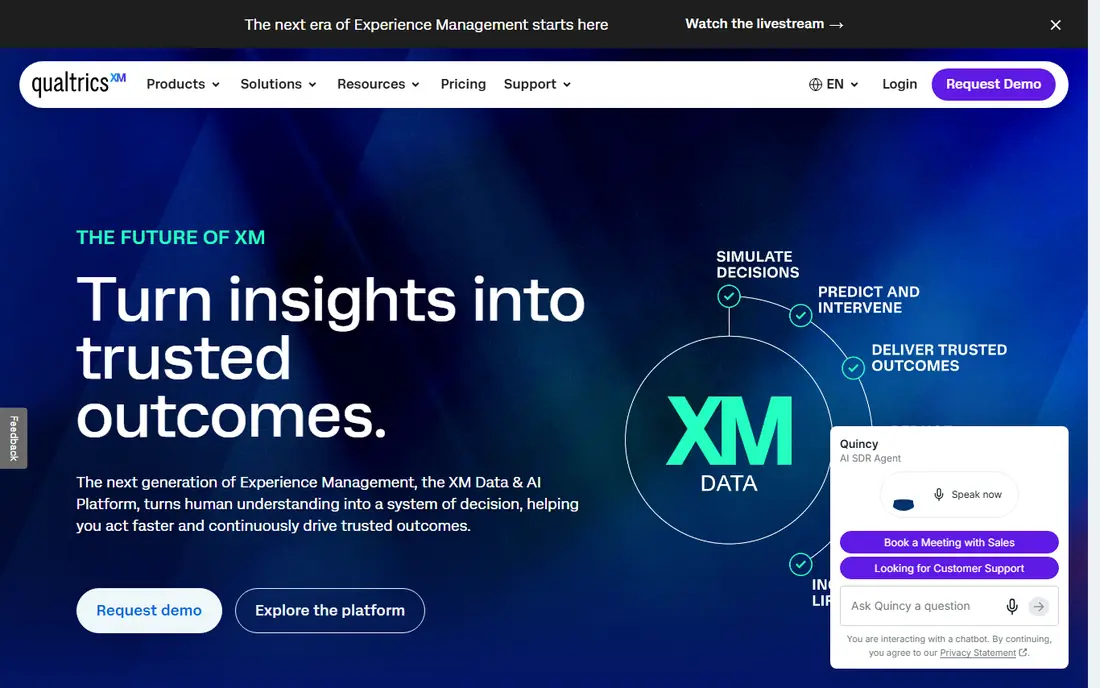
Qualtrics is the most flexible survey platform on this list, and that flexibility is the point. You can build concept tests with randomization, quotas, conjoint-style questions, and detailed cuts by audience, then reuse the same template across markets. Large research teams value that control, plus the ability to connect results to other business systems.
For a small team, that power can become overhead. You will spend more time designing, checking logic, and managing permissions than you would in a templated concept tool. Qualtrics makes most sense when concept testing is part of an ongoing research program, not a one-time poll.
- Deep survey logic and branching
- Strong reporting and integrations
- Suited to repeated, governed research programs
- Pricing is quote based
- Setup can feel heavy for a single quick test
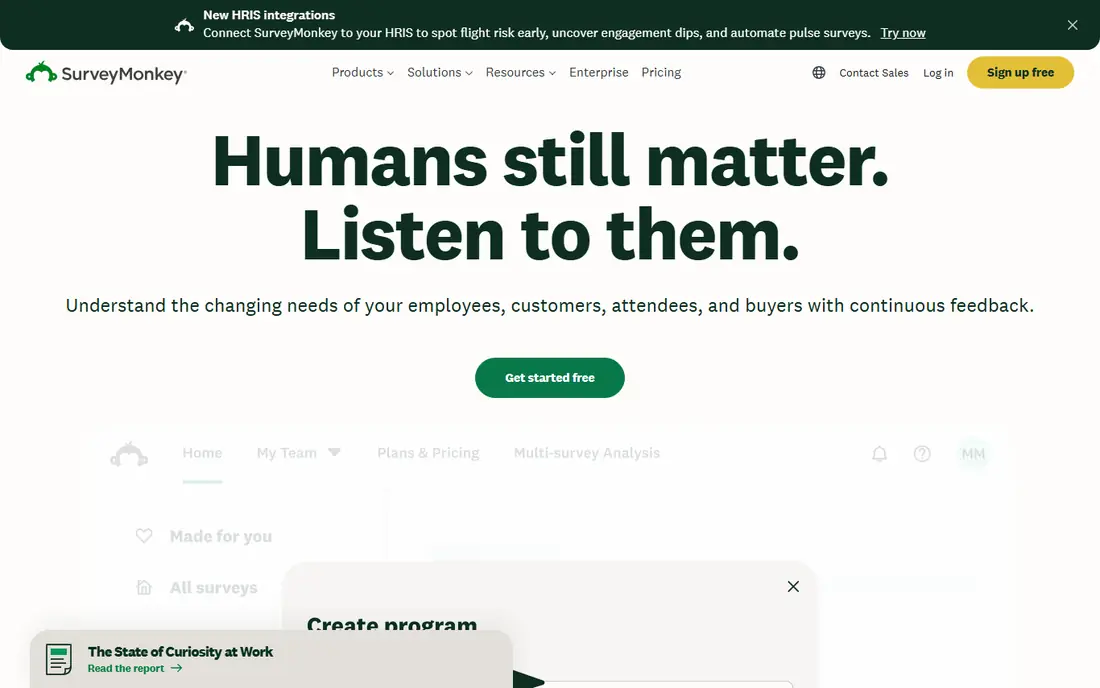
SurveyMonkey is the practical choice when you already have an audience to ask. You can show two or three concept descriptions or images, ask for preference and open feedback, and read the results without learning a research platform. That simplicity keeps small tests moving, and the free plan is enough for a short, basic survey.
The limits appear when you need careful sampling or deep analysis. Free and lower plans restrict question types, exports, and logic, and you still need your own panel or a paid audience if you want a representative sample. Use it for directional reads, and move to a specialist platform when a launch decision depends on the result.
- Easy to build and share a concept survey
- Familiar to respondents
- Useful templates and basic analysis
- Advanced analysis and branding sit on paid plans
- Respondent recruitment costs extra
Maze turns a prototype or concept into an unmoderated test in hours. Participants complete tasks, and you see success rates, misclicks, time on task, and heatmaps. For product and design concepts, those numbers are often more useful than a simple preference vote, because they show where people get stuck.
What Maze does not do is explain motivation. You learn what people clicked, not always why they hesitated, unless you add follow-up survey questions. Paid plans also start at a level that may feel steep for occasional use, and the free plan limits studies per month. Still, for teams that live in Figma, it is the fastest route from idea to evidence.
- Figma prototype testing with task metrics
- Quick setup and sharing
- Free plan for getting started
- Unmoderated by design, so you cannot probe mid-task
- Panel recruitment is a separate cost
UserTesting adds a human voice to concept testing. Participants talk through a concept, an ad, or a prototype on video, so you hear confusion, delight, and hesitation in their own words. That depth helps when a survey score is ambiguous and you need to know what to change.
The cost is time and budget. Watching videos takes longer than scanning charts, and enterprise pricing puts it out of reach for many small teams. It is best used for high-stakes concepts where the reason behind a preference matters as much as the preference itself, with surveys handling the larger quantitative read.
- Recorded video and spoken feedback from real users
- Large recruited panel
- Useful for ads, packs, and flows
- Pricing is quote based and enterprise oriented
- Video review takes more time than survey data
Lyssna, formerly UsabilityHub, is a good middle ground for teams that test often but do not need an enterprise contract. You can run first-click tests on a concept image, preference tests between versions, and short surveys, then compare results quickly. The interface is straightforward, which helps non-researchers run sound tests.
The honest weakness is depth. Analysis and audience controls are not as strong as those in Qualtrics or UserTesting, and recruited panel quality can vary by target group. For early concept screening and design direction, though, Lyssna gives a clear answer at a price small teams can justify.
- Prototype, first-click, and survey tests in one place
- Lower cost than enterprise platforms
- Simple setup
- Panel quality can vary
- Reporting is lighter than enterprise tools
Optimal Workshop answers a different concept question: does the structure make sense to users. Card sorts reveal how people group ideas, features, or products, while tree tests check whether they can find something in a proposed structure. That is valuable when a concept is really an information problem, such as a new menu, category range, or feature set.
It is not a general concept scoring platform, so you will still need a survey or prototype tool for preference and purchase intent. Used at the right stage, however, it prevents a common failure: a good idea hidden inside a confusing structure that users cannot work through.
- Card sorting, tree testing, and first-click tools
- Clear visual results
- Useful before building a full prototype
- Pricing is not published on the entry page for all plans
- Narrower focus than full survey platforms
Conjointly focuses on the trade-offs behind a concept. When customers must choose between price, features, pack size, and brand, a simple preference vote can mislead. Conjoint and pricing tests force those choices and show which attributes actually drive preference, which helps teams set a price and a feature set with more confidence.
The catch is interpretation. Conjoint results are powerful but easy to misread without a clear hypothesis and a sensible set of attributes. Conjointly guides setup, but teams should still check sample size and attribute levels before acting on a result. For pricing and packaging decisions, it earns its place; for early creative reactions, pair it with a simpler qualitative read.
- Conjoint, pricing, and claim tests
- Guided study setup
- Useful when trade-offs decide the winner
- Results need careful reading
- Less suited to open-ended creative feedback
How we picked these
We compared official product pages, pricing pages, and public feature descriptions for platforms that test concepts, ads, packs, or prototypes with real respondents. We kept only tools that exist and work today, cover concept testing as a core use, and publish enough detail to judge fit. We excluded general form builders with no testing features, and we did not claim hands-on testing we did not do. Prices shown are starting points from vendor and public pricing summaries checked in October 2026, and quote-based tools are marked as See website because their cost depends on volume and audience.
What to check before you run a concept test
Start with the decision, not the tool. Write down what you will do if concept A wins, if concept B wins, and if neither clears your bar. That sentence prevents the most common waste in concept testing: a tidy report that changes nothing because no one agreed on the threshold in advance.
Next, match the method to the question. Use a survey or Zappi-style test for broad preference and purchase intent, a prototype test for usability, a first-click test for clarity, and video feedback when you need reasons. Keep the concept presentation fair: same length, same image quality, same price information, and random order where the tool allows it. A prettier mock-up for one idea will beat a better idea shown as plain text.
Finally, watch sample and cost together. Your own customers are cheap but biased toward your brand, while a recruited panel costs more but gives a cleaner read. Small samples can screen out weak ideas, but do not use them to claim a precise market share or a narrow win. When the gap between concepts is small, test again with a larger sample or a different method before you commit spend.
Sources
- https://www.zappi.io
- https://www.qualtrics.com
- https://www.surveymonkey.com
- https://www.maze.co
- https://www.usertesting.com
- https://www.lyssna.com
- https://www.optimalworkshop.com
- https://www.conjointly.com
- https://www.trustradius.com/products/zappi/pricing
- https://blog.uxtweak.com/maze-pricing/
- https://dupple.com/learn/best-user-testing-platforms