Best Contract Lifecycle Management Software in 2026: 9 Tools Compared
By ToolNimba Editorial Team November 7, 2026 10 min read

- Top pick
 Ironclad
Complex enterprise workflows
Starting priceSee websiteCheck out IroncladRead our review - Runner-up
 DocuSign CLM
Teams already on DocuSign
Starting priceSee websiteCheck out DocuSign CLMRead our review - Also great
 PandaDoc
Sales proposals and contracts
Starting price$19 per user per monthCheck out PandaDocRead our review
How we researched this
We compared official pricing and feature pages, app store listings, privacy policies and public user reviews. Prices change, so check the provider's site before you pay.
Key takeaways
- Ironclad and Agiloft are our picks for complex, multi-department workflows, but they need a real implementation budget and timeline.
- Concord and ContractSafe are the clearer choices for smaller teams that mainly need a searchable repository, alerts and signing in one place.
- PandaDoc fits sales-led teams that already create proposals and quotes, and want contracts in the same workflow.
- Most enterprise CLM pricing is quoted, not published, so get implementation, user counts and contract volume in the first quote.
- A CLM tool does not replace legal judgment. AI review can flag risks, but your lawyers should set the playbook it follows.
Quick comparison
| Name | Best for | Starting price | Free plan | |
|---|---|---|---|---|
| Ironclad | Complex enterprise workflows | See website | No | Visit |
| DocuSign CLM | Teams already on DocuSign | See website | No | Visit |
| PandaDoc | Sales proposals and contracts | $19 per user per month | Free trial | Visit |
 Concord | Self-serve business contracts | $499 per month | Free trial | Visit |
 Juro | Browser-native contract collaboration | See website | No | Visit |
 SpotDraft | Mid-market legal teams | See website | No | Visit |
 LinkSquares | Large contract portfolios | See website | No | Visit |
 Agiloft | Highly configurable workflows | See website | No | Visit |
 ContractSafe | Simple searchable repository | $450 per month | Free trial | Visit |
The best contract lifecycle management software
Contract lifecycle management covers drafting, negotiation, approval, signing, storage and renewal. The right tool depends on how many contracts you handle, who negotiates them, and how much custom workflow you truly need.
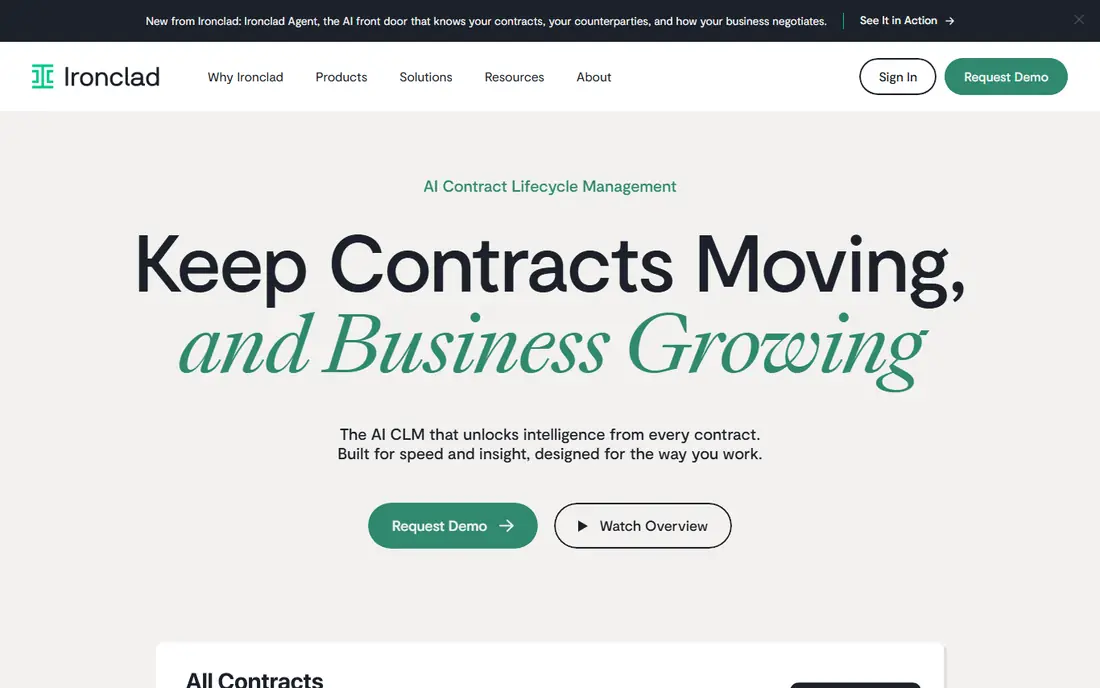
Ironclad is built for legal teams that run contracts through many departments, with conditional approvals, clause libraries and detailed audit trails. Its workflow engine can route a contract differently based on value, region or risk, which matters when a sales contract and a procurement contract should not follow the same path. AI tools help draft from templates and surface key terms, but they work best when legal has already defined approved language.
The trade-off is scale. Ironclad is priced by quote and aimed at mid-market and enterprise teams, so small teams will find it heavy in both cost and setup. If your volume is low and your contracts are standard, a simpler tool will get you live faster. For a growing legal operation, Ironclad is one of the most complete platforms available.
- Deep workflow automation
- AI-assisted drafting and review
- Strong approval and reporting tools
- Custom pricing with enterprise-level cost
- Implementation takes time and internal ownership
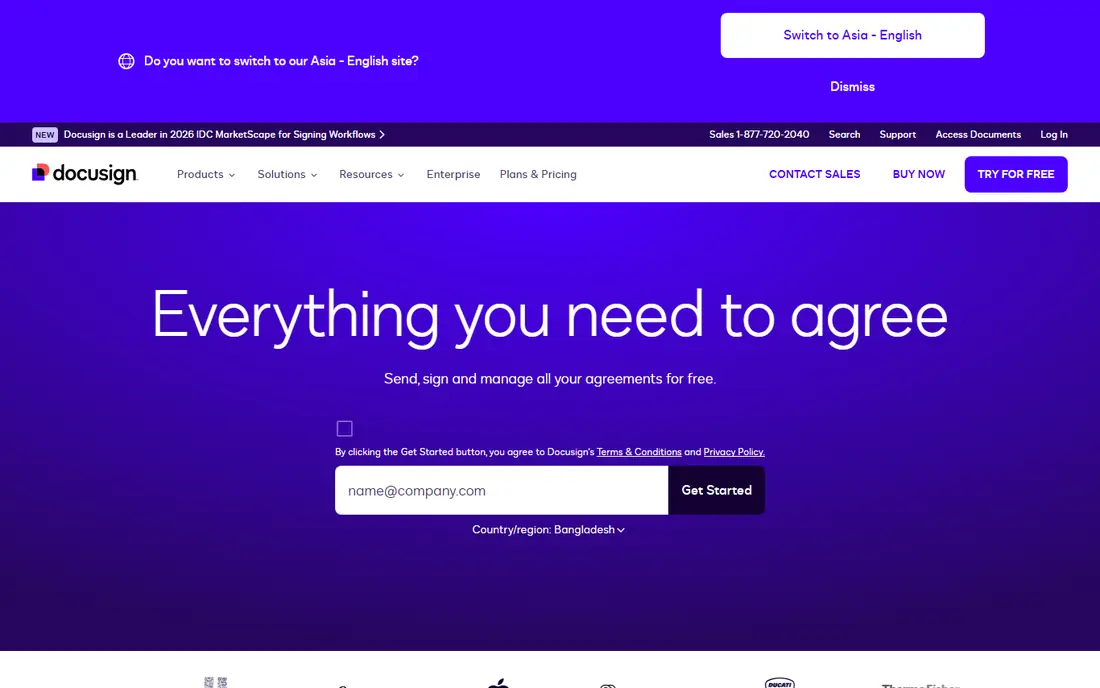
DocuSign CLM extends the signing tool many companies already use into drafting, negotiation, workflow and a searchable repository. That continuity helps adoption, because sales and legal staff already know the signing step, and signed agreements stay in the same system as drafts and approvals. DocuSign Insight adds AI extraction of key terms from stored contracts.
If you do not already use DocuSign, the case is weaker, since you are buying into an ecosystem rather than a standalone tool. Pricing is also quoted, so ask for the full platform cost, including signature envelopes and any AI modules, before comparing it with a published-price rival.
- Tight link to DocuSign eSignature
- Strong agreement management
- Familiar signing experience
- Custom pricing
- Full value needs the wider DocuSign agreement platform
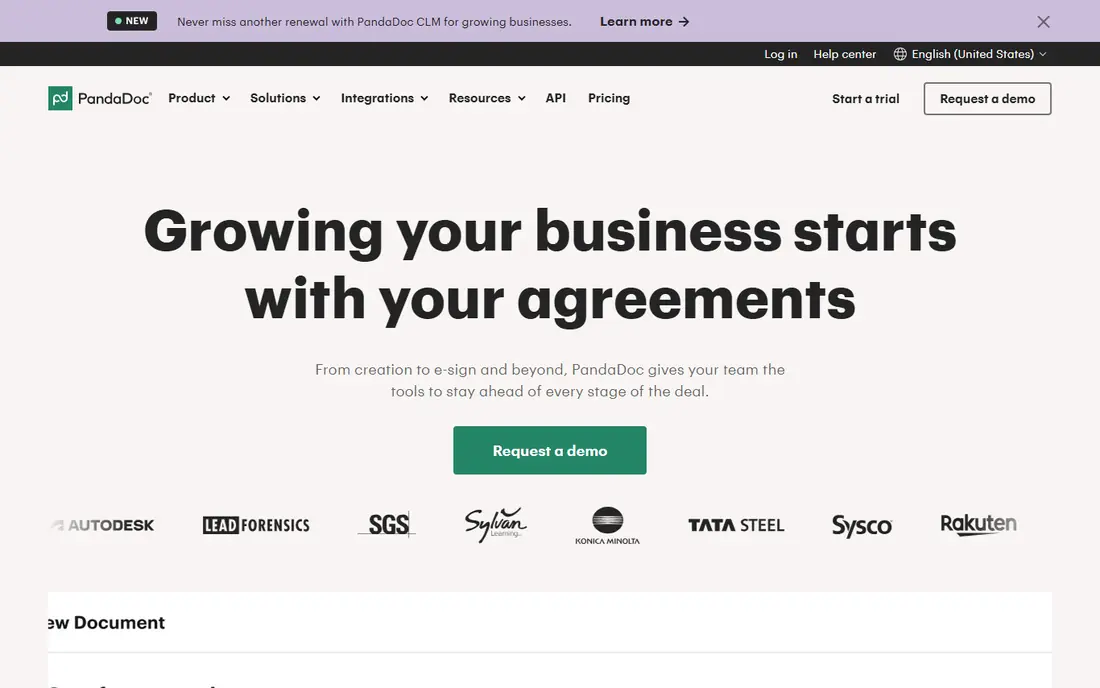
PandaDoc is the most approachable tool on this list for sales teams. You can build proposals, quotes and contracts from templates, send them for signature, and track when a recipient opens or signs. The starter plan is published, which makes budgeting simpler than with quote-only enterprise platforms, and the interface is friendly for non-legal users.
Its limits show up in complex legal work. Clause management, deep approval workflows and portfolio analytics are thinner than in dedicated CLM platforms. If most of your contracts are sales agreements and you want speed over legal depth, PandaDoc is a strong fit. If legal needs a full playbook engine, look at Ironclad, Juro or Agiloft.
- Easy document creation from templates
- Built-in eSignature
- Published starter pricing
- Not a full enterprise CLM
- AI and workflow depth is lighter than Ironclad or Agiloft
Concord is designed so business teams can handle routine contracts without routing every draft through legal. Templates, redlining, approvals and native eSignature sit in one workspace, and the entry plan covers five users at the price shown above. That structure suits companies that sign a steady stream of standard agreements and want one system of record.
The entry cost will be too high for a solo founder or a team that signs only a few contracts a month. Concord also positions itself for business users first, so legal teams with very complex clause needs may prefer a more legal-centric platform. For mid-sized companies standardizing routine contracts, Concord is a practical middle ground.
- Draft, negotiate and sign in one place
- Published pricing for the entry plan
- Unlimited eSignatures on plans
- Entry price is high for very small teams
- Editor can feel less smooth than Juro for some users
Juro takes a browser-first approach, so negotiation, comments and approvals happen in a live contract rather than in emailed Word documents. That reduces version confusion, which is a common source of delay and error. Pricing is based on contract volume rather than seat count, with unlimited users on every plan, which helps companies that want broad adoption across sales, HR and procurement.
The main drawback is price transparency. You need a sales conversation to get a quote, and deeper integrations can add cost. Teams that negotiate mainly inside documents, and want a modern editor their whole company can use, will like Juro. Teams on a tight, published budget may prefer Concord or ContractSafe.
- Contracts live in the browser, not in Word files
- Unlimited users on every plan
- AI drafting and review
- Custom pricing by contract volume
- Integrations on higher plans can add cost
SpotDraft is aimed at growing in-house legal teams that want AI help without an enterprise implementation project. It covers drafting from templates, AI review against your playbook, approvals, signing and a searchable repository. The interface is modern, and teams often report a shorter path to a working system than with larger platforms.
Pricing is quoted, so you should ask about contract volume limits, AI features and implementation support in the first proposal. SpotDraft is also less entrenched in large enterprise ecosystems than Ironclad or DocuSign, which can matter if you need a long list of prebuilt integrations. For a mid-market legal team, it is a strong balance of power and usability.
- AI-first review and drafting
- Clean repository and workflow tools
- Faster setup than enterprise CLM
- Custom pricing
- Smaller ecosystem than DocuSign or Ironclad
LinkSquares shines when the problem is not just new contracts, but thousands of old ones. Its AI tools extract dates, values, obligations and clauses from stored agreements, then turn that data into searchable reports and risk scores. Legal, sales and finance teams can answer portfolio questions, such as which contracts renew next quarter, without opening each file.
That strength comes with enterprise pricing and a migration project if your back catalog is messy or scanned. Small teams with a modest contract count will not need this depth. Large companies that need visibility across a legacy portfolio, though, will find LinkSquares one of the most useful tools here.
- Strong AI extraction and analytics across stored contracts
- Good for legacy portfolios
- Risk scoring
- Enterprise pricing
- Setup and migration effort for large back catalogs
Agiloft is the configurability pick. Its no-code platform lets legal operations teams build custom workflows, data models and approval logic without waiting for vendor development, which suits organizations with unusual processes or multiple contract types. It has a long history in contract management, and its AI tools can be applied to drafting, review and extraction.
Flexibility is also its risk. A team without a clear process design can build a system that is powerful but hard to maintain, and implementation costs can grow. Agiloft suits organizations that know their process well and want to encode it exactly, rather than teams looking for a ready-made template to use on day one.
- Very flexible no-code configuration
- Deep workflow and approval logic
- Long CLM track record
- Custom pricing
- Flexibility can mean longer design and admin work
ContractSafe focuses on the most common pain point: finding a contract and knowing when it renews. You upload agreements, the system extracts key dates and terms, and alerts warn you before renewals or expirations. Unlimited users on its plans make it easy to give the whole company read access without counting seats.
It is not a replacement for a full workflow engine. If you need multi-stage approvals, clause playbooks and deep negotiation tooling, Ironclad or Agiloft will serve you better. If your team mainly needs a reliable, searchable home for contracts with alerts, ContractSafe offers clear pricing and a fast start.
- Published pricing
- Unlimited users
- Renewal alerts and AI extraction
- Less workflow depth than full CLM platforms
- Best for repository use, not complex approvals
How we picked these
We compared official pricing and product pages, vendor documentation and public reviews, and we kept tools that cover more than signing alone. A tool had to support drafting or templates, negotiation or approval, storage and renewal tracking to qualify as CLM here. Where pricing was not published, we listed it as See website rather than repeating third-party estimates as vendor prices.
What to check before you sign
Start with a sample of your real contracts, not a vendor demo set. Upload ten agreements of different types, test search, extraction and renewal alerts, and time how long approval takes for each type. That pilot will reveal data quality problems, such as scanned PDFs or inconsistent naming, that no feature list can show.
Count the total cost
Ask for implementation, migration, training and AI module costs in writing, plus how pricing changes when contract volume or users grow. Quote-only platforms can look similar at first, then diverge sharply at renewal. A published-price tool such as Concord or ContractSafe makes this comparison easier, but you should still confirm what is included at that price.
Agree the playbook first
AI review is only as good as the rules it follows. Before you buy, have legal write down approved clauses, fallback language and escalation thresholds for your most common contracts. That document becomes your test script during a trial, and it prevents a situation where the tool approves language your lawyers would have rejected.
Sources
Frequently asked questions
What is contract lifecycle management software?
Contract lifecycle management software manages a contract from first draft through negotiation, approval, signing, storage and renewal. It replaces scattered email threads and shared drives with one system where teams can find the latest version and track key dates.
What is the best contract lifecycle management software for small businesses?
PandaDoc is a good small business starting point for sales contracts, because it combines templates, signing and published pricing. Concord and ContractSafe are better if you need a dedicated contract repository with renewal alerts and published entry prices.
How much does CLM software cost?
Published entry prices on this list run from $19 per user per month for PandaDoc to $499 per month for Concord and $450 per month for ContractSafe. Enterprise platforms such as Ironclad, DocuSign CLM, Juro, SpotDraft, LinkSquares and Agiloft are priced by quote, so your total depends on volume, users and implementation.
Can CLM software replace eSignature software?
Often, yes. Most tools here include native eSignature, so you may not need a separate signing subscription. Check envelope limits, signer authentication options and whether your existing signature workflows depend on features a CLM tool does not include.
Do I need AI contract review?
AI review helps most when you handle a high volume of similar contracts, or when you need to extract dates and obligations from a large back catalog. For a small number of standard agreements, templates and renewal alerts may deliver more value than AI review alone.