Best CPQ Software in 2026: 8 Software Compared
By ToolNimba Editorial Team November 7, 2026 8 min read

- Top pick
 Salesforce CPQ
Salesforce teams
Starting price$150 per user per monthCheck out Salesforce CPQRead our review - Runner-up
 Oracle CPQ
Global enterprises
Starting price$240 per user per monthCheck out Oracle CPQRead our review - Also great
 SAP CPQ
SAP ERP teams
Starting priceSee websiteCheck out SAP CPQRead our review
How we researched this
We compared official pricing and feature pages, app store listings, privacy policies and public user reviews. Prices change, so check the provider's site before you pay.
Key takeaways
- Salesforce CPQ suits teams already on Salesforce, while Oracle CPQ suits global enterprises with complex catalogs.
- DealHub and Conga suit teams that want faster setup than legacy CPQ, with strong document and approval tools.
- CPQ implementation often costs more than licenses, so budget for setup, training, and ongoing rule maintenance.
- Small businesses should favor simpler CPQ tools, because enterprise CPQ can overwhelm a small sales team.
Quick comparison
| Name | Best for | Starting price | Free plan | |
|---|---|---|---|---|
| Salesforce CPQ | Salesforce teams | $150 per user per month | Free trial | Visit |
| Oracle CPQ | Global enterprises | $240 per user per month | Free trial | Visit |
| SAP CPQ | SAP ERP teams | See website | No | Visit |
 Conga CPQ | Document-led quoting | See website | Free trial | Visit |
 DealHub | Fast modern CPQ | See website | Free trial | Visit |
 PROS | Pricing optimization | See website | No | Visit |
 Tacton | Manufacturing configuration | See website | No | Visit |
 Infor CPQ | Manufacturing and distribution | See website | No | Visit |
The best CPQ software
CPQ stands for configure, price, quote. It helps sales teams build valid product combinations, apply pricing and discount rules, and send accurate quotes without spreadsheet errors. The eight tools below span CRM-native CPQ, ERP-native CPQ, and manufacturing CPQ, so the right pick depends on your CRM, your product complexity, and your team size.
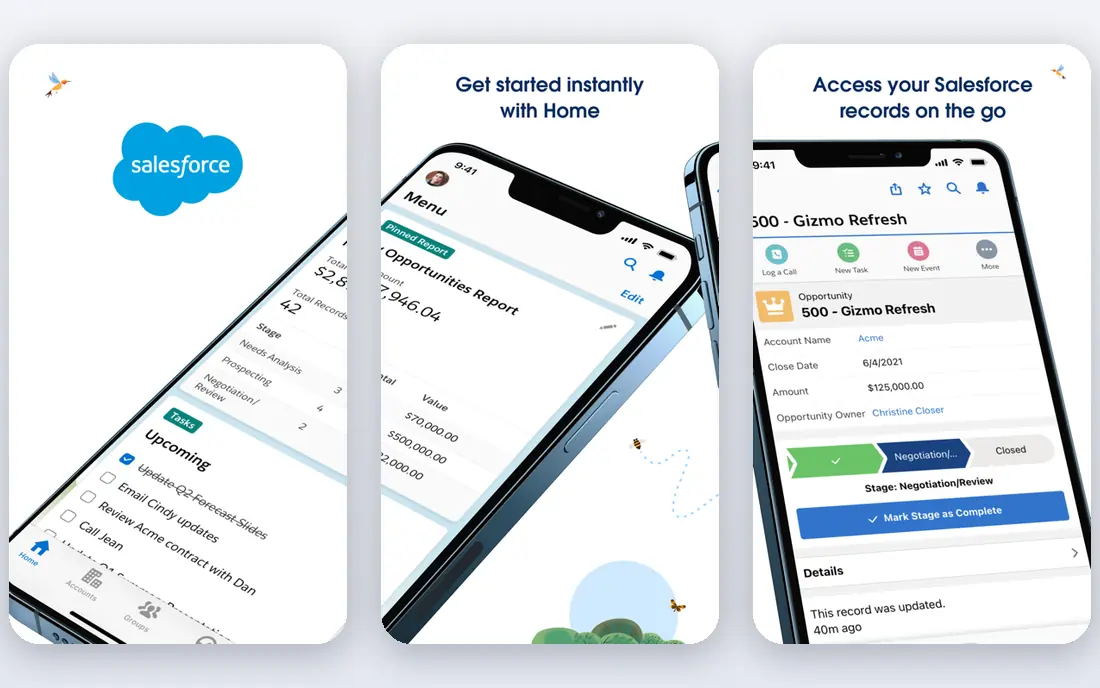
Salesforce CPQ, now part of Salesforce Revenue Cloud, is our pick for teams that already run sales on Salesforce. Quotes, opportunities, products, and customer data stay in one system, which reduces re-entry and keeps pricing rules close to the pipeline. Guided selling helps reps configure bundles correctly, while approvals and renewal tools keep discounting under control.
The catch is total cost and effort. Current guides list Growth pricing around $150 per user per month billed annually, on top of a Sales Cloud license, and implementation often needs consultants. Small teams may find that heavy. If your sales process already lives in Salesforce, Salesforce CPQ is the most natural fit. If not, a standalone tool may be faster to adopt.
- Native Salesforce integration
- Guided selling
- Strong approval and renewal tools
- Needs a Salesforce Sales Cloud license on top
- Implementation is resource-heavy
- Learning curve is steep
Oracle CPQ suits large enterprises with complex catalogs, multiple channels, and global pricing needs. It handles product, service, and subscription configuration, central discount and promotion rules, and document generation in many languages. Integrations cover Oracle Sales, Salesforce, Dynamics, and many ERP systems, which helps when quotes must match back-office data.
The price reflects that enterprise focus. Current guides list Oracle CPQ Cloud Service at $240 per hosted named user per month, with a 25-user minimum and a multi-year contract in many deals. That puts it out of reach for small teams. If you run global sales with complex rules, Oracle CPQ is worth the investment. If your catalog is simple, a lighter tool will get you live sooner.
- Strong global pricing and documents
- Subscription and renewal support
- Many ERP integrations
- High list price with a user minimum
- Complex setup
- Steep learning curve
SAP CPQ, formerly SAP Configure Price Quote, is the pick for companies already running SAP ERP. It ties quoting to product data, pricing, and order processes in SAP, which reduces errors when a quote becomes an order. For manufacturers with variant configuration and complex bills of materials, that ERP link is a real advantage.
The downside is effort and cost. SAP CPQ implementation is a large project, and its value drops if you do not already use SAP. Teams outside the SAP stack should look at CRM-native or standalone CPQ instead. Inside SAP, SAP CPQ keeps quoting, pricing, and fulfillment aligned in a way standalone tools struggle to match.
- Deep SAP ERP integration
- Strong for manufacturing and variant configuration
- Enterprise scale
- High implementation cost
- Steep learning curve
- Best only inside the SAP stack
Conga CPQ suits teams where the quote document and contract matter as much as the price. It generates polished proposals, contracts, and order documents from Salesforce data, with approval workflows that keep discounting in check. That document strength helps legal and finance teams as well as sales.
The trade-off is implementation time. Conga projects can run long, especially for complex catalogs, and pricing is quote-based, so you need a detailed proposal. Ongoing rule maintenance also needs ownership, or the system drifts from current pricing. If documents and approvals are central to your sales process, Conga is a strong choice.
- Strong document generation and contracts
- Good Salesforce integration
- Mature approval workflows
- Implementation can be long
- Pricing is quote-based
- Ongoing maintenance needs care
DealHub is a modern CPQ pick for mid-market teams that want to move faster than legacy platforms allow. Its quote, approval, and document workflows are designed for quicker setup, and current migration guides place its licensing well below legacy enterprise CPQ. That speed helps teams that need CPQ live in months, not in a year-long project.
The limit is extreme complexity. DealHub may not match Oracle or SAP for very complex manufacturing configuration, though it covers most SaaS and services quoting well. Pricing is quote-based, so get a proposal for your user count and features. If you want modern CPQ without a legacy project, DealHub is a strong shortlist pick.
- Faster setup than legacy CPQ
- Modern quote and approval workflows
- Good for mid-market teams
- Less depth than Oracle or SAP for very complex manufacturing
- Pricing is quote-based
PROS stands out for pricing science rather than just quoting. Its tools analyze deal history, suggest prices and discounts, and help teams protect margin, which suits industries with complex pricing such as manufacturing, distribution, and travel. CPQ features sit alongside that pricing depth, so quotes reflect smarter price guidance.
The catch is enterprise scope. PROS pricing is quote-based and implementation needs clean data and process work to deliver value. Small teams with simple pricing will not use its depth. If pricing optimization is your main problem, and quoting is the delivery vehicle for it, PROS deserves a close look.
- Strong AI pricing and discount guidance
- Good for airlines, manufacturing, and distribution
- Analytics depth
- Enterprise focus and pricing
- Implementation needs data and process work
Tacton is built for manufacturers with complex, engineered products. Its configuration engine handles rules, constraints, and dependencies that simpler CPQ tools cannot, such as which options can combine and what engineering changes they trigger. Channel partners and customers can also configure products through guided self-service.
That depth comes with project scale. Tacton pricing is quoted per customer, and implementation is a major effort that needs product data and rule design. For simple SaaS bundles, Tacton is overkill. For complex manufacturing, where a wrong configuration costs real money, Tacton is one of the strongest CPQ choices available.
- Deep manufacturing configuration rules
- Strong for complex engineered products
- Good channel and self-service options
- Quote-based pricing
- Implementation is a major project
- Overkill for simple SaaS quoting
Infor CPQ suits manufacturers and distributors already running Infor ERP. It connects quoting to product and order data in Infor systems, with guided selling that helps reps and channel partners configure valid products. That ERP link reduces order errors and keeps pricing consistent across channels.
The limit is stack fit. Like SAP CPQ, Infor CPQ gives its best value inside its own ERP family, and pricing is quote-based. Teams outside Infor should compare standalone or CRM-native CPQ first. Inside Infor, Infor CPQ keeps quoting aligned with manufacturing and distribution processes in a way a generic tool cannot easily match.
- Good fit for Infor ERP users
- Manufacturing and distribution configuration
- Guided selling
- Best value inside the Infor stack
- Quote-based pricing
- Smaller community than Salesforce or Oracle
How we picked these
We compared official product pages, pricing guides, and migration guides for CPQ platforms. We favored tools with a working CPQ product, a clear CRM or ERP fit, and a real customer base. We included CRM-native, ERP-native, and manufacturing CPQ, because buyers often start with the wrong type and pay for complexity they do not need.
What to check before you buy
First, map your product complexity honestly. Simple bundles need a light tool, while engineered products need a configuration engine. Next, check your CRM and ERP fit, because a native tool saves integration work, while a standalone tool may need custom links. Then ask for implementation cost and timeline in writing, separate from license cost, because setup often exceeds the first year of licenses.
Also test discount and approval rules on real deals, not just demos, and confirm who will own rule maintenance after go-live. Finally, start with a pilot for one product line or team, prove the quote accuracy and speed gains, and then expand. A phased rollout beats a big-bang CPQ project that stalls.
Sources
Frequently asked questions
What is CPQ software?
CPQ software helps sales teams configure valid products, apply pricing and discount rules, and generate accurate quotes. It reduces errors from spreadsheets and manual pricing, and it speeds up approvals for complex deals.
What is the best CPQ software for small business?
Small businesses usually do better with simpler, faster CPQ tools such as DealHub or a CRM-native option, rather than enterprise platforms like Oracle or SAP CPQ. Match the tool to your catalog size and your team's capacity to maintain rules.
How much does CPQ software cost?
License costs range from about $150 per user per month for Salesforce CPQ to $240 per user per month for Oracle CPQ in current guides, with many vendors quote-based. Implementation, training, and maintenance often add more than the first year of licenses.
Does CPQ replace a CRM?
No. CPQ usually sits inside or alongside a CRM, using customer and opportunity data to build quotes. It does not replace pipeline, contact, or activity management, and most CPQ tools assume a CRM is already in place.
How long does CPQ implementation take?
Simple CPQ projects can take weeks to a few months, while complex manufacturing or enterprise projects can take six to eighteen months. The timeline depends on catalog size, rule complexity, and integration needs.
Can CPQ handle subscriptions and renewals?
Yes, most modern CPQ tools handle subscriptions, renewals, amendments, and upsells, though depth varies. Check renewal and amendment workflows in a demo if recurring revenue is a large share of your business.