Best Crypto Staking Platforms in 2026: 9 Platforms Compared
By ToolNimba Editorial Team October 31, 2026 9 min read

- Top pick
 Kraken
All-round exchange staking
Starting priceSee websiteCheck out KrakenRead our review - Runner-up
 Coinbase
Beginner staking
Starting priceSee websiteCheck out CoinbaseRead our review - Also great
 Binance
Widest asset choice
Starting priceSee websiteCheck out BinanceRead our review
How we researched this
We compared official pricing and feature pages, app store listings, privacy policies and public user reviews. Prices change, so check the provider's site before you pay.
Key takeaways
- The best crypto staking platform depends on custody: exchanges hold your assets for you, while DeFi protocols let you keep more control with more responsibility.
- Headline yields change with network conditions and platform fees, so check the fee cut, lock-up, and reward asset before comparing rates.
- Kraken and Coinbase suit beginners who value a regulated exchange, while Lido and Rocket Pool suit Ethereum holders who want liquid staking.
- This is not financial advice. Crypto staking carries risk, including price falls, lock-ups, slashing, and smart contract risk, and rewards are not guaranteed.
Quick comparison
| Name | Best for | Starting price | Free plan | |
|---|---|---|---|---|
| Kraken | All-round exchange staking | See website | No | Visit |
| Coinbase | Beginner staking | See website | No | Visit |
| Binance | Widest asset choice | See website | No | Visit |
 Lido Finance | Ethereum liquid staking | See website | No | Visit |
 Rocket Pool | Decentralized Ethereum staking | See website | No | Visit |
 Crypto.com | Exchange staking with card perks | See website | No | Visit |
 KuCoin | Flexible and locked staking | See website | No | Visit |
 Nexo | Yield across many assets | See website | No | Visit |
 OKX | Advanced users and DeFi tools | See website | No | Visit |
The best crypto staking platforms
Staking means locking crypto to help secure a proof-of-stake network in return for rewards. The platforms below differ in custody, fees, lock-ups, and asset range. Read the fee disclosure and the unstaking terms for each one, since those details matter more than a single advertised rate. This article is for research only and is not financial advice.
Kraken is our all-round pick because it combines a broad staking menu with relatively clear disclosures about its reward cut. Users can stake many assets through the exchange without running a validator, which keeps the process simple. Flexible and bonded options vary by asset, so check the terms for the coin you plan to stake.
The catch is the fee cut, which reduces the headline network reward, and regional limits that affect which assets you can stake. If you value simplicity and an established exchange, Kraken is a sensible starting point for research.
- Wide asset range
- Clear fee disclosures
- Long track record as an exchange
- Platform takes a cut of rewards
- Availability varies by region and asset
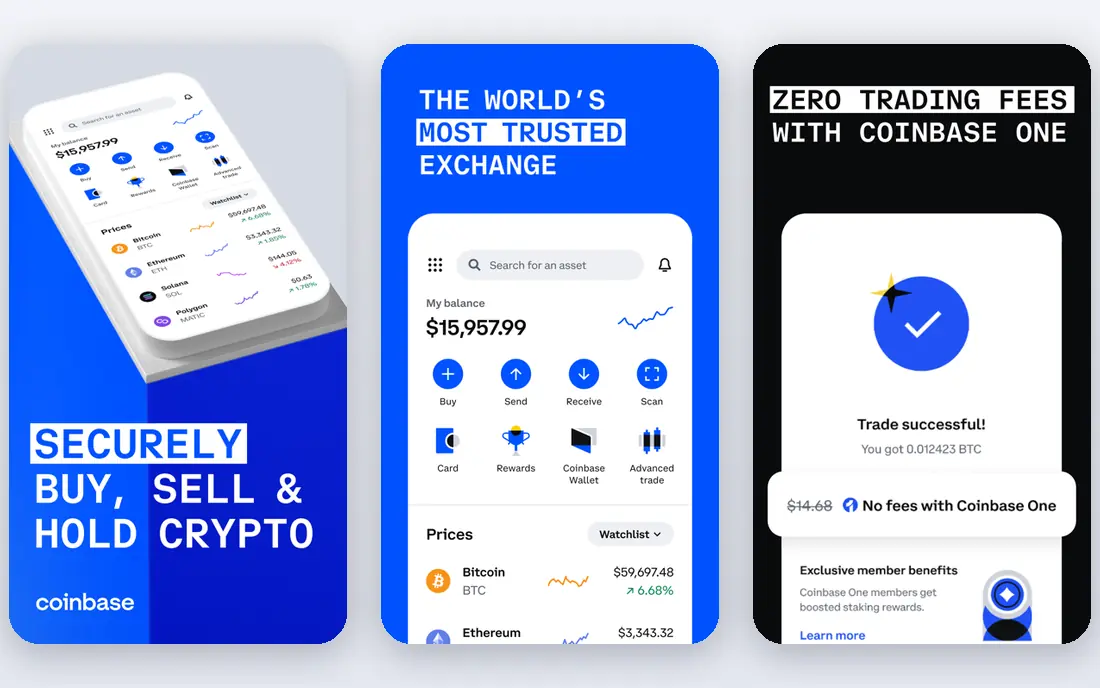
Coinbase is the simplest staking route for beginners. Staking sits inside the same app many people already use to buy crypto, and the steps are short. That ease matters if you are staking for the first time and do not want to manage wallets, validators, or DeFi protocols.
The trade-off is cost. Coinbase takes a larger share of rewards than Kraken or Binance on some assets, according to its own fee disclosures. Check the current rate and fee for your asset before staking, and compare the net reward, not just the headline rate.
- Very easy to use
- Clear app flow
- US-based exchange
- Higher reward cut than some rivals
- Smaller staking asset list

Binance offers one of the widest staking menus, with flexible and locked products across many assets. That choice suits users who hold several coins and want to manage staking in one account. Earn products also include auto-invest and other yield tools, though those are not all pure staking.
Availability is the main limit. US residents use a separate Binance.US platform with a different menu, and terms vary by product and region. Read the product page for lock-up, early redemption, and reward terms before committing funds.
- Very wide asset menu
- Flexible and locked options
- Auto-invest tools
- Not available to US residents on the global platform
- Fee and rate terms vary by product
Lido is the best-known liquid staking protocol for Ethereum. You stake ETH and receive stETH, a token that represents your stake and can be used in DeFi, while rewards accrue. That liquidity is the main advantage over locked staking, since you are not waiting for a long unstaking period to access value.
The risks are different from exchange staking. Lido charges a fee on rewards, and stETH carries smart contract and market risk, including price differences from ETH at times. It suits Ethereum holders who understand DeFi, not beginners who want a simple exchange product.
- Liquid staking token for Ethereum
- No lock-up in the usual sense
- Widely integrated in DeFi
- Takes a cut of rewards
- Smart contract and DeFi risk
- Ethereum-focused
Rocket Pool offers a more decentralized take on Ethereum liquid staking. Users can stake smaller amounts and receive rETH, or run a node with less ETH than a solo validator needs. That design appeals to people who care about decentralization and want an alternative to a single large provider.
Complexity is the cost. Wallets, gas fees, and protocol mechanics need more understanding than exchange staking. If you are comfortable with self-custody and DeFi, Rocket Pool is a strong option to research; if not, start with an exchange product.
- More decentralized design
- Liquid staking token
- Node operator option
- More complex than exchange staking
- Ethereum-only
- Gas and protocol fees apply
Crypto.com combines exchange staking with a wider app and card ecosystem. Users can stake many assets, and holding or locking CRO, the platform token, can raise reward tiers. That ecosystem suits people who already use Crypto.com for trading, spending, or earning.
Tiered rewards can be confusing, since the best rates often require locking tokens or holding a balance. Check the current tier table and lock-up for your asset, and do not buy a token only to chase a tier unless you understand the price risk.
- Broad asset range
- Card and app ecosystem
- Tiered rewards for CRO holders
- Reward tiers depend on holdings and lock-ups
- Fee terms vary by product
KuCoin offers flexible and locked staking across many assets, with low entry points for several products. That flexibility suits users who want to test staking with a small amount before locking funds for longer. The Earn section also includes other yield products, so check whether a product is true staking or a different yield offer.
As with other global exchanges, availability and terms vary by region. Read the product terms, especially for locked products, since early redemption may reduce rewards or incur penalties.
- Wide asset range
- Flexible and locked terms
- Low entry for many products
- Fee and rate terms vary
- Regulatory availability varies by region
Nexo offers earning products across many assets, with flexible terms and tiered rates for NEXO token holders. That breadth suits users who want yield on several holdings in one account, rather than staking each asset on a separate protocol.
The key distinction is that some Nexo products pay interest or yield rather than network staking rewards, with different risks and terms. Check whether a product is staking, lending-based yield, or another structure, and read the risk disclosure before depositing.
- Yield across many assets
- Flexible terms
- App and web access
- Yield products are not all pure staking
- Loyalty tiers affect rates
OKX suits advanced users who want exchange staking plus DeFi tools in one place. You can stake through the exchange or explore on-chain options, depending on the asset and your comfort with wallets. That range makes OKX a good research option for users who already trade on the platform.
Beginners may find the interface busy, and regional availability affects which products you can use. If you are new to staking, start with a simpler exchange product and use OKX once you are comfortable with the mechanics.
- Wide asset range
- DeFi and on-chain staking tools
- Advanced trading ecosystem
- Interface can feel complex for beginners
- Availability varies by region
How we picked these
We compared official fee pages, staking product pages, custody descriptions, and public reviews for staking platforms. We favored platforms with clear fee disclosure, a working staking product in 2026, and a track record as an exchange or protocol. We excluded platforms with frozen withdrawals, unclear custody, or only promotional yields with no published terms. Rates change often, so we use See website for pricing and urge readers to check the live product page.
What to check before you stake
Start with custody. Custodial staking means the platform holds your assets, which is simpler but adds counterparty risk. Non-custodial or DeFi staking means you keep more control, but you also bear wallet, smart contract, and key management risk. Neither option removes price risk: if the asset falls, rewards may not cover the loss.
Fees, lock-ups, and slashing
Check the platform fee cut, the unstaking period, and whether early exit reduces rewards. For validators and some protocols, slashing can penalize poor validator performance, which may reduce rewards. For liquid staking, check whether the liquid token trades at a discount to the underlying asset, since that affects what you can actually sell it for.
A simple risk checklist
Stake only an amount you can leave locked for the full term, and only on a platform whose terms you have read. Keep records for tax purposes, since staking rewards may be taxable in your country. Consider spreading larger amounts across platforms or assets rather than placing everything in one high-yield product, and treat any yield far above the network average as a warning sign to investigate.