Best Ecommerce Platform for SEO in 2026: 8 Platforms Compared
By ToolNimba Editorial Team October 29, 2026 10 min read

- Top pick
 Shopify
Balanced SEO for most stores
Starting price$29 per monthCheck out ShopifyRead our review - Runner-up
 WooCommerce
Full SEO control on WordPress
Starting priceFreeCheck out WooCommerceRead our review - Also great
 BigCommerce
Large catalogs and B2B
Starting price$39 per monthCheck out BigCommerceRead our review
How we researched this
We compared official pricing and feature pages, app store listings, privacy policies and public user reviews. Prices change, so check the provider's site before you pay.
Key takeaways
- WooCommerce gives the most SEO control, since you own the WordPress site, URLs, and code, but you also own the maintenance.
- Shopify is the best balanced choice for most stores, with fast hosting, clean URLs, and a large SEO app ecosystem.
- BigCommerce suits larger catalogs and B2B stores that want strong built-in SEO features without extra apps.
- Wix and Squarespace work for small, design-led stores, but their SEO flexibility is narrower than WooCommerce or Shopify.
Quick comparison
| Name | Best for | Starting price | Free plan | |
|---|---|---|---|---|
| Shopify | Balanced SEO for most stores | $29 per month | Free trial | Visit |
| WooCommerce | Full SEO control on WordPress | Free | Yes | Visit |
| BigCommerce | Large catalogs and B2B | $39 per month | Free trial | Visit |
 Wix | Small design-led stores | $29 per month | Free trial | Visit |
 Squarespace | Design-led brands | See website | Free trial | Visit |
 Adobe Commerce | Enterprise SEO and customization | See website | No | Visit |
 PrestaShop | Open-source store control | Free | Yes | Visit |
 Ecwid | Adding a store to an existing site | See website | Yes | Visit |
The best ecommerce platforms for SEO
The best SEO ecommerce platform is not the one with the most marketing claims, but the one that lets you control titles, URLs, structured data, speed, and content without fighting the system. We compared official pricing pages, feature documentation, and platform guides for eight platforms that cover the main ways to sell online. Prices below are the common starting rates, with monthly billing usually higher than annual billing.

Shopify is our pick for most stores because it balances SEO basics with reliability. Hosting is fast and managed, SSL is included, and the platform handles sitemaps, redirects, and mobile-friendly themes without extra work. The app store adds SEO tools for structured data, image optimization, and bulk editing, which helps as a catalog grows.
The limits are structural. Shopify forces product URLs under a products folder and collections under a collections folder, and full control over robots files and URL patterns is narrower than on WooCommerce. Liquid theme editing can work around some of this, but it needs developer help. For most stores, the speed, stability, and app ecosystem outweigh those limits.
- Fast hosted platform with clean URLs
- Large app store for SEO tools
- Strong blogging and redirect tools
- URL structure adds fixed folders for products and collections
- Many advanced features need paid apps
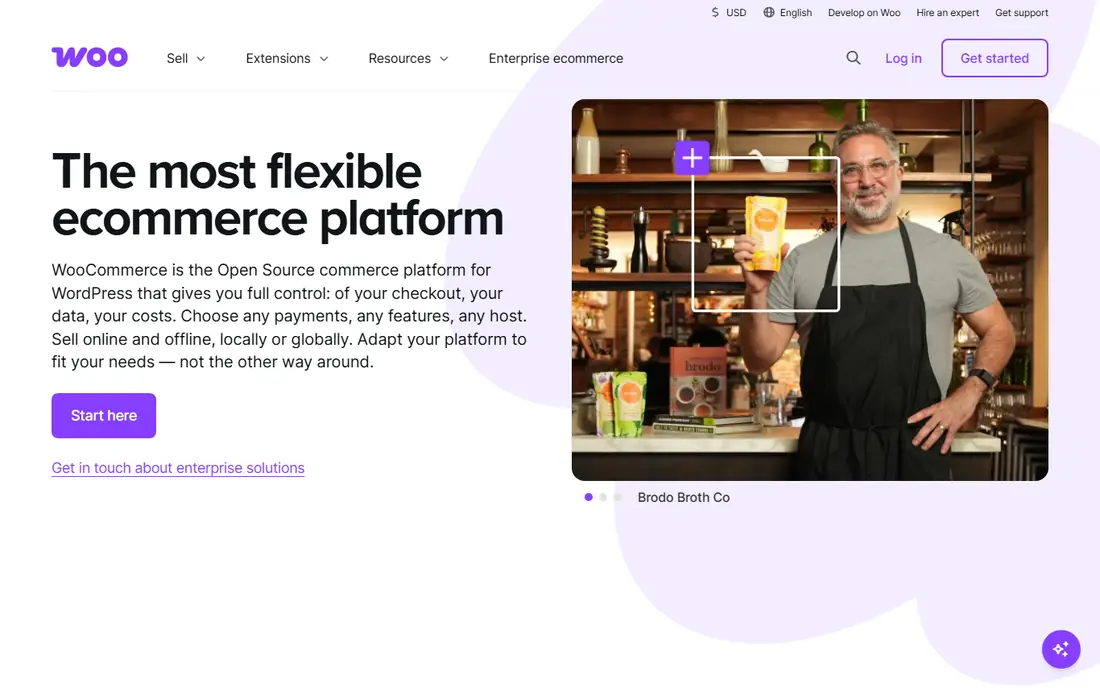
WooCommerce is the best SEO ecommerce software for control, because it runs on WordPress, the most flexible content platform for search. You own the URLs, the code, the structured data, and the blog, and plugins such as Yoast SEO and Rank Math give detailed control over titles, descriptions, sitemaps, and schema. Content-led stores, where blog posts and guides drive rankings, benefit most from this setup.
Control comes with responsibility. You pay for hosting separately, and you must manage updates, security, backups, and speed yourself or hire help. A poorly chosen theme or too many plugins can slow the site and hurt rankings. If you already use WordPress, or you plan to invest in content, WooCommerce gives SEO freedom no hosted platform matches.
- Full control over URLs, code, and content
- WordPress SEO plugins such as Rank Math and Yoast
- No platform transaction fees
- You manage hosting, security, and updates
- Plugin quality varies and can slow the site

BigCommerce suits stores that want strong SEO features without buying many apps. Built-in tools cover URL customization, redirects, sitemaps, and structured data, and the platform handles large catalogs, product variants, and B2B pricing natively. No extra platform transaction fee applies on any plan, which helps margins as sales grow.
The trade-offs are ecosystem size and sales caps. The app marketplace is smaller than Shopify, so a niche SEO tool may not exist, and each plan caps annual online sales, with an upgrade required when you pass the limit. For mid-size and growing stores that value built-in features over apps, BigCommerce is a strong SEO choice.
- Strong built-in SEO features
- No platform transaction fees
- Handles large catalogs and B2B well
- App ecosystem is smaller than Shopify
- Plans are capped by annual online sales
Wix has improved its SEO tools considerably, and small stores now get a workable setup without technical help. You can edit page titles, descriptions, URLs, and image alt text, connect a custom domain, and use the built-in SEO checklist to catch basic issues. The blog and visual builder suit small brands that want a good-looking store quickly.
Larger stores will feel the limits. URL control and advanced technical SEO options are narrower than on WooCommerce or Shopify, and very large catalogs are harder to manage. Wix is best for stores with a modest product count that value design and simplicity over deep SEO customization. For that audience, it ranks well enough when content and basics are done properly.
- Easy setup with SEO tools for titles, descriptions, and sitemaps
- Good for small catalogs
- Integrated blog
- Less flexible URL and code control
- Weaker for very large catalogs
Squarespace is the design-first choice for small stores and creators. Templates look polished on mobile, SEO basics such as titles, descriptions, sitemaps, and SSL are built in, and the blog integrates cleanly with the store. Brands that sell a small range of premium products, where visual presentation drives trust, will find it appealing.
SEO flexibility is the limit. Advanced control over structured data, URL patterns, and technical settings is narrower than on Shopify or WooCommerce, and the Basic commerce plan adds a 2 percent transaction fee, which drops on higher plans. If your store is small and design-led, Squarespace is a fine SEO platform. If search is your main growth channel, Shopify or WooCommerce will give you more room.
- Beautiful templates with built-in SEO basics
- Clean mobile design
- Integrated blogging and selling
- Narrower SEO customization than Shopify or WooCommerce
- Transaction fee on the Basic commerce plan
Adobe Commerce, formerly Magento, is the enterprise pick for SEO customization. It gives full control over URL structures, catalog architecture, multi-store setups, and technical SEO, which matters for large companies with complex product data and multiple brands. The agency and extension ecosystem is mature, and B2B features such as negotiated pricing and quotes are built in.
Cost and complexity set the floor. Pricing is custom and typically runs into five figures per year before development costs, and running the platform well needs dedicated developers. Small and mid-size stores will get better value from Shopify, BigCommerce, or WooCommerce. For enterprises with genuine complexity, Adobe Commerce offers SEO control that hosted platforms cannot match.
- Deep customization for URLs, catalogs, and technical SEO
- Strong for complex B2B and multi-store setups
- Large agency ecosystem
- Custom pricing and high total cost
- Needs a development team to run well
PrestaShop is a free, open-source ecommerce platform with a strong European base and solid SEO controls. You can customize URLs, meta titles, and descriptions, manage redirects, and extend the store with modules for structured data and performance. Like WooCommerce, it suits owners who want control without platform transaction fees.
Self-hosting brings the same responsibilities as WooCommerce: hosting, security, updates, and speed are yours to manage. The module marketplace varies in quality, and the English-speaking community is smaller than the WordPress ecosystem. For owners comfortable with open-source software, or for European stores that value PrestaShop's local ecosystem, it is a credible SEO platform.
- Free open-source software
- Good control over URLs and SEO settings
- Large module marketplace
- You manage hosting and updates
- Module quality varies
- Smaller community than WooCommerce
Ecwid solves a specific problem: adding a store to a site that already ranks well. Instead of rebuilding your website, you embed an Ecwid store into WordPress, Wix, Squarespace, or a plain HTML site, keeping your existing content and SEO intact. Product pages get SEO-friendly URLs, titles, and descriptions, and the free plan covers a small store.
The trade-off is depth. Ecwid is not a full website platform, so advanced SEO customization is narrower than on WooCommerce or Shopify, and larger stores may outgrow it. For a content site, blog, or business site that wants to start selling without a rebuild, Ecwid protects your existing rankings while adding commerce. That makes it a smart, low-risk SEO choice for its niche.
- Free plan for a small store
- Embeds into an existing website
- Built-in SEO basics for product pages
- Less control than a full platform
- Advanced SEO features need higher plans
How we picked these
We compared official pricing pages, feature documentation, and platform guides, focusing on URL control, structured data, speed, blogging, redirects, and sitemaps. We favored platforms that let owners edit the SEO basics without developer help, while noting honestly where advanced control needs code or apps.
We covered hosted, open-source, and embeddable platforms because stores start from different places. A content site adding a store has different needs from a new store built for search. We did not run live ranking tests, since rankings depend on content and competition as much as platform; our findings rest on platform capabilities and pricing.
How to choose an ecommerce platform for SEO
Start with where your traffic will come from. If search and content are your main growth channels, prioritize URL control, blogging, and structured data, which favors WooCommerce and Shopify. If paid ads and social drive most sales, platform SEO depth matters less, and ease of use and checkout speed matter more.
Next, test the basics before you migrate. Check that you can edit titles and descriptions in bulk, set 301 redirects, customize URLs, and add structured data without custom code. Measure page speed on a demo store, since speed affects both rankings and conversions. Finally, plan your migration carefully: map every old URL to a new one, keep your best content, and monitor rankings for a month after launch.
Sources
- https://www.shopify.com
- https://woocommerce.com
- https://www.bigcommerce.com
- https://www.wix.com
- https://www.squarespace.com
- https://business.adobe.com/products/commerce.html
- https://www.prestashop.com
- https://www.ecwid.com
- https://toolsmarketing.net/best-ecommerce-website-builder/
- https://rankite.com/blog/best-ecommerce-software