Best Ecommerce Platform for Small Business in 2026: 9 Platforms Compared
By ToolNimba Editorial Team November 6, 2026 11 min read

- Top pick
 Shopify
All-round small business stores
Starting price$29 per monthCheck out ShopifyRead our review - Runner-up
 WooCommerce
WordPress users who want control
Starting priceFreeCheck out WooCommerceRead our review - Also great
 BigCommerce
Growing stores and B2B
Starting price$29 per monthCheck out BigCommerceRead our review
How we researched this
We compared official pricing and feature pages, app store listings, privacy policies and public user reviews. Prices change, so check the provider's site before you pay.
Key takeaways
- Shopify is our pick for most small businesses because it combines ease of use, a large app store and built-in selling channels.
- WooCommerce is the best choice if you already use WordPress and want full control over your store and data.
- BigCommerce suits growing stores that want strong built-in features without paying platform transaction fees.
- Wix and Squarespace are best for small, design-led stores that need a website and a shop in one place.
- Square Online and Big Cartel are the cheapest ways to start, especially for local sellers and makers with small catalogs.
Quick comparison
| Name | Best for | Starting price | Free plan | |
|---|---|---|---|---|
| Shopify | All-round small business stores | $29 per month | Free trial | Visit |
| WooCommerce | WordPress users who want control | Free | Yes | Visit |
| BigCommerce | Growing stores and B2B | $29 per month | Free trial | Visit |
 Wix | Design-led small shops | $29 per month | Yes | Visit |
 Squarespace | Creative brands and portfolios | $19 per month | Free trial | Visit |
 Ecwid | Adding a store to an existing site | $5 per month | Yes | Visit |
 Square Online | Local sellers who also sell in person | Free | Yes | Visit |
 Big Cartel | Artists and makers | Free | Yes | Visit |
 Shift4Shop | Stores that want no platform fees | See website | Yes | Visit |
The best ecommerce platforms for small business
The right ecommerce platform depends on how you sell, how much control you want, and how much technical work you are willing to do. A hosted platform handles security and updates for you, while a self-hosted option gives you ownership at the cost of more maintenance. Here are nine platforms that cover that range.

Shopify is the safest default for most small businesses. The Basic plan costs $29 per month on annual billing, or $39 per month on monthly billing, and it includes hosting, security and a checkout that customers already trust. You can sell on your website, on social channels and in person with Shopify POS, and the app store covers reviews, subscriptions, email marketing and upsells that the core platform does not include.
The costs to watch are transaction fees and apps. Shopify charges no extra platform fee when you use Shopify Payments, but it adds a fee of 2 percent on Basic if you use a third-party payment provider, on top of card processing fees. Paid apps can also push the monthly bill well above the subscription price. Even with those costs, Shopify's combination of ease, reliability and room to grow makes it our pick for most new stores.
- Huge app ecosystem
- Built-in sales channels
- Reliable hosted checkout
- Extra transaction fee with third-party payment providers
- App costs add up
- Starter plan is not a full store
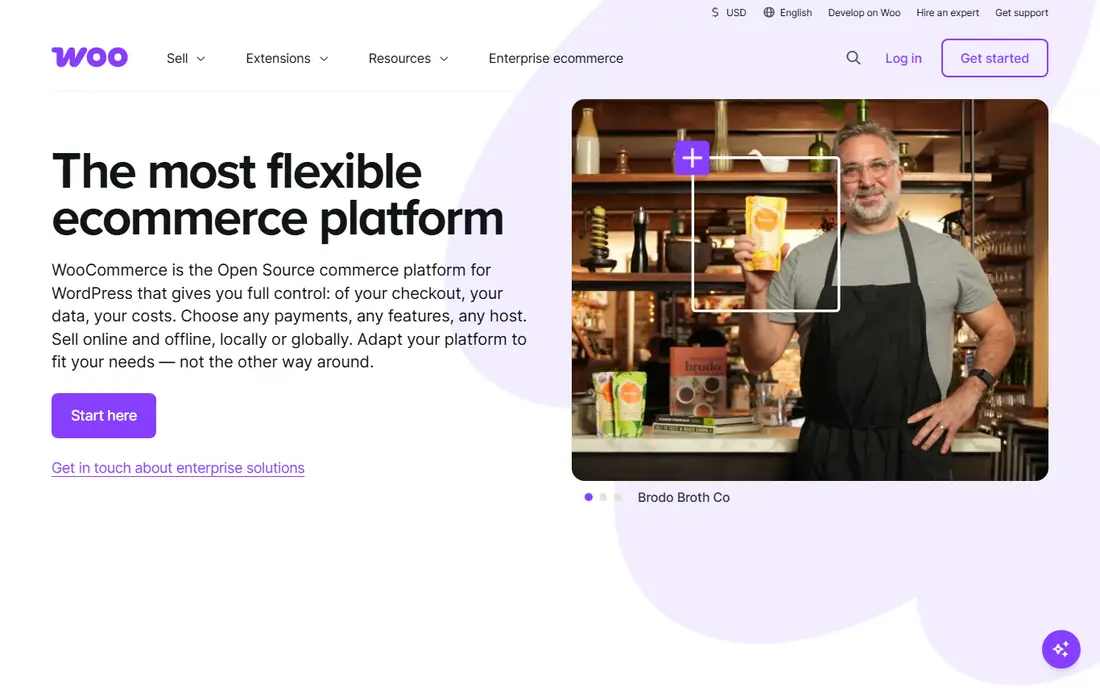
WooCommerce is a free plugin that turns a WordPress site into a full online store. The software itself costs nothing, although you pay separately for hosting, a domain name and payment processing, with typical hosting in the range of $10 to $30 per month for a small store. Because it is open source, you own your store, your data and your design choices in a way that hosted platforms do not allow.
That freedom comes with responsibility. You or a developer must keep WordPress, your theme and your plugins updated, and you must handle backups and security. For content-led businesses that already rely on WordPress for blogging and search traffic, that trade is worth it, since WooCommerce gives unmatched control over product pages, SEO and checkout. If you want a store with no technical upkeep, a hosted platform will suit you better.
- Free open-source plugin
- Full ownership of store and data
- Huge extension library
- You arrange hosting and maintenance
- Setup takes more technical skill
- Costs vary with extensions

BigCommerce is built for stores that plan to grow. The Core plan costs $29 per month on annual billing, or $39 per month monthly, and it includes hosting plus a wider set of built-in features than many rivals, such as product options, discounts and multi-channel selling, without needing as many paid apps. It also charges no platform transaction fee, which helps higher-volume sellers keep more of each order.
The main limits are plan thresholds and the app ecosystem. Each plan has an annual online sales limit, and you move to a higher plan as sales grow, so fast-growing stores should price that in. The app store is smaller than Shopify's, although the stronger built-in feature set reduces the need for apps. If you expect steady growth or sell to other businesses, BigCommerce is a strong alternative to Shopify.
- No platform transaction fees
- Strong built-in features
- Good B2B tools
- Smaller app store than Shopify
- Plan limits tied to annual sales volume
- Learning curve for beginners
Wix suits small businesses that want a good-looking website and a shop in one place without learning a complex platform. The Core plan, which adds ecommerce, costs $29 per month on annual billing, and the drag-and-drop editor makes it easy to adjust layouts, add product pages and publish quickly. The free plan lets you explore the builder, although you cannot accept payments on it.
The trade-off is depth. Wix ecommerce is fine for small catalogs, but it lacks the app depth and advanced selling tools of Shopify or BigCommerce, and a Wix site cannot be moved to another host if you outgrow it. Card processing fees still apply on every order. If your store is small, your catalog is modest, and design matters as much as selling features, Wix is an easy and pleasant choice.
- Easy drag-and-drop builder
- Good design templates
- Free plan for exploring
- Free plan cannot sell
- Ecommerce features are lighter than Shopify
- Site cannot move to another host
Squarespace is the design-first option for creatives, service businesses and small brands. The Basic plan costs $19 per month on annual billing and lets you sell products, while the Core plan at $29 per month on annual billing removes the Squarespace transaction fee. Templates are consistently polished, and blogging, portfolios and scheduling sit alongside commerce in one subscription.
The limits show up at scale. The Basic plan adds a 2 percent transaction fee on top of payment processing, the app ecosystem is smaller than Shopify's, and large or complex catalogs are harder to manage. Squarespace also offers point-of-sale tools for sellers who meet customers in person. If your brand presentation matters most and your catalog is small, Squarespace produces some of the best-looking small stores available.
- Polished templates
- Strong for portfolios and services
- Built-in blogging and commerce
- 2 percent transaction fee on Basic
- Smaller app ecosystem
- Less flexible for large catalogs
Ecwid, now part of Lightspeed, takes a different approach: instead of building a new site, it adds a store to the website, blog or social page you already have. The Starter plan costs $5 per month on annual billing for up to 10 products, and the Venture plan costs $29 per month on annual billing for larger catalogs. A free plan covers very small catalogs, which makes Ecwid a low-risk way to test selling online.
The catch is that Ecwid is not a full website builder, so if you need a brand-new site from scratch, a platform like Wix or Squarespace fits better. Design control is also more limited than a dedicated builder, since the store adapts to your existing site. For bloggers, creators and businesses with a site they already like, Ecwid is the path of least resistance to taking orders.
- Embeds in an existing website
- Free plan for small catalogs
- Sells on social channels too
- Not a full website builder
- Paid plans rise with catalog size
- Fewer design controls than Wix
Square Online is the natural choice if you already use Square for in-person payments. The free plan lets you build a store and take orders at no monthly cost, with online card processing at 3.3 percent plus 30 cents per transaction, while the Plus plan costs $49 per location per month and lowers the card rate to 2.9 percent plus 30 cents. Inventory, orders and customer data sync between your shop counter and your website.
The free plan is genuinely useful, but it carries Square branding limits and the higher card rate, so high-volume sellers should price the Plus plan. The app and integration range is also narrower than Shopify's. For cafes, boutiques, markets and service businesses that sell both in person and online, Square Online keeps everything on one bill and one system.
- Free plan to start selling
- Strong in-person tools
- Simple setup for Square users
- Higher card rate on the free plan
- Paid Plus plan costs $49 per location
- Fewer apps than Shopify
Big Cartel is built for artists, makers and independent brands with small catalogs. The free Gold plan covers up to 5 products, and the Platinum plan costs $15 per month after a trial for larger catalogs. Setup is deliberately simple: add products, set prices, connect a payment provider and publish, without wading through features you will never use.
That simplicity is also the limit. Big Cartel lacks the marketing, discount and inventory depth of larger platforms, and it is not the right home for a store with hundreds of products or complex variants. For a painter, jeweler or band selling a focused range, though, the low cost and lack of clutter are genuine advantages. It is one of the cheapest honest ways to start selling online.
- Free plan for up to 5 products
- Simple setup
- Made for independent makers
- Limited features for larger stores
- Small app range
- Not suited to complex catalogs
Shift4Shop offers a free ecommerce plan for US sellers who process payments through Shift4, which makes it one of the few full-featured platforms with no monthly subscription and no platform transaction fee. The builder covers product pages, discounts, shipping and SEO tools, and paid plans add more features for larger stores. For a new store watching every dollar, that combination is hard to ignore.
The main condition is the payment tie-in: the free plan requires Shift4 payments, so switching payment providers later means moving to a paid plan. Shift4Shop also has a smaller app community and fewer tutorials than Shopify, which can slow down troubleshooting. If you are comfortable with Shift4 as your payment provider and want a full store without a monthly fee, it is a strong value pick.
- Free plan when using Shift4 payments
- Full-featured store builder
- No platform transaction fees on that plan
- Free plan ties you to Shift4 payments
- Pricing varies by plan
- Smaller community than Shopify
How we picked these
We compared official pricing pages, feature pages and recent 2026 platform comparisons, and we favored platforms with a real product, published pricing or a clear free plan, and a track record serving small businesses. We noted transaction fees and payment processing separately, since those costs often matter more than the subscription price. We did not claim hands-on testing; our comparison is based on vendor pages, pricing pages and public reviews.
Working out the true monthly cost
Do not compare subscription prices alone. Add the subscription, the card processing rate on your expected sales, any platform transaction fee, and the cost of apps you actually need, such as reviews, email marketing or subscriptions. A $19 plan with a 2 percent transaction fee can cost more than a $29 plan with no platform fee once sales grow, so run the numbers on your expected monthly revenue before choosing.
Also think about where your store will be in two years. Migrating a store means rebuilding pages, redirecting URLs and reconfiguring SEO, so it pays to pick a platform with room to grow, even if a cheaper option looks tempting today. If you plan to sell in person, check point-of-sale support. If content drives your sales, check blogging and SEO tools. The cheapest platform today is rarely the cheapest after a migration.
Sources
- https://www.shopify.com
- https://woocommerce.com
- https://www.bigcommerce.com
- https://www.wix.com
- https://www.squarespace.com
- https://www.ecwid.com
- https://squareup.com
- https://bigcartel.com
- https://www.shift4shop.com
- https://rankite.com/blog/best-ecommerce-software
- https://www.alidrop.co/blogs/best-ecommerce-website-builders
- https://techilu.com/best-cms-for-ecommerce/
Frequently asked questions
What is the best ecommerce platform for a small business?
Shopify is the best all-round choice for most small businesses because it is easy to use, reliable and has a large app store. WooCommerce is better if you use WordPress and want full control, while BigCommerce suits growing stores that want strong built-in features and no platform transaction fees.
What is the cheapest ecommerce platform for small business?
Big Cartel and Square Online both offer free plans for small catalogs, and Ecwid starts at $5 per month on annual billing. WooCommerce software is free, although hosting and payment processing still cost money. Shift4Shop is also free when you use Shift4 payments.
Is Shopify or WooCommerce better for small business?
Shopify is easier because hosting, security and updates are handled for you, while WooCommerce gives you more control and ownership but requires you to manage hosting and maintenance. Choose Shopify if you want simplicity, and WooCommerce if you already use WordPress or need deep customization.
Do ecommerce platforms charge transaction fees?
Some do, and some do not. Shopify charges an extra fee if you use a third-party payment provider instead of Shopify Payments, Squarespace charges 2 percent on its Basic plan, and BigCommerce charges no platform transaction fee. Card processing fees apply on every platform, usually around 2.9 percent plus 30 cents per order.
Can I sell on social media with these platforms?
Yes, most of them support selling on social channels. Shopify, Wix, Squarespace, Ecwid and Square Online all offer social selling or link-in-bio options, although the exact channels and features vary by plan. Check the plan details if social selling is central to your business.
How hard is it to switch ecommerce platforms later?
Switching is possible but takes work, since you must move products, customers and order history, rebuild pages, and redirect old URLs to protect search rankings. That is why we recommend choosing a platform with room to grow rather than picking only on the lowest starting price.