Best Ecommerce Shipping Software in 2026: 9 Tools Compared
By ToolNimba Editorial Team November 7, 2026 10 min read

- Top pick
 ShipStation
Multichannel sellers
Starting price$14.99 per monthCheck out ShipStationRead our review - Runner-up
 Shippo
Small and mid-size stores
Starting priceFreeCheck out ShippoRead our review - Also great
 Pirate Ship
USPS and UPS shippers
Starting priceFreeCheck out Pirate ShipRead our review
How we researched this
We compared official pricing and feature pages, app store listings, privacy policies and public user reviews. Prices change, so check the provider's site before you pay.
Key takeaways
- ShipStation suits multichannel sellers, while Shippo and Pirate Ship suit small stores with low volume.
- Cross-border sellers should shortlist Easyship for duties and courier choice.
- Developer teams should look at EasyPost, while brands focused on tracking should look at AfterShip.
- Free plans help at low volume, but label caps and tier jumps matter as orders grow.
Quick comparison
| Name | Best for | Starting price | Free plan | |
|---|---|---|---|---|
| ShipStation | Multichannel sellers | $14.99 per month | Free trial | Visit |
| Shippo | Small and mid-size stores | Free | Yes | Visit |
| Pirate Ship | USPS and UPS shippers | Free | Yes | Visit |
 Easyship | Cross-border sellers | Free | Yes | Visit |
 EasyPost | Developer-led shipping | Free | Yes | Visit |
 Veeqo | Amazon and multichannel sellers | Free | Yes | Visit |
 ShippingEasy | Small US sellers | Free | Yes | Visit |
 AfterShip | Post-purchase tracking | Free | Yes | Visit |
 Ordoro | Shipping plus inventory | $59 per month | Free trial | Visit |
The best ecommerce shipping software
We compared shipping tools for online stores by carrier coverage, label costs, automation, and free plans, so you can match the tool to your order volume.
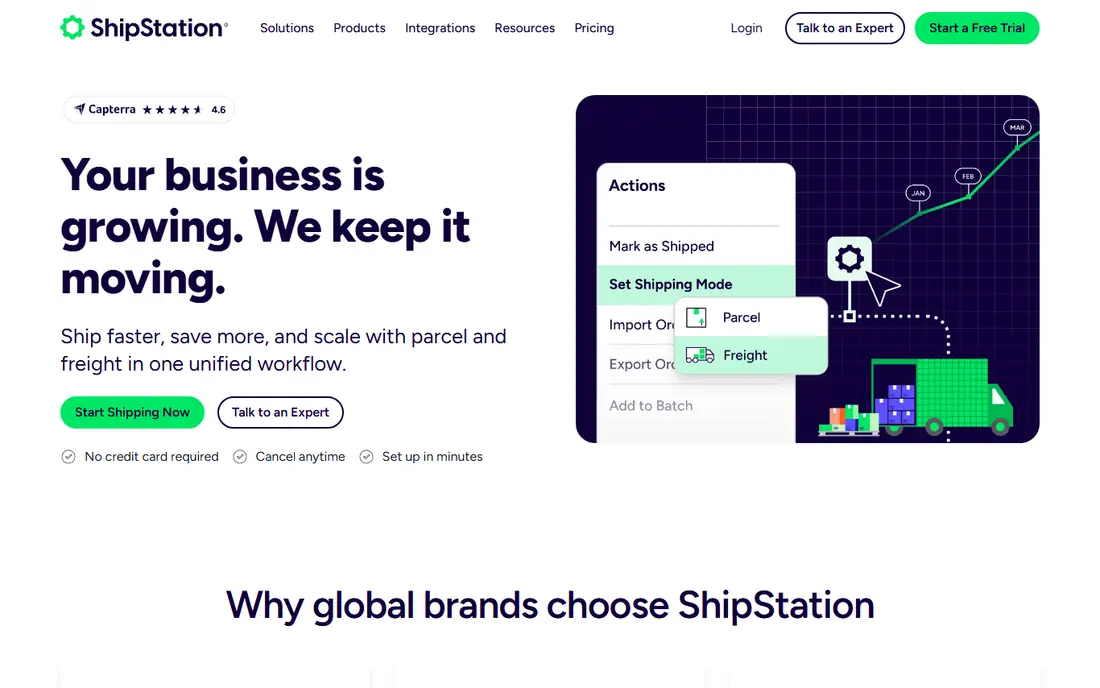
For sellers on several channels, ShipStation pulls orders together and compares carrier rates in one place. ShipStation covers the basics you would expect for this kind of tool, and its pricing page and feature pages set out what is included at each level. We compared those pages with app store listings and public help pages before including it here, and we kept it on the list only because it clearly fits this topic today.
The catch is volume pricing, so a busy store should check the tier it will land in after a few months. Before you commit, check the current pricing page and the limits on the plan you are considering, because caps on users, events, or volume change the real cost. If you can, run a short trial with a real example from your own work, and look closely at how exports, support, and cancellation work.
- Many carrier and store integrations
- Automation rules
- Returns portal on mid plans
- Price rises with shipment volume
- Own carrier accounts need higher plans
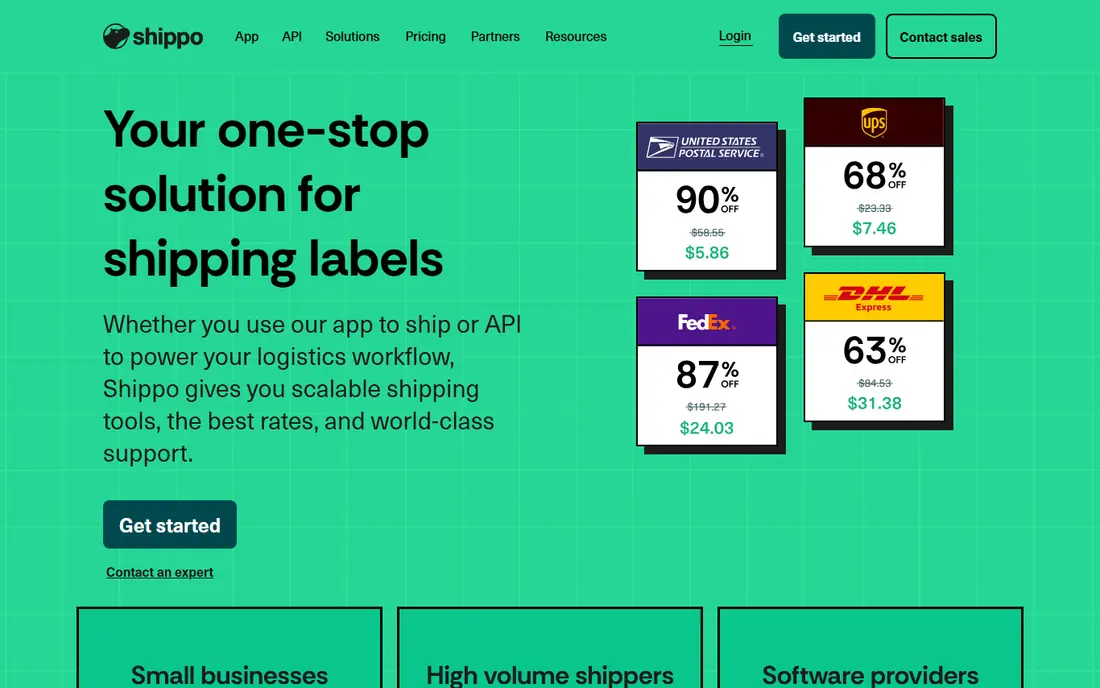
For a small store that wants discounted rates with little setup, Shippo is an easy first tool. Shippo covers the basics you would expect for this kind of tool, and its pricing page and feature pages set out what is included at each level. We compared those pages with app store listings and public help pages before including it here, and we kept it on the list only because it clearly fits this topic today.
The catch is the free label cap, so daily shippers will need the Pro plan. Before you commit, check the current pricing page and the limits on the plan you are considering, because caps on users, events, or volume change the real cost. If you can, run a short trial with a real example from your own work, and look closely at how exports, support, and cancellation work.
- Free starter plan
- Discounted carrier rates
- Simple label printing and API
- Free plan capped at 30 labels a month
- Returns are labels only
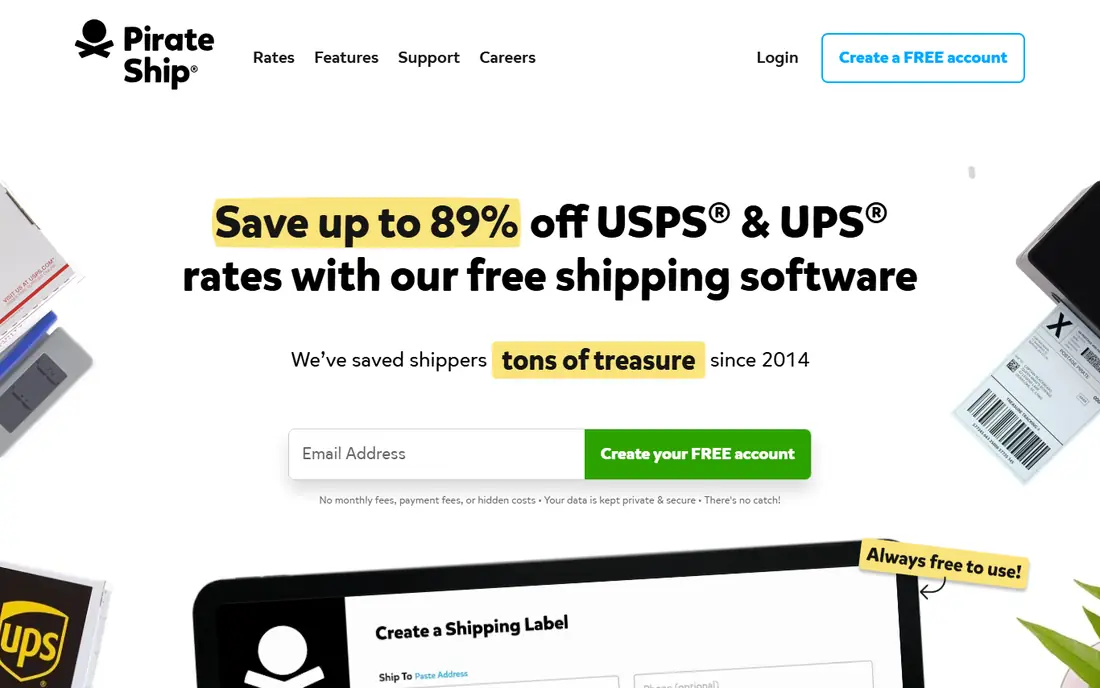
For a small seller who ships mainly with USPS or UPS, Pirate Ship keeps costs at postage only. Pirate Ship covers the basics you would expect for this kind of tool, and its pricing page and feature pages set out what is included at each level. We compared those pages with app store listings and public help pages before including it here, and we kept it on the list only because it clearly fits this topic today.
The catch is carrier choice, since sellers who need FedEx or DHL must use another tool. Before you commit, check the current pricing page and the limits on the plan you are considering, because caps on users, events, or volume change the real cost. If you can, run a short trial with a real example from your own work, and look closely at how exports, support, and cancellation work.
- Free to use
- Discounted USPS and UPS rates
- Simple interface
- Only USPS and UPS
- Fewer automation tools than full platforms
For stores selling abroad, Easyship helps compare couriers and handle duties at checkout. Easyship covers the basics you would expect for this kind of tool, and its pricing page and feature pages set out what is included at each level. We compared those pages with app store listings and public help pages before including it here, and we kept it on the list only because it clearly fits this topic today.
The catch is that the free plan suits testing more than high-volume shipping. Before you commit, check the current pricing page and the limits on the plan you are considering, because caps on users, events, or volume change the real cost. If you can, run a short trial with a real example from your own work, and look closely at how exports, support, and cancellation work.
- Many courier services worldwide
- Duties and taxes tools
- Free starter plan
- Paid plans needed for higher volume
- Returns handling is partial
For teams building shipping into their own system, EasyPost offers a flexible API and broad carrier access. EasyPost covers the basics you would expect for this kind of tool, and its pricing page and feature pages set out what is included at each level. We compared those pages with app store listings and public help pages before including it here, and we kept it on the list only because it clearly fits this topic today.
The catch is that you build the workflows yourself, so it suits technical teams best. Before you commit, check the current pricing page and the limits on the plan you are considering, because caps on users, events, or volume change the real cost. If you can, run a short trial with a real example from your own work, and look closely at how exports, support, and cancellation work.
- API-first shipping
- Many carriers
- Free tier for lower volume
- Developer skills needed
- Label tool is less suited to non-technical teams
For Amazon sellers who also sell elsewhere, Veeqo ties inventory and shipping together at no subscription cost. Veeqo covers the basics you would expect for this kind of tool, and its pricing page and feature pages set out what is included at each level. We compared those pages with app store listings and public help pages before including it here, and we kept it on the list only because it clearly fits this topic today.
The catch is that free does not mean unlimited in every area, so check order and user limits. Before you commit, check the current pricing page and the limits on the plan you are considering, because caps on users, events, or volume change the real cost. If you can, run a short trial with a real example from your own work, and look closely at how exports, support, and cancellation work.
- Free platform
- Inventory and shipping in one place
- Amazon links
- Some advanced features need paid options
- Support varies by plan
For a small US store that wants batch labels and rate comparison, ShippingEasy is a low-risk start. ShippingEasy covers the basics you would expect for this kind of tool, and its pricing page and feature pages set out what is included at each level. We compared those pages with app store listings and public help pages before including it here, and we kept it on the list only because it clearly fits this topic today.
The catch is that growth brings paid tiers, so track how fast your label count rises. Before you commit, check the current pricing page and the limits on the plan you are considering, because caps on users, events, or volume change the real cost. If you can, run a short trial with a real example from your own work, and look closely at how exports, support, and cancellation work.
- Free starter plan
- USPS, UPS, FedEx, and DHL support
- Batch labels
- Free plan limits apply
- Advanced automation needs paid plans
For brands that care about tracking and returns after checkout, AfterShip focuses on that post-purchase stage. AfterShip covers the basics you would expect for this kind of tool, and its pricing page and feature pages set out what is included at each level. We compared those pages with app store listings and public help pages before including it here, and we kept it on the list only because it clearly fits this topic today.
The catch is that it is not a full label platform for every seller, so pair it with a label tool if needed. Before you commit, check the current pricing page and the limits on the plan you are considering, because caps on users, events, or volume change the real cost. If you can, run a short trial with a real example from your own work, and look closely at how exports, support, and cancellation work.
- Tracking pages and notifications
- Returns tools
- Many carriers for tracking
- Label features are an add-on for some users
- Paid plans needed for scale
For sellers who need inventory control alongside shipping, Ordoro reduces the need for separate systems. Ordoro covers the basics you would expect for this kind of tool, and its pricing page and feature pages set out what is included at each level. We compared those pages with app store listings and public help pages before including it here, and we kept it on the list only because it clearly fits this topic today.
The catch is price, since the entry plan is higher than simple label tools. Before you commit, check the current pricing page and the limits on the plan you are considering, because caps on users, events, or volume change the real cost. If you can, run a short trial with a real example from your own work, and look closely at how exports, support, and cancellation work.
- Shipping automation plus inventory and returns in one tool
- Many integrations
- Higher starting price than label-only tools
- Smaller sellers may not need inventory tools
How we picked these
We compared official feature pages, pricing pages, and app store listings, and we kept only products that exist today and clearly fit the topic. We checked starting prices and free tiers where the vendor publishes them, and we used See website where a price was not published or depended on a quote. We did not claim hands-on testing, and we weighed who each product suits, one clear strength, and one honest weakness for every entry.
How to pick shipping software by volume
Start with the job, not the feature list. Write down the one task you need to finish each week, the number of people or items involved, and the budget you can hold for a year. That short list rules out most options faster than any comparison chart, and it stops you paying for capacity you will not use.
Next, check the limits that hide behind the headline price. Look for caps on users, seats, shipments, events, or pageviews, and for fees that apply per item or per transaction. A low monthly price can become expensive once volume grows, while a higher flat price can be cheaper for a busy team. Read the cancellation terms too, so you know what happens to your data if you leave.
Finally, test the parts you will touch every day. The setup flow, the mobile app, the export options, and the support response matter more than a long list of extra tools. Pick the option that your team will actually use, even if a rival looks stronger on paper, because an unused tool helps no one.
Also check whether you can use your own carrier accounts, since negotiated rates can beat discounted platform rates at higher volume.
Sources
Frequently asked questions
What is the best shipping software for ecommerce?
ShipStation suits multichannel sellers, Shippo suits small stores, and Easyship suits cross-border sellers. Your order volume and carrier mix decide the winner.
Which ecommerce platform has the best shipping?
Shopify, WooCommerce, and Amazon each offer built-in shipping, but dedicated tools like ShipStation and Shippo add rate comparison and automation. Compare the built-in option with a dedicated tool before you pay.
What is the best shipping service for ecommerce beginners?
Shippo and Pirate Ship suit beginners because they are free to start and simple to use. You can learn label printing without a monthly fee.
What is the best shipping app for ecommerce on a budget?
Pirate Ship costs only postage for USPS and UPS, while Shippo offers a free starter plan. Both suit low-volume sellers.
What is the top shipping software for high volume?
ShipStation and Ordoro suit higher volume because they add automation, inventory, and multi-warehouse tools. Check tier pricing at your actual shipment count.