Best EMR Software in 2026: 9 Systems Compared
By ToolNimba Editorial Team November 7, 2026 9 min read

- Top pick
 Epic
Hospitals and health systems
Starting priceSee websiteCheck out EpicRead our review - Runner-up
 Oracle Health
Large health systems
Starting priceSee websiteCheck out Oracle HealthRead our review - Also great
 athenahealth
Ambulatory groups
Starting priceSee websiteCheck out athenahealthRead our review
How we researched this
We compared official pricing and feature pages, app store listings, privacy policies and public user reviews. Prices change, so check the provider's site before you pay.
Key takeaways
- Epic and Oracle Health suit hospitals and large health systems, with enterprise pricing handled by quote.
- athenahealth suits ambulatory groups that want charting and revenue cycle management in one network-based system.
- eClinicalWorks offers a published per-provider price, which makes budgeting easier for multi-specialty practices.
- SimplePractice and Practice Fusion suit smaller practices, with lower entry prices and simpler workflows.
Quick comparison
| Name | Best for | Starting price | Free plan | |
|---|---|---|---|---|
| Epic | Hospitals and health systems | See website | No | Visit |
| Oracle Health | Large health systems | See website | No | Visit |
| athenahealth | Ambulatory groups | See website | No | Visit |
 eClinicalWorks | Multi-specialty practices | $499 per provider per month | No | Visit |
 DrChrono | Mobile charting on iPad | $199 per provider per month | Free trial | Visit |
 Practice Fusion | Budget general practice | $199 per provider per month | Free trial | Visit |
 SimplePractice | Therapists and private practice | $29 per month | Free trial | Visit |
 AdvancedMD | Multi-specialty billing | $169 per provider per month | No | Visit |
 ModMed | Specialty practices | $500 per provider per month | No | Visit |
The best EMR software
EMR software, also called EHR software, holds patient records, supports charting and prescribing, and connects to billing and scheduling. We compared official product pages, pricing information, and public reviews, focusing on fit by practice size and specialty rather than feature count alone. This is general information, not medical or legal advice, and practices should confirm HIPAA, certification, and contract terms with each vendor.
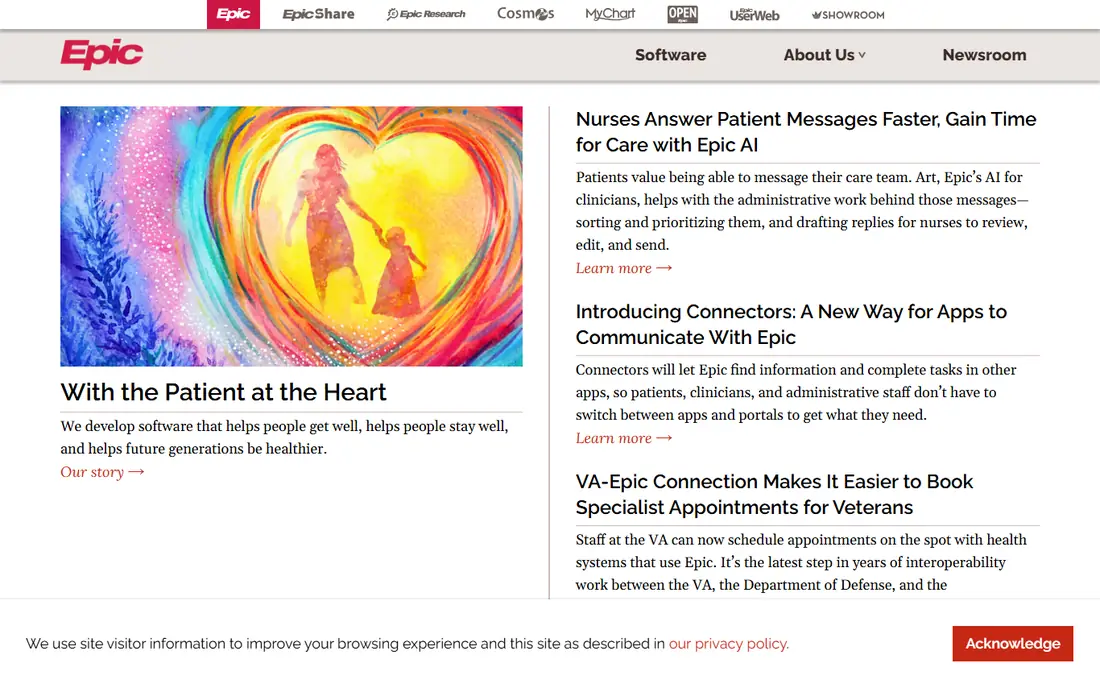
Epic is the standard choice for large hospitals and health systems that need one record across inpatient, ambulatory, emergency, and specialty care. Its MyChart portal gives patients access to records, messaging, and scheduling, while Care Everywhere tools support record exchange with other organisations. AI documentation and reporting features are also built into the platform for large teams.
The scale is the drawback for smaller buyers. Pricing is handled by quote, implementation involves major planning and training, and a small clinic will rarely need the full platform. Epic also offers Community Connect through a sponsoring health system, which lets smaller practices use an existing Epic instance, but terms depend on the sponsor. For a hospital system, Epic is the benchmark. For a solo practice, it is usually too much.
- Unified inpatient and ambulatory records
- MyChart patient portal
- Broad interoperability tools
- Quote-based enterprise pricing
- Implementation is a major project
- Smaller practices may find it too large
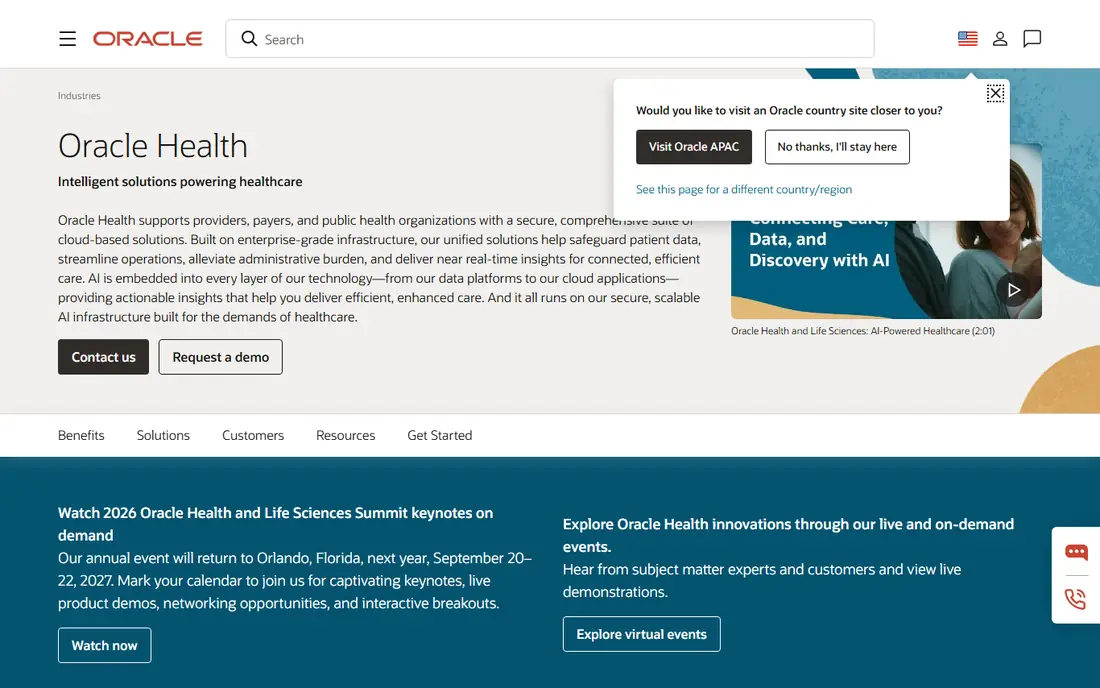
Oracle Health, built around the Millennium EHR, serves hospitals and large health systems that need inpatient clinical workflows, ordering, and enterprise reporting. Oracle Cloud hosting and analytics options appeal to systems already invested in Oracle infrastructure. For a large organisation renewing a Millennium contract, continuity and integration are real advantages.
Smaller practices should look elsewhere. Pricing is quote-based, implementation is enterprise-scale, and the roadmap between hosted Millennium and newer cloud EHR offerings needs careful clarification during procurement. Ask for a written scope that covers hosting, migration, training, and support before comparing Oracle Health with Epic or a mid-market system.
- Millennium hospital EHR with broad clinical tools
- Oracle Cloud hosting options
- Enterprise analytics
- Quote-based pricing
- Migration and hosting decisions are complex
- Smaller practices are not the target
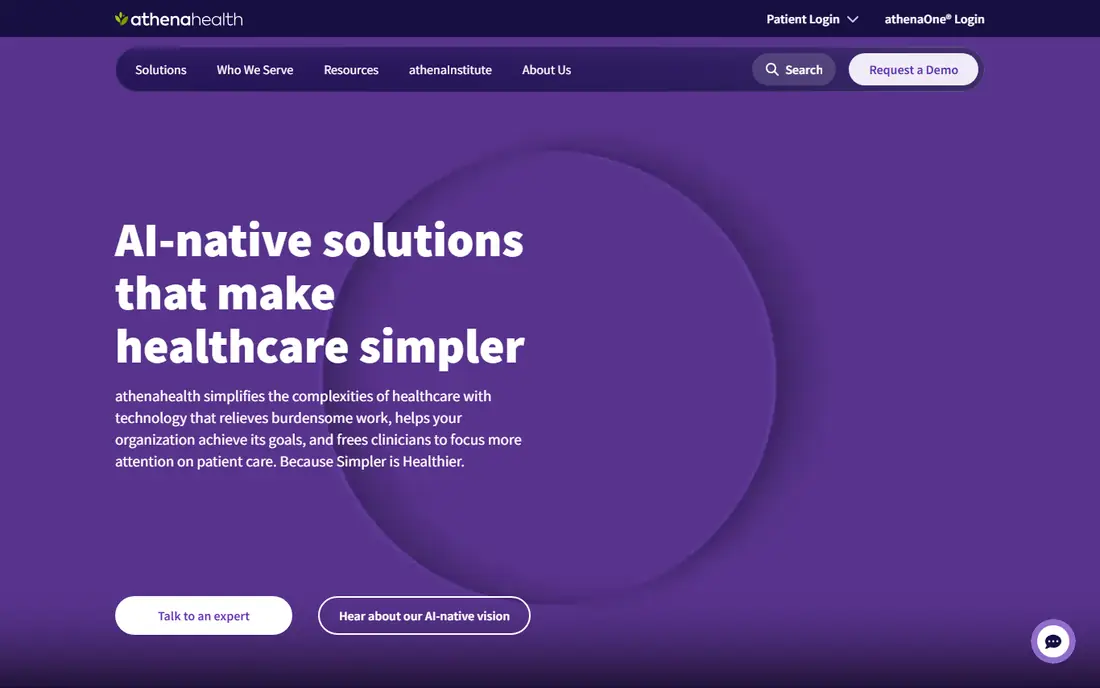
athenahealth, through athenaOne, combines a cloud EHR with practice management and revenue cycle services for ambulatory groups. The network model means updates and payer rule changes flow through the shared platform, and the company handles much of the billing workflow. That combination suits independent and multi-specialty groups that want charting and collections in one contract.
Pricing is quote-based and often structured as a percentage of collections, which means costs rise as revenue grows. Customisation is also more limited than in some specialty systems, so practices with unusual workflows should test templates and reporting during a demo. For insurance-heavy primary care and multi-specialty groups, athenahealth remains a strong, well-supported option.
- Cloud ambulatory EHR with strong revenue cycle support
- Network-based updates
- Patient engagement tools
- Quote-based pricing, often as a share of collections
- Customisation is more limited than some rivals
eClinicalWorks is one of the few major EMR vendors with a published starting price, listed at $499 per provider per month for EHR only, with a higher tier for EHR plus practice management and an optional revenue cycle service based on collections. That transparency helps a practice build a budget before entering a sales process. The platform covers charting, e-prescribing, labs, telehealth, and patient engagement through its healow portal and mobile apps.
The published price is not the full cost. Add-ons, implementation, training travel, and messaging features can add expense, and the interface has a learning curve for new staff. Still, for a multi-specialty ambulatory practice that wants a single integrated system with a clear starting price, eClinicalWorks is a practical shortlist entry.
- Published per-provider pricing
- Integrated practice management and telehealth
- Patient portal and mobile app
- Add-ons and training costs vary
- Interface can feel busy
- Contract terms need careful review
DrChrono built its reputation on mobile-first design, and it still feels most natural for providers who chart on an iPad. The EHR, practice management, billing, and patient portal sit in one system, with telehealth and e-prescribing included. Customisable SOAP note templates help a practice shape documentation without a desktop-bound workflow.
Pricing is tiered and quote-based in practice, with third-party comparisons listing around $199 per provider per month as a starting point. Support and customisation draw mixed comments in public reviews, so test the exact plan you would buy, including billing and template needs. For a mobile, modern practice, DrChrono offers a distinctive workflow that desktop-first systems do not match.
- IPad-first charting and mobile workflow
- Integrated billing and telehealth
- Customisable templates
- Customisation limits for complex specialties
- Support quality varies in public reviews
- Pricing varies by plan
Practice Fusion, now part of Veradigm, is a budget-friendly cloud EHR for solo and small general practices. It covers charting with specialty templates, e-prescribing, lab connections, and claim tools, with a per-provider price listed around $199 per month in third-party comparisons. The web-based interface is easy to reach from any computer, which suits small offices without IT staff.
It is no longer free, and its feature set can feel older than newer competitors, with public reviews noting support and interface frustrations. Billing services and add-ons also raise the total beyond the base licence. For a cost-sensitive general practice that needs solid fundamentals without enterprise complexity, Practice Fusion remains a reasonable option.
- Straightforward cloud EHR for general practice
- E-prescribing and lab integrations
- Predictable per-provider pricing
- Feature set can feel dated
- Support draws mixed reviews
- Billing add-ons raise total cost
SimplePractice is the leading choice for therapists, counsellors, and small private practices, with pricing from $29 per month for solo clinicians and higher tiers for growing practices. It combines scheduling, notes, HIPAA-compliant video sessions, online booking, and payment processing in a clean interface that a solo provider can learn quickly. Support also draws positive comments in public reviews, which matters without an IT team.
It is not a general medical EMR. Complex medical charting, hospital workflows, and deep specialty templates belong in systems such as Epic, eClinicalWorks, or ModMed. For behavioural health and private practice, however, SimplePractice offers the best balance of price, simplicity, and included telehealth on this list.
- Clean interface for behavioural health
- HIPAA-compliant telehealth
- Online booking and streamlined billing
- Limited customisation for medical specialties
- Third-party integrations are thinner
- Not built for hospitals
AdvancedMD suits independent practices and multi-specialty groups that need one cloud system for EHR, scheduling, billing, and reporting. Its billing tools, claim scrubbing, and dashboards help a growing practice track revenue without a separate billing platform. Third-party comparisons list a starting point around $169 per provider per month, with higher tiers for added features.
Exact pricing depends on modules, providers, and billing services, so a quote is essential for budgeting. New staff may also need training to use the full feature set well. For a practice that values integrated billing and is willing to invest in setup, AdvancedMD is a strong mid-market alternative to athenahealth and eClinicalWorks.
- Unified EHR, practice management, and billing
- Strong scheduling and reporting
- Scalable for growing groups
- Pricing varies by configuration
- Learning curve for new staff
- Quote needed for exact total
ModMed, formerly Modernizing Medicine, builds specialty-specific EHR content for practices such as dermatology, orthopaedics, ophthalmology, gastroenterology, and plastic surgery. Its EMA platform learns provider documentation habits and suggests codes, which can reduce repetitive entry for high-volume specialty clinics. EHR, practice management, billing, analytics, and patient engagement sit in one suite.
The price reflects that focus, with third-party comparisons listing around $500 per provider per month as a starting point, and setup costs can be significant for smaller practices. Primary care, behavioural health, and urgent care practices should look elsewhere, since ModMed is not built for them. For a specialty practice with high throughput, the tailored templates and workflows are hard to replicate in a generic system.
- Specialty-specific content for dermatology, orthopaedics, and more
- AI-assisted documentation
- All-in-one suite
- High per-provider price
- Specialty focus excludes primary care
- Setup costs can be significant
How we picked these
We compared official product pages, pricing information, and public reviews, and we favoured systems that are actively sold in the United States, support HIPAA-compliant workflows, and fit a clear practice type. Where pricing is quote-based or based on collections, we say so rather than presenting an estimate as a list price. Practices should confirm certification, data migration, and contract terms during procurement.
How to choose by practice type
Match the system to your setting first. Hospitals need Epic or Oracle Health. Ambulatory groups need athenahealth, eClinicalWorks, or AdvancedMD. Specialty clinics should test ModMed. Small general practices can start with Practice Fusion or DrChrono, while therapists should start with SimplePractice. A system that fits your specialty will save more time than a generic system with a longer feature list.
Test charting, billing, and migration together
Run a demo with your own visit types, including a new patient, a follow-up, a prescription refill, and a claim. Check how long charting takes, how billing handles denials, and what migration from your current system includes. A system that charts quickly but bills poorly will cost you in a different part of the practice.
Sources
Frequently asked questions
What is the best EMR software for a small practice?
SimplePractice is best for therapists and solo private practices, while Practice Fusion and DrChrono suit small general medical practices. Both offer lower entry prices than hospital systems, with simpler setup and cloud access.
How much does EMR software cost?
Costs range from $29 per month for SimplePractice to $499 or more per provider per month for eClinicalWorks, with Epic, Oracle Health, and athenahealth priced by quote. Billing services, implementation, training, and add-ons can raise the total well above the base licence.
What is the difference between EMR and EHR software?
The terms are often used interchangeably in the United States, with EHR now the more common term for a digital record shared across providers. Both refer to systems that store patient records, support charting and prescribing, and connect to billing and scheduling.
Do these systems support telehealth?
Yes, most systems here include telehealth or integrate with a video platform, including eClinicalWorks, DrChrono, SimplePractice, and athenahealth. Confirm whether telehealth is included in your plan or requires an add-on, and check HIPAA and consent features before use.
How long does it take to switch EMR systems?
Switching can take weeks for a small practice and many months for a hospital system, depending on data migration, training, and workflow changes. Ask each vendor for a written implementation timeline, migration scope, and training plan before signing.