Best Fleet Management Software in 2026: 9 Products Compared
By ToolNimba Editorial Team October 31, 2026 8 min read

- Top pick
 Samsara
All-in-one telematics and safety
Starting priceSee websiteCheck out SamsaraRead our review - Runner-up
 Verizon Connect
Large fleets and support
Starting priceSee websiteCheck out Verizon ConnectRead our review - Also great
 Geotab
Customizable enterprise fleets
Starting priceSee websiteCheck out GeotabRead our review
How we researched this
We compared official pricing and feature pages, app store listings, privacy policies and public user reviews. Prices change, so check the provider's site before you pay.
Key takeaways
- The best fleet management software depends on your main problem: tracking, safety, maintenance, or compliance, not on the longest feature list.
- Samsara and Verizon Connect lead for all-in-one telematics, while Fleetio leads for maintenance-first fleets.
- Most fleet platforms price by quote, so hardware costs, contract length, and per-vehicle fees matter more than a headline price.
- Small fleets should start with a simple, no-contract option before committing to an enterprise platform.
Quick comparison
| Name | Best for | Starting price | Free plan | |
|---|---|---|---|---|
| Samsara | All-in-one telematics and safety | See website | No | Visit |
| Verizon Connect | Large fleets and support | See website | No | Visit |
| Geotab | Customizable enterprise fleets | See website | No | Visit |
 Motive | Trucking and ELD compliance | See website | No | Visit |
 Fleetio | Maintenance and work orders | See website | Free trial | Visit |
 Azuga | Small fleets on a budget | See website | No | Visit |
 Teletrac Navman | Mixed fleets and routing | See website | No | Visit |
 Whip Around | Inspections and maintenance | See website | Free trial | Visit |
 Simply Fleet | Simple maintenance tracking | See website | Free trial | Visit |
The best fleet management software
Fleet software is not just a map with dots. The better platforms combine live location, driver safety, maintenance reminders, fuel data, and compliance tools in one dashboard. The right choice depends on fleet size, vehicle type, and whether your biggest cost is downtime, accidents, fuel, or paperwork.
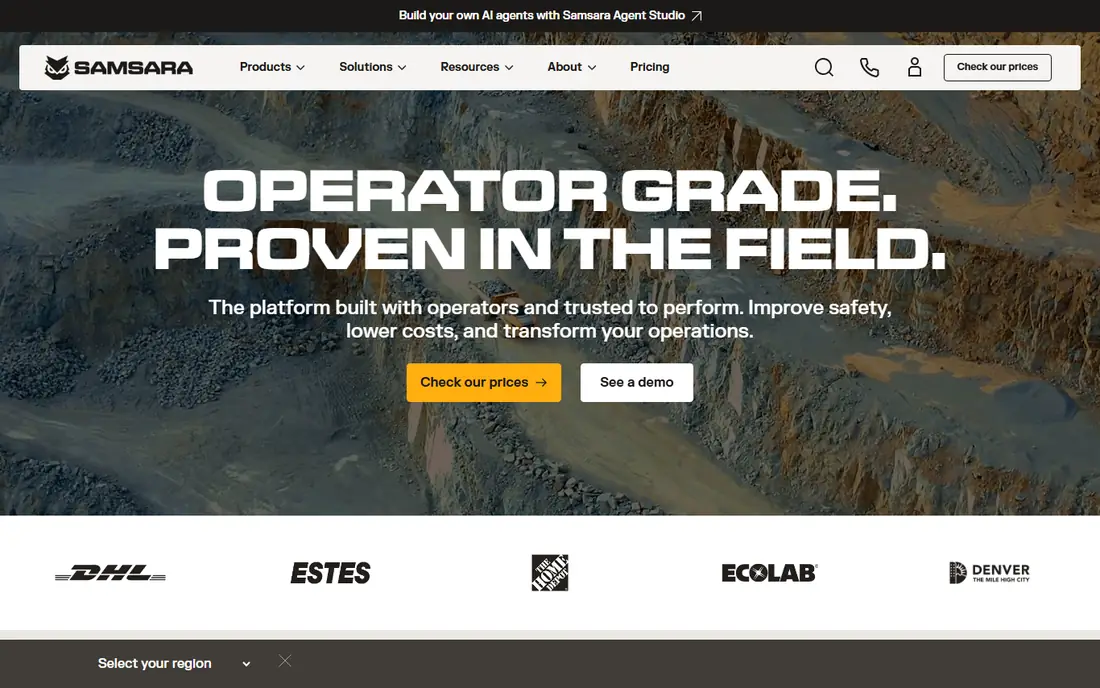
Samsara is a strong default for mixed fleets that want GPS tracking, safety cameras, and compliance in one platform. The interface is clear, which helps dispatchers who check the map all day, and AI dashcams can flag risky driving for coaching. Integrations with maintenance and fuel tools round out the package.
Pricing is by quote, and hardware adds to the total cost, so get a full quote that includes devices, install, and monthly fees before comparing. For fleets with five vans, the platform may feel large; for fleets with dozens of vehicles, the breadth makes sense.
- Clean dashboard
- AI dashcam safety features
- Broad telematics and compliance tools
- Quote-based pricing
- Hardware cost per vehicle
- May be more than a small fleet needs
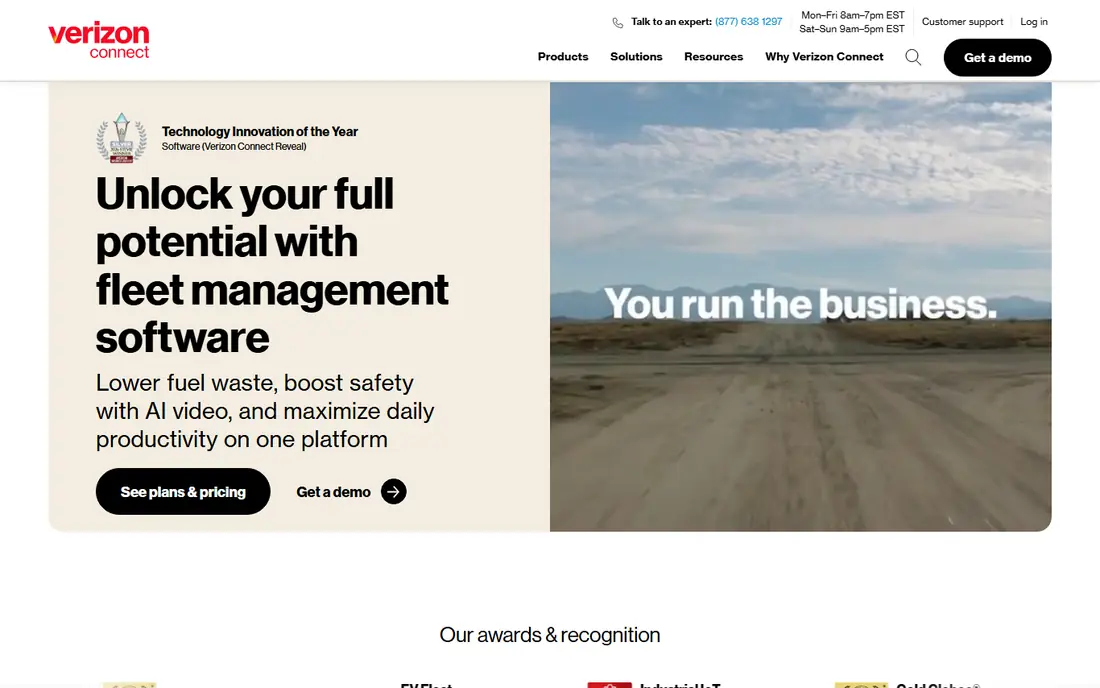
Verizon Connect suits larger fleets that need detailed tracking, reporting, and support. Route replay helps managers review a day in detail, and the dashboard can be customized for different roles. Its scale also means it handles many vehicle types and regions.
Small teams should check contract terms and onboarding time carefully, since enterprise platforms often need more setup than a simple tracker. If you run a large or growing fleet and want a proven vendor, Verizon Connect belongs on the shortlist.
- Broad feature set
- Route replay
- Strong support coverage
- Quote-based pricing
- Setup can feel complex for small teams
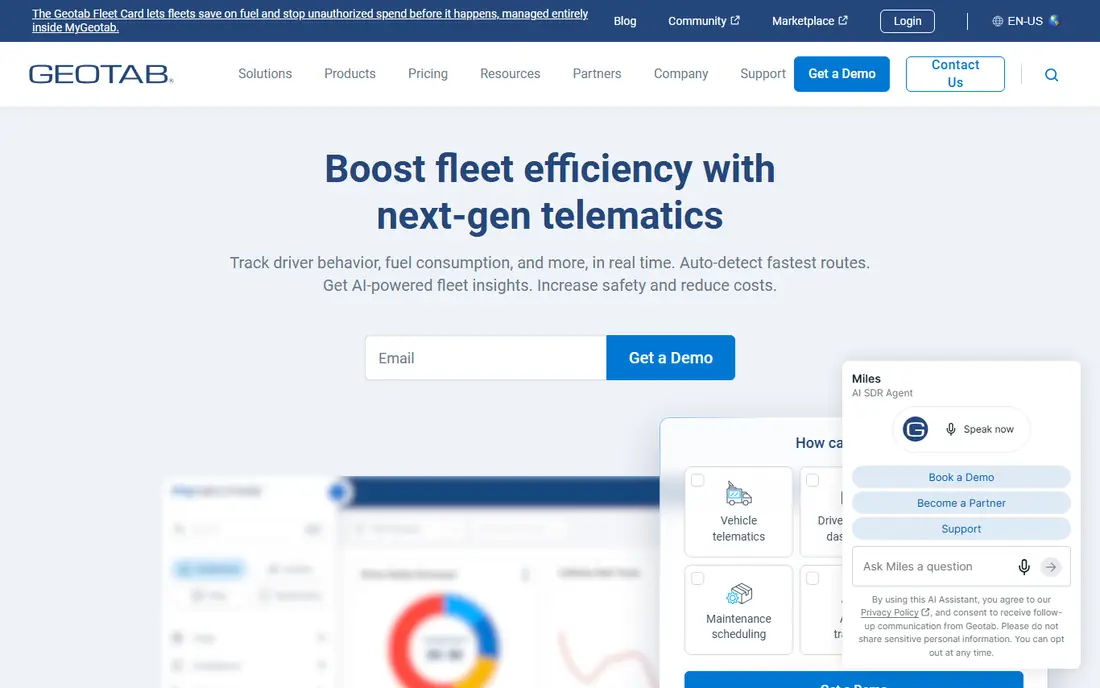
Geotab is known for flexibility. Fleets can tailor dashboards, reports, and alerts, and a large marketplace of partners adds tools for fuel, maintenance, and compliance. Government and enterprise fleets often choose Geotab for that reason.
That flexibility has a cost in complexity. Pricing is often set through resellers, so quotes can vary, and smaller fleets may need help to configure it well. If you have specific reporting needs, Geotab is worth the extra setup; if you want a simple out-of-box tracker, a smaller tool may be faster.
- Deep customization
- Large partner ecosystem
- Strong reporting
- Pricing varies by reseller
- Setup may need partner help
Motive, formerly KeepTruckin, is built for trucking operations where electronic logging device compliance and hours of service are central. Drivers get a clear app for logs and inspections, while managers get safety and tracking data in one place. That trucking focus makes it a natural pick for carriers.
Van and service fleets that do not need ELD compliance may find simpler tools cheaper. For trucking fleets, though, Motive combines compliance and safety in a way that general trackers do not.
- Strong ELD and hours-of-service tools
- Driver app
- Safety cameras
- Trucking focus may be more than van fleets need
- Quote-based pricing
Fleetio is the maintenance-first pick. It tracks service schedules, work orders, inspections, parts, and costs, which helps fleets reduce downtime and keep vehicles roadworthy. Unlike many rivals, Fleetio publishes pricing, which makes budgeting easier.
If live GPS and dashcams are your main need, Fleetio is not a direct replacement for a telematics platform, though it integrates with telematics partners. For fleets whose main pain is maintenance chaos, start here.
- Publishes pricing tiers
- Strong maintenance and inspection tools
- Good integrations
- Less focused on live telematics than Samsara or Geotab
- Telematics needs partners
Azuga suits small fleets that want tracking and basic safety without enterprise complexity. Setup is straightforward, and the platform covers location, driver behavior, and maintenance reminders in a single view. That simplicity helps owner-operators and small service fleets.
Larger fleets with complex compliance or custom reporting needs will likely outgrow it. For a first fleet system, though, Azuga is a practical, lower-friction choice.
- Simpler pricing for small fleets
- GPS tracking and driver safety
- Easy setup
- Fewer enterprise features
- Reporting less deep than Geotab or Samsara
Teletrac Navman covers tracking, routing, and safety for mixed fleets, including trucks, vans, and plant equipment. Its routing tools help dispatchers plan efficient days, while safety features support driver coaching. Multi-region coverage suits fleets that operate across borders.
Check which features are included in your region and plan, since availability varies. For fleets that need routing as well as tracking, it is a solid alternative to the larger US-focused platforms.
- GPS tracking and routing tools
- Driver safety features
- Multi-region coverage
- Quote-based pricing
- Feature depth varies by region and plan
Whip Around focuses on the daily inspection habit that keeps fleets compliant and safe. Drivers complete digital inspections on a phone, report faults with photos, and managers turn those reports into work orders. That workflow reduces paper forms and missed defects.
It is not meant to replace a GPS tracker on its own. Fleets that already track vehicles, or that pair Whip Around with a telematics partner, get the most value from its inspection and maintenance focus.
- Easy driver inspections
- Maintenance reminders
- Fault reporting
- Not a full telematics replacement
- Best paired with a tracker for live GPS
Simply Fleet is a lightweight option for fleets of roughly 25 to 100 vehicles that need maintenance without enterprise overhead. It tracks service, inspections, fuel, and costs in a clean interface, and it deploys quickly without heavy IT work.
It will not match Samsara or Geotab for live telematics, AI cameras, or complex compliance. For a fleet whose main problem is missed services and messy spreadsheets, Simply Fleet is an easy upgrade.
- Simple setup
- Maintenance and fuel tracking
- Low overhead for small fleets
- Limited telematics depth
- Less suited to large enterprise fleets
How we picked these
We compared official feature pages, pricing pages, and public reviews for fleet management platforms. We favored vendors with a live product, clear coverage of tracking, safety, maintenance, or compliance, and a working trial or demo path. We excluded development agencies that build custom fleet software, since this list covers products you can buy and deploy, not firms to hire.
What to check before you sign a fleet contract
Start with your biggest cost, not the demo. If accidents drive cost, prioritize dashcams and driver coaching. If downtime drives cost, prioritize maintenance and inspections. If fuel drives cost, prioritize route and idle-time reporting. A platform that is excellent at one of these may be average at another.
Read the full quote, not just the monthly fee
Ask for hardware cost per vehicle, installation cost, contract length, early exit terms, and any fees for extra users or reports. Some vendors bundle hardware, while others charge separately, and that difference changes the first-year total a lot. Also check whether the driver app works offline in areas with weak signal, since dead zones are common on rural routes.
Test with drivers, not just managers
A dashboard that managers love can fail if drivers find the app confusing or slow. Run a trial with a small group of drivers, check inspection and log workflows, and ask for honest feedback before rolling out to the whole fleet. Driver adoption decides whether safety and maintenance data are actually complete.