Best Free Newsletter Platforms in 2026: 9 Platforms Compared
By ToolNimba Editorial Team October 29, 2026 10 min read

- Top pick
 Substack
Writers starting a paid newsletter
Starting priceFreeCheck out SubstackRead our review - Runner-up
 beehiiv
Newsletter growth and monetization
Starting priceFreeCheck out beehiivRead our review - Also great
 Kit
Creators selling products and courses
Starting priceFreeCheck out KitRead our review
How we researched this
We compared official pricing and feature pages, app store listings, privacy policies and public user reviews. Prices change, so check the provider's site before you pay.
Key takeaways
- Substack, beehiiv, and Kit all let you start free, but they charge in very different ways once you grow or earn money.
- Mailchimp, MailerLite, and Brevo suit small businesses that need email marketing, not just a publication.
- Ghost is best for publishers who want full ownership of their site and memberships, but hosted plans are paid.
- Check the free subscriber limit, the sending limit, and the revenue fee before you pick, since those three numbers shape the real cost.
Quick comparison
| Name | Best for | Starting price | Free plan | |
|---|---|---|---|---|
| Substack | Writers starting a paid newsletter | Free | Yes | Visit |
| beehiiv | Newsletter growth and monetization | Free | Yes | Visit |
| Kit | Creators selling products and courses | Free | Yes | Visit |
 Mailchimp | Small business email marketing | Free | Yes | Visit |
 MailerLite | Low-cost campaigns and clean design | Free | Yes | Visit |
 Brevo | Email, SMS, and transactional mail together | Free | Yes | Visit |
 Ghost | Owned publication with memberships | $9 per month | Free trial | Visit |
 Buttondown | Simple indie newsletters | Free | Yes | Visit |
 Constant Contact | Local businesses and events | $12 per month | Free trial | Visit |
The best free newsletter platforms
A newsletter platform does more than send email. It hosts your archive, manages subscribers, handles unsubscribes, and, in some cases, helps readers find you. Free plans differ a lot, though. Some cap subscribers, some cap sends, and some take a share of paid revenue. We compared official pricing pages and recent platform guides to sort the free starts from the free traps.
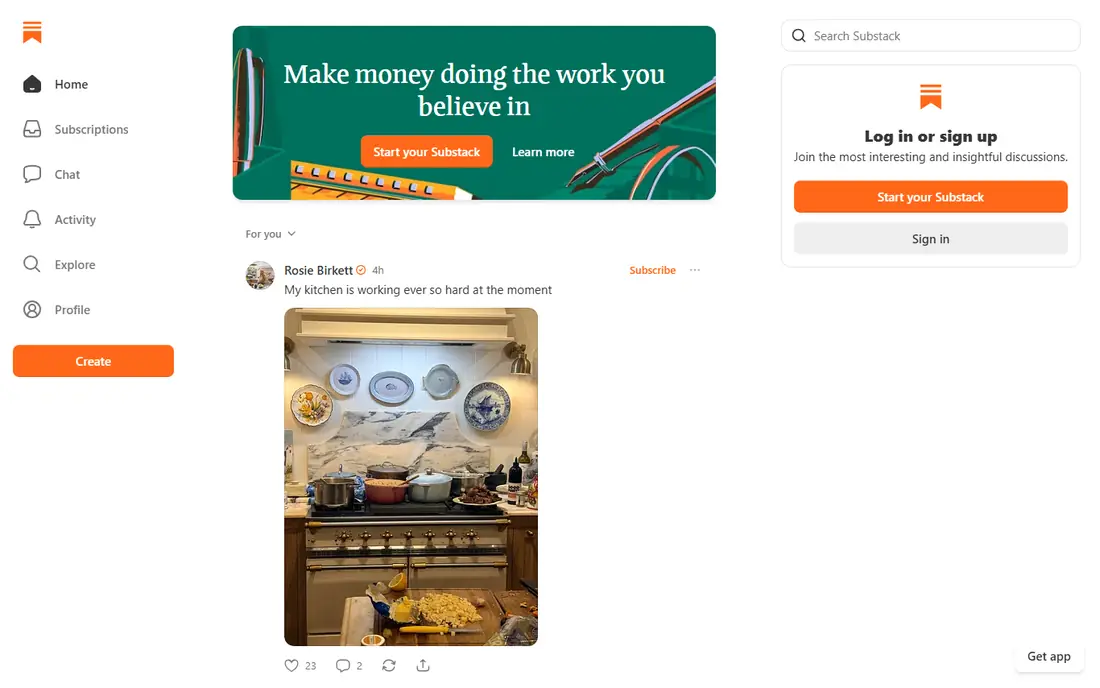
Substack is the simplest way to start a newsletter. You can publish free issues to any number of subscribers, and turning on paid subscriptions is straightforward. Readers can also discover your work through Substack itself, which helps a new writer find an audience without ads.
The cost appears only when you earn. Substack takes 10 percent of paid revenue, plus card processing fees, so a large paid list becomes expensive compared with a flat-fee platform. Design and automation are also basic. If writing and paid subscriptions are the core, Substack is an excellent start. If you need deep automation, look elsewhere.
- Free to publish with no subscriber cap
- Built-in reader discovery
- Simple paid subscriptions
- Takes 10 percent of paid subscription revenue plus payment fees
- Limited design and automation
- Moving away can take work
beehiiv is built for newsletters as a business. The free plan covers up to 2,500 subscribers with unlimited sends, and the platform adds referral programs, recommendations, and an ad network to help a publication grow and earn. It also charges no platform fee on paid subscriptions, apart from payment processing.
Paid plans are the catch, starting around $49 per month for the Lite tier in recent pricing guides. That is a jump from free, though it can still beat a 10 percent revenue share for a larger paid list. If your newsletter itself is the product, beehiiv is one of the strongest free starts. If you only send occasional business email, a cheaper marketing tool may fit better.
- Free up to 2,500 subscribers
- Built-in referral, recommendation, and ad tools
- No platform fee on paid subscriptions
- Paid plans start around $49 per month
- Growth tools take time to learn
- Less suited to general email marketing
Kit, formerly ConvertKit, is made for creators who sell through email. The free plan covers up to 10,000 subscribers, which is generous, and the platform focuses on forms, tags, sequences, and product sales. That makes it a good fit for a writer, coach, or course creator whose newsletter feeds a business.
The free plan limits automation, and paid plans start in the $29 to $39 per month range depending on billing and list size, with a transaction fee on some commerce sales. The editor is also plainer than a design-led tool. If you sell to your list, Kit is a practical free start. If you only publish a newsletter, beehiiv or Substack may feel more focused.
- Free up to 10,000 subscribers
- Strong automation and tagging
- Commerce tools for digital products
- Full automation sits on paid plans
- Paid plans start around $29 to $39 per month
- Email editor is simpler than some rivals
Mailchimp is the safe, familiar choice for small business email. It offers templates, audience segments, automations, and links to many other tools, from online stores to booking apps. That breadth helps a business that sends promotions, updates, and event mail from one place.
The free plan is now small, at 250 contacts and 500 sends per month in recent pricing guides, and paid plans from $13 per month rise as contacts grow. For a tiny list, the free plan still works. For a growing newsletter, beehiiv or Kit may give more room at a lower early cost. Choose Mailchimp when integrations and all-round marketing matter most.
- Well-known platform with many integrations
- Templates and audience tools
- Free plan for very small lists
- Free plan covers only 250 contacts and 500 sends per month
- Paid plans rise with contacts
- Interface can feel busy
MailerLite is a favorite for budget-conscious senders. The editor is clean, the templates look modern, and paid plans start at $12 per month for small lists. For a small business or creator who sends regular campaigns without complex automation, it offers good value.
Free limits matter, at 250 subscribers and 2,500 emails per month, so a growing list will need a paid plan sooner than on Kit or beehiiv. New accounts may also face a review step before sending. If you want a simple, low-cost email tool and you can live within those limits, MailerLite is easy to recommend.
- Clean editor and templates
- Free plan for small lists
- Paid plans are lower cost than many rivals
- Free plan covers 250 subscribers and 2,500 emails per month
- Advanced automation sits on higher tiers
- Approval process can delay first sends
Brevo, formerly Sendinblue, suits businesses that need more than newsletters. The free plan allows 300 emails per day with a large contact allowance, and paid plans from $9 per month are priced by sending volume. SMS, WhatsApp, and transactional email can sit in the same account.
That model helps a business with a large list but modest sending frequency. The daily cap can frustrate a publisher who sends a large issue at once, and the archive feels more like campaign copies than a public magazine. For a small business that mixes marketing and transactional mail, Brevo is a strong low-cost choice.
- Free plan with 300 emails per day
- Pricing based on sends rather than contacts
- SMS and chat tools available
- Daily sending cap on free plan
- Automation depth sits on paid tiers
- Newsletter archive is less publication-like than Substack
Ghost is for publishers who want to own their site. It combines a website, a newsletter, and paid memberships, and it takes no cut of membership revenue apart from payment fees. That ownership appeals to independent media, blogs, and creators who do not want to rent their audience from a network.
The hosted service is paid, starting at $9 per month in recent guides, with higher tiers for larger member counts. Self-hosting the open-source software is free, but it needs server care. Setup also takes more time than Substack. If ownership and a full publication site matter most, Ghost is worth the paid start. If you only want free email, start elsewhere.
- Full website, newsletter, and memberships in one
- No platform fee on paid memberships
- Self-hosting option is free software
- Hosted plans are paid, from $9 per month
- Needs more setup than Substack
- Fewer built-in growth tools
Buttondown is deliberately minimal. You write in Markdown or a simple editor, send to subscribers, and keep a public archive. The free plan covers up to 100 subscribers, and paid plans start at $9 per month, with extra features sold as add-ons. That clarity suits writers and developers who want a simple tool without a large platform.
The limits are real. One hundred free subscribers will not last long for a growing newsletter, and add-ons can raise the bill. Design is also plain, which some readers will love and others will find dull. For a small, personal newsletter with a technical audience, Buttondown is a clean and honest choice.
- Free up to 100 subscribers
- Clean Markdown writing
- API and custom domain options
- Charges only for active subscribers
- Free limit is small
- Many features are paid add-ons
- Design options are minimal by design
Constant Contact is built for local businesses, nonprofits, and event organizers. Templates are easy to use, event pages and RSVPs are built in, and support resources are strong. That makes it a good fit for a shop, church, club, or charity that sends regular updates and event invitations.
It is not a free platform in the same sense as the others. Paid plans start at $12 per month, with a free trial rather than a permanent free tier, and costs rise with contacts. For a business that needs event tools and hands-on support, that price can be fair. For a free newsletter start, Substack, beehiiv, or Kit will save money.
- Easy templates and event tools
- Good support and learning resources
- Social and SMS options on higher tiers
- No permanent free plan
- Pricing rises with contacts
- Less focused on paid newsletter publishing than Substack or beehiiv
How we picked these
We compared official pricing pages and recent platform pricing guides, and we favored platforms that are still available in the United States, state a free plan or trial clearly, and handle subscribing, sending, and unsubscribing properly. We did not claim hands-on testing. Prices change often in this category, so confirm the current plan on the vendor site before you commit.
What to check before you choose
Free is not one thing. A platform can be free by subscriber count, by sends, by days, or by revenue share. The right free plan depends on how fast you grow and whether you plan to charge readers.
Count subscribers and sends together
A free plan with 10,000 subscribers but limited automation may beat a plan with 250 subscribers and full features. Write down your current list size, your sending frequency, and your growth goal for the next year, then match those numbers to the plan.
Check the revenue fee
If you plan paid subscriptions, compare a percentage fee with a flat monthly price. A 10 percent fee is cheap at first and costly later. A flat fee is costly at first and cheaper later. Do the math at 100 paying readers, not just at zero.
Test migration and ownership
Check how you export subscribers, whether your archive stays public, and whether you can use a custom domain. A platform that makes leaving hard is a risk, even if the start is free.
Sources
- https://substack.com
- https://beehiiv.com
- https://kit.com
- https://mailchimp.com
- https://www.mailerlite.com
- https://www.brevo.com
- https://ghost.org
- https://buttondown.com
- https://www.constantcontact.com
- https://omidsaffari.com/blog/convertkit-alternatives
- https://dev.to/rosgluk/best-newsletter-platforms-in-2026-pricing-hosting-and-seo-46ka