Best Identity Theft Protection Services in 2026: 8 Services Compared
By ToolNimba Editorial Team October 29, 2026 10 min read

- Top pick
 Aura
All-in-one family protection
Starting price$10 per monthCheck out AuraRead our review - Runner-up
 LifeLock
Dedicated restoration help
Starting price$10.42 per monthCheck out LifeLockRead our review - Also great
 Identity Guard
AI alerts and social monitoring
Starting priceSee websiteCheck out Identity GuardRead our review
How we researched this
We compared official pricing and feature pages, app store listings, privacy policies and public user reviews. Prices change, so check the provider's site before you pay.
Key takeaways
- Aura is our pick for most households because it puts three-bureau monitoring on every plan and adds device tools in the same bill.
- LifeLock is the strongest choice if you want a dedicated restoration specialist and the highest coverage limits on the top tier.
- A free credit freeze at all three bureaus stops most new-account fraud, so a paid service should add monitoring, alerts and recovery help to be worth it.
- Entry prices can rise sharply at renewal, so check the renewal rate and the insurance limits on the exact plan you buy, not the headline plan.
Quick comparison
| Name | Best for | Starting price | Free plan | |
|---|---|---|---|---|
| Aura | All-in-one family protection | $10 per month | Free trial | Visit |
| LifeLock | Dedicated restoration help | $10.42 per month | No | Visit |
| Identity Guard | AI alerts and social monitoring | See website | Free trial | Visit |
 Experian IdentityWorks | Credit-focused monitoring | Free | Yes | Visit |
 IdentityIQ | Credit reports and monitoring | $7.44 per month | No | Visit |
 IDShield | Legal help plus monitoring | See website | No | Visit |
 Coveron | Budget all-in-one cover | $4.99 per month | No | Visit |
 DeleteMe | Removing data from brokers | See website | No | Visit |
The best identity theft protection services
We compared official plan pages, pricing, insurance limits and public reviews for the services below. This is not financial advice, and no service can stop every form of identity theft. Monitoring helps you spot misuse early, and a credit freeze remains the strongest free step against new accounts opened in your name.
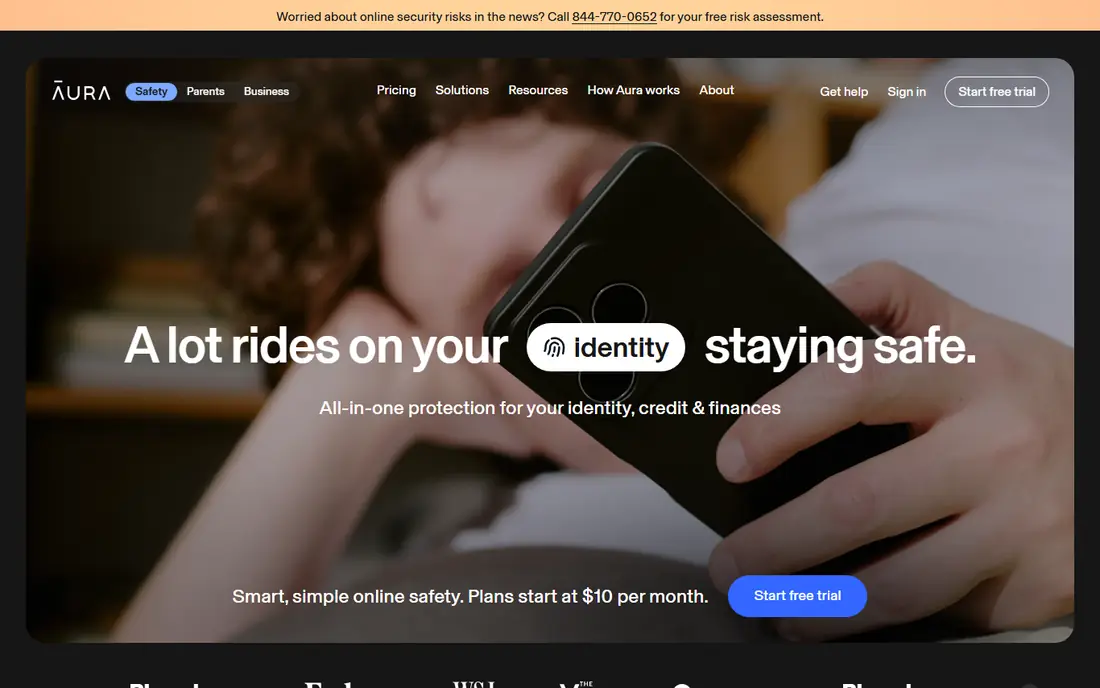
Aura stands out because it does not gate its three-bureau credit monitoring behind a premium tier. Every plan watches Experian, Equifax and TransUnion, so a new account or inquiry at any bureau should trigger an alert. That matters when a thief only targets one bureau, which is a common gap in cheaper plans that watch a single file.
The bundle is the other reason Aura leads this list for most people. Antivirus, a VPN, a password manager and data broker removal sit in the same subscription, which replaces several separate bills. Family plans add parental controls and child identity protection, plus higher combined insurance. The catch is the price for a larger household, and the renewal rate can differ from an introductory offer, so confirm the second-year price before you commit.
- Three-bureau monitoring on every plan
- Antivirus, VPN and password manager included
- Up to $1 million in identity theft insurance per adult
- Higher tiers add cost for larger families
- Some features are family-plan only

LifeLock has been in this market longer than most rivals, and its restoration promise is the core selling point. If your identity is stolen, a dedicated specialist works the case rather than leaving you to chase bureaus and creditors alone. That support is worth real money when you are dealing with paperwork, disputes and phone calls during a stressful period.
The entry Core plan covers two-bureau monitoring and up to two financial accounts, which suits a single adult with a simple financial life. Moving up adds three-bureau monitoring, scam reimbursement and home title monitoring, and the top tier reaches up to $3 million in combined coverage. Read the plan details closely, because the lowest price shown is an introductory annual rate and it renews higher.
- US-based restoration specialists
- Up to $3 million in coverage on the top tier
- Automatic data broker removal
- Three-bureau monitoring only on higher tiers
- Monthly billing costs more than the annual rate shown
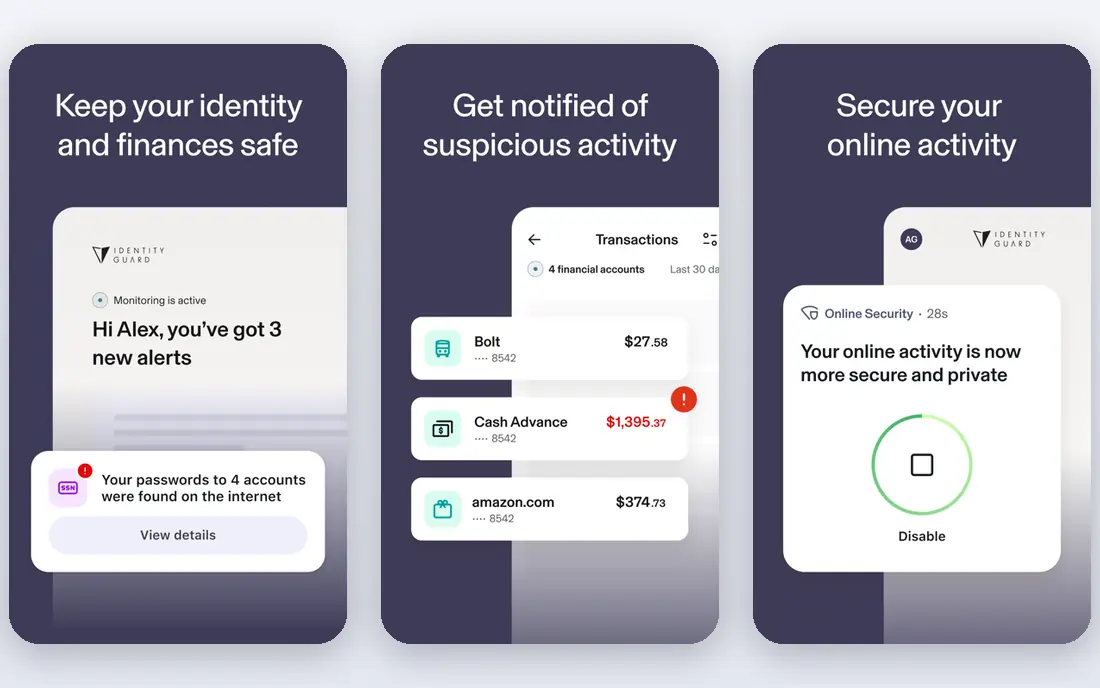
Identity Guard takes a different angle from Aura by putting more weight on risk scoring and social monitoring. Its alerts aim to explain why something looks risky, not just that a change happened, which helps if you get a lot of notices and want to know which ones deserve action first. Social media monitoring also fits people who worry about impersonation or account takeover rather than credit fraud alone.
The trade-off is tiering. Single-bureau monitoring on the entry plan leaves gaps, and you need a higher plan for full three-bureau coverage. That makes Identity Guard better for buyers who value its alert style and are willing to pay for the upper tier. Check the current plan page for the exact price, since published rates and trial terms have changed over the past year.
- AI-driven risk alerts
- Social media monitoring
- Up to $1 million in identity theft insurance
- Three-bureau monitoring is limited to higher tiers
- Pricing varies by plan and billing term
Experian IdentityWorks is the natural pick if credit is your main worry and you want data straight from a bureau. The free Basic plan gives Experian monitoring, a FICO score tracker and a privacy scan, which is a solid starting point at no cost. Paid plans add three-bureau monitoring, dark web surveillance, financial account takeover alerts and Experian CreditLock.
The weakness is price. Premium costs $24.99 per month and Family costs $34.99 per month, which is well above Aura and LifeLock entry rates. That premium is hard to justify unless you value the bureau-direct credit tools and the daily score updates. For many readers, the free plan plus a credit freeze covers the credit side, and a cheaper all-in-one service covers the rest.
- Free basic plan with Experian monitoring and a FICO score
- Three-bureau monitoring on paid plans
- Up to $1 million in insurance on Premium
- Paid plans cost more than many rivals
- Free plan is single-bureau only
IdentityIQ is built around credit first and everything else second. It monitors all three bureaus, supplies credit reports and scores, and adds dark web monitoring and restoration help. That focus suits buyers who check their credit often, are rebuilding credit, or want a clear paper trail when something changes on a report.
What you give up is breadth. There is no antivirus, VPN or password manager bundle here, so you will still need separate tools for device security if you want them. The interface is also more report-heavy than the polished dashboards from Aura and LifeLock. If credit monitoring is the job, IdentityIQ does it at a lower starting price than Experian, and that is enough for many households.
- Three-bureau credit monitoring
- Regular credit reports
- Identity theft insurance up to $1 million
- Fewer device and privacy extras than Aura
- Family pricing adds up quickly
IDShield appeals to people who want a person, not just a dashboard, when identity theft turns legal. Its plans include identity monitoring plus access to legal help, and restoration work is handled by specialists rather than left to the customer. That combination fits households dealing with complex cases, such as tax fraud or medical identity theft, where forms and disputes pile up.
The drawback is clarity. Plan names, prices and legal-service limits vary, and the website pushes you toward a quote or consultation to get exact figures. That is not a dealbreaker, but it makes side-by-side comparison harder than with Aura or LifeLock. Ask for the full price, the insurance limit and what legal help is included before you sign up.
- Licensed investigator support
- Legal consultation options
- Monitoring across credit and identity sources
- Pricing is not as transparent as rivals
- Top coverage requires higher tiers
Coveron, from the company behind NordVPN, is the value pick in this list. The entry price undercuts every other full service here, and the insurance limit is generous for the money. Higher tiers add NordVPN, antivirus and data broker removal, which turns it into a credible all-in-one bundle for households that already like Nord products.
The limits are real, though. Below the top tier you get one-bureau monitoring and no credit report, so the cheapest plan is weaker than it looks on paper. Coveron is also US only and does not serve New York, which rules it out for some readers. If you live in a covered state and pick a higher tier, it is strong value, but do not judge it on the entry price alone.
- Low starting price
- Up to $2 million in identity theft insurance
- Home title fraud cover on higher tiers
- One-bureau monitoring below the top tier
- US only and excludes New York
DeleteMe is not a full identity theft protection service, and we include it because it solves a different half of the problem. It removes your personal details from data broker and people-search sites, then keeps checking for re-listings. Fewer public listings means scammers have less to work with when they try to impersonate you or answer security questions.
The honest catch is that DeleteMe does not watch your credit or insure your losses. It pairs best with a free credit freeze and, if you want alerts, a monitoring service from elsewhere in this list. Buy it for exposure reduction, not as a replacement for monitoring, and check the current price on its site, since plans vary by household size and removal scope.
- Focused data broker removal
- Reduces exposure that scammers use
- Regular re-removal checks
- No identity theft insurance
- No credit monitoring
How we picked these
We compared official feature pages, pricing pages and plan terms for each service, plus app store listings and public reviews where they clarified real-world limits. We favored services that are available in the US now, publish clear insurance limits, and cover credit monitoring, dark web monitoring or restoration help in a meaningful way. Prices shown are starting prices from vendor pages and third-party pricing checks in October 2026, and they can change with promotions and renewal terms.
What to check before you pay
Start with the free steps, because they do more than any subscription alone. Place a credit freeze at Experian, Equifax and TransUnion, use unique passwords with a password manager, and turn on two-factor authentication for email, banking and tax accounts. A freeze is free by law and blocks most new credit accounts, while a lock is a paid product feature that is not the same thing.
Then match the service to your gap. If you have children, a family plan with child monitoring matters more than a slightly higher insurance limit. If you own a home, home title monitoring is worth a look. If you travel or use public Wi-Fi often, a VPN and device protection bundle adds value. Finally, read the insurance terms: limits often split across stolen funds, personal expenses and legal costs, and reimbursement usually requires paperwork and proof of loss.
Sources
- https://www.aura.com
- https://www.lifelock.com
- https://www.identityguard.com
- https://www.experian.com
- https://www.identityiq.com
- https://www.idshield.com
- https://www.coveron.com
- https://www.deleteme.com
- https://gizmodo.com/best-vpn/identity-theft-protection
- https://cyberinsider.com/identity-theft-protection/comparison/aura-vs-lifelock/