Best Market Research Tools in 2026: 9 Platforms Compared
By ToolNimba Editorial Team October 31, 2026 9 min read

- Top pick
 SurveyMonkey
Structured surveys with panels
Starting price$39 per monthCheck out SurveyMonkeyRead our review - Runner-up
 Qualtrics
Enterprise research programmes
Starting priceSee websiteCheck out QualtricsRead our review - Also great
 Typeform
Conversational surveys
Starting price$28 per monthCheck out TypeformRead our review
How we researched this
We compared official pricing and feature pages, app store listings, privacy policies and public user reviews. Prices change, so check the provider's site before you pay.
Key takeaways
- SurveyMonkey remains the safest default for structured surveys, with templates, logic and a research panel for bought respondents.
- Qualtrics suits enterprise research programmes that need advanced methods, panel management and experience management in one system.
- Typeform and SurveySparrow improve completion rates when surveys need to feel conversational rather than formal.
- Attest, Pollfish and GWI help when you need real consumers or audience data fast, not just a survey builder.
- Response caps, panel costs and per-user minimums change the real price, so model your sample size before you buy.
Quick comparison
| Name | Best for | Starting price | Free plan | |
|---|---|---|---|---|
| SurveyMonkey | Structured surveys with panels | $39 per month | Yes | Visit |
| Qualtrics | Enterprise research programmes | See website | Yes | Visit |
| Typeform | Conversational surveys | $28 per month | Yes | Visit |
 QuestionPro | Research-grade surveys and analytics | $99 per month | Yes | Visit |
 Alchemer | Unlimited responses without per-response fees | $55 per user per month | Free trial | Visit |
 SurveySparrow | Conversational CX and research surveys | $19 per month | Yes | Visit |
 Attest | Fast consumer answers for brands | See website | No | Visit |
 Pollfish | Fast targeted audience surveys | See website | No | Visit |
 Statista | Secondary research and statistics | See website | Yes | Visit |
The best market research tools
Market research is not one task. Sometimes you need to field a survey to your own customers. Sometimes you need to reach strangers who match a profile. Sometimes you need existing statistics, social sentiment or audience profiles before you ask a single question. The tools below cover that range, from survey builders to panels and secondary data, and each one is live and widely used for research work.
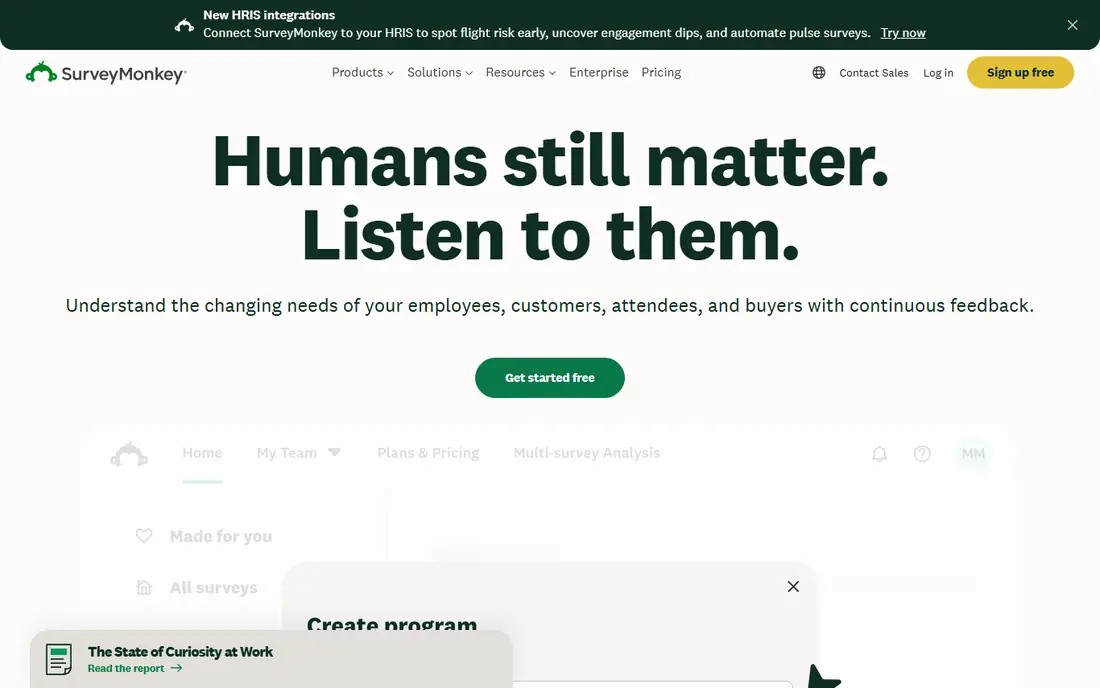
SurveyMonkey is the default many teams reach for first, and for structured surveys that makes sense. The builder is fast, expert-written templates reduce bad question design, and analysis includes cross-tabs and significance testing on paid plans. When you lack your own audience, the panel service can supply respondents, priced separately from the survey plan. The pricing meter needs attention. Response limits and overage charges can add up on large studies, and team plans start with three users. For a single survey to a known list, the individual plan is often enough. For a research programme with regular studies, model annual response volume before you commit.
- Large template library
- Skip logic and analysis tools
- Research panel for bought respondents
- Response caps and overage fees
- Team plans need a three-user minimum
- Free plan is limited
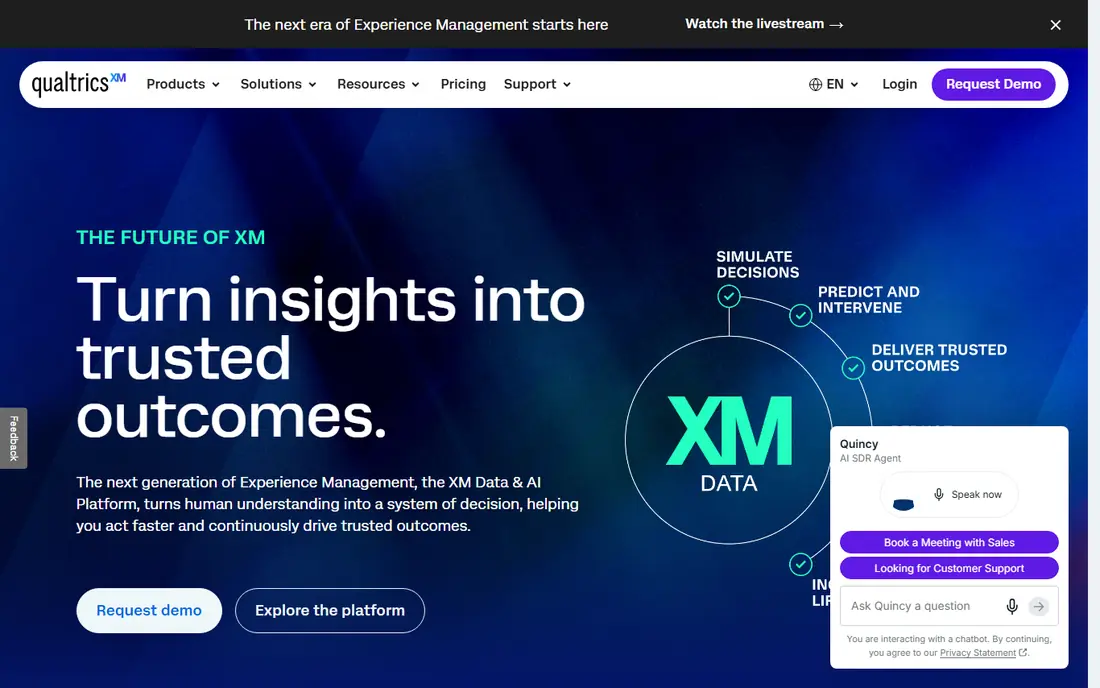
Qualtrics is built for organisations where research is a programme, not a one-off task. It supports conjoint, MaxDiff and other advanced methods, complex logic, panel management and experience management that links customer, employee, product and brand feedback. Large teams can run many studies under one governance model. That depth comes with cost and complexity. Pricing is handled through sales, and small teams often find the quote too high for occasional surveys. New users also need training to use the advanced features well. Buy Qualtrics when research quality, scale and governance justify an enterprise platform, not when you need one quick poll.
- Deep survey logic and advanced methods
- Panel management
- Experience management across touchpoints
- Quote-only enterprise pricing
- Steep learning curve
- Overkill for simple surveys
Typeform changes how a survey feels. Instead of a long form, respondents answer one question at a time, which can lift completion rates for customer and market surveys. Logic, scoring and integrations help teams route answers to the right follow-up or system without manual work. Research teams should check analysis depth. Typeform is strong on collection and experience, but heavy cross-tabulation and advanced methods may need an export to another analysis tool. For brand, product and customer surveys where completion matters most, it is a strong pick.
- One-question-at-a-time flow
- Strong completion rates
- Clean design and logic
- Less deep research analysis than Qualtrics
- Response limits on lower plans
QuestionPro sits between simple builders and enterprise platforms. It offers research-grade surveys, advanced logic, analytics and reporting, plus audience services for reaching respondents. Teams that need more method than a basic form, but cannot justify Qualtrics pricing, often land here. The entry price is higher than SurveyMonkey or Typeform, so it suits teams that run research regularly. Occasional users may find the free Essentials tier enough for a small study, but should check its limits on questions, responses and analysis before fielding a large survey.
- Research-grade question types
- Strong analytics and reporting
- Audience panel options
- Higher entry price than basic builders
- Interface takes time to learn
Alchemer, formerly SurveyGizmo, appeals to teams that worry about response caps. Paid plans offer unlimited responses, which removes the overage anxiety that comes with metered survey tools. The builder supports complex logic, piping and reporting for serious research work. The trade-off is the entry model. There is a free trial rather than a permanent free tier, and per-user pricing means a larger research team pays more even if only a few people build surveys. For high-volume studies, the unlimited-response model can still work out cheaper than a capped plan with overages.
- Unlimited responses on paid plans
- Flexible survey design
- Good reporting options
- No permanent free plan
- Pricing is per user, so team costs rise
SurveySparrow combines survey research with customer experience work. Chat-style surveys feel closer to a conversation, which helps for feedback, NPS and short market checks. Templates and automation help teams send surveys after a purchase, a support interaction or a product trial. It is not a full replacement for an enterprise research platform. Advanced methods and large panel programmes may need another tool. For small and mid-size teams that want affordable, friendly surveys with decent analysis, SurveySparrow offers good value at its entry price.
- Conversational chat-style surveys
- NPS and CX templates
- Affordable entry price
- Less enterprise research depth
- Some features need higher plans
Attest helps consumer brands get credible answers fast. Instead of only building a survey, teams can reach a defined consumer audience, field questions quickly and view results in dashboards that support tracking and segmentation. That speed matters when a product, pricing or campaign decision cannot wait for a slow panel process. Pricing is handled through sales, and the platform fits consumer research better than very narrow B2B samples. Teams should confirm audience availability for their market and the cost per complete before they plan a tracking study. For brand and product decisions, Attest shortens the gap between question and answer.
- Access to real consumers
- Fast turnaround
- Dashboards for tracking and segmentation
- Pricing is quote based
- Best suited to consumer brands, not B2B niche samples
Pollfish focuses on reaching specific audiences quickly through mobile and web placements. Researchers can target by demographics and other criteria, field a survey and watch results arrive in real time. That makes it useful for concept tests, pricing checks and quick market reads. Cost depends on sample size, targeting and survey length, so buyers should get a quote for their exact study before budgeting. As with any panel, researchers should use screening, attention checks and sensible sample sizes. Pollfish works best for fast, targeted quantitative reads rather than deep qualitative work.
- Fast audience targeting
- Mobile-first respondent reach
- Real-time results
- Pricing depends on sample and targeting
- Quality checks matter for niche audiences
Statista covers the other half of market research: existing data. Its library includes statistics, reports, forecasts and consumer survey data across industries and countries. For a market sizing, competitor overview or pitch deck, it can answer questions in minutes that a primary survey would take weeks to field. It does not replace primary research. Statista will not tell you what your specific customers think of your new feature. Used together, secondary data from Statista frames the market, while a survey tool tests your own hypothesis. The limited free tier lets teams check coverage before paying for full access.
- Large library of statistics and reports
- Industry and consumer data
- Charts ready to cite
- Not a survey tool
- Full access needs a paid plan
- Data depth varies by market
How we picked these
We compared official feature and pricing pages, product documentation and public reviews. We favoured tools that are live now, that clearly support market research tasks such as survey design, audience access, analysis or secondary data, and that publish enough pricing detail to compare. We excluded generic form tools with no research analysis, closed platforms and tools whose core research features could not be verified.
How to choose for your study
Start by naming the decision the research must support. A pricing decision needs a different sample and method than a brand tracking study or a concept test. Then choose the data type: your own customers, a bought audience, existing statistics or social conversation. That choice narrows the shortlist fast.
Survey builders versus panels
A survey builder is enough when you have your own list. A panel tool is needed when you must reach strangers who match a profile. Budget for both the software and the cost per respondent, since panel costs often exceed the software fee.
Check analysis before fielding
Confirm cross-tabs, significance testing, exports and dashboard options before you send a survey. Fixing analysis limits after fielding is costly. Run a pilot with a small sample, check question wording and logic, then scale to the full sample.
Sources
- https://www.surveymonkey.com/pricing/
- https://www.qualtrics.com/pricing/
- https://www.typeform.com/pricing/
- https://www.questionpro.com/pricing/
- https://www.alchemer.com/pricing/
- https://surveysparrow.com/pricing/
- https://www.askattest.com/pricing/
- https://www.pollfish.com/pricing/
- https://www.statista.com/pricing/