Best Meditation App for Kids in 2026: 8 Apps Compared
By ToolNimba Editorial Team October 29, 2026 10 min read

- Top pick
 Moshi
Bedtime stories and sleep
Starting price$9.99 per monthCheck out MoshiRead our review - Runner-up
 Smiling Mind
Free structured mindfulness
Starting priceFreeCheck out Smiling MindRead our review - Also great
 Calm
Families wanting one app for all ages
Starting price$14.99 per monthCheck out CalmRead our review
How we researched this
We compared official pricing and feature pages, app store listings, privacy policies and public user reviews. Prices change, so check the provider's site before you pay.
Key takeaways
- Moshi is our pick for bedtime, thanks to its character stories, sleep sounds, and routines built for younger children.
- Smiling Mind is the best free starting point, with structured mindfulness programs for children aged 5 to 12 and no subscription required.
- Calm and Headspace work best for older children and families who already use those apps, because the kids content sits inside a full adult library.
- Keep sessions short, sit with younger children at first, and treat any app as general information, not medical advice.
Quick comparison
| Name | Best for | Starting price | Free plan | |
|---|---|---|---|---|
| Moshi | Bedtime stories and sleep | $9.99 per month | Free trial | Visit |
| Smiling Mind | Free structured mindfulness | Free | Yes | Visit |
| Calm | Families wanting one app for all ages | $14.99 per month | Yes | Visit |
 Headspace | Older kids and structured courses | $12.99 per month | Free trial | Visit |
 Insight Timer | Free guided audio with parent curation | Free | Yes | Visit |
 GoNoodle | Movement and classroom calm | Free | Yes | Visit |
 Mindful Powers | Play-based emotional skills | Free | Yes | Visit |
 Breathe, Think, Do with Sesame | Preschool feelings and breathing | Free | Yes | Visit |
The best meditation apps for kids
Children do not meditate like adults, and the best apps accept that. Short audio, a friendly voice, a story, or a bit of movement will hold attention far better than a long silent sit. We compared official app listings, pricing pages, and age guidance to find options for bedtime, school-day calm, and learning about feelings.
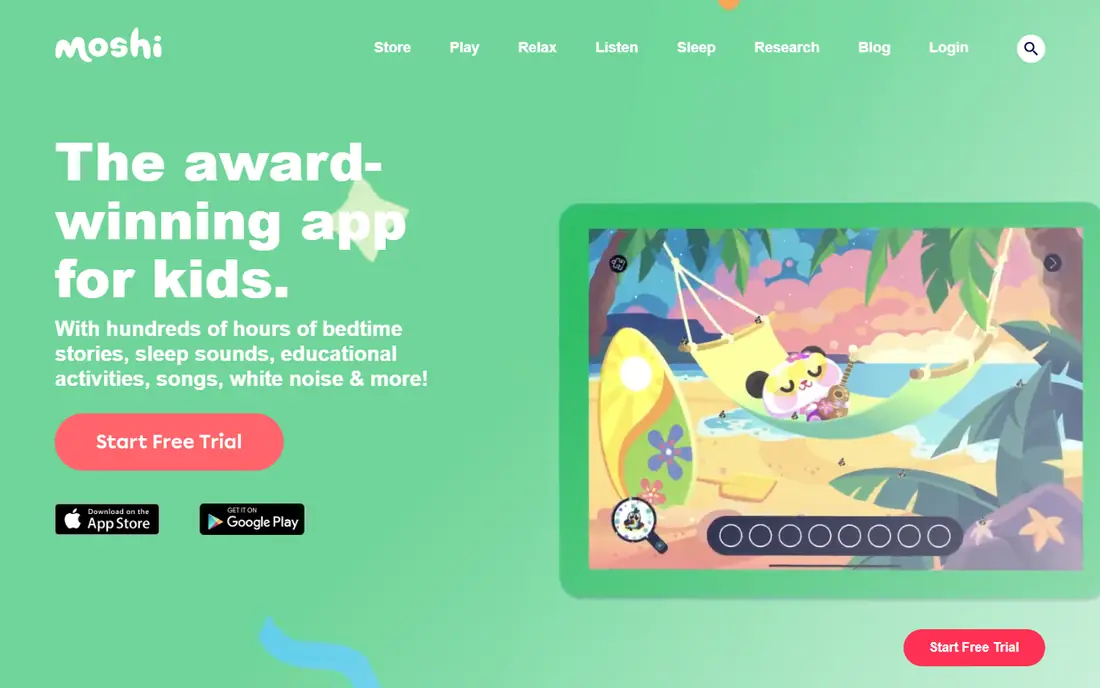
Moshi is built around characters and stories, which is why it works so well at bedtime. Children can follow familiar voices through sleep stories, meditations, music, and calming sounds, and parents can build a repeatable routine around the same few favorites. The app covers ages up to about 12, with simpler content for younger children and longer stories for older ones.
The main catch is price and scope. The free content is limited, and the subscription starts at $9.99 per month in app store listings, so families should use the trial to see whether their child actually asks for it again. Moshi also includes play sections, which are fun in the daytime but less helpful in the last minutes before sleep. Used as an audio bedtime routine, with the screen face down, it is our pick for families whose main problem is settling at night.
- Large library of sleep stories and sounds
- Characters children can follow
- Routines for day and night
- Full library needs a subscription
- Screen-based play sections can distract from wind-down
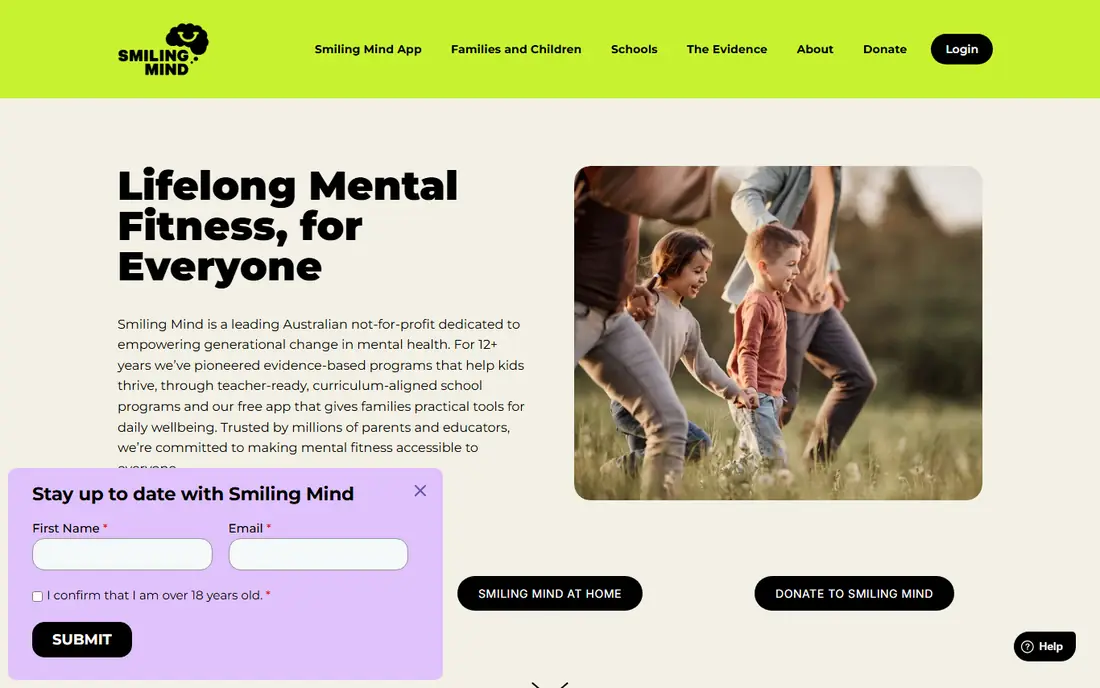
Smiling Mind is the app we point to first when a family does not want to pay. It offers structured mindfulness programs for children, teens, and adults, with children's collections for ages 5 to 12 covering sleep, calm, emotions, and school life. The sessions are short, plain, and designed to be repeated, which suits a classroom or a kitchen-table routine better than a one-off story.
The trade-off is tone. Smiling Mind is calmer and more instructional than Moshi or Calm Kids, and a child who wants characters and songs may find it plain at first. That plainness is also a strength for parents who want a screen to stay in the background. If you want to try mindfulness without a subscription, start here, pick one short program, and repeat it for a week before judging it.
- Free with no subscription
- Programs built by mental health professionals
- Content for ages 5 to 12
- Less playful than character-led apps
- Australian voice and phrasing may feel unfamiliar to some US families
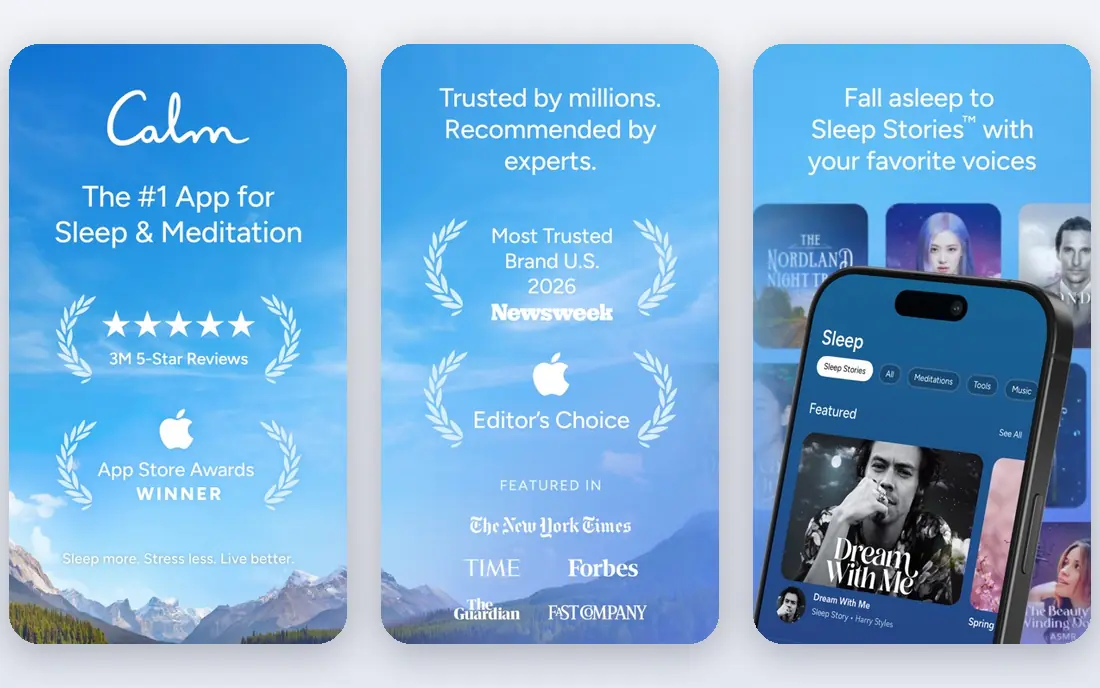
Calm Kids lives inside the main Calm app, which makes it a practical choice for a household rather than a child alone. Children get guided meditations, sleep stories, breathing exercises, and movement content, while parents get the full adult library for their own sleep and stress. A family plan covers up to six people, which can make the cost easier to justify if several people will use it.
The weakness is navigation. A younger child will need a parent to open the right section, and the sheer size of Calm can pull attention toward adult content. The free tier is also limited, with the monthly price at $14.99 and an annual option that lowers the monthly equivalent. For older children who can follow a guided session on their own, and for families who already pay for Calm, this is a strong, simple addition.
- Calm Kids stories, meditations, and breathing exercises
- Strong sleep library for parents too
- Family plan available
- Kids content is inside a large adult app
- Full access needs a paid subscription
Headspace for Kids splits its content by age, with groups for ages 5 and under, 6 to 8, and 9 to 12, and themes such as calm, focus, kindness, sleep, and waking up. The sessions are short and clearly explained, and the friendly animation style helps children understand what to do with their breath and attention. For a child who likes a course structure, with one session leading to the next, Headspace feels orderly and easy to follow.
The limit is that Headspace is still an adult app first. Kids content is a section inside it, and the subscription starts at $12.99 per month, with an annual plan that lowers the monthly cost. Younger children who want a bedtime story may prefer Moshi, and families on a tight budget may prefer Smiling Mind. For school-age children who are ready for real mindfulness practice, Headspace is one of the best-structured options here.
- Age-grouped kids content on calm, focus, and kindness
- Short, clear sessions
- Family plan available
- Most content needs a subscription
- Younger children may prefer story-led apps
Insight Timer is best thought of as a library, not a kids app. It holds a very large collection of free guided meditations, sleep audio, music, and timers, and a parent can save a short list of suitable sessions for a child to use. That makes it a good free option for families who want variety without paying, and for older children who have outgrown character stories.
The risk is curation. Because anyone can publish, and because kids content sits beside adult content, a child should not browse alone. Parents should pick sessions in advance, check the length and language, and save them to a playlist. If you are willing to do that small amount of setup, Insight Timer gives you more free audio than any other app on this list. If you want a child-safe walled garden, pick Moshi or Smiling Mind instead.
- Very large free library
- Timers and ambient sounds
- Useful for older children with a parent guiding choices
- Kids content is mixed into a huge adult library
- Quality varies by teacher
GoNoodle takes a different route to calm, which is movement first. Its short videos mix dancing, stretching, breathing, and mindfulness, and many US teachers already use it in classrooms for transitions and brain breaks. For a child who cannot sit still for a guided meditation, a two-minute movement video can be a better on-ramp to paying attention.
That is also the limit. GoNoodle is not a meditation app in the strict sense, and it is video-first, so it does not suit a dark bedroom or a screen-free wind-down. The free tier covers a large amount of content, which makes it easy to try without a subscription. Use GoNoodle for daytime energy and classroom-style calm, and use Moshi or Calm for the bedtime slot.
- Free movement, breathing, and mindfulness videos
- Popular in schools
- Short, energetic sessions
- More movement than meditation
- Video-first, so it is not ideal for bedtime
Mindful Powers teaches mindfulness through play. Children follow voice-guided stories, learn breathing and calming skills, and help calm their virtual pet, a creature called a Flibbertigibbet, which gives the practice a clear, friendly purpose. The tone is gentle, the sessions are short, and the focus on feelings such as worry and frustration makes it useful for children who need words for what they feel.
The library is smaller than Moshi, Calm, or Headspace, and older children may outgrow the pet theme quickly. The app is free to download, with in-app options to check before handing it to a child. For younger school-age children, especially those who learn best through a story and a character, Mindful Powers is a charming and low-pressure place to start.
- Story-led play that teaches calming skills
- Virtual pet gives children a reason to return
- Gentle, age-appropriate tone
- Smaller content library than the big apps
- Some content may feel young for older children
Breathe, Think, Do with Sesame
Best for: Preschool feelings and breathing
Breathe, Think, Do with Sesame is the simplest app on this list, and for preschoolers that is a virtue. Children help a Sesame monster calm down by taking deep breaths, thinking of a plan, and trying it out, which gives them a repeatable routine for frustration, fear, or disappointment. Parents can also use it as a prompt in real life, saying the same three steps when a meltdown starts.
Older children will find it too young, and the content library is small next to Moshi or Headspace. It is also not a sleep app, so it will not replace a bedtime story routine. For families with a child aged 3 to 5 who is learning about feelings, this free app is an excellent first step, and it pairs well with a short Smiling Mind session as the child grows.
- Free
- Familiar Sesame characters
- Teaches a simple breathe, think, do routine for big feelings
- Aimed at preschoolers, so older kids will outgrow it
- Content is limited compared with full meditation apps
How we picked these
We compared official app store listings, pricing pages, and age guidance, and we favored apps that are still available in October 2026 and that offer real content for children, not just a kids label on an adult library. We included free options alongside paid ones, because a family should be able to try mindfulness without a subscription. We also kept sessions and age fit at the center, since a meditation app only helps if a child will actually use it. This article is general information, not medical advice. If a child has anxiety, sleep problems, or other health concerns, talk with a pediatrician or another qualified professional.
How to choose for your child
Start with the moment you want to help. Bedtime calls for stories and sounds, so Moshi or Calm Kids fit best. A school-day reset calls for short, repeatable practice, so Smiling Mind or GoNoodle fit best. Learning about feelings calls for a story and a routine, so Mindful Powers or Breathe, Think, Do with Sesame fit best for younger children.
Then set the routine before you judge the app. Pick one session, use it at the same time each day for a week, and sit with a younger child while it plays. Keep sessions to a few minutes for preschoolers and a little longer for school-age children, and keep the phone out of reach at night if the screen itself becomes the attraction. If a child asks for the same session again, that app is working, whatever its price or ranking.