Best Online Tools for Personal Growth in 2026: 9 Tools Compared
By ToolNimba Editorial Team October 29, 2026 8 min read

- Top pick
 MasterClass
Learning from famous teachers
Starting price$120 per yearCheck out MasterClassRead our review - Runner-up
 Mindvalley
Personal growth programs
Starting priceSee websiteCheck out MindvalleyRead our review - Also great
 Coursera
University courses and certificates
Starting price$59 per monthCheck out CourseraRead our review
How we researched this
We compared official pricing and feature pages, app store listings, privacy policies and public user reviews. Prices change, so check the provider's site before you pay.
Key takeaways
- MasterClass inspires with famous teachers, while Coursera delivers academic depth and certificates that employers recognize.
- Mindvalley focuses squarely on personal growth, wellness and mindset, with polished programs and a community.
- Skillshare and Udemy suit practical skills, with project-based classes and per-course buying.
- Day One, Habitica, Fabulous and Finch turn growth into daily habits, journaling and small wins.
- The best tool is the one you actually use: pick one learning platform and one habit tool, not five of each.
Quick comparison
| Name | Best for | Starting price | Free plan | |
|---|---|---|---|---|
| MasterClass | Learning from famous teachers | $120 per year | No | Visit |
| Mindvalley | Personal growth programs | See website | Free trial | Visit |
| Coursera | University courses and certificates | $59 per month | Yes | Visit |
 Skillshare | Creative and practical skills | See website | Free trial | Visit |
 Udemy | Single courses on any topic | See website | Yes | Visit |
 Day One | Journaling and reflection | $34.99 per year | Yes | Visit |
 Habitica | Gamified habits | Free | Yes | Visit |
 Fabulous | Daily routines and habits | See website | Free trial | Visit |
 Finch | Self-care companion | Free | Yes | Visit |
The best online tools for personal growth
Personal growth tools fall into two groups: learning platforms that teach new ideas, and habit apps that turn ideas into daily action. We compared official feature pages, pricing pages and public documentation to build this list, covering both sides.
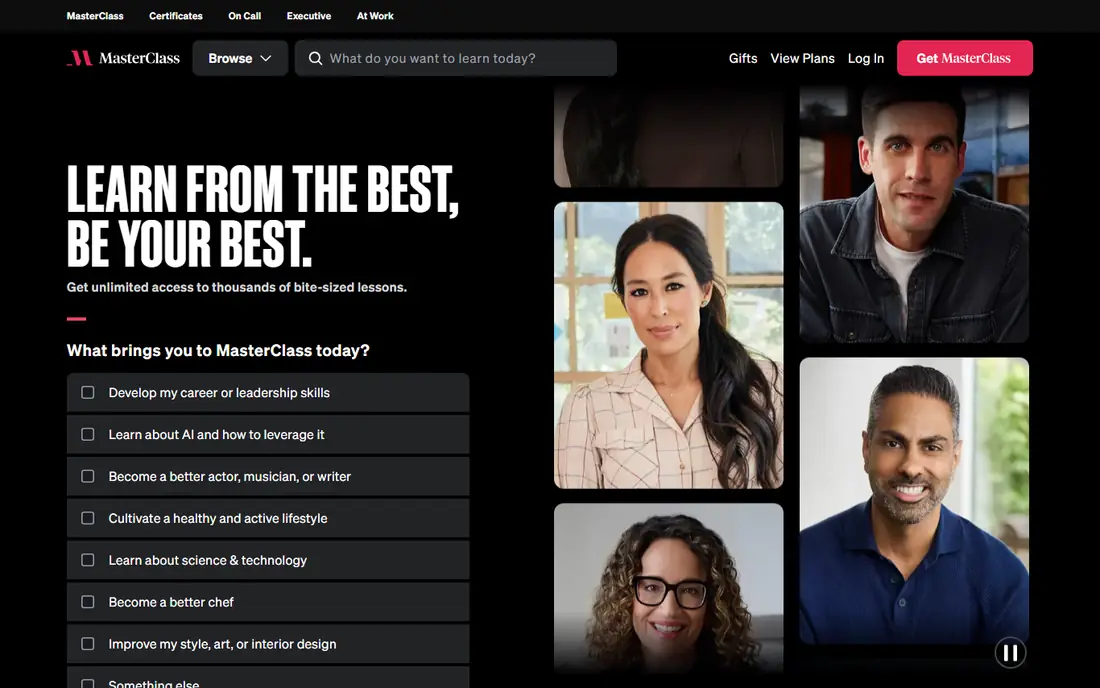
MasterClass offers classes taught by famous names across writing, business, cooking, music and more, filmed to a high standard with workbooks and lesson plans. Membership costs 120 dollars per year for Standard, with Plus at 180 dollars and Premium at 240 dollars, all billed annually.
The classes inspire and introduce ideas, but they are not a structured curriculum and membership includes no certificate. Separate certificate programs exist at extra cost. For learners who want motivation and perspective from top practitioners, MasterClass is a strong pick.
- Cinematic classes from well-known experts
- 30 day satisfaction guarantee
- Offline viewing on higher plans
- Annual billing only
- No certificates with membership
- Inspiration more than structured curriculum
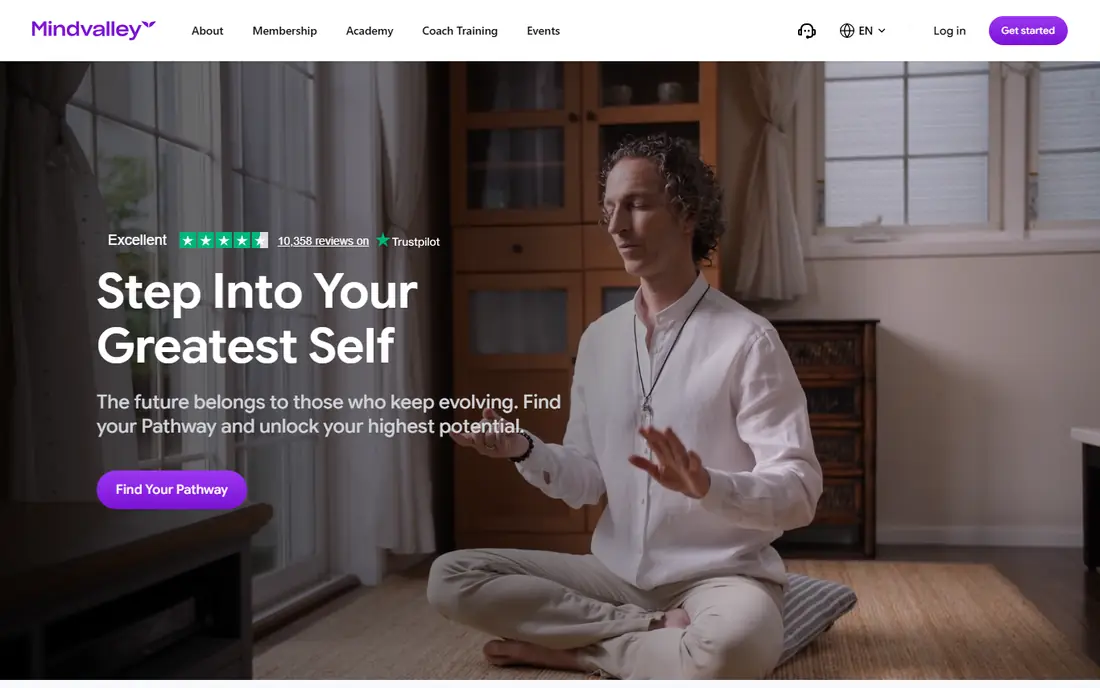
Mindvalley focuses on personal growth, with programs on mindset, health, relationships, career and spirituality from well-known coaches and authors. Programs run over weeks with daily lessons, and the community adds accountability.
Pricing is annual, with figures varying by promotion, and a trial or money-back period applies. The content is polished and the focus is narrower than general learning platforms, which suits users who want growth content specifically rather than academic courses.
- Programs built for growth, wellness and mindset
- Polished video content
- Active community
- Annual pricing is premium
- Completion certificates only
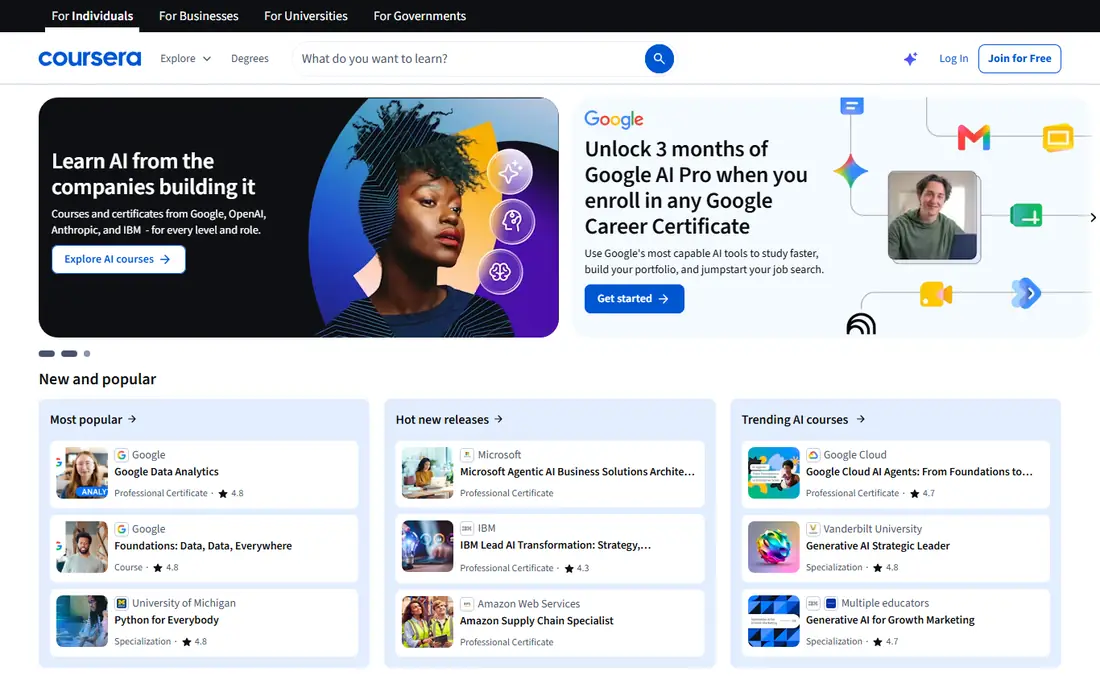
Coursera offers courses, professional certificates and degree programs from universities and companies, with Coursera Plus at 59 dollars per month and a 7 day trial. Many courses can be previewed free, and certificates carry weight with employers in a way that completion badges do not.
The academic depth suits career changers and professionals who need credentials. Slow learners should watch the monthly billing, since a course that takes three months costs three months. For recognized certificates, Coursera is the best pick here.
- University and company certificates
- 7,000 plus courses
- Free previews on many courses
- Monthly cost adds up for slow learners
- Depth varies by course
Skillshare offers thousands of short, project-based classes in design, illustration, writing, photography, business and more, with students sharing finished projects for feedback. Annual pricing varies with promotions, and a free trial is usually available.
The project focus suits learners who want to make something, not just watch videos. Quality varies by teacher, and there are no accredited certificates. For creative skills and hobbies, Skillshare is a practical, affordable pick.
- 35,000 plus project-based classes
- Creative subjects
- Community project galleries
- No certificates
- Quality varies by teacher
Udemy sells individual courses on almost any topic, from coding and design to personal development, with lifetime access and a refund window on eligible courses. Prices run from under 20 dollars on sale to around 200 dollars at list, and free courses exist for many topics.
The per-course model suits learners who want one specific skill without a subscription. Quality varies, so check ratings, preview videos and recent reviews before buying. For a single skill on a budget, Udemy is hard to beat.
- Buy one course and keep it for life
- Huge catalog
- Frequent sales
- Quality varies widely
- No subscription value for heavy learners
Day One is a journaling app that makes daily reflection easy, with prompts, photos, locations, weather and tags that turn entries into a searchable life record. Premium costs 34.99 dollars per year, while a free tier covers basic journaling.
Regular journaling supports self-awareness and goal tracking, and Day One makes the habit pleasant rather than a chore. The experience is strongest on Apple devices, though Android and web versions exist. For a reflection habit, Day One is our pick.
- Beautiful journaling app
- Photos, locations and prompts
- End-to-end encryption option
- Best on Apple devices
- Premium needed for unlimited journals and features
Habitica turns habits, daily tasks and to-dos into a role-playing game: complete tasks to earn gold and experience, level up a character, and join parties where friends hold you accountable. The core app is free, with optional in-app purchases for cosmetic items.
Gamification suits people who struggle with plain checklists and enjoy streaks and rewards. The game layer can distract from the habits themselves, and the interface is busy. For habit building with fun built in, Habitica is a free, effective pick.
- Turns habits into a role-playing game
- Free core app
- Parties and accountability
- Game elements can distract
- Interface is busy
Fabulous builds daily routines around habit science, with guided journeys for mornings, focus, sleep and exercise, plus coaching content that explains why each habit matters. The app starts with a short assessment and builds a routine step by step.
A free trial opens the full programs, after which a subscription is needed. The coaching tone is warm and structured, which suits users who want guidance rather than a blank checklist. For building a morning routine from scratch, Fabulous is a strong pick.
- Science-based habit programs
- Guided routines for mornings and evenings
- Coaching content
- Subscription needed for full programs
- Style suits some users more than others
Finch is a self-care app built around a virtual pet that grows as you complete daily goals, reflections and breathing exercises. The gentle design suits users who find productivity apps stressful and want a kinder approach to habits.
The core app is free, with a Plus tier adding more content and features. Finch is less structured than Fabulous or Habitica, so users who want strict programs may prefer those. For a low-pressure daily self-care habit, Finch is a charming pick.
- Gentle self-care pet companion
- Daily goals and reflections
- Free core app
- Less structured than habit programs
- Premium needed for full content
How we picked these
We compared official feature pages, pricing pages and public documentation for each tool, and favored products that are actively sold and supported in October 2026. We mixed learning platforms with habit and journaling apps so the list covers both learning and daily action. Prices come from vendor pricing pages, and where promotions change the figure we say so plainly rather than guessing.
How to use personal growth tools without overload
Pick one learning platform and one habit tool, and use them for a month before adding more. Growth comes from finishing programs and repeating habits, not from collecting subscriptions. Set a weekly review: what did you learn, what did you practice, and what will you change next week.
Start small and specific
Choose one goal, such as a morning routine or a single course, and track it daily. Small, specific goals beat vague resolutions, and a journal entry each evening helps you see progress that daily effort hides.
Pick one change at a time. People who load an app with ten goals usually drop all of them within weeks, while people who pick one habit, track it daily and review weekly tend to stick with it for months. Write down why the change matters, set a tiny daily version of it, and celebrate streaks rather than perfection. Growth comes from repetition, and apps help most when they make repetition visible.